
🏠 Home > 🗺️ Recipes > 🏛️🌾 Primitive Grains & Flatbreads
🏛️🌾 5,000 Years of Primitive Grains & Flatbreads: Ancient Civilization Origins
Published by Supakorn | Updated: September 2026
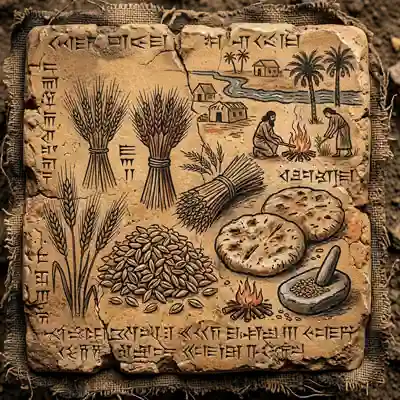
🗄️ The Cradle of Human Flavor: 5,000 Years of Primordial Baking Legacies
Hey friend! Have you ever wondered what the world tasted like before mass production and artificial ingredients took over? Imagine stepping into a time machine and setting the dial back 5,000 years. Long before modern culinary arts existed, our ancestors discovered a magical duo that literally built empires: primitive grains and flatbreads.
The epic history of human baking unfolds across three fascinating epochs. First, we have the Wild Gathering Dawn, where prehistoric humans hand-foraged wild grasses. Next came the Domestication Boom, when societies settled along roaring rivers to farm the very first crops. Finally, the Imperial Hearth Golden Age arrived, where baking evolved from a survival necessity into a deeply spiritual art form.
The lifestyle back then was beautifully tied to the rhythms of nature. Communities gathered around a central flame every single evening. The crackle of the fire and the comforting aroma of hand-ground grains heating on hot stones served as the ultimate social glue, bringing families together to share stories, warmth, and sustenance.
🍂 The Evolutionary Epochs of Early Grain Harvests
• The Age of Foraging: Before fields were planted, early humans migrated to follow wild grain patches, collecting ancient seeds with primitive flint sickles.
• The Stone-Milling Revolution: Ancestors realized that crushing hard grains between heavy river stones produced a fine, versatile flour that mixed easily with water.
• The Invention of the First Crust: Dropping this simple grain paste onto blazing hot stones created a durable, portable food source that allowed human tribes to survive long journeys.
👑 God-Kings & Sacred Hearths: The First Elite Flatbreads
• Divine Offerings: In the grand courts of pharaohs and god-kings, flatbreads were far more than mere food—they were sacred symbols of life and power.
• The Royal Bakers: Elite kitchen guilds served the upper class, carefully guarding highly classified grain blends from the public.
• Sacred Fuel: High priests used specialty woods and aromatic resins to heat temple hearths, infusing royal flatbreads with a rich, smoky aroma meant exclusively for the gods.
🗺️ The Sovereign Grain Codex: Deep Dive into 7 Legendary Ancient Origins
Are you ready to explore the ultimate ancient baking map? Let’s take a journey across the globe and uncover the spectacular grain traditions and secret menu names of 7 legendary ancient civilizations. Keep your eyes peeled, because full, step-by-step recipe guides for each of these secrets are waiting for you via our exclusive internal links below!
🧱 1. The Hearth-Baked Empires of Mesopotamia & Egypt
• The Landscape: Nestled between the fertile banks of the Tigris, Euphrates, and Nile rivers, these empires turned baking into a massive state industry.
• The Primitive Grains: Cultivated from the rich river silt, wild Emmer wheat and raw barley dominated every single household kitchen.
• The Ancient Baking Style: Bakers used conical clay ovens called tannurs, slapping the dough directly onto the glowing-hot interior walls.
• The Secret Legends: Keep an eye out for our upcoming deep-dives into The Sun-God Emmer Disc and Nile Delta Honeyed Barley Hearthcake to unlock these ancient pharaoh secrets!
🛕 2. The Stone-Ground Flatbread Realms of the Indus Valley
• The Landscape: Sprawling across ancient India, cities like Harappa and Mohenjo-daro boasted incredibly advanced urban kitchens.
• The Primitive Grains: Early farmers mastered the cultivation of indigenous club wheat, small millets, and ground pulses.
• The Ancient Baking Style: Dough was rolled thin on massive stone saddle querns and seared to perfection on heavy terracotta griddles over open flames.
• The Secret Legends: Prepare your kitchen for The Harappan Sacred Ash Roti and Sarasvati Crushed-Pulse Flatbread.
🏯 3. The Clay-Pot Grain Traditions of Huaxia & Yellow River
• The Landscape: Along the misty Yellow River during the mythical Era of the Five Emperors, a completely unique grain culture bloomed.
• The Primitive Grains: Instead of wheat, the foundations of Chinese civilization were built upon golden foxtail and broomcorn millet.
• The Ancient Baking Style: Rather than baking over dry fire, early artisans used beautiful clay pottery vessels to steam their grain dough, keeping it incredibly soft and moist.
• The Secret Legends: Discover the hidden histories behind The Yellow Emperor’s Steamed Millet Loaf and Shennong’s Five-Grain Primordial Cake.
🏟️ 4. The Sun-Drenched Ancient Bakes of Minoan & Mediterranean
• The Landscape: The rocky cliffs of early Crete and ancient Greece produced resilient communities deeply connected to the sea.
• The Primitive Grains: Wild coastal barley and early Einkorn wheat thrived perfectly in the dry, sun-kissed Mediterranean soil.
• The Ancient Baking Style: Coarse dough was heavily kneaded with pressed wild olive mash, wild thyme, and honey, then fired on flat ceramic slabs.
• The Secret Legends: Taste history with The Labyrinthine Barley-Thyme Crisp and Aegean Olive-Infused Flatdisc.
🗿 5. The Sacred Maize Shrines of Mesoamerican & Andean
• The Landscape: High up in the Andes mountains and deep within the Mesoamerican rainforests, early Maya and Inca ancestors worshipped the soil.
• The Primitive Grains: The absolute kings of this region were ancient varieties of multi-colored maize and high-altitude, nutrient-dense quinoa.
• The Ancient Baking Style: Using a process called nixtamalization, they softened the grains before hand-slapping the dough into thick, soft discs grilled on volcanic stone plates called comals.
• The Secret Legends: Unearth the ancient energy of The Jagged Peaks Quinoa Flatbread and The Solar Maize Ritual Tortilla.
🏰 6. The Wildwood Grain Banquets of Celtic & Nordic Tribes
• The Landscape: The dense, frost-covered forests of Northern Europe demanded hearty, dense, and warming food to survive the brutal winters.
• The Primitive Grains: Coarse wild oats and winter-hardy rye were the only grains tough enough to conquer the freezing climate.
• The Ancient Baking Style: Tribes mixed their rustic flours with dried forest berries, shaping them into thick cakes baked over the aromatic heat of crackling pine and oak logs.
• The Secret Legends: Warm your soul with The Midsummer Hearth Rye Bannock and The Druid’s Foraged Berry-Oat Flatloaf.
🏝️ 7. The Primordial Earth-Oven Flatbreads of Ancient African & Oceanic Tribes
• The Landscape: From the vast Rift Valley to the volcanic islands scattered across the Pacific, nature provided unique starch sources.
• The Primitive Grains & Roots: Sorghum, tiny teff grains, and nutrient-rich wild yams were intensely pounded into smooth pastes.
• The Ancient Baking Style: Communities dug large underground pit ovens, lining them with blazing wood coals and large green leaves to slow-bake massive flatbreads under the earth.
• The Secret Legends: Experience the earth's oldest flavors with The Rift Valley Sorghum Flatbread and The Subterranean Volcanic Yam Disc.
🧐 Ancient Hearth Mysteries: Civilization Bakes FAQ
Q1.Why were all ancient flatbreads entirely unleavened?
Before commercial yeast was discovered thousands of years later, flatbreads relied entirely on the pure combination of grain flour and water, relying occasionally on wild, ambient microbes for a very subtle, natural rise.
Q2.What made Emmer wheat so vital to early civilizations?
Emmer wheat possessed an incredibly thick outer hull that naturally protected the grain from pests and spoilage, allowing ancient empires to store massive grain surpluses in royal granaries for years.
Q3.How did ancient people mill grains without modern machinery?
Everything was driven by pure human muscle! Ancestors used large, hollowed-out stones called mortars and flat stone slabs called querns to hand-crush grains for hours every day.
Q4.What role did clay pit ovens play in ancient community life?
Because building a high-heat fire required valuable wood fuel, families shared massive community pit ovens, making the local bakery the ultimate daily gathering place for neighborhood news and connection.
🧠 Time-Traveled Tastes: Reclaiming Your Imperial Legacy
The simple flatbreads of our ancestors are the literal foundation upon which human civilization was built. By understanding the primitive grains and unique hearth styles of these 7 magnificent cultures, you aren't just reading about history.
Ready to transform your modern kitchen into a sacred ancient temple? Click through our exclusive internal recipe links scattered above to unlock the exact ingredient ratios, step-by-step hand-kneading methods, and fire-roasting secrets of the ancients. Let’s bring the imperial flavors of the past back to life today!
🏛️🌐 Mesopotamia & Egypt Origins: Primitive Grains & Flatbreads
👉 🧱 🏛️🌾 Ancient Egyptian: Primitive Grains & Flatbreads Recipes
👉 🧱 🏛️🌾 Babylonian: Primitive Grains & Flatbreads Recipes
🏛️🌐 Indus Valley Origins: Primitive Grains & Flatbreads
👉 🛕 🏛️🌾 Harappan: Primitive Grains & Flatbreads Recipes
👉 🛕 🏛️🌾 Mohenjo-Daro: Primitive Grains & Flatbreads Recipes
🏛️🌐 Huaxia & Yellow River Origins: Primitive Grains & Flatbreads
👉 🏯 🏛️🌾 Sanxingdui: Primitive Grains & Flatbreads Recipes
👉 🏯 🏛️🌾 Five Emperors Era: Primitive Grains & Flatbreads Recipes
🏛️🌐 Minoan & Mediterranean Origins: Primitive Grains & Flatbreads
👉 🏟️ 🏛️🌾 Minoan Crete: Primitive Grains & Flatbreads Recipes
👉 🏟️ 🏛️🌾 Mycenaean Greek: Primitive Grains & Flatbreads Recipes
🏛️🌐 Mesoamerican & Andean Origins: Primitive Grains & Flatbreads
👉 🗿 🏛️🌾 Pre-Classic Maya: Primitive Grains & Flatbreads Recipes
👉 🗿 🏛️🌾 Olmec: Primitive Grains & Flatbreads Recipes
| 🏠 < Back | Next > 🍖🏛️ 🌐 |
| Next > 🌐 Recipes | Next > 👑 Royal Recipes | Next > 🏛️ Ancient Recipes |
| Next > 🧊 Prehistoric Recipes | Next > 🔥 Lower Paleolithic Recipes |