
🏠 Home > 🗺️ Recipes > 🏛️🌾 Primitive Grains & Flatbreads > 🗿 Pre-Classic Maya: Primitive Grains & Flatbreads Recipes
🗿 🏛️🌾 Pre-Classic Maya: Primitive Grains & Flatbreads Recipes
Published by Supakorn | Updated: October 2026
🐆📜 The Storyteller’s Intro: 5,000 Years of Ancestral Flavors
Hey there, fellow history enthusiasts and food lovers! Pull up a chair, get comfortable, and let’s take a mind-bending trip back in time—about 5,000 years, to be exact. When we picture the ancient Maya, our minds usually race straight to giant stone pyramids piercing through lush jungle canopies, complex astrological calendars, or secretive glyphs carved into limestone. But before all those mega-cities like Tikal or Chichen Itza dominated the landscape, there was a quiet, revolutionary story unfolding on a much humbler stage: the hearth.
To truly appreciate where Maya cuisine comes from, we have to trace the timeline across the major epochs of Mesoamerican history:
✦ Archaic Period (c. 8000 BCE – 2000 BCE): The era of hunter-gatherers slowly discovering the magic of plant domestication, transforming wild teosinte grass into early maize.
✦ Early Pre-Classic Maya (c. 2000 BCE – 1000 BCE): The vibrant era where permanent agricultural villages sprang up, firing up the very first ceramic vessels, and establishing fundamental flatbread traditions.
✦ Middle Pre-Classic Maya (c. 1000 BCE – 400 BCE): A period of rapid expansion, organized farming rituals, trade routes, and complex culinary techniques like alchemy-driven grain processing.
✦ Late Pre-Classic Maya (c. 400 BCE – 250 CE): The era when massive ceremonial centers blossomed, setting the stage for the iconic monumental architecture of the Classic Maya era.
During the Early and Middle Pre-Classic periods, nomadic foraging faded into the background as settled agricultural life took root in the fertile lowlands and volcanic highlands of Mesoamerica. Imagine standing in a small village nestled along a coastal lagoon or an inland river basin around 2000 BCE. The air is thick with humidity, woodsmoke, and the unforgettable earthy aroma of freshly ground grain resting on wet volcanic stone. This wasn't merely survival cooking; it was a deeply spiritual, scientific, and cultural movement that built the foundation for an entire civilization.
At the very heart of this ancient food revolution was a magical, chemical transformation called nixtamalization. Way back before modern food chemistry explained alkaline processing, early Mesoamerican cooks figured out that soaking tough, raw maize kernels in water mixed with wood ash or slaked lime (calcium hydroxide) unlocked hidden nutrients like niacin (Vitamin B3), softened the tough outer hulls, and created a workable dough. Without this brilliant breakthrough, raw corn alone couldn't have sustained dense, thriving populations without causing severe malnutrition. This humble process allowed the Pre-Classic Maya to transform primitive grains into versatile doughs, flatbreads, and fortifying porridges that fueled the builders of the ancient world.
📜 Iconic Excavated Menus: Ancestral Archaeological Discoveries
archaeological excavations across Guatemala, Belize, Southern Mexico, and Honduras have uncovered fascinating botanical remains, ceramic residue samples, ground-stone tools, and charred hearth traces. These discoveries allow archaeologists and food historians to reconstruct the actual menus enjoyed thousands of years ago.
🌽 Primitive Grain Preparations & Ancestral Doughs
✦ Nixtamalized Teosinte-Maize Mash: The ancient precursor to modern masa, created by steeping early heirloom maize varieties in mineral-rich ash water to create a nutritious, pliable base paste.
✦ Coarse Metate Flatbread Cakes: Thick, dense ancestral flatbreads formed by hand from coarsely stone-ground corn dough and baked directly over hot clay embers.
✦ Ash-Roasted Amaranth Patties: Nutritious, protein-rich patties made from native amaranth grains bound with herbal infusions and toasted on open hearth rocks.
✦ Wild Chia-Seed Porridge (Pinole Precursor): A nutrient-dense, energetic morning gruel made from roasted chia seeds, wild grain flours, and water, offering sustained stamina for farm labor.
🌿 Wild Botanical Wraps & Hearth Dishes
✦ Fire-Roasted Squash Seed Flatbreads: Savory hearth cakes encrusted with crushed heirloom pumpkin seeds (pipian precursors) and roasted on flat earthenware plates.
✦ Steamed Leaf-Wrapped Grain Packs: Early prototypes of tamales, where spiced grain pastes mixed with local greens were wrapped in wild maranta or banana-like leaves and slow-steamed over heated stones.
✦ Earthy Chaya & Maize Patties: Savory flat cakes incorporating folded tree-spinach leaves (chaya) into wet maize dough, yielding a dark green, nutrient-rich flatbread.
✦ Smoked Hearth Bean Mash Paste: Slow-cooked wild black beans mashed with clay-pitted stones, seasoned with aromatic leaves, and served as a savory spread for baked flatbreads.
🗺️ Daily Life, Hearth Traditions, and Archaeological Culinary Travel
Eating in the Pre-Classic Maya world was a communal, sacred ritual tied directly to the rhythms of nature, rain cycles, and cosmic seasons. Life revolved around the milpa—an ingenious multi-cropping agricultural system where corn, beans, and squash (known as the "Three Sisters") were grown together in total ecological harmony. Corn provided structural support for climbing beans, beans fixed vital nitrogen into the soil, and sprawling squash leaves shaded the ground to retain moisture and keep weeds at bay.
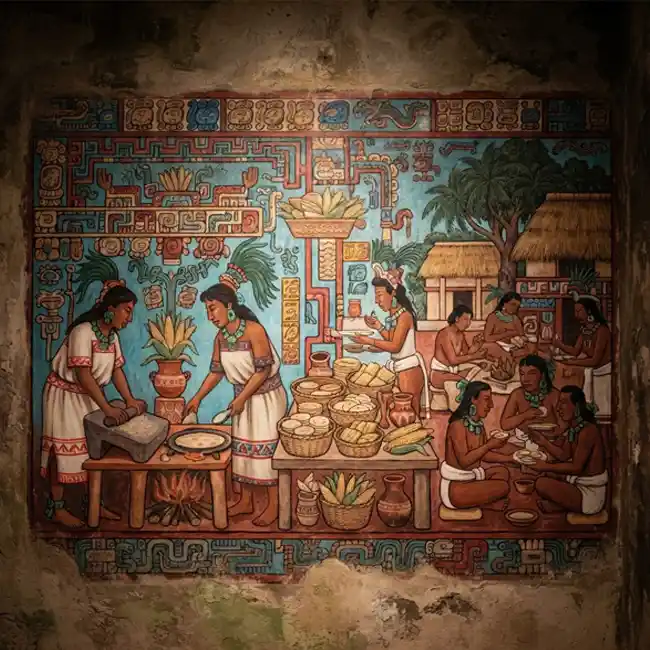
The heart of every Pre-Classic home was the domestic hearth, typically framed by three sacred hearthstones representing the cosmic origin of the universe. Women were the true master chefs and food scientists of this era. Rising before dawn, they would spend hours at the metate (a curved volcanic grinding stone), using a stone roller called a mano to grind soaked maize into smooth masa. The rhythm of grinding stone against stone was effectively the rhythmic heartbeat of every early Maya village.
For modern travelers and history buffs looking to walk in the culinary footsteps of the Pre-Classic Maya, the ancient Mesoamerican landscape offers incredible destinations where food, archaeology, and natural beauty intertwine:
• Sumpango and the Guatemalan Highlands: Explore vibrant mountain markets where heirloom maize varieties in shades of deep violet, crimson, soft yellow, and jet black are still traded using centuries-old techniques.
• Joya de Cerén (El Salvador): Known as the "Pompeii of the Americas," this remarkable UNESCO site was preserved under layers of volcanic ash, offering an unmatched look at actual Pre-Classic and Early Classic Maya kitchens, clay storage jars, and hearth layouts.
• The Mirador Basin & Petén Jungle (Guatemala): Trek through pristine rainforests to see remote Pre-Classic sites like El Mirador, where early Maya urban planning took root amid wild cacao trees and ancient agricultural terraces.
• Copán Valley Foothills (Honduras): Walk through lush river valleys where early farming hamlets flourished, offering a glimpse into early riverine agriculture and stone-grinding craftsmanship.
• The Northern Lowlands & Cenote Network (Yucatán, Mexico): Experience the unique geological landscape where early agriculturalists relied on natural limestone sinkholes for freshwater, setting up early homesteads surrounded by native fruit trees.
🚣 Riverine Basins and Coastal Lagoons: The Ancient Maya Waterways
Water was the lifeblood of Pre-Classic Maya settlement and food distribution. Long before paved roads or draft animals existed in the Americas, wide rivers, inland lakes, and coastal estuaries served as the primary highways for trading primitive grains, obsidian tools, salt, and regional seeds.
• Usumacinta River Basin: Flowing through modern Mexico and Guatemala, this grand river highway allowed early river dwellers to trade fertile wetland crops, freshwater mollusks, and unique riverine grains across vast distances.
• Pasión River Network: A crucial central trade vein in the Petén lowlands that connected remote agricultural forest villages with early ceremonial meeting grounds.
• New River and Northern Lagoon Systems (Belize): Home to early settlements like Cuello and Cerros, where coastal Maya communities harvested marine resources, traded dried fish, and cultivated early maize plots along fertile riverbanks.
• Motagua River Valley: This strategic southern river corridor connected the mineral-rich volcanic highlands with Caribbean coastal trade networks, enabling the exchange of prized green jade, volcanic basalt for grinding stones, and regional seed stock.
• Candelaria River Floodplains: Low-lying floodplains where early farmers built sophisticated raised beds and canal systems to harvest multiple crops of corn and squash every single year.
🏜️ Highland Volcanic Valleys and Karst Landscapes
While the Maya realm is famous for its dense tropical forests, the Pre-Classic culinary story was equally shaped by dramatic highland volcanic zones and dry, porous limestone terrain. These diverse landscapes provided unique microclimates for cultivating distinct grain varieties and mineral-rich cooking agents.
• Guatemalan Volcanic Highlands: Towering mountain valleys blanketed in rich volcanic soil, providing ideal growing conditions for cold-hardy highland maize, amaranth, and wild legumes.
• The Highlands of Kaminaljuyu (Guatemala City Valley): A major Pre-Classic trade hub where highland agricultural techniques, obsidian tool production, and valley farming thrived alongside natural springs.
• The Puuc Hills Limestone Ridges: Rolling karst landscapes where early agriculturalists mastered the collection of rainwater in underground cisterns (chultunes) to sustain grain storage through long dry seasons.
• Central Chiapas Plateau: Elevated river terraces where early agricultural communities cultivated high-altitude grains while harvesting mineral-rich wood ash for daily nixtamalization hearth work.
• Yucatecan Coastal Salt Flats: Arid, sun-baked coastal stretches where ancient gatherers harvested sea salt—a prized trade commodity used to preserve wild meats and season ancestral hearth flatbreads.
🌌❓ Ancient Civilization FAQ: Unlocking Palace Kitchen Mysteries
Q1.How did ancient Pre-Classic Maya flatbreads differ from modern corn tortillas?
Ancient Pre-Classic flatbreads were much thicker, denser, and coarser than modern machine-pressed tortillas. Before modern metal hand-crank mills were invented, maize was ground exclusively by hand on volcanic stone metates. This created a texturally rich dough containing rustic grain fragments and fine stone minerals. These ancestral flatbreads were often hand-patted into thick discs, baked on unglazed clay griddles (comales) or hot river stones, and eaten as hearty, filling meal foundations rather than delicate food wraps.
Q2.What made nixtamalization such a revolutionary chemical discovery?
Nixtamalization was a complete game-changer for Mesoamerican civilization. Naturally, raw corn hardens as it dries, and its vital nutrients—especially niacin (Vitamin B3)—are chemically bound, making them difficult for the human digestive system to absorb. By soaking raw kernels in an alkaline bath of water mixed with wood ash or slaked lime, the tough outer skin dissolves, the grain softens, and the bound niacin is released. This process also balances amino acid profiles, making corn a complete, life-sustaining protein source when paired with beans.
Q3.Did the Pre-Classic Maya only eat corn, or were other grains and seeds popular?
While maize was undeniably the spiritual and nutritional core of their diet, the Pre-Classic Maya enjoyed a rich variety of grains, seeds, and pseudocereals! Amaranth and wild chia seeds were prized for their high protein content, long shelf life, and concentrated energy. They also relied heavily on crushed pumpkin seeds (pipian), wild breadnut (ramón seeds), and various native beans to create diverse, nutrient-packed flatbreads, porridges, and hearth cakes.
Q4.How do archaeologists know what ancient Maya food tasted like if recipes weren't written down?
Even without written recipe books from 5,000 years ago, modern archaeology uses incredible high-tech tools to decode ancient diets! Archaeobotanists examine microscopic starch grains stuck to ancient grinding stones (metates), analyze phytoliths (fossilized plant cells) found in hearth ash, and run chemical residue analyses on porous clay pottery. These tests detect microscopic traces of ancient fats, proteins, and chemical compounds, giving us a precise picture of what ingredients were cooked, stored, and eaten in Pre-Classic kitchens.
🧠 Final Thoughts: The Timeless Allure of Antique Gastronomy
Stepping back to explore the foodways of the Pre-Classic Maya reminds us that cooking has always been far more than mere fuel—it is art, science, community, and reverence all rolled into one. The sheer genius required to invent nixtamalization, the patience needed to hand-grind primitive grains on volcanic stone, and the deep ecological wisdom behind the milpa farming system are awe-inspiring reminders of human ingenuity.
When we strip away modern convenience and look at the primitive grains and rustic flatbreads of 5,000 years ago, we see the pure roots of modern culinary culture. These ancient flavors carry the soul of the rainforest, the warmth of the woodfire hearth, and the incredible resilience of a civilization that literally built itself from a single grain of corn.
Hungry to learn how to bring these ancient flavors into your own modern kitchen? Keep your eyes peeled and stay tuned! In our upcoming release, we’ll be breaking down step-by-step, authentic historic recipes so you can grind, pat, and bake your very own ancestral Mesoamerican flatbreads right at home. You won't want to miss it!
🏛️ Credit to the Keepers of the Culture (The Legacy)
This exploration of Pre-Classic Maya culinary history stands on the shoulders of generations of dedicated indigenous communities, archaeologists, ethnobotanists, and historians.
◦ To the Indigenous Maya Communities of Guatemala, Mexico, Belize, and Honduras: The true guardians of biodiversity, heirloom seeds, and ancestral culinary techniques who have preserved the sacred art of nixtamalization and milpa farming for thousands of years.
◦ To the Archaeobotanists and Culinary Historians: Whose painstaking lab work, field excavations, and artifact analyses allow us to reconstruct ancient diets with scientific precision.
◦ To the Cultural Conservationists and Local Market Vendors: Who keep traditional heirloom maize varieties alive in local markets, protecting genetic food diversity against industrial uniformity.
🏛️🌾 Inside the Maya Hearth: The Tortilla Recipe Time Forgot
👉 Unlock Pre-Classic Maya: Primitive Grains & Flatbreads
| 🌐 🏛️🌾 < Back | Next > 🍖 🗿 |