
🏠 Home > 🗺️ Recipes > 🏛️🌾 Primitive Grains & Flatbreads > 🏯 Sanxingdui: Primitive Grains & Flatbreads Recipes
🏯 🏛️🌾 Sanxingdui: Primitive Grains & Flatbreads Recipes
Published by Supakorn | Updated: September 2026
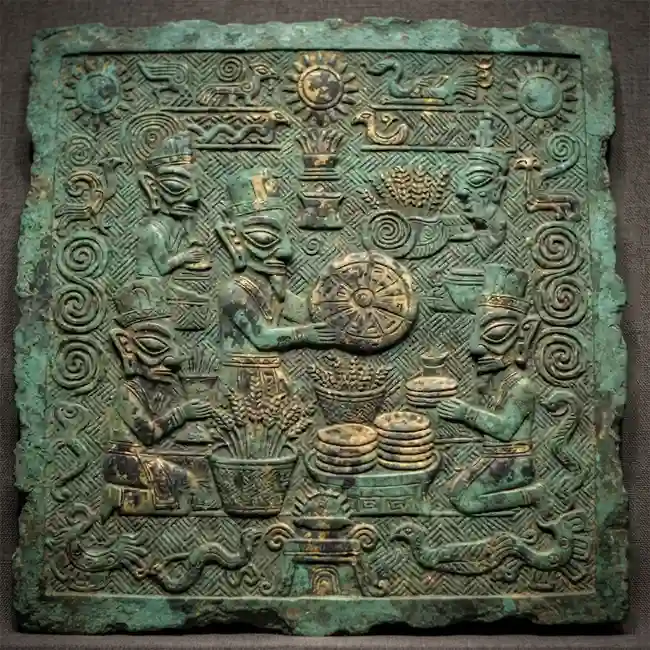
🏯📜 The Storyteller’s Intro: Thousands of Years of Ancestral Flavors
Imagine standing on the Chengdu Plain thousands of years ago.
There are no modern supermarkets, no neatly packaged flour, no electric ovens, and certainly no recipe websites telling you how long to cook dinner. Instead, food begins with the landscape itself: wet fields, river channels, fertile soil, dry uplands, wild plants, domesticated animals, and the patient work of farming communities.
This is the world surrounding Sanxingdui, one of the most fascinating archaeological cultures of ancient Southwest China.
And before we talk about grains or flatbreads, there is one important detail worth getting right.
Sanxingdui should not simply be described as a civilization that existed exactly 5,000 years ago. Archaeological research places the main Sanxingdui cultural horizon at roughly 3,700–3,100 years before present, while earlier cultures on the Chengdu Plain, particularly the Baodun culture, belong to a much older Neolithic farming tradition. The sequence is important because it shows that the food story of Sanxingdui did not suddenly appear from nowhere. It developed from a much longer history of agriculture in the Sichuan Basin.
The broader agricultural story can be imagined as a long chain:
• Early Neolithic communities established farming traditions on the Chengdu Plain.
• The Baodun culture, dating broadly to the third millennium BC, developed substantial settlements and agricultural systems.
• Rice became especially important in the wet environments of the Chengdu Plain.
• Foxtail millet and broomcorn millet provided complementary dry-land crops.
• Later, the Sanxingdui culture inherited and transformed this agricultural foundation.
• By the Sanxingdui period, farming supported increasingly complex communities, craft production, ritual activity, and social organization.
So when we use the phrase “Primitive Grains & Flatbreads,” we are really opening a window into a much bigger story.
It is a story about how ancient people transformed humble grains into everyday nourishment.
🌾 Rice, Millet, and the Landscape of Ancient Shu
Archaeobotanical evidence gives us some fascinating clues.
Researchers have identified rice and different millet varieties in archaeological contexts associated with the ancient agricultural systems of the Chengdu Plain. Research specifically examining the Sanxingdui agricultural economy indicates a mixed farming system in which rice agriculture was particularly important, while foxtail millet and broomcorn millet complemented wet-field cultivation with dry-land farming. Soybean cultivation has also been associated with the wider agricultural picture of the period.
That combination matters enormously for understanding food.
Rice flour, millet flour, whole grains, porridge-like preparations, steamed foods, cakes, gruels, and other grain-based preparations would all have been possibilities in societies with access to these crops.
But archaeology requires discipline.
We should not automatically turn a carbonized grain into a specific modern-looking dish.
A rice grain proves rice was present.
A millet grain proves millet was present.
Cooking vessels may demonstrate food preparation.
But these discoveries do not automatically reveal the exact shape, ingredients, seasoning, or cooking method of a particular ancient flatbread.
That distinction makes the Sanxingdui food story more interesting, not less.
It reminds us that archaeology is partly the art of reconstructing an ancient kitchen from fragments.
🏺 The Sanxingdui World Behind the Food
The Sanxingdui site covers an enormous archaeological landscape in Guanghan, Sichuan, and is widely associated with the ancient Shu civilization. Researchers identify it as a major center of the ancient Shu kingdom before the political center later shifted toward Jinsha.
What makes Sanxingdui extraordinary is not simply its age.
It is the visual world.
Bronze masks with dramatic facial features, monumental bronze figures, elaborate ritual objects, jade, gold, pottery, and other artifacts reveal a society with highly developed craft traditions and complex social organization.
Yet behind those spectacular objects was something much more ordinary.
People had to eat.
Farmers had to grow crops.
Workers had to process grain.
Families had to prepare meals.
Communities had to store food.
And someone had to turn harvested grain into something people could actually consume.
That everyday food economy is one of the quieter stories hiding behind Sanxingdui's famous bronzes.
📜 Iconic Excavated Menus: Archaeological Grain Evidence from Ancient Shu
When researching ancient food, it is tempting to create dramatic dish names such as “Sanxingdui Royal Millet Flatbread” or “Ancient Shu Palace Bread.”
But there is a problem.
There is currently no secure archaeological evidence that such named dishes were actually recorded as menus from Sanxingdui.
So instead of inventing historical recipes, we can build our food category around archaeologically supported ingredients and preparation traditions.
This approach is both more honest and more fascinating.
🌾 1. Ancient Rice — The Foundation Grain
Rice is one of the strongest agricultural themes connected with the Chengdu Plain.
Archaeobotanical studies show that rice cultivation was important in the region, and carbonized rice remains have been identified in Sanxingdui-period contexts. Research on the wider Chengdu Plain also indicates that rice agriculture formed a major part of the local subsistence system.
Rice could be transformed into many forms of food.
Possible grain-processing pathways include:
• Whole cooked rice
• Rice porridge or gruel
• Ground rice preparations
• Steamed grain-based foods
• Rice cakes or other molded preparations
However, individual reconstructed dishes should be labeled as interpretations, rather than presented as documented Sanxingdui menu names.
🌾 2. Foxtail Millet — The Dry-Land Companion
Foxtail millet is another important crop in the agricultural history of Southwest China.
Its importance is especially revealing because it demonstrates that ancient farming communities did not rely on a single crop.
Wet environments favored rice.
Drier land could support millet.
This combination created a flexible agricultural system capable of responding to different landscapes.
For ancient cooks, millet was more than a field crop.
It was a source of energy that could be processed into cooked grains, porridges, ground mixtures, cakes, and potentially flat or molded foods.
The exact Sanxingdui preparation methods remain a subject for archaeological interpretation rather than a simple cookbook reconstruction.
🌾 3. Broomcorn Millet — Another Ancient Grain
Broomcorn millet appears within the wider crop spectrum associated with prehistoric and early historic Southwest China.
Its presence helps tell a broader story of agricultural diversity.
Rather than imagining ancient Shu cuisine as one single food tradition, it is more useful to picture a flexible food system combining:
• Rice
• Foxtail millet
• Broomcorn millet
• Soybeans
• Domesticated animals
• Wild plants
• Hunting and fishing resources
Research synthesizing the Sanxingdui agricultural economy describes a mixed system involving rice and dry-land millet cultivation alongside animal husbandry, while hunting, fishing, and gathering continued to contribute to subsistence.
🍪 4. Primitive Flatbreads — A Careful Reconstruction
This is where the story becomes especially intriguing.
The phrase “primitive flatbreads” is useful as a culinary concept, but it should not be presented as the name of a confirmed Sanxingdui archaeological dish.
Why?
Because the surviving evidence does not provide us with a complete Sanxingdui cookbook describing a specific flatbread recipe.
Still, the basic technological idea is plausible.
Ancient grain-based communities around the world discovered that crushed or ground grains could be mixed with water and transformed into cohesive foods.
Depending on local technology, such mixtures could potentially be:
• Cooked as soft grain foods
• Steamed
• Molded
• Flattened
• Heated on a hot surface
• Combined with seeds or other available ingredients
The important point is that a plausible reconstruction is not the same thing as an excavated recipe.
That distinction should always remain visible.
🏺 5. Cooking Vessels — The Silent Recipe Book
Pottery may be one of the most important clues to ancient food culture.
A vessel cannot tell us everything.
But its form, residue, location, and archaeological context can help researchers understand how ancient communities handled food.
At Sanxingdui, archaeologists have recovered substantial quantities of pottery and cooking-related implements alongside the spectacular bronze and jade objects. Research on the site's agricultural economy notes the discovery of numerous well-crafted cooking utensils and other vessels, reflecting a sophisticated food and material culture.
In a sense, these objects are the silent utensils of an ancient kitchen.
They do not tell us exactly what Grandma's recipe tasted like.
But they tell us that cooking was part of an organized material world.
🗺️ Ancient Shu Foodways: Eating, Living, and Following the Sanxingdui Landscape
Food never exists separately from geography.
The Chengdu Plain provided an extraordinary setting for agriculture.
It is a large alluvial plain shaped by river systems and receives substantial seasonal rainfall. Modern archaeological research emphasizes the importance of waterways, fertile soils, and environmental conditions in the development of agriculture across the region.
For ancient communities, this meant food and landscape were inseparable.
🏡 What Might Daily Eating Have Looked Like?
We should be cautious about reconstructing individual meals.
There is not enough evidence to say that every Sanxingdui household ate the same breakfast, lunch, or evening meal.
But we can reasonably understand the broader pattern.
Daily food would have been influenced by:
• Seasonal harvests
• Household resources
• Agricultural work
• Access to rice and millet
• Animal husbandry
• Fishing
• Wild plant gathering
• Social status
• Ritual activities
The result was probably not a single standardized “Sanxingdui cuisine.”
Instead, there would have been differences between ordinary households, specialized workers, elite communities, and ritual contexts.
🔥 Grain Was Labor Before It Became Food
Modern cooks can forget how much work hides inside a bowl of rice.
For ancient farmers, grain required a long chain of effort:
• Preparing fields
• Planting
• Managing water
• Protecting crops
• Harvesting
• Drying
• Removing unwanted plant material
• Grinding or processing
• Cooking
• Serving
That means a grain-based food was also a record of human labor.
A simple millet cake or rice preparation, if such a food was made, represented an entire agricultural system behind it.
This is one reason ancient grain foods are so historically valuable.
They connect the household kitchen directly to the landscape.
🚣 Rivers, Rice Fields, and the Waterways of Ancient Shu
If you want to understand the food culture of ancient Shu, follow the water.
The Chengdu Plain was shaped by river systems including the Minjiang and Tuojiang and their tributaries. The region's water environment helped create conditions favorable to intensive rice agriculture.
This creates an important contrast.
🌊 Wetland Agriculture
Rice thrives in environments where water can be managed effectively.
That means waterways were not merely geographical features.
They were part of the agricultural infrastructure that made certain foods possible.
🌾 Dry-Land Agriculture
Millets provided another strategy.
They could be cultivated outside the wet rice-growing environment and therefore expanded the agricultural possibilities of communities living across different ecological zones.
This mixed agricultural system is one of the most fascinating aspects of the ancient Chengdu Plain.
Rice and millet were not necessarily competitors.
They could work together.
🏞️ The Ancient Shu Food Corridor
The larger Sichuan Basin was connected through waterways, mountain routes, and regional exchange networks.
That meant crops, technologies, people, and ideas could move between different ecological environments.
The story of Sanxingdui food is therefore not simply a story about what grew in one field.
It is a story about adaptation.
🏜️ Mountains, Valleys, and the Non-Desert Food World of Sanxingdui
Sanxingdui was not an oasis civilization in the classic desert sense, so a desert-focused food section would be misleading.
Instead, its landscape story belongs to the river plains, wetlands, foothills, and surrounding mountains of Sichuan.
This distinction is useful for long-tail searches because it helps separate Sanxingdui from civilizations whose food systems depended heavily on deserts and oasis agriculture.
⛰️ From Plain to Mountain
The Chengdu Plain sits within a broader mountainous environment.
Different elevations offered different resources.
The ancient food economy could therefore combine:
• Cultivated grains
• Wetland resources
• Forest products
• Wild plants
• Animals
• Fish
• Seasonal foods
This ecological diversity helps explain why ancient Southwest China developed food systems that were more complicated than a simple “rice civilization” label might suggest.
🌱 The Meaning of Primitive Grains
“Primitive grains” should not be interpreted as inferior grains.
These were highly valuable crops that helped communities build stable food supplies.
Millet and rice were technologies of survival.
They could be planted, harvested, stored, processed, and transformed into foods capable of supporting growing communities.
That agricultural foundation helped make complex societies possible.
🐉❓ Ancient Civilization FAQ: Unlocking Sanxingdui Kitchen Mysteries
Q1.Was Sanxingdui really 5,000 years old?
Not exactly.
The main Sanxingdui cultural period is generally placed around 3,700–3,100 years ago. However, the broader Chengdu Plain contains earlier Neolithic cultures, including Baodun, and farming in Southwest China reaches much farther back. This is why “5,000-year-old food traditions of the Sanxingdui region” can be historically meaningful, while calling Sanxingdui itself a precisely 5,000-year-old civilization would be misleading.
Q2.Did archaeologists discover an actual Sanxingdui flatbread recipe?
There is no securely documented ancient Sanxingdui flatbread recipe comparable to a modern written recipe.
Archaeology provides evidence for rice, millet, agricultural production, cooking vessels, and food-related activities, but it does not currently give us a complete named flatbread recipe.
Therefore, any modern “Sanxingdui flatbread” should be presented as a historically inspired reconstruction, not as a confirmed excavated recipe.
Q3.What grains were important around ancient Sanxingdui?
Rice was particularly important on the Chengdu Plain, while foxtail millet and broomcorn millet complemented rice cultivation. Archaeological research also identifies soybean cultivation in the wider Sanxingdui agricultural system.
Q4.Why are grains so important to understanding Sanxingdui civilization?
Because agriculture creates the foundation that supports everything else.
The spectacular bronzes of Sanxingdui are the objects visitors remember.
But behind those bronzes were farmers, fields, harvests, storage systems, cooking technologies, and daily meals.
Food was part of the infrastructure of civilization.
🧠 Final Thoughts: The Timeless Allure of Antique Gastronomy
There is something wonderfully humbling about studying ancient food.
The most famous Sanxingdui objects are enormous bronze figures, mysterious masks, elaborate trees, gold objects, and ritual treasures.
Yet some of the most revealing discoveries may be much smaller.
A carbonized grain.
A pottery fragment.
A cooking vessel.
A trace of agricultural activity.
These fragments help us reconstruct a world in which food was closely connected to water, soil, labor, season, community, and belief.
And that brings us back to Primitive Grains & Flatbreads.
The most responsible way to understand this theme is not to pretend that archaeologists found a perfectly preserved ancient cookbook.
They did not.
Instead, we can look at the agricultural evidence and ask a more interesting question:
What kinds of foods could ancient communities have created from the grains they cultivated?
Rice and millet were extraordinarily versatile.
They could become everyday staples, soft cooked foods, ground mixtures, molded preparations, and potentially various grain cakes or flattened foods.
Some reconstructions may eventually become more convincing as archaeological science develops.
Others may remain fascinating possibilities.
That uncertainty is part of the mystery.
Sanxingdui does not give us every answer.
It gives us clues.
And those clues are enough to make the ancient kitchen come alive again.
The full recipe story deserves its own chapter—one that clearly separates archaeological evidence, historical reconstruction, and modern culinary interpretation.
That is where the next journey into Sanxingdui's ancient grain kitchen becomes especially exciting.
🏛️ Credit to the Keepers of the Culture (The Legacy)
Any exploration of Sanxingdui food culture should begin with respect for the archaeological record and the people who protect, excavate, study, and interpret it.
Sanxingdui is not simply a collection of mysterious ancient objects.
It is part of the cultural heritage of Sichuan and of the wider history of ancient Southwest China.
Archaeological discoveries at Sanxingdui have transformed our understanding of the ancient Shu world, while continuing excavations and scientific studies are refining what researchers know about its economy, environment, rituals, agriculture, and society. The site was first recognized archaeologically in the early twentieth century, while the spectacular discoveries of 1986 brought Sanxingdui to international attention. More recent excavations have continued to add evidence to the story.
The greatest respect we can show this heritage is to avoid turning uncertainty into false certainty.
So when we speak of ancient Sanxingdui grains, we can confidently discuss archaeological evidence for rice and millet cultivation.
When we discuss ancient cooking, we can examine pottery and agricultural evidence.
When we imagine grain cakes or primitive flatbreads, we should clearly identify them as reconstructions rather than claim they were discovered recipes.
That balance keeps the mystery alive while honoring the evidence.
And perhaps that is the real secret of ancient gastronomy.
A civilization can disappear from everyday life, but its food landscape can still speak.
The rice fields.
The millet plots.
The river plains.
The grinding stones.
The cooking vessels.
The carbonized grains.
Piece by piece, they tell us that before the magnificent bronze treasures of Sanxingdui were created, people first needed something much more basic:
food on the table.
That is where the story of ancient cuisine truly begins.
🏛️🌾 Recreating the Ancient Flatbread Traditions of Sanxingdui
👉 Explore Sanxingdui: Primitive Grains & Flatbreads
| 🌐 🏛️🌾 < Back | Next > 🍖 🏯 |