
🏠 Home > 🗺️ Recipes > 🏛️🌾 Primitive Grains & Flatbreads > 🛕 Harappan: Primitive Grains & Flatbreads Recipes
🛕 🏛️🌾 Harappan: Primitive Grains & Flatbreads Recipes
Published by Supakorn | Updated: July 2026
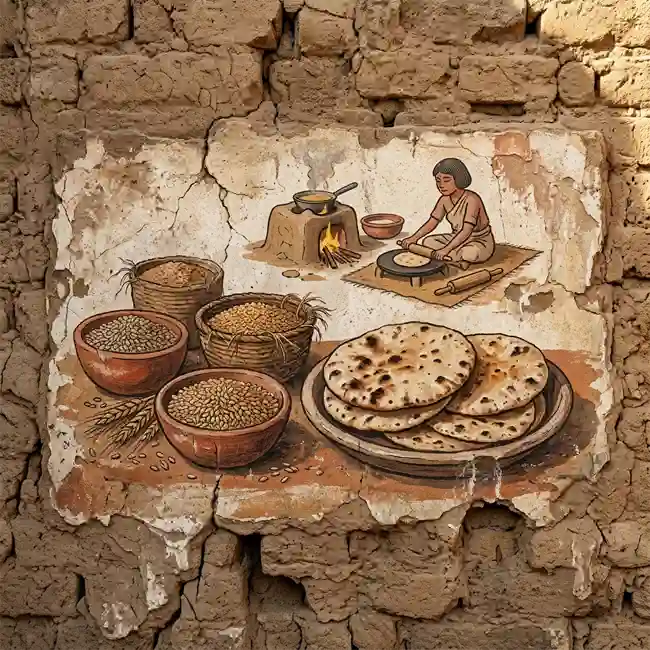
🛕 📜 The Storyteller’s Intro: 5,000 Years of Ancestral Flavors
Imagine stepping back into a world where the air smells of freshly ground emmer wheat, woodsmoke, and earth damp with the seasonal overflow of the Indus River. Welcome to the Indus Valley Civilization, home to the Harappan culture—one of the most sophisticated, peaceful, and urbanized societies of the ancient world. Nestled across modern-day Pakistan and northwestern India around 3300 BCE, the Harappan people were true pioneers of agriculture, master urban planners, and humble culinary geniuses who turned basic grains into life-sustaining, flavorful masterpieces.
When we talk about the Harappan timeline, bio-archaeologists and historians generally divide this incredible civilization into three distinct phases:
• The Early Harappan Phase (c. 3300 BCE – 2600 BCE): This was the era of settling down and mastering the soil. Communities began transitioning from nomadic foraging to organized farming, domesticating cattle, and cultivating early landrace grains like barley, sesame, and primitive wheat.
• The Mature Harappan Phase (c. 2600 BCE – 1900 BCE): The golden age of urban mastery! Cities like Harappa, Mohenjo-daro, Dholavira, and Lothal thrived with grid-pattern streets, advanced brick drainage systems, public granaries, and specialized terracotta kitchens equipped with clay hearths (chulhas) and tandoor-style ovens.
• The Late Harappan Phase (c. 1900 BCE – 1300 BCE): A period of climate shift, shifting river courses, and gradual urban decentralization. As monsoon patterns altered, Harappans adapted by relying more heavily on drought-resistant summer crops like millets and pulses, showing an inspiring resilience through food.
Long before modern bread-making additives or commercial yeasts existed, Harappan cooks were transforming primitive grains like hulled barley, emmer, and einkorn wheat into wholesome flatbreads cooked on flat clay griddles (tavas) or slapped against the heated inner walls of subterranean earthen ovens. They didn’t just eat to survive; they created a balanced, sustainable plant-forward diet rich in dietary fiber, plant proteins, and earthy spices. Exploring their daily nourishment isn't just a history lesson—it’s an invitation to reconnect with the pure, unadulterated roots of human gastronomy.
📜 Iconic Excavated Menus: From Clay Tablets to Archaeological Hearth Sites
While the Harappans didn't leave behind written recipe cookbooks like later civilizations did, the earth itself serves as their ultimate recipe ledger. Bio-archaeologists using starch grain analysis, micro-botanical residue testing, and isotope analysis from excavated terracotta vessels, pestles, and teeth fragments have unearthed fascinating evidence of what filled Harappan plates.
Here is a look at the iconic culinary archetypes and menu traditions preserved in the archaeological records of the Indus Valley:
🌾 Ancestral Flatbreads & Baked Offerings
• Harappan Bajra & Jowar Moti Roti: Primitive millet-based flatbreads hand-patted and toasted over glowing wood embers, eaten as a dense, nutrient-heavy daily staple by agrarian workers.
• Tandoor-Slapped Emmer Flatbread: Wild-fermented or unleavened wheat flatbreads baked along the inner walls of subterranean clay pits, giving them a distinct smoky char and chewy texture.
• Sesame-Crusted Seed Loaves: Coarsely ground grain patties mixed with toasted sesame seeds and cold-pressed mustard oil, baked on flat terracotta griddles for ritual gatherings and seasonal feasts.
• Sattu-Puri Hearth Discs: Roasted chickpea and barley flour patties mixed with wild herbs, shaped by hand, and slow-baked over hot ash pits for long journeys.
🥣 Hearth Pot Stews & Grain Porridges
• Indus Valley Triple-Pulse Stew: A thick, aromatic pottage made of slow-simmered lentils, field peas, and green gram (moong), scented with crushed wild ginger and turmeric.
• Barley-Herb Morning Mash: Whole hulled barley cracked on stone querns, boiled in fresh water or buttermilk, and finished with a drizzle of sesame oil and crushed wild mustard seeds.
• Wild Finger Millet Porridge (Ragi Kanji): A deeply nourishing, warm porridge made from coarsely ground millets, sweetened naturally with stewed wild figs or dates.
🧹 Rustic Grinding & Mortar Preserves
• Stone-Ground Ginger & Wild Garlic Paste: Crushed on flat sandstone grinding querns (sil-batta) to form the flavor base of prehistoric stews and bread toppings.
• Toasted Mustard Seed & Tamarind Relish: A tangy, pungent condiment mashed in clay bowls to brighten up dense grain breads.
• Fermented Buttermilk Curd Paste: Cultured dairy preserved in unglazed terracotta jars, blended with wild greens and crushed cumin-like seeds for dipping flatbreads.
🗺️ Ancient Culinary Tourism: Mapping Flavors to Historic Landscapes
If you’re a traveler with a passion for history and food, walking through the geographic cradle of the Harappan civilization is a truly magical experience. The footprint of this ancient empire spans across modern Pakistan and northwestern India (Gujarat, Rajasthan, Haryana, and Punjab). Traveling these regions today offers an incredible glimpse into living culinary heritage—where modern village cooks still use techniques that haven't changed much in five millennia!
🏛️ Dholavira & Lothal (Gujarat, India)
Located in the enchanting Salt Marsh environment of the Rann of Kutch and Gulf of Khambhat, these coastal Harappan cities were famous for maritime trade and salt production.
• Living Heritage Connection: Modern Gujarati cuisine still heavily features millet flatbreads (rotla), sesame seeds, and pulse stews baked in earthenware. Visiting the excavated ruins of Dholavira lets you see the actual stone cisterns and clay hearths where these foods were prepared.
🏛️ Rakhigarhi & Banawali (Haryana, India)
Rakhigarhi is one of the largest Harappan sites ever discovered, surrounded by fertile, rich agricultural plains that have been farmed for thousands of years.
• Living Heritage Connection: The local food culture in Haryana remains deeply tied to rustic flatbreads (bajra roti), white butter, and slow-cooked legumes. Standing on the ancient mounds of Rakhigarhi, you can inhale the same earthy aroma of wood-fired clay ovens that filled the air 5,000 years ago.
🏛️ Mohenjo-daro & Harappa (Sindh & Punjab, Pakistan)
The towering heartlands of the civilization feature massive public granaries, precise grid towns, and excavated subterranean tandoors.
• Living Heritage Connection: Across the Punjab and Sindh regions, traditional flatbread making in outdoor clay tandoors remains a daily social ritual. The usage of cracked wheat porridges (dalia) and wood-fired flatbreads mirrors the exact micro-botanical findings extracted from ancient Mohenjo-daro pots!
🚣 The Indus River Basin: Riverbed Agriculture & Heritage Grains
The absolute backbone of the Harappan civilization was its river system—specifically the Indus River and the legendary, now-lost Sarasvati River network. The annual, predictable floodwaters left behind nutrient-rich alluvial silt across the riverbanks, creating an agricultural wonderland without the need for complex metal plows.
Harappan farmers were absolute geniuses when it meandered to seasonal crop rotation (a practice known as multi-cropping):
🌾 Winter Crops (Rabi Harvest)
During the cooler months, farmers sowed primary winter grains that thrived on the lingering moisture of the floodplains:
• Barley (Hordeum vulgare): The true king of the Harappan grain basket. Rich in fiber and adaptable to varied soils, it was ground into flour for bread or boiled whole for hearty meals.
• Emmer & Einkorn Wheat: Ancient ancestral wheat species with tight husks that protected the grain from pests. These primitive grains provided a nutty, deep flavor and high nutritional density.
• Chickpeas & Field Peas: Essential legumes that naturally replenished nitrogen in the soil while offering a reliable source of plant protein.
🌾 Summer Crops (Kharif Harvest)
During the summer monsoon season, Harappans cultivated drought-resistant crops:
• Pearl Millet (Bajra) & Sorghum (Jowar): Small, hardy grains capable of thriving in high heat and lower rainfall, forming the foundation of summer flatbreads.
• Sesame (Til): Highly valued for its oil content, providing essential fats for cooking and preserving food.
• Rice (Early Domesticates): Particularly in the eastern Harappan zones like Haryana and Uttar Pradesh, early rice strains were harvested and integrated into grain mixes.
This sophisticated agricultural balance meant that Harappan pantries were always stocked, protecting their cities from famines and providing a rich variety of plant foods that made their daily bread anything but boring!
🏜️ Desert Trade Route Banquets: Caravan Luxuries & Pantry Staples
The Harappan civilization was not an isolated island—it was an international trading powerhouse! Harappan merchants traveled vast overland desert tracks through Baluchistan and Iran, and navigated sea routes across the Persian Gulf to trade with ancient Mesopotamia (where they were known as Meluhha).
These long caravan trade journeys required foods that were lightweight, non-perishable, highly nutritious, and shelf-stable under scorching sun rays.
🐫 The Caravan Pantry Staples
• Sattu (Roasted Grain Flour): A miracle food of the ancient world! Barley or chickpeas were roasted over hot sand and ground into fine flour. Caravan travelers could simply mix sattu with river water or buttermilk for an instant, refreshing, and high-protein meal on the go.
• Dried Wild Figs & Dates: Carried in woven palm bags from oasis stops, dates provided quick energy for traders and served as a natural sweetener for festive grain patties.
• Pressed Seed Cakes: Compact slabs made of crushed sesame seeds, melon seeds, and wild honey or date syrup. These acted as the world's very first "energy bars" for desert travelers!
• Cold-Pressed Mustard & Sesame Oils: Stored in durable, pitch-lined terracotta flasks, these oils kept for months without spoiling and were used to preserve pickles and top roasted flatbreads.
• Rock Salt & Wild Spices: Sourced from trade routes near the Salt Range, pink rock salt was used to cure foods and season grain mashes, keeping traders healthy and hydrated.
When caravans arrived at bustling city gates or oasis trade hubs, communal banquets were thrown where rustic local flatbreads were paired with luxury imported dried fruits, rich pulse purées, and freshly churned cultured butter—a true celebration of ancient global connectivity!
📝 Ancient Civilization FAQ: Unlocking Palace Kitchen Mysteries
Q1.Did Harappans use yeast or sourdough to make their flatbreads rise?
Answer: While commercial yeast was thousands of years away, Harappans primarily made unleavened flatbreads (similar to modern roti or chapati). However, archaeological evidence suggests they were fully aware of wild fermentation! By leaving grain batters exposed to wild air yeast and mixing them with fermented buttermilk or fruit residues, they created naturally fermented, slightly sour doughs that produced light, airy flatbreads when slapped against hot clay ovens.
Q2.What kind of cooking utensils and stoves did Harappan cooks use?
Answer: Harappan kitchens were amazingly modern! They used multi-fuel clay hearths (chulhas) with airflow vents, flat terracotta cooking plates (tavas), and deep earthenware pots for slow boiling. Most impressively, excavators at sites like Kalibangan found cylindrical subterranean clay ovens identical to modern tandoors, proving that wall-baked flatbread techniques are at least 5,000 years old!
Q3.How did ancient Harappan flatbreads taste compared to modern breads?
Answer: They were much earthier, nuttier, and denser! Modern commercial wheat has been bred for high gluten and soft textures, processed with fine roller mills. Harappan flour was coarsely stone-ground from ancient grains like emmer, barley, and millets. The bread had a rich, toothsome chew, a smoky finish from wood-fired clay cooking, and subtle aromatic hits from wild mustard seeds, ginger, and sesame oil.
Q4.Was the Harappan diet strictly vegetarian?
Answer: While grain crops, flatbreads, and pulses were the primary daily staples for the vast majority of the population, bio-archaeological animal bone findings indicate that Harappans were omnivorous. They consumed fish from the river systems, domesticated cattle, goat, and wild game on occasion. However, their day-to-day gastronomy centered heavily around grains, legumes, dairy, and plant-based foods.
🧠 Final Thoughts: The Timeless Allure of Antique Gastronomy
There is something profoundly humbling about looking back at the foodways of the Harappan civilization. In our fast-paced modern world of hyper-processed foods and instant meals, turning our eyes toward 5,000-year-old primitive grains reminds us of what eating was always meant to be: simple, wholesome, deeply connected to the earth, and shared in community.
The Harappan approach to food was living proof that you don't need complicated chemical additives or fancy technology to eat well. All it takes is good soil, whole ancient grains, a stone to grind them, a spark of fire, and a warm clay griddle. The flatbreads that nourished the builders of Mohenjo-daro and Dholavira still carry lessons for us today about sustainability, culinary mindfulness, and natural health.
Stay tuned, food history lovers! In our upcoming culinary deep-dive, we will be taking these ancient historical concepts out of the archaeology lab and straight into your modern kitchen. Get ready for step-by-step, authentic recreated recipes where you'll learn how to hand-craft your own primitive Harappan millet rotis, emmer flatbreads, and ancient stone-ground spreads at home!
🏛️ Credit to the Keepers of the Culture (The Legacy)
This exploration of ancient gastronomy is made possible thanks to the tireless, dedicated work of generations of bio-archaeologists, archaeobotanists, historians, and local heritage keepers across India, Pakistan, and the global scientific community.
Special honor and recognition go to:
• The Archaeological Survey of India (ASI) & Department of Archaeology and Museums (Pakistan): For decades of painstaking excavation, protection, and preservation of invaluable Indus Valley hearth sites, granaries, and terracotta artifacts.
• Pioneering Archaeobotanists & Researchers: Experts like Dr. Dorian Fuller, Dr. Steven Weber, Dr. Vasant Shinde, and Dr. Akshyeta Suryanarayan, whose groundbreaking lipid residue analyses on ancient potsherds have unlocked the exact ingredients and cooking methods of Harappan kitchens.
• The Indigenous Farming Communities of South Asia: The rural farmers of Gujarat, Rajasthan, Haryana, Punjab, and Sindh who have faithfully preserved ancient landrace grains, traditional dryland farming techniques, and ancestral stone-milling traditions for thousands of years.
Through their combined passion and preservation efforts, the savory story of humanity's earliest kitchen secrets continues to live on, inspiring our plates today and for generations to come.
🏛️🌾 The Forgotten Indus Flatbreads That Predate History Itself
👉 Taste Iconic Harappan Grains & Flatbreads
| 🌐 🏛️🌾 < Back | Next > 🍖 🛕 |