
🏠 Home > 🗺️ Recipes > 🏛️🌾 Primitive Grains & Flatbreads > 🏟️ Mycenaean Greek: Primitive Grains & Flatbreads Recipes
🏟️ 🏛️🌾 Mycenaean Greek: Primitive Grains & Flatbreads Recipes
Published by Supakorn | Updated: September 2026
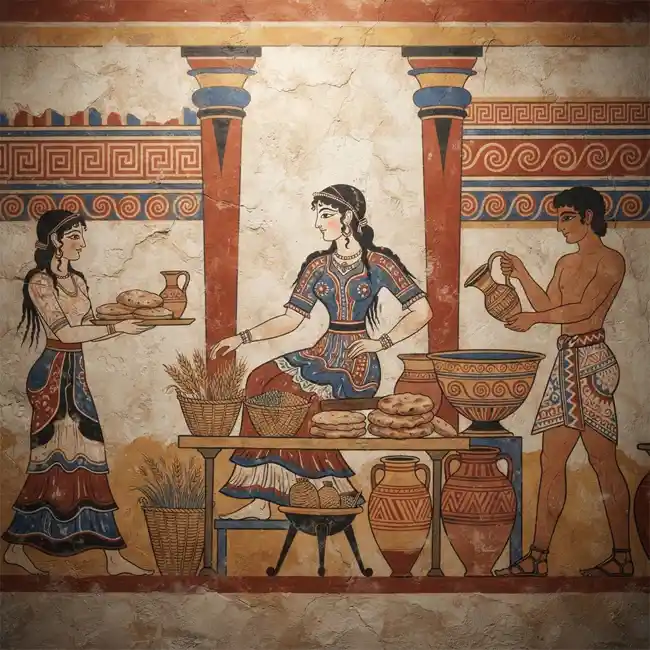
🗿📜 The Storyteller’s Intro: 5,000 Years of Ancestral Flavors
Imagine walking into a kitchen that is older than the Trojan War, older than the Olympics, older than writing as we know it in Europe. That is the world of the Mycenaeans.
When we talk about Mycenaean Greek civilization, we are talking about the first truly grand civilization on mainland Greece, the one that made Homer’s epics possible. But the story of their food goes back even further than their palaces.
Here is how the timeline breaks down, so you can really taste the history:
✦ The Neolithic Foundation (c. 7000 - 3200 BCE): This is where it all starts. Long before palaces, early farming communities in Thessaly and the Peloponnese were domesticating the ancestors of our modern grains. They were growing einkorn and emmer wheat, not for fluffy loaves, but for survival porridge and rough flatbreads cooked on hot stones.
✦ The Early & Middle Bronze Age (c. 3200 - 1600 BCE): Think of this as the training ground. Communities get bigger, trade with Minoan Crete explodes, and they learn to store grain in massive pithos jars. Olive cultivation begins to spread. The diet is still simple but more organized.
✦ The Mycenaean Palatial Peak (c. 1600 - 1100 BCE): This is our golden age. This is the era of King Agamemnon, of massive citadels like Mycenae, Tiryns, and Pylos. Food is no longer just survival. It is power, religion, and economy. Linear B tablets, the earliest form of Greek writing, do not record myths - they record grain rations, olive oil shipments, and how many figs are owed to the palace. This is the period we are focusing on for Primitive Grains & Flatbreads.
✦ The Post-Palatial Legacy (c. 1100 BCE onwards): The palaces burn and fall, but the people and their grains remain. Their baking techniques survive in the mountains and islands, becoming the root of what we now call classic ancient Greek food.
So when we say 5,000 years, we are not exaggerating. We are tracing a continuous line from the first wild grain crushed between two stones to the organized, almost industrial bakeries of the Mycenaean palaces.
What made their approach to grains so special? It was primitive in the best way possible - pure, smoky, earthy, and deeply connected to the land.
🌾 Why Grains Were Everything in Mycenae
• Grains were the original currency. A worker in the Palace of Nestor at Pylos was not paid in coins, he was paid in measured units of wheat and figs.
• They were sacred. The first portion of barley, called oulai, was always offered to the gods before any meal or sacrifice. No meal started without it.
• They were communal. The huge circular hearths, called eschara, in the center of every megaron (the great hall) were not just for heating. They were where flatbreads were baked for the whole household.
• Storage was survival. Every palace had vast magazines filled with huge jars of barley and wheat. To control grain was to control the kingdom.
📜 Iconic Excavated Menus: Unearthed From Linear B and Ashes
This is where it gets exciting. We are not guessing. Archaeologists have literally found charred bread, clay tablets listing menus, and grinding stones still stained with flour. Here are the most famous, documented Mycenaean grain-based foods that historians and archaeologists have agreed on:
✦ Maza - The Original Barley Flatbread: If there is one Mycenaean staple, this is it. Maza was not a fluffy loaf. It was a dense, unleavened or lightly leavened flatbread made from roasted barley meal (alphita). Workers, soldiers, and even kings ate it daily. It was often crumbled into broth or rubbed with olive oil. Linear B tablets from Pylos mention it as a standard ration.
✦ Artos - The Festive Wheat Bread: While barley was for every day, artos made from emmer or einkorn wheat was more prestigious. It was softer, rounder, and often reserved for feasts, religious offerings, and the wanax (the king). We have found molds for it at Mycenae.
✦ Pelos - The Ancient Porridge: Before bread, there was porridge. This was a thick, slow-cooked gruel of cracked barley or emmer, boiled with water, a little olive oil, and sometimes dried figs. Think of it as the Bronze Age power breakfast that fueled the builders of the Lion Gate.
✦ Plakous - The Honey and Cheese Flat Cake: This is the luxury item. A flat cake made from a mix of wheat and barley flour, layered or mixed with fresh goat cheese, honey, and dried fruits. It was not an everyday snack. It appears on tablets listing offerings for goddesses.
✦ Kribanos - The Hearth-Baked Barley Cake: A slightly leavened cake baked directly in the ashes of the central hearth. Excavations at Tiryns found evidence of these ash-cakes, slightly smoky, with a hard crust and a dense crumb. Often studded with toasted sesame or wild fennel seeds.
✦ Phyteuma - The Sprouted Grain Bread: An incredibly advanced technique for the time. Mycenaeans would sprout barley grains, then crush and form them into a sweet, slightly tangy flatbread. The sprouting made it more nutritious and easier to digest. This is ancient bio-hacking at its finest.
✦ Etne - The Lentil-Barley Stew Bread: Not exactly a bread, not exactly a stew. A thick pottage where barley groats were cooked with lentils, bitter vetch, and wild greens until it was solid enough to be eaten by hand or sliced. The ultimate one-pot palace worker’s meal.
🏺 What We Found in the Kitchens
• Saddle querns and grinding stones, worn smooth by generations of women grinding grain.
• Charred remains of flatbreads in the House of the Oil Merchant at Mycenae, still showing finger marks.
• Linear B tablets (like the PY An series from Pylos) that literally say: "To the 20 rowers, 60 units of barley, 20 units of figs."
• Large clay baking trays called pans with soot on the bottom, used for baking maza directly over coals.
🗺️ Mycenaean Table & Travel: Living, Eating, and Exploring the Peloponnese Today
If you want to understand Mycenaean food, you have to understand where it was eaten. This was not a culture of lush river valleys. It was a culture of rugged mountains, rocky coasts, and brilliant sunlight.
How did they live and eat?
• The Palace-Centric Diet: 90% of the population lived in small villages around the citadel, but the palace controlled everything. They brought their grain to the palace mills to be ground. In return, they received oil, wine rations, and protection. The communal oven was the heart of village life.
• Seasonal and Hyper-Local: In summer, fresh figs, wild greens (horta), and barley bread. In winter, stored emmer, dried lentils, olives, and preserved flatbreads softened in broth. Nothing was imported unless it was a luxury like honey from the mountains of Arcadia.
• The Sacred Hearth: The megaron hearth was never allowed to go out. The lady of the house would cover the embers at night. That same fire baked the morning bread. Food and home were the same word.
🧭 Where to Travel to Taste the Legacy Today
If this story makes you hungry for history, these places still echo with those flavors:
• Archaeological Site of Mycenae: Stand in the megaron of Agamemnon and look at the central hearth circle. You can literally see where the bread was baked 3,400 years ago.
• Palace of Nestor in Pylos: The best-preserved palace. Their storerooms still have the giant pithoi jars in place. The museum next door displays actual Linear B tablets listing food rations.
• Nafplio and the Argolic Plain: This is the breadbasket that fed Mycenae. Today, local bakeries still make bobota, a dense corn and barley flatbread that is a direct descendant of maza.
• The Mani Peninsula Villages: Go to the mountain villages where women still bake flatbreads on a stone slab called a plaka, just like Mycenaean women did.
🚣 Aegean Currents & Mountain Springs: The Waterways That Fed a Civilization
The Mycenaeans were not a river civilization like the Egyptians, but water was still their lifeline. They were masters of managing scarce water to grow their precious grains.
• The Aegean Sea as a Highway: The Aegean was not a barrier, it was a road. Minoan grain-ships brought new varieties of wheat from Crete. Mycenaean ships exported their surplus olive oil and grain to Troy and Egypt. The sea salt also preserved their flatbreads for long voyages.
• The Rivers of the Argolid: Rivers like the Inachos and Erasinos were not mighty, but they were seasonal miracles. Their floodplains were the only places flat and fertile enough for large-scale barley cultivation. The Mycenaeans built dams and channels to direct this water.
• Cisterns and Wells: At Tiryns, they built massive underground cisterns to collect rainwater. Without them, no grain could be ground, no bread could be baked during the dry summer. Archaeologists found grinding installations right next to these cisterns.
• Mountain Springs: Every village was built near a sacred spring. The spring of Perseia at Mycenae still flows today. The water was not just for drinking, it was used to soak bitter vetch and acorns to make them edible for mixing into breads during lean years.
🛎️❓ Ancient Civilization FAQ: Unlocking Palace Kitchen Mysteries
Q1: Did Mycenaeans use yeast? Was their bread sour?
Yes, but not how we do it today. They did not have commercial yeast. They used a wild sourdough starter, called prozymi in later Greek. They would save a piece of old dough, let wild yeasts from the air ferment it, and mix it into the new batch. So their wheat breads like artos had a mild, pleasant tang, while the daily maza barley bread was usually unleavened and much denser. You can still smell this in traditional Greek village bakeries.
Q2: What is the difference between Mycenaean and Minoan bread?
Great question! Both are Bronze Age, but very different. Minoan bread from Crete was more diverse and luxurious - they used more wheat, more olive oil, and added more honey and herbs. They had actual enclosed ovens. Mycenaean bread was more rugged, military, and practical. It was barley-heavy, baked directly on hearths or in ashes, and designed for rationing and storage. Think Minoan = artisan bakery, Mycenaean = efficient army field kitchen.
Q3: Were Mycenaean flatbreads gluten-free?
Not at all. Einkorn, emmer, and barley all contain gluten, but it is a very different, more fragile gluten than modern bread wheat. Their long fermentation and sprouting techniques broke down a lot of that gluten, making it easier to digest. The bread was dense and did not rise high. People with modern wheat sensitivities often find ancient grains more tolerable, but it was definitely not gluten-free.
Q4: How do we actually KNOW these recipes? We have no cookbooks!
We have something even better: garbage and bureaucracy. 1) Charred food remains: archaeobotanists use microscopes to identify carbonized seeds and bread crumbs. 2) Linear B tablets: Mycenaean bureaucrats wrote down EVERYTHING. Tablets like PY Un 138 list ingredients for a religious banquet: barley, olives, honey, figs. 3) Pottery residue analysis: scientists scrape the inside of cooking pots and find lipids from olive oil and cheese. 4) Frescoes: wall paintings at Tiryns show people carrying trays of what look like flatbreads. No cookbook needed when the palace recorded it all.
🧠 Final Thoughts: The Timeless Allure of Antique Gastronomy
Mycenaean Greek primitive grains and flatbreads are not just old food. They are the first chapter of European comfort food.
There is something deeply moving about holding a piece of maza in your mind. It is smoky from the hearth, a little gritty from the stone grinding, rubbed with peppery, fresh-pressed olive oil, and maybe a smear of fig. It is the same taste a sentry on the walls of Mycenae had while watching for ships from Troy.
These recipes survived because they are honest. No complicated techniques, no rare spices from far away, just grain, fire, water, and time. In a world of superfoods and complex diets, the Mycenaeans remind us that the most powerful food is often the simplest.
This is just the beginning, the appetizer, if you will. In our next full article, we will go hands-on: how to recreate authentic Maza, Pelos, and Plakous in your own modern kitchen using einkorn and barley flour, with no modern shortcuts.
Stay tuned. The palace ovens are just heating up.
⛪ Credit to the Keepers of the Culture (The Legacy)
This deep dive would not be possible without the tireless work of those who guard our shared past.
• Deep Respect to the Hellenic Ministry of Culture and Sports and the archaeologists at the Archaeological Sites of Mycenae and Pylos for preserving these citadels and making their findings accessible.
• Honor to the Linear B Scholars: To the legacy of Michael Ventris and John Chadwick who deciphered Linear B, and to modern epigraphers like Cynthia Shelmerdine and John Bennet, whose translations of food ration tablets let us literally read the Mycenaean menu.
• Gratitude to the Archaeobotanists: To teams from the American School of Classical Studies at Athens who painstakingly analyze charred seeds and crumbs, turning ash into recipes.
• Tribute to the Local Keepers: To the village bakers of the Argolid and Arcadia, who never stopped baking on a stone slab, keeping a 5,000-year-old technique alive not in a museum, but in their daily lives.
Their work ensures these Lost Ancient Recipes are not lost forever.
🏛️🌾 The Bronze Age Bread That Fueled Mycenaean Kings
👉 Discover Mycenaean Greek: Primitive Grains & Flatbreads
| 🌐 🏛️🌾 < Back | Next > 🍖 🏟️ |