
🏠 Home > 🗺️ Recipes > 🏛️🌾 Primitive Grains & Flatbreads > 🏝️ Kingdom of Kerma: Primitive Grains & Flatbreads Recipes
🏝️ 🏛️🌾 Kingdom of Kerma: Primitive Grains & Flatbreads Recipes
Published by Supakorn | Updated: October 2026
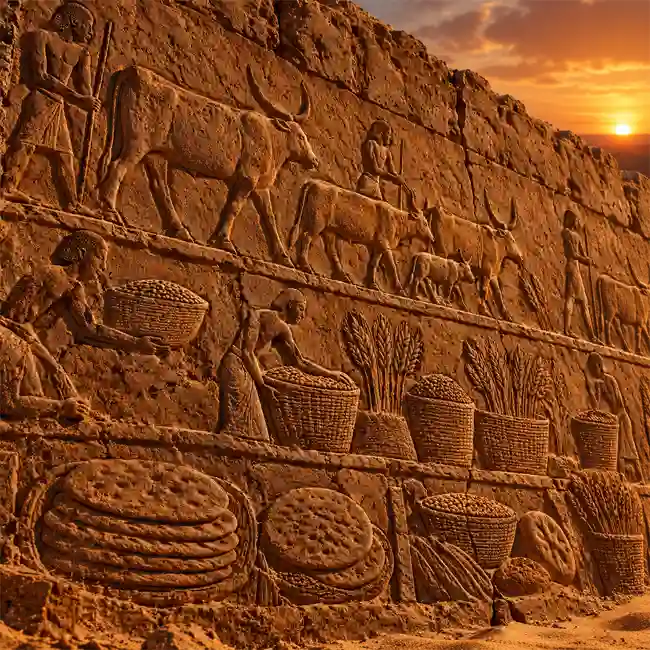
Hey there, fellow food history explorer! Grab a comfortable seat and let’s take an incredible trip back in time together. Have you ever wondered what people were baking, hearth-cooking, and breaking bread over five millennia ago? While most people instantly picture the massive pyramids of Egypt when thinking about ancient Africa, there was another absolute powerhouse thriving right along the fertile banks of the Nile—the legendary Kingdom of Kerma.
Located in present-day northern Sudan, Kerma was one of the earliest urban civilizations in Africa, flouring around 2500 BCE to 1500 BCE. Long before modern cookbooks or digital recipe blogs existed, the people of Kerma were master agriculturalists, skilled artisans, and passionate bakers who transformed rustic, stone-ground grains into nutrient-dense flatbreads and rich, hearty grain porridges. In this article, we’re going to step into their shoes, explore how they lived and ate, check out the iconic dishes uncovered by archaeologists, and discover how you can still feel their culinary spirit today when visiting these ancient Nile regions.
👑📜 The Storyteller’s Intro: 5,000 Years of Ancestral Flavors
To really appreciate the food of Kerma, we have to travel back roughly 5,000 years to around 3000 BCE to 2500 BCE, when the seeds of this incredible Nubian culture were first planted along the Middle Nile. Kerma didn’t just pop up overnight; it evolved through distinct archaeological eras that shaped how people farmed, cooked, and gathered together.
🌾 Early Kerma Period (c. 2500 BCE – 2050 BCE)
• This was the era of foundational settlement, where semi-nomadic pastoralists transitioned into settled farming communities.
• People relied heavily on wild harvest grains alongside early domesticated crops like emmer wheat and barley.
• Early cooking involved basic open-pit hearths, simple clay cooking pots, and coarse grinding stones made from granite or sandstone.
• Pastoral livestock like cattle, sheep, and goats played a massive role in their daily diet and cultural identity, supplying fresh milk, ghee, and curd.
🌾 Middle Kerma Period (c. 2050 BCE – 1750 BCE)
• Urban development exploded during this phase, transforming Kerma into a booming trade hub and powerful state.
• Agricultural techniques reached new heights as farmers mastered seasonal Nile inundation irrigation, creating lush fields of sorghum, emmer, and legumes.
• Baking techniques advanced significantly with dedicated mud-brick hearth ovens, domed clay bake-stones, and refined grinding tools.
• Social feasting became central to community life, with massive public banquets hosted by local elites and rulers.
🌾 Classic Kerma Period (c. 1750 BCE – 1500 BCE)
• The golden age of the Kingdom of Kerma, marked by grand architectural marvels like the monumental Western Deffufa.
• Food presentation became an art form, featuring exquisite black-topped red pottery bowls, elegant beak-spouted pitchers, and refined serving dishes.
• Culinary practices became highly organized, separating everyday household cooking from royal palace banquets and sacred temple offerings.
• Long-distance trade brought exotic spices, fragrant botanical herbs, and imported pottery styles from neighboring lands into Kerma’s vibrant kitchens.
📜 Iconic Excavated Menus: Kerma’s Archaeological Table
Archaeologists excavating the city of Kerma, its vast residential quarters, and sacred mortuary complexes have uncovered fascinating evidence of what was prepared in ancient kitchens. While exact written recipe books didn’t survive in the way later Greco-Roman texts did, ceramic residue analysis, plant micro-fossils, carbonized seeds, and animal bone fragments give us a vivid picture of these ancient dishes!
🥖 Ancient Breads & Grain Staples
◦ Deffufa Hearth Ember Flatbread: A rustic, unfermented coarse emmer wheat flatbread baked directly over hot acacia coals or heated ceramic tiles, featuring a smoky crust and dense, nutty center.
◦ Sun-Baked Nubian Sorghum Bread: A traditional flatbread made from coarse sorghum flour mixed with wild spring water and left to lightly ferment under the warm African sun before being seared on flat clay griddles.
◦ Sacred Funeral Barley Loaves: Specially shaped mini-loaves of coarse barley flour, often sweetened with wild palm fruit pulp and molded into symbolic shapes for ritual offerings in tombs.
◦ Kerma Crushed Grain & Wild Seed Porridge: A hearty morning staple cooked in thick earthenware pots, combining cracked emmer wheat, sprouted barley, wild grass seeds, and fresh livestock milk.
🍲 Stews, Legumes & Everyday Hearth Dishes
◦ Nile Delta Fava & Lentil Slow-Stew: A thick, savory pulse mash made from wild-harvested or cultivated legumes, seasoned with crushed desert seeds, wild onions, and rendered animal fat.
◦ Herbal Pastoral Curd & Grain Mash: A rich, comforting bowl of warm fermented goat milk curds blended with toasted cracked grain and aromatic desert herbs.
◦ Royal Roasted Meat & Marrow Stew: A high-status dish served during royal feasts, featuring tender cuts of roasted beef or goat simmered with cracked barley, bone marrow, and wild botanicals.
◦ Dried Nile Fish & Sorghum Mash: A nutritious, savory comfort food combining sun-dried Nile river fish, wild garlic, and coarse sorghum meal, eaten by workers and river traders along the banks.
🗺️ Everyday Life & Historical Gastronomy: Living by the Ancient Hearth
Life in ancient Kerma revolved around two main forces: the rhythmic rise and fall of the majestic Nile River and the deeply held tradition of community hospitality. Imagine waking up at sunrise in a sun-dried mud-brick home as the cool desert morning air begins to warm up.
🏡 Kitchen Setup & Household Cooking
◦ Kitchens were typically outdoor courtyards or semi-enclosed shade structures attached to mud-brick homes, keeping smoke away from living quarters.
◦ Every household featured a pair of saddle querns—heavy, concave stones used for grinding grain by hand using smaller oval rubbing stones.
◦ Women and family members spent hours each morning grinding emmer wheat, sorghum, and barley into fresh, coarse flour.
◦ Cooking vessels included hand-shaped clay pots, open-topped boiling jars, and heavy ceramic baking platters placed directly over pit fires fueled by acacia wood and dried river reeds.
🤝 Community Feasting & Cultural Beliefs
◦ Food was never just about fuel; it was deeply linked to spiritual beliefs, ancestor veneration, and communal bonding.
◦ Massive public feasts were hosted near the grand Western Deffufa temple during seasonal festivals, harvesting celebrations, and royal gatherings.
◦ Funeral ceremonies included elaborate banquets where hundreds of animals were prepared, and grain offerings were placed in beautiful black-topped ceramic vessels to nourish loved ones in the afterlife.
◦ Sharing flatbread and fresh milk with travelers was considered a sacred duty of hospitality, a cultural virtue that remains vibrant in Nubian culture to this day.
🚣 The Lifeline of the Empire: Culinary Secrets of the Middle Nile
You can’t talk about the Kingdom of Kerma without talking about the mighty River Nile! The geography of the Third Cataract region created an agricultural paradise surrounded by harsh desert terrain, making the river the absolute beating heart of the civilization.
🌾 The Nile’s Agricultural Powerhouse
◦ Annual summer floods deposited nutrient-dense dark silt across the floodplain, creating ultra-fertile soil that required minimal chemical intervention.
◦ Farmers cultivated emmer wheat, barley, sorghum, pulses, flax, and various garden herbs along the receding floodwaters.
◦ Storage silosis—large subterranean mud-brick granaries—were built across Kerma to store grain surpluses, protecting the Kingdom during years of low floods.
◦ River trade routes allowed Kerma to export surplus grain, livestock, gold, and timber to neighboring northern and southern regions in exchange for exotic goods.
🐟 River Harvesting & Culinary Uses
◦ The Nile provided a constant supply of rich freshwater fish, including giant Nile perch, tilapia, and catfish.
◦ Fish were caught using bone hooks, woven reed nets, and harpoons, then split open, salted, and sun-dried on riverbanks for long-term storage.
◦ Sun-dried fish was pounded into savory meal bases or simmered into rich broth-based stews to flavor simple grain flatbreads and porridges.
◦ Wild river birds like ducks, geese, and cranes were hunted along the marshy banks and roasted over open hearth fires during festive occasions.
🏜️ Desert Oasis & Trade Route Gastronomy: Flavors from the Saharan Trails
Beyond the green, fertile ribbon of the Nile, Kerma was surrounded by vast desert expanses and key trade corridors linking Central Africa, the Red Sea coast, and Egypt. Life on the desert edge required ingenuity, long-lasting shelf-stable foods, and clever preservation techniques.
🐫 Oasis Agriculture & Foraged Delights
◦ Oases scattered throughout the western desert provided vital stopovers for caravans, offering freshwater springs and shade.
◦ Date palms flourished around these oases, providing sweet date fruit eaten fresh, dried into chewy traveling snacks, or crushed to sweeten grain porridges.
◦ Wild desert plants like desert gourds, acacia seeds, wild melons, and aromatic herbs were gathered by pastoralists to supplement cultivated farm crops.
◦ Ziziphus berries (jujubes) were harvested, dried, and ground into sweet flour to enrich flatbread doughs or brew non-alcoholic herbal infusions.
🎒 Caravan Provisions & Preservation Secrets
◦ Travelers and traders navigating long desert routes carried ultra-durable survival foods that wouldn't spoil under the blazing sun.
◦ Twice-baked flatbreads—hardened, moisture-free crispbreads—were packed in woven palm-frond bags and rehydrated in water or milk during long journeys.
◦ Sun-dried strips of seasoned meat (the ancient ancestor of modern African jerky) provided concentrated protein for trail wanderers.
◦ Clarified butter (ghee) stored in sealed earthenware pots kept fats fresh without spoiling, serving as an energy-dense ingredient for trail cooking.
🕌❓ Ancient Civilization FAQ: Unlocking Palace Kitchen Mysteries
Q1:What made Kerma’s flatbreads different from ancient Egyptian breads?
While ancient Egyptians relied heavily on emmer wheat yeast breads baked in tall ceramic cones, Kerma bakers frequently utilized coarse sorghum, barley, and emmer baked on open flat clay griddles or hearth embers. This resulted in denser, nuttier, thin flatbreads similar to traditional African kisra or rustic griddle cakes, prioritizing portable durability and rich hearth flavors over high rising yeast textures.
Q2:How do archaeologists know what people in Kerma ate 5,000 years ago if there were no written recipes?
Archaeological science uses incredible tools! Researchers examine residue trapped inside unglazed pottery pores, analyze carbonized plant seeds found in ancient hearths and storage pits, study microscopic phytoliths (plant silica structures) on grinding stones, and analyze stable isotopes in human and animal bones. These clues allow scientists to rebuild the exact dietary profile of Kerma's inhabitants with amazing precision.
Q3:Did ancient Kerma cooks use spices and seasonings in their flatbreads and stews?
Absolutely! While modern imported spices like black pepper didn't exist in ancient Sudan, cooks used local wild botanicals like coriander, coriander-like desert seeds, wild cumin, fenugreek, wild garlic, mustard seeds, and salt gathered from dry salt flats. They also infused doughs with sweet dates, wild palm syrup, and aromatic herbs to create complex sweet and savory flavor profiles.
Q4:What type of pottery did Kerma bakers use for preparing and serving meals?
Kerma is famous for its world-class "Black-Topped Red Ware"—ultra-thin, hand-burnished pottery with a glossy red body and a metallic black rim. Cooks used sturdy, thick-walled unglazed jars for cooking stews and fermenting dough, while elegant, thin-walled burnished bowls and beak-spouted jugs were used exclusively for serving food, broths, and fresh milk at family meals and ceremonial banquets.
🧠 Final Thoughts: The Timeless Allure of Antique Gastronomy
Exploring the culinary heritage of the Kingdom of Kerma reminds us that food has always been humanity’s greatest connector. Five thousand years ago, along the banks of the sunny Nile, families gathered around warm clay hearths, shared stories, and broke freshly baked flatbreads made from primitive grains that nourished a whole empire.
The simplicity, sustainability, and rich wholesome flavors of Kerma's ancient kitchen offer incredible inspiration for modern home cooks seeking wholesome, ancient grain recipes. Keep your culinary curiosity sparked, stay tuned for upcoming articles where we'll explore step-by-step cooking instructions to replicate these historical flatbreads in your own modern kitchen, and keep exploring the incredible edible secrets of our ancient world!
🏛️ Credit to the Keepers of the Culture (The Legacy)
Swiss Archaeological Mission to Sudan (Kerma): Decades of tireless excavation work led by pioneering archaeologist Charles Bonnet and his dedicated team at the site of Kerma and Doukki Gel, bringing Nubian history to light.
The Kerma Museum & National Corporation for Antiquities and Museums (NCAM), Sudan: Preservation guardians who safeguard the physical artifacts, pottery, granaries, and monumental ruins of the Kingdom of Kerma for global education.
International Society for Nubian Studies: Scholars, historians, and archaeobotanists worldwide whose research into ancient Nile valley agriculture, seed analysis, and pottery analysis makes understanding ancient foodways possible.
Modern Nubian Communities of Northern Sudan: The living custodians of Nile valley heritage, whose traditional cooking methods, flatbread baking techniques, and warm hospitality directly connect us to the ancient soul of Kerma.
🏛️🌾 The 5,000-Year-Old Secret: Recreating Nubia’s Lost Kerma Stone-Baked Sorghum Bread
👉 Discover Kingdom of Kerma's Primitive Grains & Flatbreads
| 🌐 🏛️🌾 < Back | Next > 🍖 🏝️ |