
🏠 Home > 🗺️ Recipes > 👑🍝 Imperial Mains (Main Dishes) > 🇹🇭 Thai Imperial Mains (Main Dishes) Recipes
🇹🇭 👑🍝 Thai Imperial Mains (Main Dishes) Recipes
Published by Supakorn | Updated: July 2026
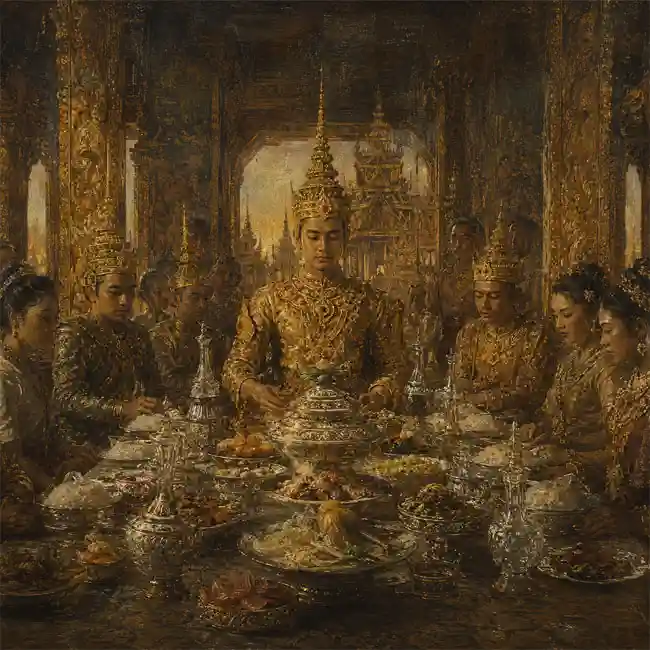
🇹🇭 👑📜 The Storyteller's Intro: Unlocking the Palace Kitchens Hidden Behind Golden Walls
For centuries, the world's fascination with Thai cuisine has revolved around vibrant street food, family kitchens, and regional specialties. Yet beyond bustling markets and floating villages lies another extraordinary culinary world—one once reserved exclusively for kings, queens, princes, noble families, and trusted palace officials. This remarkable collection is known today as Thai Imperial Mains, a refined tradition where every meal reflected not only taste but also hierarchy, diplomacy, artistry, and spiritual harmony.
Unlike common household meals, imperial main dishes were carefully crafted to impress foreign ambassadors, celebrate royal ceremonies, honor Buddhist traditions, and symbolize prosperity. Every ingredient was selected with precision, every garnish carried meaning, and every serving represented centuries of accumulated culinary wisdom.
The story of Thai imperial cuisine stretches across roughly 700 to nearly 1,000 years of history, evolving through multiple royal eras while continuously preserving older culinary knowledge.
👑 Early Kingdom Foundations (13th–14th Century)
The earliest foundations emerged during the Sukhothai Kingdom, where agriculture flourished along fertile river valleys. Rice became the sacred center of every royal meal, while freshwater fish, forest herbs, aromatic roots, and coconut slowly formed the framework of elite cuisine.
Royal cooks learned that elegance often came through balance rather than excess. Delicate seasoning, carefully managed textures, and graceful presentation became more important than overwhelming richness.
🏯 Ayutthaya's Golden Culinary Age (14th–18th Century)
During the Ayutthaya period, palace cuisine experienced remarkable expansion.
International trade connected Siam with Persia, India, China, Japan, Portugal, and many neighboring kingdoms. New spices, cooking techniques, vegetables, and aromatic ingredients entered palace kitchens without replacing native traditions.
Instead, royal chefs transformed foreign influences into distinctly Thai masterpieces.
Many famous palace dishes believed to be "traditional Thai food" today actually gained their sophisticated forms during this remarkable period.
The palace kitchens became highly organized institutions where specialist cooks handled curries, soups, stir-fries, steamed dishes, carved vegetables, ceremonial banquets, and festive royal feasts.
🌸 Rattanakosin Refinement (18th Century to Present)
Following the establishment of Bangkok, royal cuisine entered another era of refinement.
Recipes became carefully documented.
Cooking methods emphasized consistency.
Food carving evolved into an internationally admired art.
Balance between sweetness, saltiness, sourness, creaminess, fragrance, and gentle spice reached extraordinary sophistication.
Many palace recipes remained confidential, shared only among trusted royal households and highly respected culinary families.
These treasured traditions continue to inspire modern Thai fine dining today.
🍽️ Characteristics That Make Thai Imperial Main Dishes Truly Unique
Rather than relying on expensive ingredients alone, palace cuisine focused on harmony.
Some defining characteristics include:
• Carefully layered flavors rather than aggressive seasoning.
• Elegant presentation worthy of royal ceremonies.
• Seasonal ingredients selected at peak freshness.
• Handcrafted curry pastes prepared from scratch.
• Balanced nutrition according to traditional Thai wisdom.
• Beautiful vegetable and fruit carving.
• Slow cooking methods that develop delicate aromas.
• Respect for Buddhist ceremonial calendars.
• Gentle spice levels designed to complement rather than dominate.
• Meals served in thoughtfully planned sequences.
Every royal meal reflected patience.
Nothing was rushed.
Nothing was accidental.
Every bite represented discipline, craftsmanship, and cultural identity.
👑 Famous Royal Main Dishes Once Reserved for the Elite
While countless recipes remain closely guarded or exist only in old manuscripts and palace memories, several legendary names continue to represent Thailand's aristocratic culinary heritage.
Among the most admired are:
• Royal Massaman Curry
• Palace Green Curry
• Slow-Braised Beef Curry
• Royal Chicken in Coconut Cream
• Imperial Stuffed Crab Shell
• Palace Fish Wrapped in Banana Leaf
• Delicate Steamed Fish with Aromatic Herbs
• Royal Tamarind Duck
• Palace Coconut Crab Curry
• Lotus Stem Curry
• Fragrant Jasmine Rice Banquets
• Palace Shrimp Curry
• Royal Stuffed Bitter Melon
• Imperial Coconut Braised Chicken
• Noble Pork with Palm Sugar Glaze
• Palace River Prawn Curry
• Golden Egg Thread Garnished Mains
• Royal Vegetable Carving Platters
• Palace Herbal Braised Beef
• Ceremonial Banquet Rice Sets
Many of these dishes evolved continuously across generations, making each royal household's interpretation slightly different while preserving the same philosophical foundation.
🗺️ The Royal Culinary Tourism: Mapping Flavors to Historic Landscapes
Thailand offers one of Asia's richest opportunities for culinary tourism because its royal food traditions remain deeply connected to historic cities rather than existing solely inside museums.
Travelers interested in Thai Imperial Mains often begin in Bangkok, where grand palaces, historic temples, riverside communities, and traditional markets reveal the environments that shaped palace cuisine.
Historic Ayutthaya provides another essential destination.
Walking among ancient temple ruins allows visitors to imagine the magnificent royal banquets once prepared for kings, diplomats, and noble courts.
Old palace districts, riverfront communities, and archaeological sites help explain how waterways supplied ingredients daily.
Further north, Sukhothai introduces travelers to the earliest foundations of royal Thai cooking.
Its peaceful landscapes reveal how rice cultivation, freshwater fisheries, and herbal traditions first supported elite dining centuries before Bangkok became the capital.
Throughout Thailand, many heritage restaurants, culinary schools, museums, and cultural centers now preserve elements of palace cooking while respectfully adapting them for modern visitors.
Food tourism becomes far more meaningful when every meal is understood as part of a living historical landscape rather than simply another restaurant experience.
🚣 Cradle of Royal Delicacies: Rivers, Canals, and Coastal Kingdoms
Thailand's waterways served as the lifeblood of royal cuisine.
The Chao Phraya River connected fertile rice fields, fishing villages, floating markets, fruit orchards, and royal palaces.
Freshwater fish, giant river prawns, lotus stems, water vegetables, herbs, and fragrant flowers arrived daily by boat.
Canals surrounding the capital functioned as floating supply routes long before modern transportation existed.
Nearby coastal regions added premium seafood, coconut products, sea salt, shrimp paste, and rare shellfish to palace kitchens.
Royal cooks mastered techniques that enhanced natural sweetness without overwhelming delicate seafood flavors.
Many ceremonial dishes originated from these river-and-coastal ecosystems where abundance met sophisticated culinary craftsmanship.
Today, travelers exploring riverside heritage communities continue discovering the agricultural landscapes that nourished Thailand's royal tables for centuries.
⛰️ Kingdom of Wild Aromatics & Heritage: Forests, Mountains, and Hidden Ingredients
Although Thailand's royal kitchens stood inside magnificent palaces, many prized ingredients came from distant mountains and ancient forests.
Northern highlands contributed fragrant herbs, medicinal plants, mushrooms, forest vegetables, and aromatic spices.
Western forests supplied wild pepper, roots, edible flowers, and traditional healing ingredients.
Eastern regions added tropical fruits and fragrant citrus varieties that balanced rich curries.
Southern forests introduced rare herbs alongside coconut-rich ingredients that eventually became integrated into certain palace dishes.
Royal ingredient gatherers understood seasonal harvesting, sustainable collection, and botanical knowledge passed through generations.
These natural landscapes became silent partners in creating elegant imperial cuisine.
Modern heritage tourism increasingly celebrates these mountain communities where many traditional ingredients continue to be cultivated with remarkable respect for nature.
❓ Royal FAQ: Unlocking Palace Kitchen Mysteries
Q1.Why was royal Thai cuisine so different from ordinary village cooking?
Royal cuisine emphasized refinement, visual beauty, ingredient quality, ceremonial etiquette, and culinary precision. While village food focused on practicality, palace meals celebrated diplomacy, status, spirituality, and artistic excellence.
Q2.Were all palace recipes kept secret?
Not entirely.
Many techniques gradually spread through noble households and respected culinary families. However, some ceremonial recipes, preparation methods, ingredient proportions, and presentation styles remained closely guarded within palace circles for generations.
Q3.Why are royal dishes often less spicy than modern Thai food?
Imperial chefs aimed for balance rather than intensity.
Every ingredient needed space to express its own aroma and texture. Excessive heat would overshadow subtle flavors carefully developed through hours of preparation.
Q4.Can travelers still experience authentic royal cuisine today?
Yes.
Several heritage restaurants, cultural institutions, royal-inspired culinary schools, and historic dining experiences continue preserving palace traditions while adapting them respectfully for contemporary guests.
🧠 Final Thoughts: The Timeless Allure of Aristocratic Gastronomy
Thai Imperial Mains represent far more than luxurious recipes.
They preserve centuries of diplomacy, craftsmanship, agricultural wisdom, artistic presentation, Buddhist traditions, regional diversity, and cultural identity.
Behind every elegant curry, carefully carved garnish, fragrant rice dish, and ceremonial banquet lies an extraordinary story connecting rivers, forests, kingdoms, palaces, and generations of dedicated royal cooks.
For travelers, historians, chefs, and passionate food lovers alike, exploring Thailand's imperial culinary heritage offers one of Southeast Asia's richest cultural journeys.
This guide serves only as the gateway.
Each legendary royal main dish deserves its own dedicated story, historical background, culinary evolution, regional connection, and eventually its own carefully explained recipe.
In the coming chapters, we'll continue unlocking these remarkable palace secrets one masterpiece at a time.
👑 Credit to the Keepers of the Culture (The Legacy)
The enduring legacy of Thai Imperial Mains belongs first and foremost to the generations of royal cooks, palace attendants, noble households, farming communities, fishermen, gardeners, herbal specialists, temple kitchens, artisans, and cultural historians who preserved these traditions across centuries.
Their patience transformed ordinary ingredients into extraordinary works of culinary art.
Their discipline protected recipes through changing kingdoms, political transitions, and cultural exchange.
Today, museums, universities, heritage chefs, cultural organizations, and dedicated families continue honoring this priceless legacy by teaching younger generations the values behind the cuisine—not merely the recipes themselves.
As we celebrate Thai imperial gastronomy, we also pay deep respect to every known and unknown guardian who ensured that these magnificent culinary traditions continue inspiring the world.
The true secret of Thai royal cuisine has never been luxury alone.
It has always been respect—for nature, craftsmanship, history, harmony, and the timeless generosity of sharing food with dignity.
👑🍝 Discover the Hidden World of 500-Year Thai Imperial Main Dishes
👉 Discover Thai Secret Imperial Main Course
| 🌐 👑🍝 < Back | 🇹🇭 👑🥪 < Previous | Next > 🍨👑 🇹🇭 |