
🏠 Home > 🗺️ Recipes > 👑🍝 Imperial Mains (Main Dishes)
👑🍝 Imperial Mains (Main Dishes) Recipes from Around the World
Published by Supakorn | Updated: September 2026
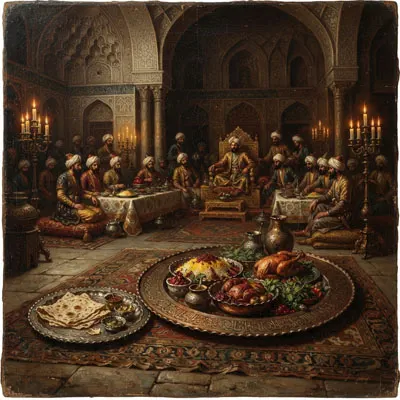
This is your codex to the secret main dishes of royal families and old nobility, aged 200 to 1,000 years. We’re not just talking food. We’re talking power, ritual, and legacy served on gold-rimmed plates. These Imperial Mains shaped empires, ended wars, and stayed locked in palace kitchens for centuries. Ready to peek behind the velvet curtain?
📜 The Storyteller’s Intro: 1,000 Years of Aristocratic Appetites
For a full millennium, what the elites ate was never just dinner. It was diplomacy, medicine, religion, and status all plated together. From 1025 to 2025, imperial mains were guarded like state secrets. Only court chefs, sworn to silence, knew the exact spice blends or cooking hours. Commoners got bread. Nobles got symbolism. Every bite told you who ruled, who prayed, and who paid. And honestly, some of these dishes still feel like they belong in a museum, not a menu.
🏛️ The Three Eras of Elite Gastronomy
• The Foundational Era 1025–1400: Monasteries and early courts set the rules. Food was tied to divine right. Think slow-roasted game, preserved fruits, and grain pottages made noble with saffron or gold leaf. Meals were timed with prayer and seasons. Waste was treason.
• The Opulent Era 1400–1800: Exploration brought pepper, nutmeg, and chocolate to royal tables. Kitchens became theaters. French courts invented service à la française, where 40 dishes hit the table at once. Ottoman sultans had 1,000+ staff just for main courses.
• The Refined Era 1800–2025: Empires modernized, but kept the secrets. Escoffier coded French haute cuisine. Qing dynasty “Manchu Han Imperial Feast” listed 108 main dishes. Colonization mixed techniques, but palace recipes stayed family-locked. Today, descendants still whisper them.
👑 The Secret Culinary Rituals of the Nobles
Noble dining wasn’t casual. It was performance. Main dishes arrived with fanfare, carvers, and tasters. In Japan, shogun meals used honzen-ryōri trays: exact placement meant respect. In Persia, khoresht stews were simmered 12 hours because a rushed meal insulted guests. European royalty had “Grand Couverts” where thousands watched them eat. Why? Because seeing the king eat proved he was alive, healthy, and rich. Ingredients were also code. Peacock meant immortality. River fish meant purity. And recipes? Often written in cipher. One wrong herb and you weren’t just a bad cook, you were a traitor.
🗺️ The Sovereign Flavor Map: Deep Dive into 6 Continents
We’ve traced the imperial mains across six continents. No tourist dishes here. These are the ones whispered about in old castles and ancestral halls.
🛕 The Forbidden Flavors of Asia
Asia’s royal kitchens mastered balance and longevity. Chinese emperors had Imperial Bird’s Nest Braised Abalone, served only during lunar coronations. The broth took 3 days and 9 “clearings” to reach mirror clarity. In India, Mughal Neheri Gosht was a midnight main for warriors and kings, marrow-rich and spiked with 21 ground spices no common market carried. Korea’s Joseon dynasty guarded Tteokgalbi for the Crown Prince, minced rib patties grilled over pine, glazed with soy aged in royal jars. Thailand’s Ayutthaya nobles ate Matsaman Nuea Chao Wang, a palace beef curry so fragrant that recipe books left out two key roots to protect it. The theme? Time, secrecy, and ingredients that cost a village.
🏺 The Sun-Drenched Heritage of Africa
African nobility drew power from the land. Ethiopia’s Solomonic dynasty served Doro Wot of the Negus, a chicken stew darkened with clarified butter and berbere aged in clay for years. Only the emperor’s wot bet chef knew the ratio. In Mali, Songhai kings feasted on Imperial Mafe, but theirs used smoked river giant perch and wild desert truffles, not peanuts alone. Egypt’s Muhammad Ali dynasty had Fattah Malaki, layers of rice and meat showered with vinegar and ghee, crowned tables after military wins. Moroccan Mrouzia of the Saadian Court used ras el hanout with 40 spices and honey preserved since the last eclipse. These mains were earthy, ancestral, and cooked in vessels passed down 30 generations.
🏰 The Imperial Banquets of Europe
Europe turned dinner into empire branding. The Habsburgs’ Kaiser Tafelspitz wasn’t just boiled beef. It was veal from milk-fed calves, poached in vegetable gold stock, sliced only by the Trancheur Imperial. Russia’s Romanovs hid Sturgeon Pozharskaya of the Winter Palace, minced fish cutlets with frozen butter cores, so they’d “weep” when cut. France’s Louis XIV demanded Oille Royale, a main-course soup-stew of 7 meats and 7 roots, symbolizing the days of creation. In Ottoman courts, Hünkâr Beğendi meant “the Sultan liked it” — smoked eggplant puree under slow-stewed lamb, a dish born from a French chef’s visit. The rule? If it didn’t glitter, shine, or require 10 staff, it wasn’t main-worthy.
🦅 The Grand Dynasties of North America
Before “America,” there were confederacies and kingdoms. The Mississippian elite at Cahokia served Great Sun Stew, bison and hominy cooked in massive clay urns buried with hot stones for 2 days. Aztec nobility, which stretched into the continent, reserved Totolin Patzcalmollo for emperors — turkey in complex mole with cacao and hoja santa, requiring 3 days of grinding. In the Pacific Northwest, potlatch chiefs presented Tyee Salmon of the Lineage, pit-roasted on cedar with seal oil and mountain huckleberry. Later, the Gilded Age “aristocrats” of New York created Diamondback Terrapin à la Maryland for Vanderbilt dinners, stewed with cream and Madeira-reduction so thick it coated the spoon. We’re skipping the wine, but the richness stayed. North American imperial mains mix indigenous sovereignty with colonial excess.
🐆 The Lost Gold Kitchens of South America
The Andes and Amazon hid royal kitchens in clouds and jungles. Inca Qhapaq Ñan Pachamanca was a noble’s earth-oven: llama, guinea pig, and tubers cooked under hot stones with aromatic herbs, only for Sapa Inca and priests. Brazil’s imperial court after 1808 created Imperial Feijoada, but the palace version used suckling pig and black beans soaked in mountain spring water, not the street version. Mapuche Lonko Kofke was a chieftain’s bread-meat bake, where ostrich meat and pine nuts were sealed in dough and cooked in coals during war councils. Colombian noble houses in Cartagena served Posta Negra Cartagenera of the Viceroys, beef glazed in panela and burned spices until black as obsidian. These dishes were altitude, gold, and ritual.
🌊 The Tribal Nobility of Australia and Oceania
Oceania’s “nobility” was hereditary chieftains and high families. Hawaiian Aliʻi Puaʻa Kalua wasn’t the luau pig you know. For royals, it was boar fed on taro and coconut for months, then steamed in underground imu with banana stumps for sweetness. Maori Rangatira Hangi elevated the earth oven with kūmara, muttonbird, and pikopiko fern shoots, reserved for chiefs’ hui. In Tonga, Sipi Puaka Tonga was a royal roast pork, marinated in chiefly coconut cream for 48 hours before fire. Australia’s early colonial governors mimicked Europe but indigenous elders held Bush Elder’s Kangaroo Tail Slow Soup, where the tail was jointed, smoked, and simmered with native pepperberry. The luxury here? Isolation. Ingredients you couldn’t ship, only inherit.
✋ Palace Kitchen Mysteries: Imperial Mains (Main Dishes) FAQ
Q1.Why were imperial main dishes kept secret for centuries?
Because recipes were political. A unique spice blend proved legitimacy. Leaking it meant another house could copy your “divine flavor” and challenge your status. Plus, some ingredients were medicine for the ruling family only.
Q2.Did royal families actually eat these complex dishes daily?
Not always. Many imperial mains were for ceremonies, victories, or holy days. Day-to-day, nobles ate simpler versions. But the “official” main dish had to be ready if a foreign envoy showed up.
Q3.What made a main dish ‘imperial’ instead of just ‘rich’?
Three things: origin story, restricted ingredients, and ritual. If the dish had a founding myth, used something like saffron or bird’s nest, and required a specific serving ceremony, it graduated to imperial.
Q4.Are any of these secret recipes still cooked today?
Yes, but rarely. Some royal descendants and heritage hotels recreate them for state events. Others are held by cultural trusts. The full versions? You’d need to marry into the family or spend years earning trust.
🧠 Final Thoughts: Bringing Regal Legacies to Your Table
These 1,000 years of imperial mains prove one thing: food was the original crown. Every continent hid flavors that defined who had power and who remembered. We’ve only cracked the door. No full recipes yet, just the stories, the secrets, and the names that make chefs shiver.
Want the actual step-by-step breakdowns? Click into each continent’s vault to unlock the full Imperial Mains recipe scrolls. Your kitchen’s about to feel a lot more... sovereign. Ready to cook like your ancestors were watching?
👑🌐 Asia Imperial Mains (Main Dishes)
👉 🇹🇭 👑🍝 Thai Imperial Mains Recipes
👉 🇱🇦 👑🍝 Lao Imperial Mains Recipes
👑🌐 Africa Imperial Mains (Main Dishes)
👉 🇬🇭 👑🍝 Ghanaian Imperial Mains Recipes
👉 🇬🇦 👑🍝 Gabonese Imperial Mains Recipes
👑🌐 Europe Imperial Mains (Main Dishes)
👉 🇦🇱 👑🍝 Albanian Imperial Mains Recipes
👉 🇦🇩 👑🍝 Andorran Imperial Mains Recipes
👑🌐 North America Imperial Mains (Main Dishes)
👉 🇺🇸 👑🍝 American Imperial Mains Recipes
👉 🇲🇽 👑🍝 Mexican Imperial Mains Recipes
👑🌐 South America Imperial Mains (Main Dishes)
👉 🇧🇷 👑🍝 Brazilian Imperial Mains Recipes
👉 🇬🇾 👑🍝 Guyanese Imperial Mains Recipes
👑🌐 Australia and Oceania Imperial Mains (Main Dishes)
👉 🇦🇺 👑🍝 Australian Imperial Mains Recipes
👉 🇳🇿 👑🍝 New Zealander Imperial Mains Recipes
| 🏠 < Back | 🌐 👑🥪 < Back | Next > 🍨👑 🌐 |
| Next > 🌐 Recipes | Next > 👑 Royal Recipes | Next > 🏛️ Ancient Recipes |
| Next > 🧊 Prehistoric Recipes | Next > 🔥 Lower Paleolithic Recipes |