
🏠 Home > 🗺️ Recipes > 👑🥪 Royal Starters (Appetizers) > 🇹🇭 Thai Royal Starters (Appetizers) Recipes
🇹🇭 👑🥪 Thai Royal Starters (Appetizers) Recipes
Published by Supakorn | Updated: July 2026
🇹🇭 👑📜 The Storyteller’s Intro: Whispers From the Golden Tray
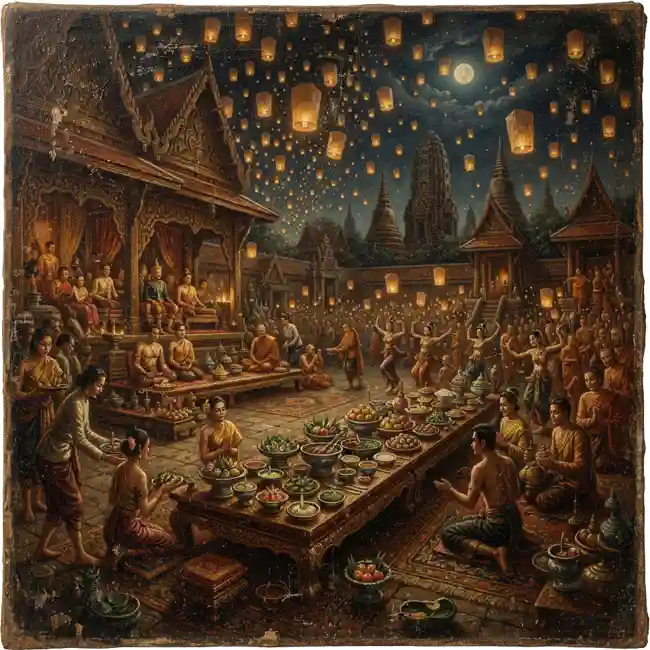
You ever wonder what it was like to eat like a king in Siam before street food took over the world? We’re talking real royal bites. Not the pad thai you get at night markets, but the delicate, secret starters served on mother-of-pearl spoons to nobles and courtiers over the last 200 to 1,000 years.
Thai royal cuisine didn’t happen in one era. It evolved through 4 distinct chapters of aristocratic gastronomy:
1. Dvaravati–Lavo Period (6th–13th century): 1,000+ years ago. Mon-influenced court food from the central plains. Think fermented fish condiments, wild herbs, and river delicacies presented as offerings. Eating was tied to Buddhist merit and agrarian cycles. Nobles ate communally but with strict hierarchy — elders and monks first, then family.
2. Sukhothai Kingdom (13th–15th century): 700–800 years ago. The first “Thai” royal identity. Simple, elegant, and deeply tied to rice culture. Appetizers were seasonal — green mango with sweet fish sauce, grilled river prawns wrapped in wild betel leaves. Meals were low tables, floor cushions, and fingers only.
3. Ayutthaya Period (1351–1767): 250–650 years ago. This is where it gets lavish. Persian, Portuguese, and Chinese traders brought new spices, techniques, and ingredients to the palace. The royal kitchen became a lab for “fusion” before that was even a word. Starters turned into edible art: carved fruits, gilded dumplings, and intricate miang bites. Nobles dined to music, poetry, and candlelight.
4. Rattanakosin Era (1782–present): 200+ years ago to today. Bangkok’s Grand Palace refined everything. Recipes were codified by royal consorts and ladies-in-waiting. This era gave us the most documented “secret” starters — dishes with names that hint at poetry, flowers, and court rituals. The culture? Every bite had meaning. Temperature, color, and order of dishes were tied to balance of elements in the body.
Old-school nobles didn’t “snack.” They opened the palate. Royal starters were called khrueang wang — palace items — meant to wake up your senses, aid digestion, and show status. No forks stabbing aggressively. Everything was bite-sized, fragrant, and eaten with intention. You’d be served on nielloware or celadon, with finger bowls scented by jasmine water.
🗺️ The Royal Culinary Tourism: Mapping Flavors to Historic Landscapes
Eating royal starters isn’t just about taste. It’s time travel. Each bite maps to a place, a river, a palace, a vanished kingdom. This is culinary tourism for people who want stories with their spice.
The palace kitchens never sourced randomly. Ingredients were tributes from vassal states. A starter in Ayutthaya might feature peppercorns from Chanthaburi, coconut from Samut Songkhram, and wild honey from Kanchanaburi. When you follow the food, you walk the old trade routes.
Royal food tourism today looks like this: You visit the ruins of Wiang Kum Kam near Chiang Mai and imagine nobles eating miang kum under teak pavilions. You cruise the Chao Phraya at sunset past the Grand Palace and realize those thong yip and chor muang dumplings were made in those very kitchens. You hike to Phetchabun and taste wild tea leaves that were once wrapped into palace miang for traveling royals.
It’s not about restaurants. It’s about landscapes. The flavor map of Siamese nobility is still there if you know where to look.
🚣 Cradle of Royal Delicacies - The Chao Phraya Basin & Gulf Coast
If Ayutthaya was the heart of the kingdom, the Chao Phraya River was its artery. And the royal starters born here? They’re all about abundance, refinement, and water.
• Ma Hor — “Galloping Horses.” A poetic name for a powerhouse bite. Think tangerine or pineapple segments topped with minced pork, peanuts, and a peppery glaze. Born in Ayutthaya palace kitchens as a way to use citrus from royal orchards. Today, you can trace it by visiting Bang Pa-In Palace and the orchard communities along the river in Ayutthaya. Local guides call it the “citrus route.”
• Chor Muang — “Purple Flower Dumplings.” Steamed dumplings tinted with butterfly pea, shaped like flowers, filled with seasoned chicken. These were pleated by the hands of ladies-in-waiting. The technique is so delicate it was a courtship skill. Find its legacy in Phetchaburi, a city known as the “living Ayutthaya” for its preserved food culture.
• Miang Kham Chao Wang — “Royal Leaf-Wrapped Delicacy.” Unlike the street version, the palace miang uses rare leaves like chaphlu or lotus petals, with fillings of dried shrimp, toasted coconut, and a secret tamarind sauce. Origin: the floating kitchens that followed kings on royal barge processions. Travel tip: Do a barge museum tour in Bangkok, then head to Samut Sakhon to see where the coastal ingredients were harvested.
Travel keywords to pin: Ayutthaya Historical Park food tour, Bang Pa-In Summer Palace cuisine, Samut Songkhram heritage orchards, Phetchaburi dessert and appetizer trail.
🏔️ Kingdom of Wild Aromatics & Heritage - Northern Mountains & Forest Realms
Go north to Lanna and Isan’s uplands, and royal starters get wilder, smokier, and more herbal. These were the tributes from forest vassals — dishes designed to travel and to impress.
• Miang Tao — “Forest Vine Wrap.” A Lanna noble secret. Fermented tea leaves, wild ginger, and river fish roe wrapped in medicinal vines. Served to visiting dignitaries as a sign of purity and land connection. You can still explore this in the hills of Chiang Rai and Nan, where tea-forest villages keep the tradition alive. The “Lanna Tea Heritage Route” is a real thing now.
• Saa Goong Jao Phraya — “River Prawn Salad of the Lords.” Not your average spicy salad. This one uses giant river prawns from the Ping River, tossed with smoked chili, wild lime zest, and young galangal. It was chilled on stone slabs before serving. Track it by visiting the Ping River communities near Chiang Mai and the old Wiang Kum Kam ruins.
• Khao Tang Na Tang Luang — “Royal Crispy Rice with Court Dip.” Rice crusts fried in rendered pork fat, paired with a relish of minced pork, crab fat, and peanut. Northern in origin but perfected in Bangkok’s palace. The dip recipe was guarded by the “room of savory scents” in the inner court. For food tourism, hit Lampang and its ceramic-bowl villages — the same bowls were used to serve this dish 150 years ago.
Travel keywords to pin: Lanna culinary heritage trail, Nan royal cuisine villages, Chiang Rai tea forest tours, Ping River food history cruise.
👋 Royal FAQ: Unlocking Palace Kitchen Mysteries
Q1. Why were Thai royal starters always bite-sized and never shared from a central plate?
In the inner court, status and hygiene were everything. Bite-sized meant no double-dipping and no mess on royal silk. Each piece was crafted so a noble could eat it in one motion, without talking or chewing awkwardly. It was also about control — the palace chef dictated the exact flavor journey, one perfect bite at a time. Sharing from a common dish was for the outside world, not the throne hall.
Q2. What made a starter “royal” versus something commoners ate?
Three things: ingredients, labor, and symbolism. Royals had access to tribute goods — rare sugars, imported spices, first-harvest fruits. Labor? Some dishes took 6 hours for one tray. Chor muang flowers were pleated one by one. And symbolism: colors had meaning. Purple for royalty, gold for divinity, green for renewal. If your starter didn’t tell a story or balance the body’s elements, it wasn’t palace-worthy.
Q3. Did royal Thai cuisine really go back 1,000 years, or is that just legend?
It’s both. The Thai state isn’t 1,000 years old, but the court cultures it inherited are. Dvaravati and Lavo kingdoms were on this land before “Thailand.” Their food rituals — fermented dips, wrapped bites, fruit carving — got absorbed into Sukhothai and Ayutthaya kitchens. So when we say “1,000 years,” we mean the culinary DNA. The techniques and philosophies are that old, even if the recipe names changed.
Q4. Were these secret recipes written down, or just passed by memory?
For centuries, it was all memory and apprenticeship. The inner court had “master ladies” who trained girls from age 9. Recipes were poems, not measurements. “Sweet like a mother’s lullaby, salty like the third tide.” Written cookbooks only appeared in the Rattanakosin era, and even then, many royal consorts burned their notes so secrets wouldn’t leave the palace. That’s why so many “secret” starters are being reconstructed today from oral histories.
🧠 Final Thoughts: The Timeless Allure of Aristocratic Gastronomy
Here’s the thing about Thai royal starters — they were never meant to fill you up. They were meant to wake you up. To history, to craft, to a way of eating where every leaf and every pleat mattered.
The allure isn’t just flavor. It’s the feeling that you’re tasting something guarded for centuries. A bite that kings debated politics over. A dumpling folded by someone who would never be named in a history book.
So pin this page. Bookmark the routes. Ayutthaya for river-born delicacies. Chiang Rai for tea-leaf secrets. Phetchaburi for floral dumplings. We’re just getting started. The full, single-recipe deep dives — with stories, not just steps — are coming next. If you’ve ever wanted to cook like a Siamese noble or plan a food trip that’s pure living history, you’ll want to be here when the palace doors open.
👑 Credit to the Keepers of the Culture (The Legacy)
This isn’t our food to “discover.” It belongs to Thailand. To the descendants of palace chefs, to the communities in Phetchaburi and Chiang Mai who still pleat, wrap, and ferment the old way. To the scholars at Suan Sunandha Rajabhat University and the National Library of Thailand preserving royal cookbooks. To the ladies of the Royal Project and Blue Elephant culinary school who teach these techniques without cutting corners.
We’re just storytellers here. The real legacy is kept by Thai artisans, historians, and families who’ve held these flavors through war, colonization, and modernization. If you cook or travel these recipes, do it with respect. Credit the source. Tip the teacher. And remember: you’re not just eating an appetizer. You’re being trusted with 1,000 years of culture.
👑🥪 Aristocratic App: Inside the 1000-Year Legacy of Thai Royal Starters
👉 Unlock Thai Authentic Royal Starters
| 🌐 👑🥪 < Back | Next > 🍝👑 🇹🇭 |