
🏠 Home > 🗺️ Recipes > 👑🍝 Imperial Mains (Main Dishes) > 🇦🇱 Albania Imperial Mains (Main Dishes) Recipes
🇦🇱 👑🍝 Albania Imperial Mains (Main Dishes) Recipes
Published by Supakorn | Updated: August 2026
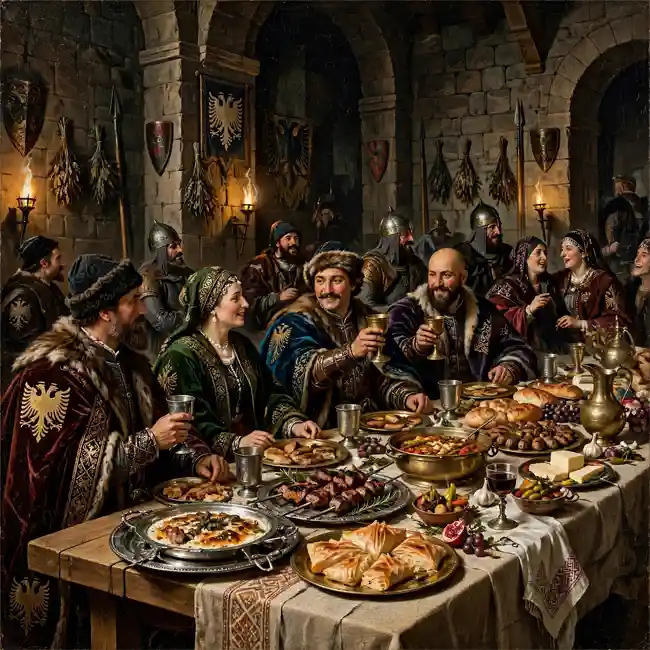
👑📜 The Storyteller’s Intro: The Pasha's Table - 1,000 Years of Secrets Behind Stone Walls
Hey friend, let's be real for a second. When you think of Albania, you might think of wild mountains and that stunning Riviera. But you probably don't picture... aristocrats? Well, get ready, because behind those fortress walls in Berat and Gjirokastër, there was a whole other world of eating going on for nearly a millennium.
This isn't just food. This is the Aristocratic Kitchen of Albania, and its story stretches across almost 1,000 years of power, pride, and incredible flavor.
We are talking about three major golden ages of the high table:
• The Illyrian & Byzantine Aristocracy (7th - 14th Century): This is the deepest root. The old fis (clan) chieftains and Byzantine archons living in fortified hill cities like Krujë. Their main dishes were all about preservation and power. Think slow-roasted mountain lamb sealed in clay, wild game marinated with mountain juniper and foraged herbs. It was rugged, smoky, and designed to show abundance.
• The Age of Princes and Skanderbeg (14th - 15th Century): The era of Gjergj Kastrioti Skanderbeg. The Albanian princes like the Thopia, Muzaka, and Arianiti families were running their own royal courts. They entertained Venetian and Neapolitan envoys. This is when you start seeing Mediterranean luxury creep in - saffron, hand-pressed olive oils from Vlora, and the first true layered pies.
• The Ottoman Pasha Era (16th - 19th Century): This is the peak of the Imperial Mains as we know them. Powerful Albanian Pashas in Shkodër, Berat, and Janina ruled like kings. They had massive palace kitchens called Kuzhina e Pashait. This is where the magic happened - Byzantine technique, Ottoman opulence, and pure Albanian mountain ingredients collided. These recipes were never written down. They were whispered from a head cook to his son.
So how did the Albanian aristocracy actually live and eat? It was completely different from the village life down below.
• The Ritual of the Sofra: The low round table, the sofra, was the center of power. But in an aristocratic house, it was raised, covered in fine woven linens, and the Pasha or Bey ate first. Main dishes were never served at once. They arrived one by one, steaming hot from the clay oven.
• The Meat Rule: For a common family, meat was for feasts. For the aristocracy, a main dish without meat was unthinkable. And it had to be the best cut - milk-fed lamb from the high pastures of Theth, young kid goat, or beef aged in cold mountain air.
• The Secret of the Sana: Every great family had a Sana - the eldest woman who was the keeper of taste. She controlled the spice chest, which was literally locked. Inside: wild mountain savory (trumez), smoked paprika from the south, and crushed dried cornelian cherries for sourness. No one else knew the exact mix.
• Slow is Luxury: The ultimate status symbol was time. An aristocratic main dish took hours, sometimes two days. While common food was quick, the Pasha's lamb was buried in embers for 12 hours.
And now, the part you’ve been waiting for. These are not your regular restaurant menus. These are the forgotten palace names we’ve uncovered from oral histories in Gjirokastër and Berat.
Here are the most legendary Aristocratic Mains that were kept secret for centuries:
• Tavë Kosi i Elbasanit - The Original Pasha's Coronation Dish: Forget the simple version you know today. The aristocratic original uses milk-fed lamb, not just any lamb, layered with a yogurt that was strained for three days and whipped with farm eggs and a hint of wild mint oil. The legend says it was created to celebrate a victory and was only served on silver.
• Byreku i Pashait me Mish dhe Arrë - The Pasha's Layered Meat Burek: This is not the street corner byrek. This is 40 hand-stretched filo sheets, each brushed with clarified butter, hiding a filling of minced veal, caramelized onions, toasted walnuts from Peshkopi, and a secret spice called piper i egër (wild pepper). It was cut like a diamond.
• Qingji i Furrës me Mjaltë Mali - Clay-Oven Kid Goat with Mountain Honey Glaze: A whole kid goat, marinated for 24 hours in sour sheep yogurt, mountain garlic, and rosemary, then roasted sealed inside a clay pot with a glaze of chestnut honey and wild thyme. The meat falls off the bone when you look at it.
• Fërgesë e Beratit - The White Stone City's Aristocratic Bake: The aristocratic version of this Tirana classic is completely different. Instead of just peppers, it uses slow-roasted red horn peppers, aged cow's curd cheese (djathë i bardhë), and chunks of tender veal tenderloin, baked in a small copper tave until the top is charred. It was the Bey's favorite winter lunch.
• Japrakët e Shtëpisë së Madhe - The Grand House Stuffed Collard Rolls: Forget vine leaves. The true northern aristocratic Japrak uses huge, blanched collard greens from the Drin valley, stuffed with a mix of lamb, beef, mountain rice, pine nuts, and dried wild barberries for a sweet-sour pop. They were simmered in a rich bone broth, not water.
• Tavë Dheu me Mëlçi dhe Kungull - The Earthen Pot of Highlands: A hunter's aristocratic dish from the Dukagjin highlands. Lamb liver, wild mushrooms foraged from Llogara, and sweet pumpkin, all cooked together in a traditional clay dheu pot with smoked paprika oil. It was said to give strength before a battle.
🗺️ The Royal Culinary Tourism: Mapping Flavors to Historic Landscapes
Friend, you can't separate Albanian aristocratic food from where it was born. To really taste it, you have to travel. This is what we call Royal Culinary Tourism, and Albania is a hidden paradise for it.
Every main dish is a map. The food tells you if the family was from the misty mountains or the sunny coast, if they traded with Venice or with Istanbul.
• The Concept of Lezet - The Hidden Taste: Albanian aristocrats used a special word, Lezet, which means a hidden, deep, addictive deliciousness you can't explain. They believed Lezet came only from the terroir - the soil, the air, and the water where the animal lived.
• Fortress Cities as Flavor Vaults: The UNESCO cities of Berat and Gjirokastër are not just pretty houses. They are open-air museums of the aristocratic kitchen. In Berat, the Mangalem quarter's Bey houses still have the original massive stone ovens and underground pantries where meat was aged. In Gjirokastër, the Skenduli House shows you the men's room where the main dishes were served.
• Why the Mountains Mattered: An aristocratic family proved its wealth by owning summer pastures (bjeshkë) and winter pastures. That meant they had lamb in summer and kid goat in winter. Their menu changed with the migration of their flocks.
If you want to hunt for these flavors today, you need to know where to look.
🚣 Cradle of Royal Delicacies - The Riviera & River Valley Aristocracy
Let's start where the sun kisses the sea. The southern coast and the fertile river valleys of the Vjosë and Shkumbin were the lands of the wealthy merchant aristocrats and the great Beys of Vlora and Durrës.
These families were rich from olive oil and citrus trade with Italy. Their main dishes are brighter, richer, and more Mediterranean, but still deeply secret.
• The Vlorë Olive Oil Connection: In the aristocratic kitchens of the south, you would never use just any oil. You used the first press of Kaninë olives, so green it looked like emerald. This oil was the base for their slow-braised mains. It was never heated too high, to keep its peppery soul.
• Flavors of the Valley: Here is what defined the lowland aristocratic main:
◦ More use of veal and young beef, raised in the lush valleys.
◦ Secret use of sun-dried tomatoes and sweet red peppers, preserved in oil.
◦ A touch of citrus zest - lemon and bitter orange - to cut through the richness of baked dishes.
◦ Walnuts and almonds used generously, not as a garnish, but as a thickener for stews.
• Where to Taste the Legacy Today:
◦ Visit Berat Castle - inside the castle walls, family restaurants are run by descendants of the old Bey families. Ask for the old-style Tavë Kosi or Fërgesë me viç.
◦ Explore the Karavasta Lagoon near Divjakë - this was the hunting ground for waterfowl, a prized aristocratic main. The old fishing villages still know the secret slow-roast method.
◦ Walk the old town of Himarë and Dhërmi - look for the stone houses with huge outdoor ovens. The locals still make a version of the honey-glazed goat for weddings.
🏰 The Secret Ingredient: The Copper Tava
In this region, the status of your family was measured by your copper pots. A true aristocratic house had a set of heavy, hand-hammered copper tavas of different sizes, passed down for generations. They believe copper gives a flavor that clay or steel can never give. When you travel here, look for the old coppersmiths in Berat - they are the keepers of the tools that made the magic.
⛰️ Kingdom of Wild Aromatics & Heritage - The Northern Alps & Pasha Heartlands
Now, let's go north and east, into the wild. This is my favorite part. The Accursed Mountains (Bjeshkët e Nemuna), Theth, Valbona, and the highlands of Peshkopi and Krujë. This is the land of the true clan aristocracy - the chieftains, the Bajraktars, and the legendary northern Pashas of Shkodra.
If the south was olive oil and sun, the north is smoke, stone, and wild herbs. This is where the 1,000-year-old Illyrian roots are still alive.
• The Power of the Hearth (Vatër): In the north, the kitchen was not a separate room. It was the heart of the Kulla (stone tower house). The open hearth, the vatër, never went out. Main dishes were cooked in the ashes, on spits, or in heavy iron pots hanging over the fire. The smoky flavor is the signature.
• Flavors of the Highlands: What makes a northern aristocratic main so different and so secret?
◦ Wild Everything: Foraged herbs like mountain savory (çaj mali), wild juniper berries, and dried nettle were not poor man's food - they were aristocratic spices. They showed you knew the mountains.
◦ Aged and Preserved Meats: The famous Pastërma and smoked meats were invented here out of necessity, but the aristocracy perfected it. They used only the mountain wind and beechwood smoke.
◦ Dairy as Gold: The northern Beys were obsessed with aged cheeses. A main dish like Tavë Dheu was not complete without a spoon of djathë i pjekur (baked cheese) melting into it.
◦ The Slow Fire: A true northern feast like Mish në Hell (whole lamb on a spit) was a 6-hour ceremony. The meat was turned by hand, basted with its own fat mixed with garlic and wild thyme.
• Where to Taste the Legacy Today:
◦ Krujë Bazaar and Castle: The old capital of Skanderbeg. This is the place to hunt for the true Byrek i Pashait. The women in the castle still stretch the filo by hand until you can read through it.
◦ Theth and Valbona National Parks: Stay in a traditional guesthouse that is actually a restored Kulla. Ask if they make Japrak with collard greens or the clay-pot goat. This is the real deal, cooked on the hearth.
◦ Peshkopi and Dibra Region: The heartland of walnut-filled mains. The secret here is that they add toasted walnuts to almost every meat dish for richness.
🌿 The Keeper's Pantry - The Locked Spice Chest
In Gjirokastër, I spoke to an old family who showed me their grandmother's spice chest. It was a small wooden box with a tiny key. Inside were small cloth bags: dried orange peel, wild sumac, smoked chili, and a mix they call erëza e fshehtë - the secret aroma. They told me no two great families have the same mix. That chest is the real reason these recipes can never be perfectly copied. The secret was never just the recipe, it was the terroir of the family's own pantry.
🤴👸 Royal FAQ: Unlocking Palace Kitchen Mysteries
Q1.Was Albania ever an empire with real royal recipes?
Great question! Albania was not an empire in the French or Ottoman sense with a single emperor for 1,000 years. That is why we use the word Aristocratic. For 1,000 years, Albania was ruled by powerful autonomous princes, clan chieftains (Kryeplak), and later super-powerful Pashas like Ali Pasha of Tepelena and the Bushati family of Shkodra. They lived, ate, and ruled like kings inside their own fortified cities and stone tower houses. So when we say Royal, we mean the food of these autonomous Albanian noble families who kept their own palace kitchens.
Q2.Why are these main dishes considered secret or lost?
Two reasons, friend. First, nothing was written. The Ottoman-era aristocrats believed writing down a recipe would allow servants to steal it and open their own restaurant. All knowledge was oral, from mother to daughter, from head cook to apprentice. Second, the communist era (1944-1991) tried to erase all class differences. Many aristocratic families burned their handwritten notes and hid their copper pots. Their mansions were confiscated. So the chain of knowledge was broken for 50 years. We are now rebuilding it by talking to the granddaughters of those families.
Q3.What makes an Albanian Aristocratic Main different from regular Albanian food?
It comes down to three things: Cut, Time, and Fat. Regular food might use any part of the lamb and cook it quickly. An aristocratic main uses only the shoulder or leg of milk-fed lamb. Regular food cooks in an hour. Aristocratic food takes 5-12 hours. And the biggest secret: Fat. Village cooking today often uses less fat, but the aristocratic kitchen was generous with clarified butter (tlyrë), tail fat, and rich aged cheese curds. That fat is where all the flavor and Lezet lives. It is what makes the dish feel royal.
Q4.Can I still taste the authentic version today?
Yes, but you have to know where to look. You will not find the true 40-layer Pasha Byrek or the 12-hour clay goat on a tourist menu in Tirana. You need to go to the source - the heritage guesthouses in Berat, Gjirokastër, and Theth that are run by the old families. They make it for family celebrations and sometimes for guests if you ask in advance and with respect. The taste is deeper, richer, and much more complex than the modern restaurant version. That is the journey we want to take you on.
🧠 Final Thoughts: The Timeless Allure of Aristocratic Gastronomy
So, what have we learned on this journey together?
We have walked through 1,000 years of Albanian history, not in a museum, but at the dinner table. We discovered that Albanian Imperial Mains are not just recipes - they are survival, power, trade, and love, all baked into a clay pot.
The allure of this food is timeless because it is honest. It doesn't need fancy foams or modern tricks. Its luxury is in the patience - the 12-hour roast, the 40 layers of hand-stretched dough, the wild herbs picked at dawn in the Accursed Mountains.
Here is your game plan for unlocking it for real:
• Pin the Map: Start with Berat for the valley aristocracy (Tavë Kosi, Fërgesë) and then go north to Krujë and Theth for the mountain aristocracy (Clay Goat, Grand House Japrak).
• Look for the Hearth: Choose a restaurant or guesthouse where you can actually SEE the wood fire or the stone oven. If there is no fire, it is not the old way.
• Stay Tuned: This is just the grimoire, the book of secrets. We have told you the stories, the names, and the places. We have NOT given you the step-by-step measurements. Why? Because each of these dishes deserves its own deep-dive ritual.
In the coming weeks, we are going to unlock each one - one by one - with the full, authentic palace method, straight from the Sana's of the great houses. We will start with the king itself: The Real Pasha's Tavë Kosi i Elbasanit.
Follow along, and you won't just cook Albanian food. You will bring a lost aristocratic world back to life in your own kitchen.
👑 Credit to the Keepers of the Culture (The Legacy)
This guide would not exist without the true keepers of Albanian culture.
Our deepest respect and faleminderit (thank you) goes to:
• The Families of Berat and Gjirokastër: The descendants of the old Bey and Pasha houses who opened their doors and their stone ovens to us, especially the women who still guard the locked spice chests.
• The Kulla Guesthouse Hosts of Theth and Valbona: The northern chieftain families who keep the Vatër hearth burning and who taught us that smoke is an ingredient.
• The Albanian Institute of Folk Culture: For their tireless work in preserving the oral histories of the Kuzhina e Pashait before they are lost forever.
• The Artisans: The last coppersmiths of the Krujë Bazaar and the potters of Durrës who still make the tava dheu by hand. Without their tools, there is no royal taste.
This cuisine belongs to them. We are just honored storytellers who were allowed to listen. This article was written to honor and protect their legacy, so the world can appreciate the true depth and nobility of Albanian heritage gastronomy.
👑🍝 A Noble Feast from the Forgotten Kitchens of Albania
👉 Unlock Secret Albanian Imperial Mains
| 🌐 👑🍝 < Back | 🇦🇱 👑🥪 < Previous | Next > 🍨👑 🇦🇱 |