
🏠 Home > 🗺️ Recipes > 👑🍨 Grand Finales (Desserts) > 🇦🇱 Albania Grand Finales (Desserts) Recipes
🇦🇱 👑🍨 Albania Grand Finales (Desserts) Recipes
Published by Supakorn | Updated: August 2026
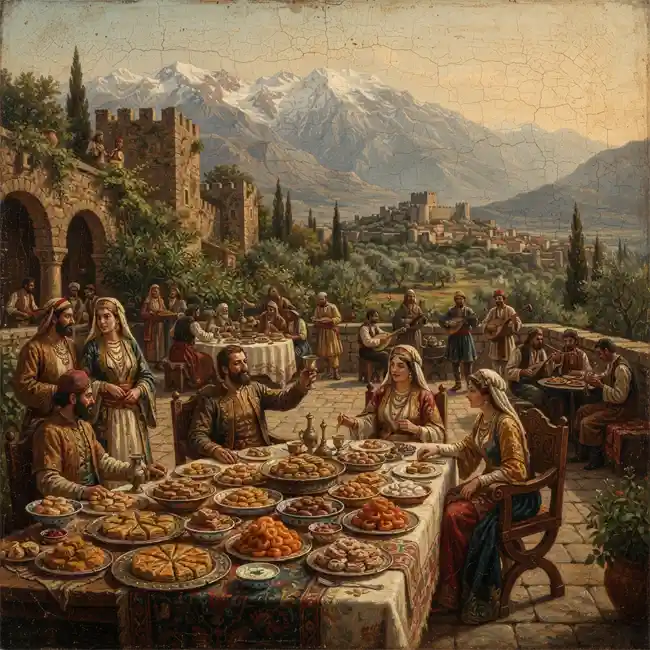
👑📜 The Storyteller’s Intro: Secrets from the Tables of Forgotten Aristocrats
Hey there, fellow flavor traveler! Grab your favorite cozy drink and pull up a chair, because we are about to journey down a sweet, centuries-old trail that most travel guidebooks completely miss. When people talk about Mediterranean or Balkan food, they usually jump straight to savory grilled meats, salty cheeses, or flaky spinach pies. But if you take a step back and peeks behind the heavy wooden doors of Albania’s historical manor houses, noble estates, and ancient fortresses, you’ll find an absolute treasure trove of sweet grandeur.
We’re talking about a sweet tradition refined over 200 to 1,000 years—a culinary heritage shaped not by fast food or modern trends, but by slow-cooked syrups, fragrant floral waters, wild mountain botanicals, and hand-stretched dough thin enough to read a love letter through. Albania never had a single long-standing "Royal Family" in the modern European sense, save for a brief monarchical period in the 20th century. But don’t let that fool you for a second! Albania was governed for centuries by powerful feudal lords, wealthy bey families, aristocratic clan leaders, and elite noble houses that ruled sprawling fiefdoms across the Illyrian coast and rugged inland mountain ranges. These high-society kitchens were true hubs of culinary artistry, where master confectioners guarded their grand finale dessert recipes like state secrets.
To truly understand how these aristocratic desserts evolved, you have to look at the three major historical epochs that sculpted the palate of Albania’s high society:
• The Byzantine & Medieval Feudal Era (11th to 15th Century): Long before the modern era, medieval Albanian nobility—like the legendary Topia, Muzaka, and Kastrioti noble houses—feasted in grand stone castles. Their banquets featured wild fruit preserves, concentrated grape syrups (petimez), toasted nuts, and honey-drenched wheat preparations. Sweetness back then was a pure luxury, reserved for grand celebrations, diplomatic alliances, and aristocratic weddings.
• The Ottoman Beylic & Golden Manor Era (15th to 19th Century): As Albania became an integral crossroads of the Ottoman Empire, local noble beys and wealthy landowning families built magnificent Ottoman-style mansions (kullas and sarays). Kitchen staff trained in imperial palace techniques introduced complex layered pastries, delicate milk puddings, soaked semolina cakes, and aromatic floral essences like rosewater and orange blossom. Local ingredients were fused with imperial luxury.
• The Early Modern Regency & Independence Era (Late 19th to Early 20th Century): During the rise of modern Albanian statehood and the brief reign of the nation's 20th-century monarchy, high-society hostesses blended old feudal secret recipes with French and Austro-Hungarian patisserie flair. Desserts became lighter, more refined, and served with elaborate crystal, bone china, and silver presentation.
Living the high life in historical Albania meant dining was a theatrical performance. Grand finales were not just quick after-dinner treats; they were status symbols designed to astound visiting dignitaries and rival clans. The nobility lived by strict codes of hospitality, where offering an intricate, time-consuming sweet was the ultimate sign of respect, wealth, and sophisticated taste.
🗺️ The Royal Culinary Tourism: Mapping Flavors to Historic Landscapes
If you're looking to plan the ultimate food-lover's pilgrimage, Albania offers an incredible geography where history and dessert culture are inextricably linked. The landscape itself acts as a natural pantry that shaped what appeared on noble tables.
• The Southern Stone City Corridor (Gjirokastër & Berat): Nestled among dramatic hillsides and UNESCO-protected stone architecture, this region was home to some of the most influential landowning families in Balkan history. Here, high-altitude mountain herbs meet sun-drenched orchards. The local desserts reflect the patience of stone carvers—requiring hours of manual beating, syrup reduction, and precise oven management.
• The Coastal Silk Road & Venetian Gateway (Vlorë, Durrës, & Lezhë): Along the glittering Adriatic and Ionian seas, coastal aristocrats traded directly with Venice, Corfu, and Mediterranean ports. Desserts here historically featured imported citrus zests, exotic spices like cinnamon and clove, almonds, and lush figs grown in saline coastal air.
• The Northern Alpine Fortress Territory (Shkodër & Theth): In the shadow of the Accursed Mountains, northern feudal lords cultivated a robust, soul-warming dessert tradition. Rich dairy from high-pasture sheep, wild forest berries, dark forest honey, and toasted walnuts dominated the sweet course of mountain banquets.
• The Eastern Lakes & Fertile Valleys (Korçë & Pogradec): Known as the cultural capital of the east, this cool-climate region developed a refined, European-influenced dessert culture. The aristocratic estates surrounded by apple orchards and lake shores created fruit-infused masterpieces and multi-layered syrup pastries that kept guests warm during crisp highland evenings.
🚣 Cradle of Royal Delicacies - The Coastal & River Basin Heritage
When you travel along Albania's coastal plains, ancient river deltas, and sparkling lakes, you step into the cradle of some of the most exclusive aristocratic sweets ever created. The abundance of fresh water, fertile soil, and maritime trade routes allowed noble kitchens in these areas to develop desserts of stunning complexity.
Here are the legendary, top-secret grand finale desserts rooted in these historic water-rich landscapes:
• Sheqerpare e Shtëpisë Noblesse (The Bey’s Golden Butter Coins): Unlike common everyday versions, the historic elite version of this delicate cookie used clarified sheep’s milk butter from coastal meadows, freshly ground almonds, and a secret splash of lemon-blossom water. It was baked until barely golden, then submerged in a light, lukewarm sugar syrup until each bite melted effortlessly on the tongue.
• Kabuni Lord Muzaka (Saffron & Caramelized Rice Grand Finale): A true hidden masterpiece originating from coastal trade hubs. This sweet rice dish was reserved exclusively for aristocratic male gatherings and high-level diplomatic feasts. Long-grain rice was cooked slow in clarified butter, enriched with tender shreds of sweet meat broth, caramelized sugar, golden raisins, pine nuts, and rare imported saffron, creating a glossy, savory-sweet dessert unlike anything else in Europe.
• Bakllava e Beratit me 100 Petë (The 100-Layer Citadel Baklava): While baklava exists across the Balkans, the secret recipe guarded by the noble families of the Berat citadel was legendary. Master pastry chefs spent entire mornings rolling micro-thin sheets of dough so sheer you could see through them. Layered with crushed wild walnuts and bathed in a citrus-infused, slow-simmered syrup, this dessert was served only at grand weddings and state visits.
• Ballokume Elbasani Aristokratik (The Sun-Disc Corn Cake of the Feudal Elite): Originating along the riverbanks of central Albania, this seasonal spring dessert was historically made in massive copper basins passed down through noble generations. Beaten entirely by hand for over an hour using pure wood ash water, refined corn flour, and copious amounts of whipped butter, the result was a fragile, melt-in-your-mouth golden disk that celebrated renewal and prosperity.
• Revani me Kos e Portokall Bregdeti (The Coastal Citrus & Yogurt Sponge Supreme): Noble estates along the southern Riviera took classic semolina cake to sublime heights. Infused with sheep’s milk yogurt and aromatic zests from local orange groves, this sponge was drenched in a lukewarm honey-citrus glaze, creating a refreshing yet intensely decadent finale to long coastal banquets.
⛰️ Kingdom of Wild Aromatics & Heritage - The Mountain & Forest Enclaves
Now, let's head up into the rugged, high-altitude sanctuaries of Albania. The mountain fortresses and forest manors operated under a different rhythm. Life up here was wilder, colder, and deeply connected to nature's raw bounty. The noble families of the north and high alpine ridges created grand finales that relied heavily on wild botanicals, ancient grains, forest fruits, and rich, unpasteurized dairy.
Here are the secret mountain finale desserts that sustained and delighted mountain aristocracy:
• Trileçe e Malësisë (The Three-Milk Mountain Empress): Long before commercial versions took over modern cafes, the original high-society mountain recipe used an ultra-rich combination of three distinct fresh milks: goat, sheep, and water buffalo milk. Baked into a light sponge and soaked until completely saturated, it was topped with a house-made burnt-sugar caramel that added a deep, smoky complexity.
• Hasude Përmeti me Arra (The Wild Walnut & Caramelized Starch Jewel): Hailing from the pristine valley towns nestled beneath dramatic mountain peaks, this warm, translucent dessert was a closely guarded secret of southern regional lords. Made by carefully caramelizing sugar, cooking local starch, and stirring continuously with clarified mountain butter and toasted wild walnuts, it yielded a silky, warm, amber-hued dessert with an unforgettable texture.
• Kadaif i Gjirokastrës me Fistëklidh (The Spun Pastry Nest of the Stone Lords): In the lofty stone manors of the south, thread-like shredded dough was wrapped around whole pistachios, crushed walnuts, and scented with wild mountain thyme honey. Baked in wood-fired stone ovens, the contrast between the crispy exterior and the soft, fragrant center made it a mandatory finale for autumn aristocratic feasts.
• Oshmar i Korçës (The Golden Sweet Corn & Clotted Cream Feast): Deep in the eastern highland villages, elite families prepared this comforting, rich dessert during crisp winter gatherings. Sweet cornmeal was slow-cooked in rich clotted cream (kajmak) and wild forest honey until it formed a fragrant, golden crust on the bottom of heavy iron skillets.
• Reshteli me Mjaltë Malësie (The Hand-Cut Sweet Noodle & Forest Honey Silk): A rare, ancient dish prepared in mountain manors. Artisanal egg pasta sheets were hand-cut into delicate ribbons, toasted until nutty and aromatic, then simmered in a reduction of dark forest honey, cinnamon sticks, and toasted hazelnut oil. It was served warm in hand-carved wooden bowls to honored guests arriving from long journeys.
📝❓ Royal FAQ: Unlocking Palace Kitchen Mysteries
Q1: Did Albania have an official royal pastry chef division like France or the Ottoman Empire?
A: While Albania did not have a massive centralized imperial palace for thousands of years, the major feudal dynasties and regional beys maintained elaborate private kitchens. Head chefs (Aççi) were frequently sent to Istanbul, Venice, or Vienna to master advanced confectionary techniques, returning to adapt those secrets using local Albanian mountain herbs, honey, and fresh dairy.
Q2: What is the secret behind the extreme lightness of historical Albanian syrup-soaked desserts?
A: The secret lies in the precise control of temperature and acid balance! Ancient master cooks never poured hot syrup over hot pastries; it was always hot pastry with cold syrup, or cold pastry with boiling syrup. Furthermore, they added precise amounts of fresh lemon juice or wild sour pomegranate juice to prevent the sugar from crystallizing, ensuring a silky, feather-light mouthfeel rather than a heavy, sugary drag.
Q3: Why are sheep’s milk butter and goat’s milk so prominent in aristocratic sweet recipes?
A: In historical Albania, cows were primarily draft animals, whereas high-altitude sheep and goats grazed on wild thyme, lavender, and mountain pastures. The milk they produced was incredibly rich in butterfat and naturally aromatic. Using clarified sheep’s milk butter gave aristocratic desserts a unique, complex aroma and luxurious mouthfeel that standard butter simply could not match.
Q4: Are these historic desserts extremely hard to replicate at home today?
A: Some require incredible manual skill—like stretching 100-layer baklava dough or hand-beating ballokume for an hour in raw copper! However, the core flavor profiles rely on high-quality natural ingredients. With a few modern shortcuts and authentic technique guides, you can bring these historic lordly flavors right into your own kitchen.
🧠 Final Thoughts: The Timeless Allure of Aristocratic Gastronomy
Stepping into the world of historical Albanian grand finale desserts is like opening a dusty, leather-bound book filled with forgotten spellwork. It shows us a side of the Balkans that is deeply sophisticated, patient, and intimately connected to the land. These desserts were never just about satisfying a sweet tooth—they were expression of love, signs of supreme hospitality, and artistic achievements crafted by master cooks who dedicated their lives to perfecting a single texture or flavor balance.
As you explore the stunning castles of Berat, the stone streets of Gjirokastër, or the dramatic peaks of the Albanian Alps, remember that the true soul of these places isn't just in their views—it's waiting on a dessert spoon.
Keep your eyes glued right here to this page! We are currently working behind the scenes to translate, standardize, and unveil the step-by-step secret recipes for every single one of these noble masterpieces. Very soon, you'll be able to recreate these 200 to 1,000-year-old aristocratic delicacies in your very own kitchen. Trust us, your dinner guests will never see it coming! 🍰✨
👑 Credit to the Keepers of the Culture (The Legacy)
A deep, heartfelt tribute goes out to the grandmothers (gjyshet), local village historians, cultural archivists, and veteran home cooks across Albania who have preserved these ancient culinary traditions through centuries of political shift and historical change. Without their dedication to passing down oral traditions, handwritten kitchen notebooks, and hand-forged copper bakeware from generation to generation, these breathtaking aristocratic desserts would have been lost to the sands of time. We honor their passion, their patience, and their unwavering love for Albania's rich culinary soul.
👑🍨 The Secret Finale Desserts The Albanian Pashas Never Wanted You To Taste
👉 Explore Iconic Albanian Grand Finales
| 🌐 👑🍨 < Back | 🇦🇱 👑🍝 < Previous | Next > 🍷👑 🇦🇱 |