
🏠 Home > 🗺️ Recipes > 👑🍨 Grand Finales (Desserts) > 🇦🇱 Albania Grand Finales (Desserts) Recipes > 👑🍨 1.The Pasha's Golden Ballokume - Elbasan's Sacred Summer Day Cookie
👑🍨 The Secret Finale Desserts The Albanian Pashas Never Wanted You To Taste
Published by Supakorn | Updated: August 2026
👑🏰 The Forgotten Aristocratic Legacy of Albania: The Pashaliks and Beys of Elbasan
📜 The Storyteller’s Intro: A Closed Door in Elbasan
Imagine stepping back to the early 19th century, into a stone kitchen in Elbasan, central Albania. It is March, just before Dita e Verës, the ancient Summer Day. The wooden shutters are closed. Outside, the town is preparing for celebration, but inside this kitchen, the air is thick with a secret.
Only three women from the most respected Bey family are allowed inside. On a massive copper tray sits a mountain of the finest corn flour, so yellow it looks like gold dust. Next to it, a bowl of clarified butter that has been simmering for hours, and sugar that was brought by caravan from far away. No written recipe exists. The eldest woman whispers the measurements, the youngest watches the way the butter is folded in. This was not just a cookie. This was Ballokume. And if you were not born into the aristocracy, you would never taste the real one.
For almost two hundred years, that door stayed closed.
🌍 The Global Value: Why These Sweets Were Meant to Disappear
Albania never had a king in the way France or England did, but it had something just as powerful. The Pashas, the Beys, and the great landowning families. They were the aristocracy of the Ottoman Balkans. And like all aristocrats, they guarded their symbols of power, especially food.
Finale desserts were never everyday sweets. While common people ate simple baklava with walnuts or boiled wheat, the aristocratic table ended with something completely different. Recipes were locked inside families. They used ingredients that were impossibly expensive at the time, like pure corn flour when everyone else used wheat, or village butter clarified for days to become perfectly pure.
When the aristocratic system collapsed in the 20th century and Albania went through decades of isolation, these family kitchens were scattered. The grandmothers who remembered the exact feel of the dough passed away. The copper trays were sold. We almost lost these recipes forever. What remained were simplified, modern versions you find in bakeries today, but the original palace method, the one that made foreign travelers write about it in their diaries, was considered lost.
✨ The Collection: What We Are Bringing Back Today
This article is part of our Forgotten Aristocratic Recipes series. Today, we are reviving the crown jewel of the Albanian aristocratic table.
We are not just giving you a cookie recipe. We are bringing back the authentic Elbasan Ballokume, the finale dessert that was the centerpiece of Dita e Verës for the elite. This is the version that was served to honored guests, to visiting Pashas, and to grooms on their wedding morning. It is crumbly, buttery, deeply fragrant, and melts in your mouth like nothing you have ever tasted. This is the taste of a lost Albania.
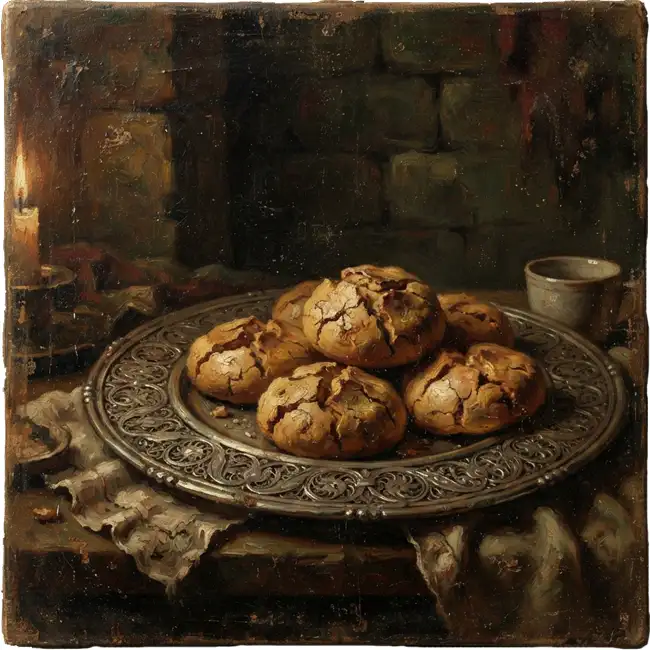
🍯 Recipe: The Pasha's Golden Ballokume - Elbasan's Sacred Summer Day Cookie
👑 About this Aristocratic Secret
If there was one dessert that defined power and respect in central Albania, it was Ballokume.
This is not a simple sugar cookie. Legend says it was created in the kitchens of a powerful Pasha of Elbasan in the 16th century. He demanded a sweet that was made from gold, to show his wealth. His cooks, having no gold, created a cookie from the most golden corn flour from the Shkumbin river valley, enriched with the purest butter and sugar. The Pasha was so pleased he declared it the official sweet of his court.
For centuries after, no Dita e Verës, Albania's most ancient pagan festival celebrating the end of winter, was complete without it. But the true, aristocratic version was reserved. While villagers made a harder, simpler version, the Bey families of Elbasan made it big, almost the size of a small plate, with a cracked, golden top and an incredibly soft, almost fudgy heart. It was traditionally made only by the women of the house, and only once a year. To receive a Ballokume from a Bey family was a sign of the highest honor. To be given the recipe was unthinkable.
The secret was never in a complicated technique. It was in the quality of the ingredients and the patience of the ritual.
🧈 Ingredients & The Aristocratic Touch
◦ The Royal Pantry
Forget everything you know about modern cookies. The aristocratic Ballokume has no baking powder, no vanilla extract, no chocolate. Its luxury comes from purity. In the old days, the corn flour was milled from a specific heirloom white corn called "Kallmet" and left to dry for months. The butter was not just butter, it was clarified Gjize butter from sheep's milk, washed and clarified until it was as clear as oil and smelled like toasted hazelnuts. And the sugar had to be finely ground by hand in a mortar. The combination creates a flavor that is nutty, buttery, and almost caramel-like without adding any caramel at all. It is elegance through simplicity.
◦ Modern Substitutes
You can still create the authentic taste today without a stone mill in Elbasan. Here is how we adapt the royal pantry for your kitchen:
For the Heirloom Corn Flour, use the finest, stone-ground, very finely milled corn flour you can find, not coarse polenta or cornmeal. If you can only find medium grind, pulse it in a blender for 60 seconds. For a softer, more modern aristocratic touch, some families in Tirana now use 70 percent corn flour and 30 percent 00 pastry flour.
For the Clarified Sheep Butter, you can use high-quality unsalted cow's milk butter and clarify it yourself, or use store-bought ghee. The key is the nutty aroma. Do not use regular melted butter, it will make the cookie heavy.
For the Sugar, use superfine caster sugar or golden caster sugar for a deeper color. Do not use powdered sugar.
◦ The Measurements
This recipe makes about 10 large, authentic aristocratic Ballokume, about 10 centimeters in diameter.
For the Dough:
• Finely milled corn flour, sifted twice: 500 grams
• Superfine caster sugar: 350 grams
• Clarified butter or ghee, at room temperature, soft like pomade: 250 grams
• Large fresh eggs, at room temperature: 4 whole eggs
• Fresh egg yolks, at room temperature: 2 yolks
• Whole milk, lukewarm: 60 milliliters, about 4 tablespoons
• A tiny pinch of fine sea salt: less than 1 gram
For Finishing:
• Extra fine corn flour for dusting your hands: a small bowl
👩🍳 The Chef’s Ritual
Making Ballokume is a meditation. You cannot rush it. The old women of Elbasan said the dough must be "beaten, not mixed."
• Step 1: The Creaming of Gold
In a very large bowl, preferably copper or glass, place your soft clarified butter and the superfine sugar. Using your hands, yes your hands, not a machine, start creaming them together. Rub the sugar into the butter with your fingertips for at least 10 to 12 minutes. The mixture will transform from grainy to a pale, fluffy, almost white cream. This step incorporates air and is the only leavening this ancient cookie has. Be patient.
• Step 2: The Addition of Life
Add the 4 whole eggs and 2 yolks one by one. After each egg, beat the mixture vigorously with your hand for a full minute. The dough will look like it is splitting, do not worry. Keep beating. By the last egg, it should be smooth, glossy, and increased in volume. Add the pinch of salt and the lukewarm milk and mix for another minute.
• Step 3: The Folding of the Harvest
Now, add the sifted corn flour all at once. Do not dump it. Sprinkle it gently over the top. With your hand open, start folding from the outside in, turning the bowl slowly. You are not kneading like bread. You are lifting and folding, letting the flour absorb the butter and eggs. Continue for 8 to 10 minutes until you have a soft, sticky, golden dough that holds together but still feels delicate. It will feel like wet sand that holds its shape. If it feels too dry, add one more tablespoon of milk.
• Step 4: The Rest of the Aristocrat
Cover the bowl with a clean linen cloth and let the dough rest at cool room temperature for 30 minutes. This is not for rising. This allows the corn flour to fully hydrate, which is the secret to the soft center. Do not skip this.
• Step 5: The Shaping
Preheat your oven to 338 degrees Fahrenheit / 170 degrees Celsius, with a fan setting of 302 degrees Fahrenheit / 150 degrees Celsius if you have it. Line two large baking sheets with parchment paper.
Lightly flour your hands with extra corn flour. Take a piece of dough about the size of a large tangerine, about 90 to 100 grams. Roll it gently between your palms into a perfect ball, then flatten it slightly so it looks like a thick disc, about 2.5 centimeters thick. The top should be smooth. Place it on the sheet, leaving at least 8 centimeters between each cookie, as they will spread.
• Step 6: The Sacred Bake
Bake on the middle rack for 22 to 26 minutes. Here is the aristocratic trick: Ballokume should NOT turn dark brown. It should stay golden, with a beautiful, naturally cracked top. The cracks will appear around minute 15. The bottom should be lightly golden brown, but the top should remain pale gold. The center will still feel very soft when you take it out. That is perfect. It will firm up as it cools. If you bake until hard, you have lost the aristocratic texture.
Let them cool completely on the baking sheet for at least one hour. Do not move them while warm or they will break.
🤫 Secrets of the Palace Kitchen
• The Butter Temperature Secret: If your clarified butter is too liquid, the cookies will spread flat and become greasy. If it is too cold, they will be dense. It must be the texture of soft lip balm. Leave it out of the fridge for 2 hours before you start. This was how the Bey's cooks tested it, by pressing it with a finger.
• The Hand-Beating Mistake: Everyone wants to use a stand mixer. Do not. A mixer beats too fast and heats the butter, destroying the air pockets. The traditional hand method creates a crumbly, short texture that no machine can replicate. If you absolutely must use a mixer, use the paddle attachment on the lowest speed and never more than 5 minutes for step 1.
• The Flour Sifting Rule: Sift your corn flour twice, not once. Old corn flour clumps together and holds moisture. Double sifting makes the final cookie lighter and prevents a gritty mouthfeel. This was a job given only to the most careful apprentice in the palace kitchen.
• The Biggest Mistake - Overbaking: 90 percent of modern Ballokume fails because people bake it like a normal cookie until it is firm. The authentic aristocratic Ballokume is meant to be fragile. When you take it out, it should wobble slightly if you shake the tray. It sets as it cools. Overbaking is why bakery versions are hard as a rock.
• The Storage Wisdom: Never store Ballokume in plastic or in the fridge. Store it in a tin box lined with a clean cotton cloth. It will stay perfect for 5 days and its flavor actually deepens on day two. In Elbasan, they said a good Ballokume tastes better the next morning with black tea.
🤴👸❓ Royal FAQ
Q1: Why is my Ballokume hard and not soft inside?
This is almost always due to two things. You used coarse cornmeal instead of fine corn flour, or you overbaked it. The center must be soft when it comes out of the oven. Remember, it is a fudgy cookie, not a crunchy biscuit.
Q2: Can I make this gluten-free?
The traditional recipe is naturally gluten-free if you use 100 percent pure corn flour and ensure your clarified butter has no cross-contamination. This is why it was so valued, it was light and easy to digest for the elderly Pashas. If you use the modern 70/30 mix with pastry flour, it will contain gluten.
Q3: Why is my dough so sticky and hard to shape?
That is actually correct. Authentic Ballokume dough is much stickier than regular cookie dough because corn flour does not have gluten to bind it. That is why we dust our hands with extra corn flour for shaping. Do not add more flour to the dough itself to make it easier, or you will ruin the texture.
📖 The Taste of History
When you break open a warm, authentic Ballokume, you are not just eating a cookie. You are tasting a piece of history that was almost erased.
You taste the golden fields of the Shkumbin valley. You taste the patience of the women who kept this secret alive through wars, through communism, through isolation. You taste the quiet pride of an aristocracy that did not need crowns to show its elegance, but showed it through a simple, perfect sweet offered to a guest with both hands and a bow.
It is buttery without being heavy, sweet without being sugary, and it crumbles into a fragrant, melt-in-your-mouth cloud. This is what a finale dessert was meant to be. Not a heavy cake to fill you up, but a light, golden farewell, a sweet memory that lingers after the feast is over.
💭 Final Thoughts: Bringing History to Your Table
I know what you might be thinking. This sounds too special, too historical, too aristocratic for my kitchen.
But that is the beauty of it. The Pashas are gone. The closed doors of Elbasan are now open. And the secret that was once guarded by Bey families can now live in your home.
You do not need a copper tray or a stone kitchen. You just need good corn flour, good butter, and a little patience to beat the dough by hand, just like they did 200 years ago. When you pull that tray of golden, cracked cookies from your oven, your kitchen will smell exactly like an aristocratic kitchen on the morning of Dita e Verës. And for a moment, you will have brought a lost world back to life.
This is more than baking. This is preservation.
💌 The Call to Action
If you fell in love with the taste of this lost history, join us in our mission to save the world's hidden culinary heritage. Try the Pasha's Golden Ballokume this weekend, share a photo of your cracked golden tops, and tell us what history tasted like to you.
Do you have a forgotten family recipe from the Balkans in your own family? A sweet your grandmother made that no one makes anymore? Send it to us. Let's make sure no recipe is ever lost again. Explore our full collection of Forgotten Aristocratic Recipes and become a keeper of the culture.
🙏 Credit to the Keepers of the Culture
This recipe and its story would not exist without the cultural guardians of Albania.
Our deepest respect and gratitude go to the families of Elbasan, especially the elder women who have kept the true Dita e Verës Ballokume tradition alive in their homes and who generously shared their oral histories. We honor the city of Elbasan itself, recognized as the cultural capital of this sacred sweet.
We also acknowledge the Albanian people, whose incredible resilience protected their unique culinary identity through centuries of change. This content was created with deep respect for Albanian heritage. We are not owners of this culture, we are humble students and storytellers. All credit for this magnificent tradition belongs to Albania.
| 🇦🇱 👑🍨 < Back |