
🏠 Home > 🗺️ Recipes > 👑🍱 Royal Court Side-Bites (Snacks) > 🇹🇭 Thai Royal Court Side-Bites (Snacks) Recipes
🇹🇭 👑🍱 Thai Royal Court Side-Bites (Snacks) Recipes
Published by Supakorn | Updated: July 2026
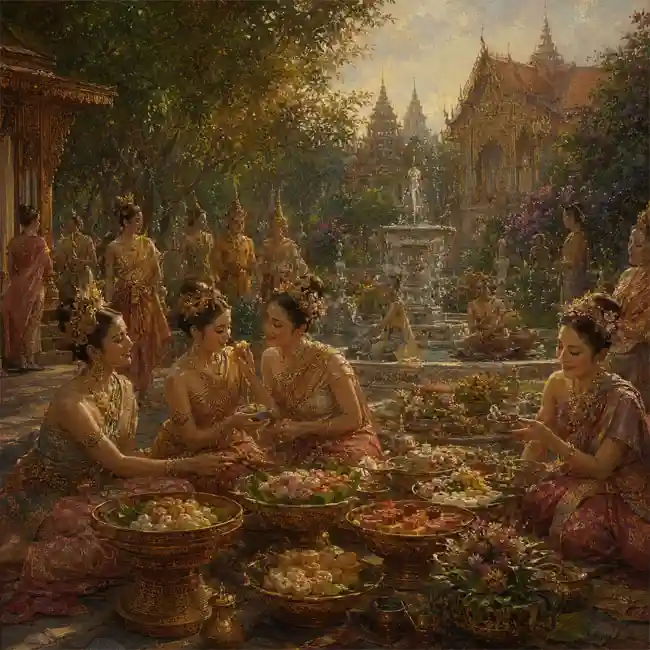
🇹🇭 👑📜 The Storyteller's Intro: Hidden Palace Bites Once Reserved for Kings, Queens, and Noble Families
When people think about Thai cuisine, they usually picture famous dishes that have traveled around the world. Yet behind those internationally loved recipes lies another fascinating culinary universe that remained hidden inside palace walls for centuries. This is the world of Thai Royal Court Side-Bites—small yet incredibly refined delicacies once served to monarchs, queens, princes, princesses, ministers, and distinguished guests during the golden ages of Siam.
These elegant snacks were never designed simply to satisfy hunger. Every bite represented social rank, artistic mastery, seasonal wisdom, agricultural abundance, religious respect, diplomatic etiquette, and the remarkable creativity of royal palace kitchens. While common villagers prepared meals for survival, palace chefs transformed ordinary ingredients into edible works of art that reflected both prestige and cultural identity.
Unlike everyday street snacks, royal side-bites required exceptional precision. Shapes were symmetrical, colors were naturally vibrant, textures were carefully balanced, and presentation mattered just as much as flavor. Even the size of each bite reflected thoughtful planning, allowing guests to enjoy multiple delicacies throughout elaborate palace gatherings.
Today, many travelers visiting Thailand discover famous desserts, curries, and noodle dishes. However, only a handful realize that some of the country's greatest culinary treasures were once tiny handcrafted palace snacks that carried stories dating back several centuries.
These remarkable creations continue inspiring chefs, historians, culinary schools, and heritage restaurants that preserve Thailand's royal gastronomic traditions.
👑 More Than Snacks—Symbols of Noble Refinement
Royal side-bites were expressions of etiquette rather than casual refreshments.
Inside the royal courts, food demonstrated discipline, education, hospitality, and artistic excellence. Noble families judged kitchens not only by taste but by consistency, elegance, and craftsmanship.
Every serving reflected the reputation of the household.
Palace cooks spent years mastering delicate preparation techniques before earning permission to prepare food for members of the royal family. Apprentices learned how to cut vegetables into flowers, carve fruits into intricate sculptures, fold leaves perfectly, balance sweet and savory flavors, and maintain impeccable cleanliness throughout every stage of cooking.
Even a small snack placed on an elegant porcelain tray communicated sophistication.
🏯 The Four Great Eras of Royal Culinary Evolution
Thailand's royal snack traditions evolved over many centuries, with each historical period contributing new techniques and flavors.
🌿 Early Kingdom Foundations (Approximately 13th–15th Century)
The earliest palace kitchens relied heavily on local agricultural abundance.
Rice formed the foundation of nearly every meal. Coconut, freshwater fish, herbs, aromatic roots, forest vegetables, and tropical fruits shaped early noble cuisine.
Simple steamed snacks wrapped in fragrant leaves were common, emphasizing freshness rather than complexity.
Natural ingredients were celebrated instead of disguised.
⚔️ The Ayutthaya Golden Age (14th–18th Century)
As Siam became one of Asia's greatest trading kingdoms, royal cuisine flourished dramatically.
International merchants introduced spices, refined sugars, dried fruits, nuts, and new culinary ideas from Persia, India, China, Japan, Portugal, and neighboring Southeast Asian kingdoms.
Rather than replacing local traditions, palace chefs carefully blended foreign influences into uniquely Siamese creations.
Many legendary royal snacks either originated or reached artistic perfection during this remarkable era.
The palace kitchens became centers of culinary innovation where presentation evolved into an essential part of noble dining.
🌸 The Early Rattanakosin Renaissance (Late 18th–19th Century)
Following political transitions, many palace recipes were carefully preserved and reorganized.
Royal households placed increasing emphasis on documenting culinary knowledge and training new generations of court cooks.
Snack preparation became even more refined.
Seasonal ingredients, ceremonial occasions, and artistic presentation were standardized to ensure consistent excellence.
Many recipes passed quietly through noble families instead of being publicly shared.
✨ The Modern Preservation Era
Today, Thailand continues protecting many aspects of royal culinary heritage.
Although palace kitchens have naturally evolved with modern technology, traditional craftsmanship remains highly respected.
Cultural institutions, culinary academies, heritage restaurants, and master artisans continue preserving these extraordinary traditions so future generations can appreciate the remarkable history behind every elegant bite.
🍃 Characteristics That Made Royal Side-Bites Unique
Royal snacks differed from ordinary food in several important ways.
• Ingredients were selected according to season, freshness, aroma, and appearance.
• Every component served a purpose beyond flavor.
• Natural colors were preferred whenever possible.
• Garnishes were edible rather than decorative alone.
• Portions encouraged graceful dining instead of excessive eating.
• Multiple textures appeared within a single bite.
• Presentation followed ceremonial etiquette.
• Plates often reflected harmony instead of abundance.
The goal was balance—not extravagance.
🍱 Legendary Royal Side-Bites Worth Discovering
Thailand's palace kitchens produced countless refined snacks that continue fascinating food historians today.
Among the most celebrated are:
• Miang Kham, elegant leaf wraps filled with carefully balanced sweet, salty, sour, and aromatic ingredients.
• Golden Bags (Thung Thong), delicate crispy parcels symbolizing prosperity.
• Royal Fish Cakes, featuring exceptionally fine texture and fragrant herbs.
• Stuffed Flower Petals, crafted to resemble blooming garden flowers.
• Royal Shrimp Cakes, prepared with unusually meticulous hand-chopped seafood.
• Steamed Coconut Custard Bites, known for their silky elegance.
• Lotus Leaf Wrapped Delicacies, highlighting natural fragrance.
• Rice Flour Dumplings, prepared in miniature ceremonial portions.
• Royal Sweet Savory Cups, showcasing balanced contrasts.
• Intricately Carved Fruit Garnishes, often considered edible sculptures rather than simple decoration.
Many palace recipes remained family secrets for generations.
Some techniques were transmitted only to trusted apprentices serving noble households.
🎨 Every Bite Was Designed Like Fine Art
Royal side-bites reflected Thailand's appreciation for visual beauty.
Palace cooks often studied flower arrangements, textile patterns, temple architecture, and seasonal gardens for inspiration.
A simple snack might resemble:
• Lotus blossoms
• Jasmine flowers
• Banana leaves
• Water lilies
• Royal umbrellas
• Temple carvings
• Mythical creatures
• Palace architecture
This artistic philosophy transformed food into cultural storytelling.
Long before social media encouraged beautiful food photography, Siamese palace chefs already believed that diners first experienced a meal with their eyes.
🌺 The Palace Garden as Nature's Pantry
Royal kitchens maintained close relationships with palace gardens.
Fresh herbs, edible flowers, aromatic leaves, citrus trees, coconuts, pandan, bananas, and medicinal plants were cultivated specifically for culinary purposes.
Garden planning often considered:
• Seasonal flowering cycles
• Fragrance combinations
• Culinary usefulness
• Religious symbolism
• Decorative potential
As a result, palace snacks naturally reflected Thailand's tropical biodiversity.
🍸 Noble Dining Was Slow and Intentional
Unlike hurried modern lifestyles, palace dining encouraged mindfulness.
Guests appreciated conversation, music, poetry, traditional performances, and beautiful surroundings while enjoying carefully prepared refreshments.
Side-bites appeared between ceremonies, during afternoon gatherings, after religious events, while welcoming distinguished visitors, or alongside cultural performances.
Food supported social harmony rather than interrupting it.
🌏 Why International Travelers Love Royal Thai Snacks Today
Modern visitors increasingly seek experiences beyond famous tourist dishes.
Royal snacks offer a deeper understanding of Thailand's cultural identity because they combine history, craftsmanship, aesthetics, and regional ingredients within one unforgettable culinary tradition.
Exploring these delicacies allows travelers to appreciate:
• Ancient palace etiquette
• Thai artistic heritage
• Seasonal cooking traditions
• Historic ingredient selection
• Noble hospitality
• Traditional craftsmanship
• Regional agricultural diversity
• Cultural storytelling through food
Every elegant bite becomes part of a larger historical journey.
🔑 A Culinary Legacy Waiting to Be Rediscovered
Many royal side-bites remain unfamiliar even to lifelong residents of Thailand.
Some recipes survived only through palace descendants, respected culinary teachers, temple communities, or heritage families committed to preserving authentic traditions.
Fortunately, renewed global interest in traditional gastronomy is bringing these remarkable creations back into the spotlight.
Rather than treating them as relics of the past, modern chefs increasingly celebrate them as living expressions of Thailand's extraordinary cultural heritage.
In the next chapters, we'll travel beyond palace walls to discover how rivers, coastlines, ancient capitals, mountain forests, fertile plains, and historic trade routes shaped the remarkable world of Thai Royal Court Side-Bites. Every region contributed unique ingredients, distinctive aromas, and timeless traditions that together created one of Asia's most sophisticated royal snack cultures.
🗺️ The Royal Culinary Tourism: Mapping Flavors to Historic Landscapes
Thailand's royal snacks did not emerge from a single palace kitchen alone. They were the result of centuries of exchange between royal courts, farming villages, riverside communities, fishing ports, mountain forests, temple complexes, and international trade routes. Every elegant side-bite carried traces of the landscape where its ingredients first flourished.
To truly understand Thai Royal Court Side-Bites, travelers must go beyond restaurants and explore the historical regions that supplied the royal kitchens. Ancient waterways, fertile plains, tropical orchards, salt fields, coconut groves, floating markets, and heritage towns all played essential roles in shaping the refined cuisine enjoyed by Siamese royalty.
Royal culinary tourism is therefore not simply about eating. It is about walking through landscapes where recipes were inspired, ingredients were cultivated, and centuries-old traditions continue to survive.
Instead of searching only for famous attractions, food lovers can follow the hidden paths of palace gastronomy across Thailand's remarkable historical geography.
🚩 Ayutthaya – The Grand Capital of Palace Cuisine
No destination better represents Thailand's royal culinary legacy than the ancient capital of Ayutthaya.
For over four centuries, the royal court attracted merchants, diplomats, scholars, artisans, and cooks from across Asia and Europe. The city's strategic position at the meeting point of major rivers allowed ingredients from every corner of the kingdom to arrive at the palace kitchens.
Fine rice, fragrant herbs, tropical fruits, freshwater fish, coconut products, spices, and imported luxuries all flowed into the capital.
Royal snacks evolved rapidly in this multicultural environment.
Visitors exploring temple ruins today can imagine how palace chefs once prepared elegant refreshments only a short distance from magnificent royal residences.
Ayutthaya remains one of the most inspiring destinations for anyone interested in Thailand's aristocratic food history.
🏛️ Bangkok – Living Heritage of Royal Kitchens
Following the establishment of Bangkok as the new capital, many palace cooking traditions continued uninterrupted.
Several royal families, noble households, and master cooks preserved recipes that might otherwise have disappeared forever.
Today, Bangkok remains one of the best places to discover carefully preserved royal culinary traditions through:
• Heritage restaurants
• Palace-inspired dining experiences
• Traditional dessert shops
• Culinary museums
• Historic neighborhoods
• Cultural festivals
• Traditional cooking schools
Many modern chefs still draw inspiration from royal techniques developed generations ago.
Walking through Bangkok's historic districts often feels like traveling through multiple centuries of Thai culinary history.
🌺 Floating Markets and Riverside Communities
Thailand's waterways shaped everyday life long before modern highways appeared.
Boats transported ingredients directly to royal kitchens.
Fresh bananas, coconuts, herbs, flowers, rice flour, vegetables, fruits, and seafood arrived daily through interconnected river systems.
Many riverside communities continue producing traditional ingredients using methods passed down for generations.
Exploring floating markets offers visitors opportunities to experience ingredients that once supplied palace chefs themselves.
The atmosphere, aromas, and seasonal produce still reflect centuries-old trading traditions.
🌴 Coconut Gardens and Orchard Heritage
Royal snacks frequently relied upon Thailand's extraordinary tropical agriculture.
Traveling through orchard regions reveals why palace cuisine developed such remarkable diversity.
Visitors encounter:
• Coconut plantations
• Banana groves
• Mango orchards
• Pomelo gardens
• Palm sugar communities
• Pandan cultivation
• Citrus farms
• Traditional fruit markets
These agricultural landscapes supplied the royal kitchens with ingredients celebrated not only for flavor but also for fragrance, appearance, and symbolism.
Seasonality remained one of the greatest luxuries available to palace chefs.
🌾 Rice Fields That Fed Royal Civilization
Rice was far more than a staple food.
It represented prosperity, harmony, fertility, and national identity.
Royal side-bites often featured rice flour prepared with exceptional care.
Traveling through Thailand's fertile central plains helps visitors appreciate why rice became the heart of palace cuisine.
Generations of skilled farmers supported not only villages but also royal households.
Without their expertise, many palace delicacies could never have existed.
🌸 Temple Communities and Culinary Preservation
Buddhist temples quietly protected many aspects of traditional food culture.
Religious ceremonies required beautifully prepared offerings.
Royal customs frequently influenced ceremonial cooking.
Temple communities helped preserve:
• Decorative fruit carving
• Traditional desserts
• Seasonal sweets
• Floral garnishes
• Banana leaf craftsmanship
• Ancient ingredient preparation
Many culinary traditions survived because they remained connected to religious festivals rather than commercial kitchens.
For travelers interested in cultural authenticity, temples provide valuable insight into Thailand's living food heritage.
🚣 Cradle of Royal Delicacies – Rivers, Coasts, and Fertile Heartlands
Thailand's river basins and coastal landscapes formed the natural cradle of royal side-bites.
These fertile environments supplied palace kitchens with abundant ingredients while connecting distant provinces through extensive waterways.
🌊 The Chao Phraya River Basin
The Chao Phraya River served as the kingdom's culinary highway.
Fresh produce reached palace kitchens quickly thanks to river transportation.
Communities along the river cultivated:
• Rice
• Coconut
• Banana
• Sugar palm
• Herbs
• Citrus
• Edible flowers
• Freshwater fish
These ingredients became essential foundations of countless royal snacks.
Travelers cruising the river today still witness landscapes remarkably similar to those that supplied ancient palace kitchens centuries ago.
🚤 Canal Networks and Floating Commerce
Thailand's intricate canal systems supported specialized farming communities.
Some villages became famous for producing particular ingredients prized by royal chefs.
Others specialized in:
• Palm sugar
• Coconut cream
• Rice flour
• Fresh herbs
• Fragrant flowers
• Banana leaves
• Traditional sweets
The canal economy encouraged culinary diversity long before refrigeration or modern logistics existed.
Every community contributed something unique.
🥥 Coastal Coconut Kingdoms
The Gulf of Thailand provided far more than seafood.
Coastal provinces developed exceptional coconut cultivation that transformed palace cuisine.
Royal cooks valued coconut for:
• Creaminess
• Aroma
• Texture
• Natural sweetness
• Decorative applications
Many refined palace snacks would be impossible without fresh coconut milk prepared by hand.
Travelers visiting coastal coconut-growing regions gain a deeper appreciation for one of Thailand's most treasured ingredients.
🦐 Coastal Harvests Beyond the Sea
Although seafood reached royal kitchens from coastal waters, palace chefs selected only the finest catches.
Small shrimp, delicate fish, shellfish, and aromatic coastal herbs inspired sophisticated savory snacks.
Rather than emphasizing abundance, royal cuisine emphasized refinement.
Quality always outweighed quantity.
🌿 Salt Fields and Flavor Balance
Salt production quietly influenced royal gastronomy.
Natural sea salt enhanced delicate flavors without overwhelming them.
Historic salt-producing communities contributed to palace kitchens by supplying carefully harvested mineral-rich salt used in numerous savory preparations.
Even today, these coastal landscapes remain important parts of Thailand's culinary heritage.
⛰️ Kingdom of Wild Aromatics & Heritage – Mountains, Forests, and Hidden Ingredients
While fertile river valleys supplied staple ingredients, Thailand's mountains and forests contributed extraordinary aromas, medicinal herbs, edible flowers, spices, and botanical diversity.
These natural environments allowed palace cuisine to achieve remarkable complexity without relying on excessive richness.
🌳 Forest Botanicals
Royal chefs appreciated nature's incredible variety.
Mountain forests supplied:
• Aromatic leaves
• Wild herbs
• Forest mushrooms
• Edible flowers
• Medicinal roots
• Fragrant bark
• Rare spices
• Natural seasonings
Many ingredients were gathered only during particular seasons.
Their limited availability increased their prestige inside palace kitchens.
🌼 Edible Flowers as Culinary Art
Flowers played multiple roles in royal snacks.
Some contributed fragrance.
Others provided color.
Many symbolized prosperity, purity, or elegance.
Palace chefs mastered techniques that incorporated blossoms naturally into food rather than simply decorating plates.
Today, visitors exploring traditional gardens and botanical attractions can better understand why floral artistry became inseparable from Thailand's royal cuisine.
🌿 Aromatic Herbs from Highland Communities
Mountain communities cultivated herbs that eventually reached palace kitchens through regional trade.
These fragrant plants enhanced both sweet and savory snacks while contributing medicinal qualities appreciated in traditional Thai wisdom.
Balance remained the guiding philosophy.
Flavor, aroma, wellness, and beauty existed together.
🍂 Seasonal Forest Harvests
Royal kitchens respected nature's calendar.
Certain herbs, fruits, flowers, and leaves appeared only during specific months.
Rather than forcing year-round availability, palace chefs celebrated each season's unique offerings.
This philosophy encouraged creativity and preserved ecological harmony.
Modern travelers visiting national parks and mountain villages often discover traditional ingredients still harvested responsibly today.
🏞️ Historic Mountain Trade Routes
Mountain paths connected distant kingdoms with Siam's royal capitals.
Caravans transported valuable culinary treasures including:
• Dried spices
• Aromatic woods
• Medicinal herbs
• Rare fruits
• Forest honey
• Specialty seasonings
These exchanges enriched palace cuisine while strengthening diplomatic and commercial relationships throughout mainland Southeast Asia.
🧺 Local Wisdom That Became Royal Tradition
One fascinating aspect of Thai royal cuisine is that many refined techniques originally emerged from ordinary communities.
Village knowledge, once perfected inside palace kitchens, evolved into elegant aristocratic traditions.
Royal chefs honored local craftsmanship rather than replacing it.
This respectful relationship between palace and countryside explains why Thailand's culinary heritage feels both luxurious and deeply connected to everyday culture.
As travelers journey from rivers to forests, from ancient capitals to mountain villages, they discover that every region contributed something irreplaceable to the remarkable world of Thai Royal Court Side-Bites. Each landscape tells part of a larger story—one where nature, craftsmanship, history, and royal refinement come together in perfect harmony.
⁉️ Royal FAQ: Unlocking Palace Kitchen Mysteries
Royal Thai cuisine has fascinated historians, travelers, and food lovers for generations. While the magnificent curries and elaborate ceremonial dishes often receive the spotlight, the elegant side-bites quietly reveal some of the palace's greatest culinary secrets. Below are four of the most frequently asked questions about Thailand's royal snack traditions.
Q1.What makes Thai Royal Court side-bites different from ordinary Thai snacks?
The greatest difference is intention.
Traditional village snacks were created for daily nourishment, local celebrations, religious festivals, or family gatherings. Royal Court side-bites, however, were carefully designed to represent refinement, etiquette, hospitality, and artistic excellence.
Every element mattered.
Ingredients were selected according to season, freshness, aroma, and symbolism. Shapes reflected harmony and elegance. Portions were intentionally small, allowing guests to enjoy a variety of delicacies throughout ceremonial occasions without overwhelming the dining experience.
Presentation itself became a form of communication. Beautifully arranged snacks expressed respect toward honored guests and demonstrated the sophistication of the royal household.
Rather than emphasizing richness alone, palace cuisine celebrated balance—where taste, fragrance, texture, appearance, and cultural meaning worked together as one.
Q2.Were these palace snacks truly secret recipes?
Many of them were.
Unlike modern cookbooks, royal culinary knowledge was traditionally passed from master cooks to carefully selected apprentices. Certain recipes remained within palace kitchens or noble families for generations.
The "secret" often involved more than ingredients.
Techniques such as ingredient preparation, timing, knife skills, texture control, decorative carving, natural coloring, steaming methods, wrapping techniques, and ceremonial presentation were equally valuable.
Because these skills required years of practice, written recipes alone could never fully capture the craftsmanship behind authentic royal snacks.
This explains why many historic palace delicacies are still admired today for their remarkable precision.
Q3.Did royal kitchens use unusual ingredients?
Not necessarily.
One of the most remarkable characteristics of Thai Royal Court cuisine is its ability to transform familiar local ingredients into extraordinary creations.
Rice, coconut, bananas, herbs, edible flowers, freshwater fish, aromatic leaves, citrus fruits, palm sugar, and seasonal produce formed the foundation of countless royal side-bites.
The difference came from exceptional ingredient selection.
Palace cooks sought ingredients harvested at their peak, prepared with extraordinary care, and combined in ways that highlighted natural flavors instead of masking them.
Luxury was measured through craftsmanship rather than extravagance.
Q4.Why are Thai Royal Court snacks becoming popular with international travelers?
Modern travelers increasingly seek authentic cultural experiences instead of simply tasting famous dishes.
Royal snacks provide a fascinating window into Thailand's history because they combine culinary artistry, architecture, agriculture, diplomacy, religion, and craftsmanship within a single dining tradition.
Visitors appreciate that these delicacies tell stories extending far beyond the dining table.
Each bite reflects centuries of cultural exchange, regional farming traditions, seasonal wisdom, palace etiquette, and artistic heritage.
For travelers interested in food tourism, exploring royal snacks offers an experience that connects history, culture, and gastronomy in a uniquely memorable way.
🧠 Final Thoughts: The Timeless Allure of Aristocratic Gastronomy
Thai Royal Court Side-Bites are much more than beautifully crafted snacks.
They represent centuries of accumulated knowledge shaped by royal ceremonies, agricultural abundance, artistic creativity, religious traditions, regional diversity, and cultural exchange across Southeast Asia.
Behind every delicate bite lies the work of countless farmers, gardeners, fishermen, artisans, traders, temple communities, palace servants, and master chefs whose collective expertise helped shape one of Asia's most sophisticated culinary traditions.
Although many of these recipes were once reserved for kings, queens, princes, princesses, and members of the aristocracy, they now offer modern visitors an extraordinary opportunity to experience Thailand's cultural legacy through food.
Exploring royal side-bites also encourages a different style of travel.
Instead of rushing between famous landmarks, travelers can discover floating markets, ancient capitals, heritage neighborhoods, temple communities, traditional orchards, riverside villages, botanical gardens, and historic culinary districts that continue preserving centuries-old knowledge.
Every destination reveals another chapter in Thailand's remarkable food story.
More importantly, these elegant snacks remind us that true luxury has never depended solely on expensive ingredients.
Real refinement comes from patience, respect for nature, attention to detail, generosity toward guests, and the ability to transform humble local harvests into timeless expressions of beauty.
That philosophy continues to inspire chefs around the world today.
This guide serves as the opening chapter of a much larger culinary journey.
In future articles, we'll explore individual Thai Royal Court side-bites one by one—uncovering their historical background, cultural symbolism, regional influences, traditional preparation methods, ceremonial importance, and the fascinating stories that have allowed these remarkable delicacies to survive across generations.
The palace doors may no longer be closed, but their culinary wisdom still invites curious travelers to step inside.
👑 Credit to the Keepers of the Culture (The Legacy)
The enduring legacy of Thai Royal Court cuisine belongs to generations of dedicated individuals who preserved these remarkable traditions with extraordinary care.
Respect is extended to the royal households that encouraged culinary excellence, the palace cooks whose skills became legendary, the noble families who safeguarded treasured knowledge, and the countless unnamed artisans whose quiet dedication allowed these traditions to survive through centuries of social and political change.
Recognition is equally due to Thailand's farming communities, orchard keepers, coconut growers, fishermen, flower cultivators, spice producers, and market vendors whose seasonal harvests supplied the royal kitchens with exceptional ingredients.
Without their expertise, many palace delicacies could never have existed.
Buddhist temples, cultural institutions, historians, culinary academies, museums, heritage restaurants, and traditional cooking instructors continue playing an invaluable role in documenting, preserving, and sharing Thailand's rich gastronomic heritage with new generations.
Their work ensures that royal cuisine remains a living cultural tradition rather than simply a historical memory.
This article is offered with sincere admiration for the people of Thailand, whose culinary heritage continues to inspire food lovers, historians, chefs, and travelers from every corner of the world.
May these timeless palace traditions continue to flourish, connecting future generations with the elegance, creativity, hospitality, and cultural wisdom that have defined Thai Royal Court cuisine for centuries.
And this is only the beginning.
Many more individual palace snack stories, regional delicacies, forgotten ceremonial bites, seasonal specialties, and hidden culinary treasures are waiting to be rediscovered—one authentic recipe, one historic journey, and one unforgettable royal bite at a time.
👑🍱 A Journey Through Thailand's Hidden Royal Court Side-Bites
👉 Get Thai Ultimate Royal Court Side-Bites
| 🌐 👑🍱 < Back | 🇹🇭 👑🍞 < Previous | Next > 🥘👑 🇹🇭 |