
🏠 Home > 🗺️ Recipes > 👑🥘 Signature Royal Sauces (Sauces) > 🇹🇭 Thai Signature Royal Sauces (Sauces) Recipes
🇹🇭 👑🥘 Thai Signature Royal Sauces (Sauces) Recipes
Published by Supakorn | Updated: July 2026
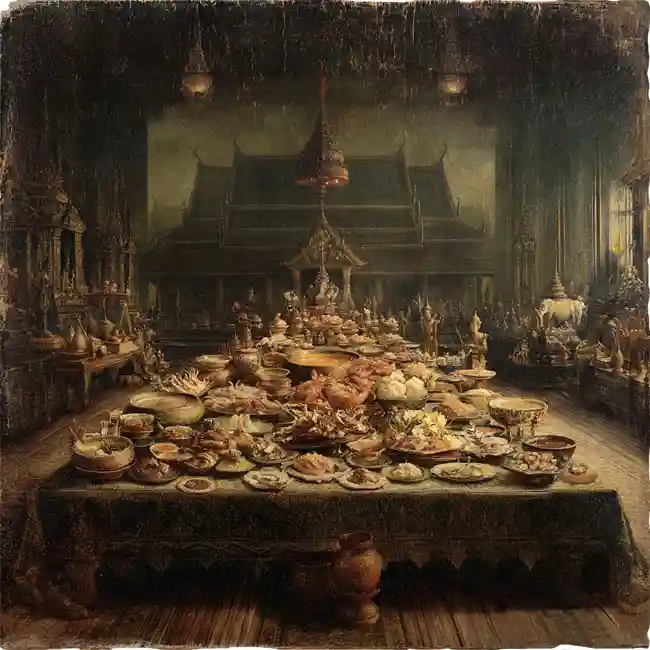
🇹🇭 👑📜 The Storyteller’s Intro: Secrets Whispered Behind Palace Walls
Hey there, fellow food lover! Lean in close, because today we are embarking on a journey that very few people in the world ever get to experience. Imagine walking through heavy, gilded teakwood doors into a world shrouded in absolute secrecy, where the air smells of roasted coriander root, crushed wild fingerroot, and sweet kaffir lime zest. Welcome to the elite, hidden universe of Thai Signature Royal Sauces. This isn’t your everyday takeout curry or the typical street food pad thai you grab on a busy Bangkok corner. No, we are stepping back 200 to 1,000 years in time to uncover the guarded culinary mysteries of the Siamese high courts, royal palaces, and ancient aristocratic families.
For centuries, these recipes were treated like state secrets. They weren't written down in messy notebooks; they were memorized, whispered from grandmother to granddaughter, from head palace chef to trusted apprentice. If a commoner happened to smell these sauces cooking, they could only dream of what they tasted like. Food in the Thai royal courts wasn't just about survival or filling a belly—it was a highly calculated art form, a symbol of divine status, and a delicate political tool.
When we look back at the grand timeline of Thai aristocratic dining, the evolution is mind-blowing. We can easily break this rich history down into three distinct, magical eras:
◦ The Ancient Roots (1,000–600 Years Ago): This takes us back to the foundations of the Sukhothai and early Ayutthaya kingdoms. During this time, the food was raw, elemental, and deeply connected to nature. Sauces were built entirely around wild herbs, fermented river fish, and rare mountain salt. It was clean, sharp, and meant to empower the god-kings who ruled the lands.
◦ The Golden Age of Aristocratic Fusion (400–200 Years Ago): This is the mid-to-late Ayutthaya and early Rattanakosin periods. The kingdom became a massive global trading hub. Portuguese traders brought chilies, Persian merchants brought rich spices, and Chinese cooks brought advanced wok techniques. The royal chefs took these foreign ingredients, refined them, removed any harshness, and created complex, multi-layered sauces that were sweet, sour, salty, and spicy all at once.
◦ The Refined Siamese Renaissance (200 Years Ago to Present): During the Bangkok era, the elite culture reached its absolute peak of elegance. Dishes were meticulously carved, seeds were painstakingly removed from every vegetable, and sauces were simmered for days to achieve a perfectly smooth texture that would never offend a royal palate.
Living like an ancient Thai noble meant following a strict, beautiful rhythm. The day-to-day lifestyle was deeply tied to the seasons and the waters. You didn't just eat what was available; you ate what harmonized with the weather. If it was the rainy season, your sauces were infused with warming ginger and bitter herbs to prevent sickness. In the scorching summer, the court enjoyed light, jasmine-scented cooling dishes. Every meal was an elaborate ritual, served on fine celadon ceramics and gleaming brass platters. Now, for the first time, we are pulling back the silk curtains to explore the essence of these legendary flavors.
🗺️ The Royal Culinary Tourism: Mapping Flavors to Historic Landscapes
If you really want to understand why these Thai signature royal sauces taste so magical, you have to look at the land they came from. Food and geography are deeply intertwined in Thailand. The ancient nobles didn't have supermarkets; they had vast networks of pristine forests, rushing rivers, and tropical coastlines where the absolute best ingredients were harvested by hand as a form of royal tribute.
Today, this rich heritage has transformed into the ultimate dream for food travelers. Imagine traveling across Thailand not just to look at old temples, but to trace the exact geographic footprints of these ancient, secret flavors. This is culinary tourism in its truest, most authentic form. When you travel through the historic landscapes of Thailand, you are walking through a living, breathing pantry that has sustained kings and queens for a millennium.
Every province, every mountain range, and every winding river basin has a unique ecological microclimate. These specific environments gave birth to wild aromatics and rare ingredients that cannot be replicated anywhere else on Earth. By mapping these flavors to the historic landscapes, we begin to see that a single drop of a royal Thai sauce is actually a distillation of centuries of geography, trade routes, and natural history. It is a time machine in a bottle.
🚣 Cradle of Royal Delicacies: The River Basins and Coastal Kingdoms
Let’s start our journey in the lowlands, the true heart of old Siam. The central plains and the sweeping coastlines were the absolute lifeblood of the royal kitchen network. This region is a lush, water-logged paradise where the Chao Phraya River twists and turns like a giant snake, depositing rich nutrients into the soil before meeting the ocean.
◦ The Floating Empires of Flavor: The central river basins were the epicenter of agricultural wealth. Because the water was so abundant, this area yielded the finest jasmine rice, plump river prawns, and incredibly sweet coconut palms. The sauces born here are famous for their luxurious, creamy textures, balancing rich coconut cream with the deep, savory undertones of fermented river fish and shrimp pastes.
◦ The Secret Maritime Trade Routes: Moving down to the coastal kingdoms, the royal courts had direct access to the bounties of the Gulf of Thailand and the Andaman Sea. Here, ancient chefs gathered sea salts, sun-dried marine life, and rare coastal herbs. This maritime influence introduced a brilliant brightness to the aristocratic palate, blending sharp lime juices with deep, oceanic umami.
◦ Historic Hidden Gems to Explore: For the ultimate culinary traveler, visiting places like Samut Songkhram, Ayutthaya, and the old riverside neighborhoods of Bangkok is essential. Walking through these ancient waterfront communities allows you to breathe in the same salty, herbal air that inspired palace cooks centuries ago. You can still find old-school artisans processing coconut sugar over wood fires using the exact methods approved by ancient lords.
◦ The Secret Seafood Glazes of the Elite: Among the most legendary, whispered-about creations from this region are the ancient, sun-reduced seafood glazes. Unlike modern fish sauces, these were thick, highly aromatic reductions infused with wild kaffir lime leaves and charred lemongrass, used exclusively to baste fresh river catch for the royal family's private dinners.
⛰️ Kingdom of Wild Aromatics & Heritage: The Highlands and Deep Forests
Now, let’s leave the rivers behind and climb up into the misty, emerald-green mountains and dense jungles of the northern and western frontiers. This is the kingdom of wild aromatics. The air up here is cooler, the soil is rugged, and the forests are packed with untamed herbs, rare roots, and medicinal plants that the lowland plains could never grow.
◦ The Untamed Mountain Bounty: The aristocratic families of the northern principalities relied heavily on the secrets of the deep forest. Instead of heavy coconut cream, their sauces were built around the intense, vibrant oils of wild-harvested plants. Think of rare forest galangal, wild ginger, mountain pepper, and bitter barks that added an earthy, grounding complexity to every bite.
◦ The Art of the Forest Forage: Foraging for the royal kitchen was an elite skill. Specialized woodsmen were tasked with venturing deep into the jungle to find wild honeycombs, rare mushrooms, and the prized Ma-khwaen (a wild mountain pepper related to Sichuan peppercorn that creates a tingling, aromatic sensation on the tongue). These wild elements gave northern aristocratic sauces a rustic yet incredibly sophisticated edge.
◦ Historic Hidden Gems to Explore: To truly feel the energy of this region, a traveler must wander through the ancient mountain towns of Chiang Mai, Lampang, and the hidden valleys of Mae Hong Son. Exploring the old forest trails and misty highlands gives you an instant appreciation for the rugged terrain that birthed these intense, fragrant, and medicinal flavor profiles.
◦ The Secret Wild Herb Pastes: The crown jewel of this region's culinary secrets is a legendary, dark, stone-ground herb paste. Made from charred wild green chilies, roasted forest garlic, and a complex blend of jungle roots, this ancient sauce was used by nobles to restore vitality and warm the body during the cold mountain nights.
❓ Royal FAQ: Unlocking Palace Kitchen Mysteries
Q1: What makes a Thai royal sauce different from regular Thai sauces?
Answer: The difference lies in the extreme obsession with balance, ingredient purity, and presentation. In regular Thai cooking, flavors can be loud, aggressive, and starkly spicy or sour. In the royal kitchen, no single flavor is ever allowed to overpower another. If a sauce is spicy, that spice must be perfectly softened by a smooth, elegant sweetness or a subtle, savory creaminess. Furthermore, every single ingredient used in an aristocratic sauce is meticulously prepped—skins are removed, seeds are discarded by hand, and herbs are ground down to an ultra-fine, velvety texture so that the final sauce glides effortlessly across the tongue without a single rough grain.
Q2: Did ancient Thai nobles really use sauces that are 1,000 years old?
Answer: Yes, absolutely! While the exact recipes have evolved slightly as new ingredients arrived via trade, the core flavor profiles and fermentation techniques date back to the Sukhothai kingdom and the early Khmer-influenced courts. For instance, the method of using sun-fermented fish and salt-aged forest fruits to create deep, umami-rich dipping sauces has been passed down through generations of elite families for a millennium. What we enjoy today as a refined royal sauce is the direct descendant of those ancient, sacred formulas.
Q3: Why were these recipes kept so strictly secret for hundreds of years?
Answer: In ancient Siam, food was power. The unique flavors created within a specific noble household or palace kitchen were considered intellectual property and a status symbol. Serving a guest a dish with a flavor they could never replicate anywhere else was the ultimate display of wealth, sophistication, and political dominance. If a palace cook leaked a secret sauce recipe to the public or to a rival court, it was seen as a massive betrayal. Recipes were closely guarded family treasures, shared only with those deemed worthy to carry the legacy forward.
Q4: How did international trade change the secret sauces of the Thai aristocracy?
Answer: International trade was the ultimate turning point that transformed Thai royal sauces into global culinary masterpieces. When foreign traders arrived in the old capitals, palace chefs were given first pick of the exotic imports. They took Persian cumin and coriander, Portuguese chilies, and Chinese soy techniques, and expertly woven them into traditional Thai herb bases. Instead of just adopting foreign dishes, they used these global ingredients to elevate their own native sauces, making them smoother, more complex, and endlessly fascinating to the international dignitaries who visited the courts.
🧠 Final Thoughts: The Timeless Allure of Aristocratic Gastronomy
There is something genuinely intoxicating about stepping into a culinary world that has survived the rise and fall of empires, wars, and the relentless march of time. The timeless allure of Thai aristocratic gastronomy isn't just about eating luxury food; it’s about consuming a piece of living history. Every single ingredient in these ancient sauces tells a story of survival, artistry, and an unyielding dedication to perfection.
We live in a fast-food world where everything is rushed, processed, and simplified for convenience. That is exactly why these ancient, slow-crafted royal sauces are so incredibly special. They represent the exact opposite of modern fast food. They represent patience, respect for the earth, and an elevated way of living that honors every single bite.
We are currently putting the final touches on an exclusive, highly anticipated project. We are carefully translating and adapting these ancient, closely guarded palace blueprints into single, step-by-step recipe guides that you can actually recreate in your own kitchen. Imagine being able to serve your friends and family a sauce that was once reserved exclusively for the kings of Siam! Keep your eyes locked on this page, bookmark it, and check back often. The grand unveiling of these individual secret recipes is coming very soon, and you definitely do not want to miss it.
👑 Credit to the Keepers of the Culture (The Legacy)
Before we close this sacred chapter, we must take a moment to offer our deepest, most profound respect and gratitude to the true keepers of this cultural legacy. We bow our heads to the generations of palace chefs, royal descendants, grandmothers, and dedicated culinary historians who refused to let these ancient traditions fade into obscurity.
It is because of their fierce loyalty to their heritage, their incredible memories, and their willingness to preserve these complex arts through centuries of change that we are able to experience these flavors today. They did not just preserve recipes; they preserved the very soul, dignity, and artistic identity of Thailand. By learning about and honoring these ancient Thai signature royal sauces, we are helping to keep their beautiful, timeless legacy alive for generations to come. Stay tuned, friends—the culinary adventure of a lifetime is just getting started!
👑🥘 The Lost Elixirs of Ayutthaya: How to Recreate Siam’s 500-Year-Old Palace Sauces at Home
👉 Taste Thai Elite Signature Royal Sauces
| 🌐 👑🥘 < Back | 🇹🇭 👑🍱 < Previous |