
🏠 Home > 🗺️ Recipes > 👑🍱 Royal Court Side-Bites (Snacks) > 🇹🇭 Thai Royal Court Side-Bites (Snacks) Recipes > 👑🍱 1Royal Golden Flower Dumplings (Chor Muang).
👑🍱 A Journey Through Thailand's Hidden Royal Court Side-Bites
Published by Supakorn | Updated: July 2026
🇹🇭 👑 The Forgotten Royal Legacy of Thailand: The Ayutthaya Kingdom and Early Rattanakosin Court
📜 The Storyteller's Intro
Imagine stepping through the towering palace gates of ancient Siam nearly one thousand years of culinary evolution ago. The sounds of the bustling city fade away, replaced by the gentle rustle of silk garments, the quiet footsteps of royal attendants, and the fragrant aroma drifting from kitchens reserved exclusively for kings, queens, princes, princesses, and honored diplomats.
Behind high palace walls stood the royal kitchens, places few commoners ever witnessed. Here, generations of master cooks devoted their lives to transforming the finest ingredients into edible works of art. Every herb was selected with extraordinary care. Every vegetable was carved with remarkable precision. Every bite carried not only flavor but also a reflection of Thailand's artistic soul.
Royal side-bites were never ordinary snacks. They were symbols of refinement, diplomacy, celebration, and cultural identity. Many appeared during grand coronations, religious ceremonies, diplomatic receptions, and intimate gatherings within the royal residence. Some recipes required days of preparation, while others demanded techniques that apprentices spent years mastering before they earned the privilege of serving the royal family.
Unlike everyday village cooking, palace cuisine celebrated patience above speed. Presentation was considered just as important as taste. Tiny details mattered. Flowers became edible decorations. Fruit transformed into intricate sculptures. Even the arrangement of food on silver serving trays reflected social rank and ceremonial importance.
Many of these treasured creations were carefully guarded within palace walls. Recipes were passed directly from teacher to student, from royal cook to trusted apprentice, often spoken rather than written. This secrecy protected not only culinary knowledge but also the prestige of the monarchy itself.
Today, only fragments of these traditions survive through historical records, cultural preservation efforts, and families whose ancestors once served the royal court. Every recreated recipe offers a rare opportunity to experience a chapter of Thai history that almost disappeared forever.
Rather than simply preparing food, recreating these royal side-bites allows us to appreciate centuries of craftsmanship, hospitality, and cultural elegance that continue to inspire chefs throughout the world.
🌏 The Global Value
Throughout history, every great civilization protected its finest recipes as symbols of wealth and national identity. Thailand was no exception.
Royal court snacks represented far more than luxurious treats. They demonstrated the kingdom's prosperity, agricultural abundance, artistic sophistication, and ability to welcome distinguished guests with extraordinary generosity. Foreign ambassadors who visited Siam frequently admired not only the magnificent palaces but also the breathtaking presentation of royal cuisine.
Many ingredients used inside the palace were difficult to obtain outside the capital. Seasonal fruits were transported across the kingdom. Fresh herbs arrived daily from carefully maintained royal gardens. Premium coconut cream, fragrant jasmine rice, aromatic spices, and delicate flowers were selected according to strict standards that reflected the prestige of the royal household.
Equally valuable were the cooking techniques themselves. Palace chefs refined methods that balanced sweetness, saltiness, creaminess, herbal freshness, and subtle fragrance into harmonious combinations rarely found elsewhere. Every finished dish sought perfect balance rather than overwhelming intensity.
As political changes reshaped Southeast Asia over the centuries, many handwritten notes disappeared, experienced palace cooks retired, and countless family traditions slowly faded. Some recipes survived only through oral storytelling. Others evolved into simplified versions suitable for everyday households, while the original ceremonial techniques gradually vanished.
Today, culinary historians and traditional Thai cooks continue studying historical manuscripts, cultural archives, and surviving royal traditions to preserve these remarkable recipes for future generations. Each restored dish helps protect an important part of Thailand's cultural heritage while introducing international audiences to the extraordinary sophistication of ancient Siamese cuisine.
Exploring these forgotten palace recipes is therefore much more than learning how to cook. It is an opportunity to reconnect with history, appreciate traditional craftsmanship, and celebrate one of Asia's richest culinary legacies.
✨ The Collection
This collection is dedicated to reviving some of the most elegant royal side-bites ever prepared inside Thailand's historic palaces.
Rather than focusing only on famous dishes already known worldwide, this guide explores lesser-known palace creations that showcase remarkable attention to detail, graceful presentation, and centuries of accumulated culinary wisdom.
Each featured recipe tells its own story. Some welcomed foreign dignitaries arriving by royal barge. Others accompanied sacred ceremonies performed inside temple grounds connected to the palace. Several became favorites of queens and princesses known for encouraging refinement within the royal kitchens.
Although modern kitchens differ greatly from those of ancient Siam, today's home cooks can still recreate these remarkable flavors by understanding the principles behind each recipe rather than simply following measurements.
Throughout this guide, you will discover the historical inspiration behind every dish, practical ingredient substitutions suitable for contemporary kitchens, step-by-step preparation techniques, traditional palace cooking tips, and fascinating stories that reveal why these recipes became treasured symbols of Thailand's royal heritage.
Instead of allowing these culinary masterpieces to remain forgotten, we invite you to bring them back to life—one carefully prepared bite at a time.
🍃 Recipe: Royal Golden Flower Dumplings (Chor Muang)
👑 About this Royal Secret
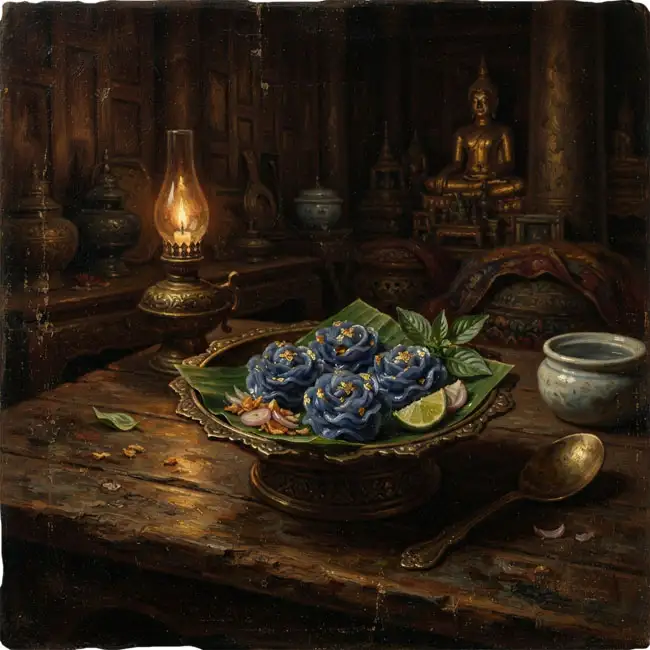
Among Thailand's most graceful palace side-bites, Royal Golden Flower Dumplings, inspired by the classic Chor Muang, have long represented the artistic brilliance of royal cuisine. Their delicate flower-shaped wrappers, naturally tinted with butterfly pea blossoms, resemble blooming orchids carefully arranged within palace gardens.
Historical traditions associate these elegant dumplings with royal banquets during the Ayutthaya Kingdom and later the early Rattanakosin Court. Skilled palace cooks prepared them for distinguished members of the royal family, respected monks invited for important religious ceremonies, and foreign envoys welcomed into the kingdom with exceptional hospitality.
Creating these dumplings demanded remarkable patience. Each wrapper was individually shaped by hand using tiny decorative tweezers or carefully pinched fingertips to form petals that looked almost too beautiful to eat. Palace chefs believed that food should delight the eyes before pleasing the palate, making visual perfection an essential part of every serving.
The filling balanced savory sweetness with fragrant herbs, while the delicate dough remained soft yet resilient enough to hold its intricate floral shape after steaming. Every finished dumpling reflected harmony between craftsmanship, flavor, and cultural symbolism.
In royal culture, flowers represented prosperity, elegance, and blessings for those gathered around the dining table. Serving these edible blossoms during important occasions expressed respect toward honored guests and celebrated the kingdom's artistic achievements through cuisine.
Today, recreating Royal Golden Flower Dumplings offers more than a delicious snack. It provides a meaningful connection to centuries of palace tradition, where every carefully folded petal preserves the timeless spirit of Thailand's royal kitchens.
🥢 Ingredients & The Aristocratic Touch
👑 The Royal Pantry
Inside the royal kitchens of ancient Siam, every ingredient was chosen with extraordinary care. Palace cooks believed that exceptional dishes began long before the fire was lit. They started with the freshest produce, the finest herbs, and ingredients harvested at precisely the right moment.
Fresh coconut was grated only hours before cooking to produce rich, naturally sweet coconut cream. Aromatic garlic and white pepper were gently crushed by hand to preserve their fragrance. Butterfly pea flowers were picked at sunrise when their vivid blue color was at its brightest, giving the dumpling wrappers their elegant royal appearance.
Palm sugar added gentle sweetness without overpowering the savory filling, while premium fish sauce contributed a delicate depth that complemented the herbs rather than dominating them. Every ingredient served a purpose, creating harmony instead of competition.
This careful balance became one of the defining characteristics of Thai royal cuisine. Palace chefs never sought excessive richness. Instead, they pursued elegance, refinement, and perfect balance in every bite.
Fortunately, modern home cooks can recreate this timeless experience using readily available ingredients while preserving the spirit of the original royal recipe.
🌿 Modern Substitutes
If some traditional ingredients are difficult to find, these alternatives work beautifully while maintaining the character of the dish.
• Fresh butterfly pea flowers can be replaced with dried butterfly pea flowers steeped in hot water.
• Traditional palm sugar may be substituted with light brown sugar, although palm sugar provides a more authentic caramel-like sweetness.
• Fresh coconut cream may be replaced with canned premium coconut cream containing a high coconut content.
• Duck meat can be replaced with ground chicken or lean pork for easier preparation.
• Garlic chives may be substituted with finely sliced green onions.
• Rice flour should remain the primary flour whenever possible, but a small amount of tapioca starch may improve elasticity.
• White pepper is recommended over black pepper because it offers a smoother, more delicate aroma.
• Fresh coriander roots may be replaced with coriander stems if the roots are unavailable.
These substitutions make the recipe practical without sacrificing the graceful balance that defines royal Thai cooking.
📏 The Measurements
For the Royal Filling
• 250 grams ground chicken or finely minced duck
• 2 tablespoons finely chopped shallots
• 2 tablespoons finely chopped garlic
• 1 tablespoon finely chopped coriander root
• 1 teaspoon white pepper
• 2 tablespoons palm sugar
• 2 tablespoons fish sauce
• 1 tablespoon coconut cream
• 2 tablespoons finely chopped roasted peanuts
• 1 tablespoon finely sliced garlic chives
• 1 teaspoon cooking oil
For the Royal Dumpling Dough
• 150 grams rice flour
• 40 grams tapioca starch
• 250 milliliters butterfly pea flower infusion
• 1 tablespoon coconut oil
• One-quarter teaspoon fine salt
For Garnishing
• Crispy fried garlic
• Fresh coriander leaves
• Thinly sliced red chili
• Lightly steamed garlic chives
• Fresh edible flowers if available
🔥 The Chef's Ritual
Creating Royal Golden Flower Dumplings is more than following a recipe. It is a peaceful ritual that rewards patience, attention to detail, and appreciation for traditional craftsmanship.
• Step 1 – Prepare the Butterfly Pea Infusion
Bring clean water to a gentle simmer before pouring it over the butterfly pea flowers. Allow the flowers to steep until the water develops a rich sapphire-blue color. Strain carefully and let the liquid cool completely.
This naturally colored infusion gives the dumplings their iconic royal appearance without the need for artificial coloring.
• Step 2 – Cook the Royal Filling
Heat a pan over medium heat and add a small amount of cooking oil.
Gently sauté the garlic, shallots, and coriander root until fragrant but not browned.
Add the ground chicken or duck and stir continuously, breaking the meat into fine pieces.
Season with fish sauce, palm sugar, and white pepper.
Continue cooking slowly until the moisture evaporates and the filling becomes rich, aromatic, and slightly sticky.
Fold in the roasted peanuts, garlic chives, and coconut cream during the final minute.
Transfer the filling onto a plate and allow it to cool completely before shaping.
A cool filling is much easier to wrap and helps preserve the delicate flower shape.
• Step 3 – Prepare the Royal Dough
Combine the rice flour, tapioca starch, and salt in a mixing bowl.
Gradually pour in the cooled butterfly pea infusion while stirring continuously.
Transfer the mixture to a saucepan over low heat.
Cook gently while stirring without interruption.
As the starch begins to cook, the mixture will gradually transform into a smooth, glossy dough.
Remove from the heat and knead carefully while still warm until the dough becomes soft, silky, and elastic.
Cover with a damp cloth to prevent drying.
• Step 4 – Shape the Dumplings
Divide the dough into small portions approximately the size of large grapes.
Flatten each piece into a thin round wrapper.
Place a spoonful of cooled filling in the center.
Carefully seal the edges together.
Using clean fingertips or decorative dumpling tweezers, gently pinch the edges into elegant flower petals.
Work patiently.
Royal palace cooks often spent years mastering this beautiful technique.
The finished dumplings should resemble blooming flowers ready to decorate a royal banquet.
• Step 5 – Steam with Patience
Arrange the dumplings on lightly oiled parchment paper or banana leaves inside a steamer.
Leave enough space between each dumpling to prevent sticking.
Steam over gently boiling water for approximately 10 to 12 minutes.
Avoid excessive heat.
Gentle steam allows the wrappers to remain translucent, tender, and beautifully shaped.
• Step 6 – Finish Like a Palace Chef
Brush each dumpling lightly with coconut oil while still warm.
This creates the delicate glossy finish often associated with royal Thai cuisine.
Arrange them carefully on an elegant serving plate.
Decorate with crispy fried garlic, coriander leaves, garlic chives, edible flowers, and finely sliced red chili for contrast.
Every element should appear balanced, graceful, and inviting.
The goal is not simply to prepare food but to present a work of edible art worthy of Thailand's royal culinary heritage.
👑 Secrets of the Palace Kitchen (Tips & Mistakes)
The finest royal cooks understood that extraordinary cuisine was created through discipline, patience, and attention to the smallest details. Their methods were refined over generations, and many of these timeless techniques remain valuable today.
🌟 Traditional Palace Tips
• Always prepare the filling before making the dough. A completely cooled filling is easier to wrap and helps the dumplings keep their elegant flower shape.
• Use freshly prepared butterfly pea infusion whenever possible. The natural color is brighter and gives the wrappers their signature royal appearance.
• Cook the dough slowly over low heat. Rushing this stage may produce a sticky or uneven texture that is difficult to shape.
• Keep the dough covered with a damp cloth while working. This prevents the surface from drying and cracking.
• Brush the finished dumplings lightly with coconut oil immediately after steaming. This creates a soft sheen that was highly admired in royal cuisine.
• Steam gently rather than aggressively. Gentle steam keeps the wrappers tender while preserving the intricate floral details.
• Shape every dumpling with calm, steady movements. Palace chefs believed that beautiful food reflected the cook's patience and respect for the guests.
⚠️ Common Mistakes to Avoid
• Overfilling the wrappers may cause them to split during steaming.
• Dough that is too dry will crack while shaping, while overly wet dough will lose its delicate flower form.
• Cooking the filling over high heat can make the meat coarse instead of tender.
• Adding too much fish sauce or sugar may overpower the balanced flavor that defines royal Thai cuisine.
• Placing the dumplings too close together in the steamer may cause them to stick.
• Skipping the resting time for the filling often makes shaping more difficult.
• Excessive steaming may soften the petals until they lose their elegant appearance.
With patience and careful attention, even first-time cooks can create dumplings worthy of a royal banquet.
🧐❓ Royal FAQ
Q1.Why are these dumplings naturally blue?
The beautiful blue color comes from butterfly pea flowers, a traditional ingredient that has been used in Thai cuisine for centuries. The flowers contribute color without changing the delicate flavor of the dough.
Q2.Can I prepare them in advance?
Yes. The filling may be prepared one day ahead and refrigerated. The shaped dumplings can also be assembled several hours before steaming, provided they are covered to prevent the dough from drying.
Q3.Can these dumplings be frozen?
Yes. Arrange the uncooked dumplings on a tray until firm, then transfer them to an airtight container. Steam directly from frozen, adding a few extra minutes to the cooking time.
Q4.What should I serve with Royal Golden Flower Dumplings?
They are traditionally enjoyed as elegant side-bites during celebrations or family gatherings. Fresh herbs, carved vegetables, and a light Thai-style dipping sauce complement them beautifully without overpowering their refined flavor.
📜 The Taste of History (Summary)
Royal Golden Flower Dumplings are much more than a visually stunning appetizer. They represent centuries of artistic skill, culinary wisdom, and cultural heritage carefully preserved inside Thailand's royal courts.
Every delicate petal reflects the extraordinary craftsmanship expected of palace chefs. Every carefully balanced filling tells the story of a kitchen where patience was considered an essential ingredient. Even the gentle blue color serves as a reminder that nature itself played an important role in royal cuisine.
Although modern kitchens are very different from those of ancient Siam, the values behind these recipes remain timeless. Respect for quality ingredients, thoughtful preparation, graceful presentation, and balanced flavors continue to define the finest examples of Thai cooking.
Preparing this recipe today allows us to experience more than delicious food. It offers an opportunity to reconnect with generations of culinary artisans whose remarkable skills transformed everyday ingredients into edible masterpieces.
Each carefully shaped dumpling becomes a small tribute to Thailand's rich royal heritage, reminding us that history can still be appreciated one beautiful bite at a time.
🏛️ Final Thoughts: Bringing History to Your Table
Centuries ago, only members of the royal family and their honored guests could enjoy dishes crafted inside Thailand's magnificent palace kitchens. Today, those traditions no longer need to remain hidden behind ancient walls.
With readily available ingredients, thoughtful guidance, and a little patience, home cooks everywhere can recreate recipes that once symbolized elegance, celebration, and extraordinary craftsmanship.
The true beauty of royal Thai cuisine lies not in expensive ingredients but in the care invested in every stage of preparation. Taking time to shape each dumpling, balancing every seasoning with intention, and presenting the finished dish beautifully all help preserve the spirit of the original palace tradition.
Whether you prepare these dumplings for a family gathering, a festive celebration, or simply to explore Thailand's remarkable culinary heritage, each bite carries a story that has traveled across generations.
Food has always been one of the world's most meaningful ways to preserve culture. By recreating these forgotten royal recipes, we help ensure that the artistry of Thailand's historic kitchens continues to inspire future generations.
✨ The Call to Action (The Golden Hook)
If you enjoy discovering the hidden flavors of history, you have only begun an unforgettable culinary journey.
Across the world, countless royal kitchens once protected extraordinary recipes that reflected the traditions, creativity, and identity of entire civilizations. Many of these remarkable dishes remain largely unknown outside historical archives and family traditions.
Join us as we continue uncovering forgotten palace recipes, imperial culinary treasures, and ancient royal cooking techniques from cultures around the globe. Every recipe we share is another step toward preserving the world's priceless gastronomic heritage for future generations.
Cook them. Share them. Celebrate them. Most importantly, help keep these remarkable stories alive through the universal language of food.
🌏 Credit to the Keepers of the Culture (The Legacy)
This recipe is inspired by the enduring culinary traditions of the Thai Royal Court, particularly the refinement of palace cuisine that flourished during the Ayutthaya Kingdom and continued into the early Rattanakosin period. Historical techniques, cultural references, and traditional ingredients have inspired this modern adaptation.
The ingredient measurements and preparation methods have been thoughtfully adjusted for contemporary home kitchens while honoring the elegance, craftsmanship, and culinary philosophy that have long distinguished Thailand's royal gastronomic heritage.
This article is intended to celebrate, respect, and help preserve Thailand's extraordinary culinary legacy by encouraging a deeper appreciation of the artistry, history, and cultural values that continue to inspire royal Thai cuisine today.
| 🇹🇭 👑🍱 < Back |