
🏠 Home > 🗺️ Recipes > 👑🍷 Noble Elixirs & Teas (Drinks) > 🇹🇭 Thai Noble Elixirs & Teas (Drinks) Recipes
🇹🇭 👑🍷 Thai Noble Elixirs & Teas (Drinks) Recipes
Published by Supakorn | Updated: July 2026
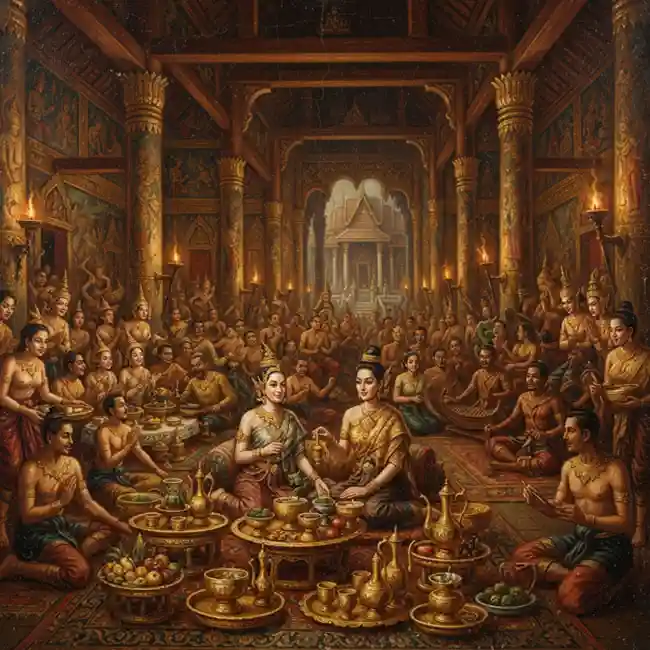
🇹🇭 👑📜 The Storyteller’s Intro: What Did Siam’s Nobles Really Sip Behind Palace Walls?
Long before Bangkok’s rooftop cafes and iced Thai tea became Instagram famous, the courts of Siam guarded a liquid legacy that spanned nearly a millennium. Thai Noble Elixirs & Teas (Drinks) weren’t just about quenching thirst. They were power moves, medicine, meditation, and messages to the gods — all steeped in one cup.
The story of these aristocratic beverages unfolds across four defining eras, each one layering new flavors, rituals, and meanings onto the last:
◦ Sukhothai Period (1238–1438): The Dawn of Sacred Sipping
This is where it begins — around 800 years ago. The Sukhothai court believed water was life’s purest blessing. Monks and royal physicians documented the first “noble tonics” made from wild forest flowers, sacred lotus stamens, and rainwater collected during auspicious moon phases. Drinks were served in celadon cups to cool the body and calm the mind. Eating and drinking were acts of merit. Nobles fasted on herbal infusions before temple ceremonies and used lightly fermented fruit hydrosols to aid digestion after lavish feasts.
◦ Ayutthaya Period (1351–1767): The Golden Age of Palace Mixology
As Ayutthaya became a global trading hub, the royal pantry exploded. Persian, Chinese, Indian, and Portuguese traders brought rosewater, pandan, star anise, and tamarind. The palace had a dedicated “Krom Phramachak” — a department of royal beverage artisans. They crafted multi-stepped cooling elixirs for summer, warming root teas for rainy season, and ceremonial cordials for coronations. Etiquette was strict: nobles never drank standing, never gulped, and always offered the first sip to the highest-ranking person present. Glassware, temperature, and even the direction you stirred mattered.
◦ Thonburi to Early Rattanakosin Period (1767–1851): Preservation Through Turmoil
When Ayutthaya fell, recipe keepers fled with handwritten tamra — palm-leaf manuscripts. King Taksin and Rama I’s courts made it a mission to reassemble the “lost flavors.” This era birthed the idea of “edible archives.” Elderly palace cooks were interviewed and their knowledge codified. Drinks became simpler but more symbolic, focusing on native Thai ingredients to reinforce Siamese identity. Bael fruit tea, butterfly pea infusions, and jewel-toned floral sodas became quiet acts of cultural resistance.
◦ Middle to Late Rattanakosin Period (1851–1950s): The Refined Revival
Kings Rama IV and Rama V loved science and diplomacy. Royal kitchens began documenting exact steeping times, water pH, and regional terroir. Victorian afternoon tea met Siamese herbal wisdom. Nobles served iced chrysanthemum with silver straws in Parisian-style salons, while still brewing 400-year-old palace recipes for private rites. The “eating life” of a noble was scheduled around drinks: a dawn detox tonic, a mid-morning floral refreshment, a post-siesta digestive, and a moonlit calming brew.
The Noble Way of Living: For Thai aristocrats, drinks structured the day. They were prescribed by royal physicians for balance of the four elements — earth, water, wind, fire. A noble’s home had a separate “beverage sala” where ingredients were sun-dried, mortars were never used for garlic, and ice was once so precious it was wrapped in silk. To drink was to show refinement, restraint, and respect for nature’s cycles.
🗺️ The Royal Culinary Tourism: Mapping Flavors to Historic Landscapes
You can’t separate Thai Noble Elixirs & Teas from the land they were born in. The palace didn’t invent flavors — it curated them from Siam’s mountains, rivers, and coasts. Today, you can literally taste history by traveling these routes. This is culinary tourism for time travelers.
◦ Why Phetchaburi’s Palmyra Palm Water Was Royal-Only
The provinces south of Bangkok were the “royal pantry.” Phetchaburi’s palm groves produced a sweet, mineral-rich sap that was reduced into syrup for court drinks. Only trees over 20 years old were tapped, and only at dawn. Travel here now and local elders still climb palms barefoot, keeping the tradition alive near Phra Nakhon Khiri Historical Park.
◦ Nan & Loei: The Misty Tea Highroads
Northern nobles sent expeditions into the mountains of Nan to harvest wild miang tea leaves and aromatic forest herbs. The cool climate and high elevation gave the brews a clarity palace poets called “drinking the clouds.” Modern tea pilgrims can hike Doi Phu Kha National Park, then visit villages where the tea is still fire-roasted in bamboo.
◦ Ayutthaya River Markets: Where Global Met Local
The Chao Phraya River was the liquid highway of flavor. Court records describe boats delivering Chinese jasmine, Indian sarsaparilla, and Javanese ginger to the palace docks. Visiting Ayutthaya Historical Park today, you’re walking the same riverbanks where nobles first tasted rose-infused snow-cooled drinks from Persia.
◦ Chanthaburi’s Gem of a Garden
Known for gems, but also for cardamom and tropical fruits. Royal recipes call for “Chanthaboon cardamom” specifically — smaller, more pungent than Indian varieties. The fruit orchards here supplied mangosteen and salak for tart-sweet summer elixirs. Agro-tourism homestays now let you pick the same fruits nobles craved.
🚣 Cradle of Royal Delicacies - River Basins & Ancient Coasts
Siam’s heart beats with its rivers. The Chao Phraya, Tha Chin, and Mae Klong basins weren’t just transport — they were the cradle of Thai noble beverage culture.
◦ The Lotus Connection: Bang Pa-In to Suphan Buri
The royal lotus, Nymphaea nouchali, grows in the floodplains of central Thailand. For 600+ years, palace artisans practiced “Nham Dok Mai” — embedding tea leaves inside closed lotus buds overnight so they absorb the perfume. You can witness this near Bang Pa-In Palace at dawn in rainy season. The Suphan Buri River communities still supply temple-grade lotus for this ritual.
◦ Samut Songkhram’s Coconut Nectar Legacy
The Amphawa floating market region gave the court its prized coconut flower nectar. Unlike coconut sugar, this was used fresh in translucent, amber drinks served to cool the blood. Take a long-tail boat tour at sunset and you’ll pass the same orchards that provisioned King Rama II’s dessert kitchen.
◦ Hidden Gem: Phetchaburi’s “City of Three Flavors”
Phetchaburi is called “Mueang Sam Ros” — salty, sweet, sour. The coastal salt farms, palm sugar, and tamarind groves created a perfect trinity for balancing royal elixirs. The UNESCO-listed Kaeng Krachan Forest Complex nearby is the source of wild honey used in court tonics. Food travelers can join salt-farming tours and palm sugar workshops that trace straight back to palace supply chains.
Travel Tip for Flavor Hunters: Follow the “Royal River Road” from Bangkok to Ayutthaya to Bang Pa-In. You’ll hit three eras of noble drink history in 80 km. Look for temple murals depicting court life — many show servants carrying tall, covered beverage urns.
⛰️ Kingdom of Wild Aromatics & Heritage - Mountains & Deep Forests
If the rivers gave Siam its sweetness, the mountains gave it soul. The north’s misty peaks were the royal apothecary and aromatics vault.
◦ Chiang Mai to Chiang Rai: The Herbal Highlands
Lanna nobles prized highland botanicals like makhwaen pepper, wild ginger, and mountain honey. Court physicians trekked to Doi Inthanon to collect dok ngiew flowers for ruby-red infusions believed to strengthen the heart. Today, the Queen Sirikit Botanic Garden conserves these species. Homestay tea routes in Mae Kampong let you forage with Karen hilltribe elders who were once royal suppliers.
◦ Tak’s Mystery: The Forbidden Forest Cordials
The Umphang wilderness was a source of rare barks and roots used in late-Ayutthaya “longevity brews.” Access was restricted to palace herbalists. Now it’s a UNESCO World Heritage Site. Ethical trekking tours share the botanical lore without harvesting, honoring the “keep but don’t take” noble code.
◦ Loei & Phitsanulok: The Cool-Climate Secret
Phu Ruea and Phu Hin Rong Kla’s cold nights produce jasmine with double the aromatic oils of lowland blooms. These went into “moon-kissed teas” drunk by nobles during poetry nights. Visit during winter flower season and the whole province smells like a palace beverage sala.
Why This Matters for Travelers: Northern Thai cuisine is famous, but Northern Thai drinks are the untold chapter. Visiting a highland tea plantation or botanical garden isn’t just pretty — it’s sipping from the same terroir that kept kings alert during war councils.
🖐️ Royal FAQ: Unlocking Palace Kitchen Mysteries
Q1.Why were so many Thai noble drink recipes kept secret for centuries?
Three reasons: medicine, status, and diplomacy. Many elixirs were prescribed by court physicians, so the formulas were medical IP. Second, serving a rare drink showed your province’s wealth and loyalty to the crown. Third, unique recipes were “soft power” — gifts to foreign envoys. Manuscripts were often written in code or poetic metaphor so rival courts couldn’t copy them. That’s why we have names like “Moonlight on the Water” instead of “lemongrass pandan cooler.”
Q2.Did nobles really have a separate department just for drinks?
Yes. The Krom Phramachak during Ayutthaya and Krom Sang in Rattanakosin handled royal beverages. They managed everything from sourcing spring water to training “flavor balancers” who adjusted recipes to the king’s health that day. They also controlled ice when it was first imported — ice was literally locked up like gold. This level of detail is why a single court tea could require 7 people and 3 days to make.
Q3.What’s the difference between temple drinks and palace drinks?
Intention and ingredients. Temple drinks focused on merit, simplicity, and monastic rules — no strong smells, no intoxicants, often served to cool monks after chanting. Palace drinks focused on sensory pleasure, healing, and symbolism. They used rare imports like sandalwood or saffron, and presentations were elaborate: carved fruit cups, smoke-infused glasses, layered colors. But they influenced each other constantly. Many “royal” recipes were first developed in temple infirmaries.
Q4.Are any of these 1,000-year-old drinks still served in Thailand today?
Absolutely, but you have to know where to look. Certain heritage hotels in Bangkok and Chiang Mai employ chefs trained in “Chao Wang” or palace cuisine. Some family lines of ex-palace cooks still cater private ceremonies. And rural communities near old capitals preserve versions through temple festivals. The catch? They’re rarely labeled as “royal” on menus. Ask for “nam samunphrai boran” — ancient herbal waters — and you’ll unlock the living legacy.
🧠 Final Thoughts: The Timeless Allure of Aristocratic Gastronomy
The magic of Thai Noble Elixirs & Teas isn’t just in a forgotten ingredient or a pretty color. It’s in the philosophy: that a drink can be a calendar, a map, a medicine, and a poem at the same time.
These beverages remind us that luxury for Siam’s nobles wasn’t excess — it was attention. Attention to season, to source, to the person you’re serving, and to the invisible elements that keep a body in balance.
So here’s your treasure map: Pin Ayutthaya Historical Park, Nan’s tea villages, Phetchaburi’s palm groves, and Doi Inthanon’s herb trails. Walk them. Breathe them. Talk to the grandmothers selling lotus tea at the morning market. Because the next chapter — the actual recipes — only makes sense once you’ve felt the landscapes they came from.
Stay close. The first secret formula drops soon. And trust me, your kettle will never look the same again.
👑 Credit to the Keepers of the Culture (The Legacy)
None of this knowledge survives without the true guardians of Thai culinary heritage. Deep respect to:
◦ The Royal Household Bureau’s Department of Traditional Thai Medicine and palace recipe archivists who preserved tamra manuscripts through war and time.
◦ Chao Wang cuisine masters like Thanpuying Praneet Suksawat and the Srisuwan lineage, who’ve spent decades teaching palace cooking without dilution.
◦ The monks and abbots of Wat Arun, Wat Pho, and upcountry forest temples who kept herbal drink knowledge alive as healing practice, not trend.
◦ Hilltribe communities in Nan, Chiang Rai, and Tak — Hmong, Karen, and Lawa elders — whose forest stewardship provides the ingredients nobles once prized.
◦ Thai academics and ethnobotanists at Chulalongkorn University, Mahidol University, and the Princess Maha Chakri Sirindhorn Anthropology Centre for documenting oral histories before they vanish.
This content is a tribute, not a claim. We share these stories so the world respects the hands that first brewed them. If you recreate these traditions, credit the culture, support the communities, and sip with gratitude.
👑🍷 The Forbidden Sips of Ayutthaya: Reviving 500 Years of Royal Thai Elixirs
👉 Sip Thai Signature Noble Elixirs & Teas
| 🌐 👑🍷 < Back | 🇹🇭 👑🍨 < Previous | Next > 🍲👑 🇹🇭 |