
🏠 Home > 🗺️ Recipes > 👑🍱 Royal Court Side-Bites (Snacks) > 🇦🇱 Albania Royal Court Side-Bites (Snacks) Recipes
🇦🇱 👑🍱 Albania Royal Court Side-Bites (Snacks) Recipes
Published by Supakorn | Updated: August 2026
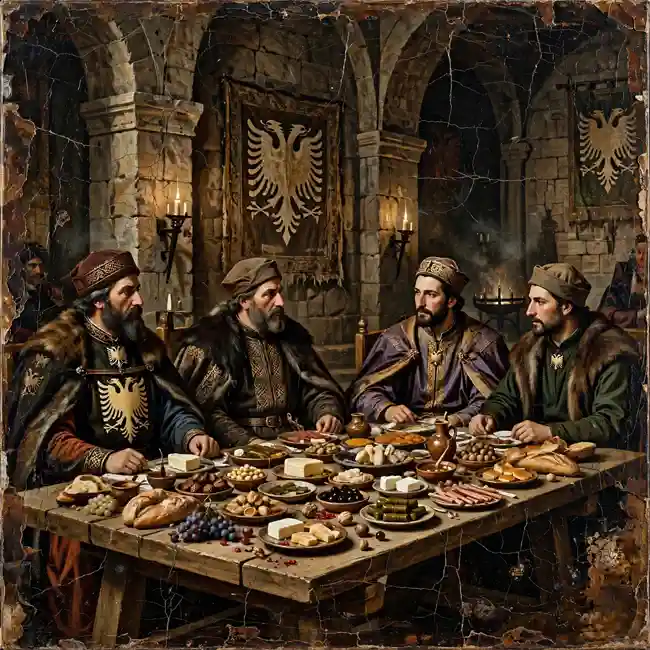
👑📜 The Storyteller’s Intro: The Secret Snacks of the Mountain Lords
This is the bible revealing the secret recipes of aristocratic and old noble cuisine aged 200 - 1,000 years of Albania Aristocratic Court Side-Bites (Snacks).
If you think Albanian food is just hearty mountain fare, you are missing the best part. Behind the stone walls of Krujë, Berat, and Gjirokastër, the old Albanian aristocracy – the Princes, the Beys, the Pashas, and the great landowning families – lived by a completely different set of culinary rules. Their snacks were never just snacks. They were power, hospitality, and poetry on a small plate.
Albania does not have a reigning Royal Court today, so we speak of its true royalty: the Aristocratic Court. Their food story spans over a thousand years, and you can taste every chapter:
• The Illyrian & Arber Foundation (1000+ Years Ago): This is the oldest layer. Long before empires, Illyrian tribes preserved cheese in brine, roasted wild herbs, and made fermented grain bites. This is where Djathë i Bardhë (white brined cheese) and pickled mountain greens were born – the sacred, salty base of every aristocratic table.
• The Byzantine & Medieval Principality Era (800 - 1400s): During the time of the Principality of Arbanon and later the noble families like Thopia, Balsha, and Kastrioti, the cuisine became refined. Skanderbeg’s court in Krujë was famous for its hospitality code, Kanuni. Side-bites were small, elegant, and meant to be eaten with the hands while discussing alliances. This era perfected stuffed leaves and layered pies.
• The Beys & Pashas Aristocratic Era (1500s - 1912): This is the golden age of Albanian aristocratic snacks. Wealthy Bey families in Berat, Elbasan, and Shkodër built massive stone tower houses (kulla) with private kitchens. Ottoman influences arrived, but Albanian nobles made it their own – less heavy, more wild herbs, more mountain dairy, more olive oil from the south. This is when most of our secret side-bites were codified and kept inside family kitchens.
For an Albanian noble, a side-bite or "meze e vogël" had three rules. It had to be ready in minutes for an unexpected guest, it had to show the richness of their land without being wasteful, and it had to be eaten without a knife. It was all about grace under pressure.
👑 What Made Aristocratic Snacking Different?
• The Code of Besa in Food: A guest in an aristocratic house had to be offered something within seconds of sitting. Not a full meal, but a bite that said, "You are safe here." That bite was always salty, warm, and accompanied by yogurt or pickles.
• Women Were the Keepers of Secrets: Unlike the grand roasts done by men, side-bites were the exclusive domain of the Zotnesha e Shtëpisë – the Lady of the House. Recipes were whispered from mother to daughter and never written down. A family's reputation depended on its Byrek and Petulla.
• Wild Over Cultivated: While common people used what they had, nobles insisted on wild. Wild oregano from Llogara, wild mountain tea, foraged nettles, and mushrooms from Theth. The wilder the ingredient, the higher the status.
🗺️ The Royal Culinary Tourism: Mapping Flavors to Historic Landscapes
You cannot understand Albanian aristocratic snacks without traveling. Every bite is a map. If you want to chase the real flavors, you need to know where the old noble families built their estates.
• Berat – The City of a Thousand Windows and a Thousand Pies: A UNESCO World Heritage site, Berat was the home of the most powerful Bey families in central Albania. Its cuisine is soft, buttery, and layered. This is the capital of Byrek. Walking the cobbled Mangalem quarter, you still find old ladies selling tiny Byrekë me Spinaq (spinach) and Byrekë me Hithra (wild nettle) that taste exactly like they did 300 years ago. The secret was the use of 15-20 paper-thin handmade sheets (petë) brushed with clarified butter.
• Krujë – The Kastrioti Fortress of Honor: The home of Albania’s national hero, Gjergj Kastrioti Skanderbeg. Food here is patriotic and rugged. Snacks were designed for warriors. Think Qofte të Fërguara – tiny fried meatballs with mountain herbs, and Fërgesë e Vogël – a small sizzling bite of peppers, tomatoes, and gjizë cheese served in a tiny clay pot. Every bite was meant to be strong and quick.
• Gjirokastër – The Stone City of Pashas: This dramatic stone city in the south produced Ali Pasha and countless noble families. Its snacks are more complex, more spiced, and heavily influenced by the nearby Dropull valley. This is where you find Qifqi – legendary fried rice balls with mint and black pepper, a snack so exclusive it was only made in Gjirokastër aristocratic houses.
• Shkodër – The Northern Aristocratic Gateway: Near the lake, close to Montenegro, Shkodër’s nobles were traders and had access to corn, beans, and fish. Their snacks are lighter. Try Japrak – tiny vine leaves stuffed with spiced meat and rice, so small you need two fingers to pick them up, a true test of a cook's skill.
🚣 Cradle of Royal Delicacies - The Coastal & River Valley Aristocratic Pantries
Albania’s coastline and fertile river valleys were the breadbaskets of the aristocracy. The families who controlled the lowlands around Vlorë, Durrës, and the Osum River had olive oil, citrus, and the best dairy.
🌿 The Secret Side-Bites of the Coastal Beys
• Petulla me Kos të Tharë: This is the ultimate aristocratic secret. Not your regular fried dough. In noble houses, petulla (fried dough puffs) were made with sourdough starter aged for days, fried in pure olive oil, and served not with sugar, but with dried salty yogurt crumbles (djathë i tharë) and wild honey. Soft inside, crisp outside, salty-sweet. It was the welcome bite in Vlorë and Durrës mansions.
• Sardele të Marinuara – The Noble Way: While fishermen ate anchovies straight, aristocratic houses marinated tiny fresh anchovies from the Adriatic in lemon from Sarandë, bay leaves, and a drop of olive oil for 24 hours. Served cold on a small piece of toasted corn bread. No cooking, just time and patience.
• Byrek me Presh dhe Kos: A coastal twist on byrek, using sweet leeks from the Myzeqe plain and creamy sheep yogurt. The nobles made them as tiny triangular parcels, no bigger than your palm, called "Byrekë Pule" (chick-sized). One bite, pure creaminess.
• Tarator i Thatë – The Dry Version: Everyone knows cold cucumber yogurt soup, but the aristocratic version was a thick, almost spreadable snack. Grated cucumber squeezed completely dry, mixed with ultra-thick strained yogurt, crushed walnuts from Berat, and a whisper of garlic. Served as a dip for warm petulla.
🏰 Why These Bites Survived
• They used preservation techniques that predated refrigeration: brining, drying yogurt, and marinating in olive oil.
• They were designed to be served at room temperature, perfect for long hospitality rituals.
• Olive oil was a status symbol. Only aristocratic families could afford to fry and marinate freely in cold-pressed oil.
⛰️ Kingdom of Wild Aromatics & Heritage - The Mountain & Forest Noble Tables
If the coast was about elegance, the mountains were about power and survival. The great northern clans (Malsor) and the southern mountain lords of the Pindus range had a different snacking philosophy: everything must come from within 10 kilometers of the kulla.
🌲 The Secret Side-Bites of the Mountain Lords
• Qofte me Mente dhe Arrë – The Noble Meatball: Forget big kebabs. Aristocratic qofte were tiny, no larger than a walnut. Made from minced lamb from Llogara, mixed with fresh mint, a pinch of smoked paprika, and crushed walnuts for crunch. Fried quickly and served with a dollop of cool yogurt. They were never eaten alone – always two or three with pickled green tomatoes.
• Qifqi i Gjirokastrës: The most famous aristocratic snack in all of Albania. Leftover rice was never wasted in a noble house. It was mixed with eggs, wild mint, black pepper, and a little flour, then fried into perfect golden balls. Crispy outside, soft and aromatic inside. Legend says a family in Gjirokastër could not marry off a daughter if she could not make perfectly round Qifqi.
• Fërgesë e Vogël në Vockël: The aristocratic single-serving fërgesë. Instead of a big pan, it’s baked in a tiny earthenware pot (vockël). Roasted red peppers, fresh gjizë (curd cheese), and a spoon of thick tomato paste, topped with crumbled white cheese and baked until bubbling. You eat it straight from the pot with a small piece of corn bread.
• Japrak me Gjethe Rrushi të Egër: The ultimate test of finesse. Tiny, wild grape leaves, not cultivated ones, picked in May, blanched and stuffed with a mix of minced meat, rice, pine nuts, and dried currants. Rolled as thin as a finger. In Shkodër’s aristocratic houses, the smaller the japrak, the higher the respect for the cook.
• Djathë i Bardhë me Mjaltë dhe Arra: The simplest and most sacred. A slice of aged, salty white cheese from the mountains of Korçë or Përmet, drizzled with wildflower honey from Llogara and topped with a toasted walnut. Salty, sweet, crunchy. This was the closing snack of any aristocratic gathering.
🏔️ Why Mountain Snacks Are Different
• They rely on smoked and fermented dairy like djathë i bardhë, gjizë, and kaçkavall – cheeses that could last the harsh winter.
• Wild herbs are not a garnish, they are the main ingredient: mountain oregano, wild mint, and Llogara sage.
• Everything is small-scale. Tiny portions, intense flavor, meant to be shared from a single wooden board.
❓👸 Royal FAQ: Unlocking Palace Kitchen Mysteries
Q1.Why Are These Recipes Called "Secret"?
Because they were never written. In Albanian aristocratic culture, recipes were intellectual property of the family. The exact ratio for Qifqi batter, how many layers a true Berat Byrek should have, or how long to marinate the anchovies – these were passed orally. Many families took them to the grave during the communist era when aristocratic identity was suppressed. What we are doing now is reconstructing from oral histories from grandmothers in Gjirokastër and Berat.
Q2.What Is the Difference Between Common and Aristocratic Albanian Snacks?
Three things: Size, fat, and wildness. Common snacks are large and filling. Aristocratic snacks are tiny, two-bite, and elegant. Common food used sunflower oil or lard. Aristocratic food insisted on clarified butter (tullë) and cold-pressed olive oil. And common food used cultivated herbs, while aristocratic food used foraged, wild mountain ingredients that servants would spend hours collecting.
Q3.What Was the Most Important Side-Bite for Guest Honor?
Petulla. Always Petulla. If you arrived at a Bey’s house in central Albania, within five minutes a plate of hot Petulla with cheese and honey would appear. Refusing it was an insult. Finishing it quickly was a compliment. The speed and quality of your Petulla defined your household’s honor. The secret was the sourdough starter, some families kept theirs alive for over 50 years.
Q4.Can I Still Taste These Aristocratic Snacks Today?
Yes, but you need to know where to look. Not in modern restaurants in Tirana, but in the old town guesthouses (bujtina) of Berat, Gjirokastër, and Krujë run by families who reclaimed their ancestral homes. Ask for "meze tradicionale shtëpie" – traditional house meze. And always go in late spring when wild herbs and wild grape leaves are in season. That is when the true aristocratic table comes alive.
🧠 Final Thoughts: The Timeless Allure of Aristocratic Gastronomy
Albania’s aristocratic side-bites are not about luxury in the modern sense. There is no gold leaf, no caviar. Their luxury was time, skill, and place.
It is the time it took to hand-roll 20 layers of petë so thin you can read through them. It is the skill to roll a grape leaf as small as your little finger and have it hold together. It is the deep knowledge of which mountain slope grows the best mint, and which valley produces the saltiest cheese.
These snacks survived 500 years of Ottoman rule, two World Wars, and 45 years of communism that tried to erase the very idea of aristocracy. They survived because grandmothers hid the recipes in their memory, not in books.
So this is your map. Start in Berat for Byrek, drive to Gjirokastër for Qifqi, climb to Krujë for Qofte, and finish on the coast of Vlorë for Petulla with honey. This article is just the gateway. The detailed, step-by-step secret recipes for each of these aristocratic bites – the exact measurements, the fermentation times, the folding techniques – are coming next on our single-recipe pages.
Follow along. The palace kitchens of Albania are opening again, one tiny, perfect bite at a time.
👑 Credit to the Keepers of the Culture (The Legacy)
This culinary bible would not exist without the true keepers of Albanian aristocratic gastronomy.
Our deepest respect and gratitude goes to the families of Berat, Gjirokastër, Shkodër, and Krujë who preserved these recipes through oral tradition during times when being called aristocratic was dangerous. To the Zotnesha e Shtëpisë – the Ladies of the House – who protected their sourdough starters and their petë techniques like family jewels.
We honor the cultural heritage of the Albanian people, the Kanun code of hospitality, and the artisans of the kulla tower houses whose stone kitchens kept this culture alive. This content is written with respect for its origins and with the mission to preserve it for the world, not to appropriate it.
This is not our invention. It is their legacy. We are just the storytellers who finally wrote it down.
Ju bëftë mirë – May it bring you goodness.
👑🍱 Rediscovering Albania’s Forgotten Royal-Inspired Snack Traditions
👉 Discover 1,000-Year Albanian Royal Snacks
| 🌐 👑🍱 < Back | 🇦🇱 👑🍞 < Previous | Next > 🥘👑 🇦🇱 |