
🏠 Home > 🗺️ Recipes > 👑🍞 Artisan Royal Breads (Breads) > 🇦🇱 Albania Artisan Royal Breads (Breads) Recipes
🇦🇱 👑🍞 Albania Artisan Royal Breads (Breads) Recipes
Published by Supakorn | Updated: August 2026
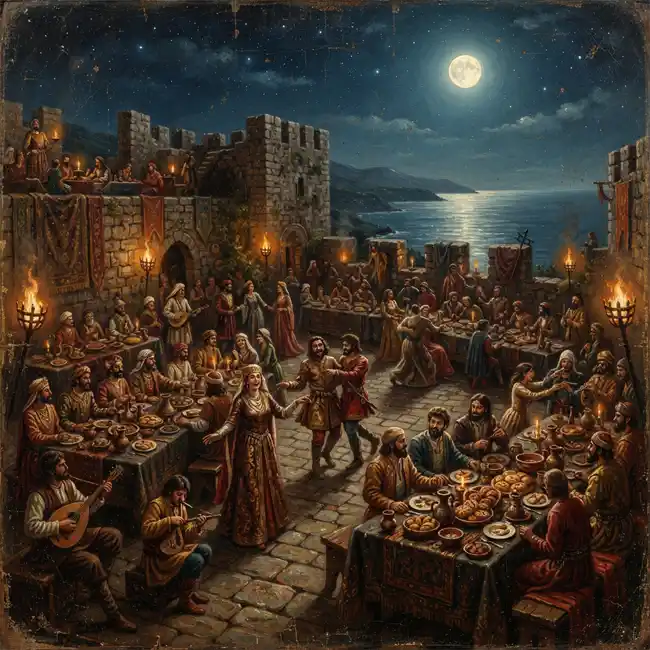
👑📜 The Storyteller’s Intro: The Hidden Bread Secrets of Albania’s Old Houses
This is the chronicle of Albania’s Artisan Royal Breads—a journey into the old-world breads, ceremonial doughs, layered pastries, and hearth-baked traditions that once belonged to the tables of powerful households, respected landowners, noble families, mountain communities, and urban elites.
And there is one important historical detail worth making clear from the beginning: Albania did not possess a single uninterrupted royal culinary tradition lasting a thousand years. Its history passed through medieval principalities, powerful noble families, Ottoman-era households, local chieftaincies, wealthy urban families, and eventually the modern Kingdom of Albania under Zog I from 1928 to 1939. So when we speak of “Royal Breads” here, the more historically careful idea is Aristocratic Breads—the breads and baked traditions associated with status, hospitality, celebrations, household prestige, and the best ingredients a family could place before its guests.
That distinction actually makes the story more fascinating.
For roughly the last 200–1,000 years, Albanian food culture developed around geography as much as social rank. Mountains demanded durable foods. Valleys encouraged grain cultivation. Coastal communities benefited from Mediterranean agriculture and trade. Towns developed more elaborate household kitchens, while isolated villages preserved techniques that could survive for generations without written cookbooks.
Bread therefore was never simply “something on the side.”
It could be the foundation of the meal.
It could announce the arrival of a guest.
It could accompany cheese, butter, yogurt, vegetables, preserved foods, meat, honey, or seasonal dishes.
And on important occasions, the bread itself could become part of the ceremony.
Among the most recognizable traditional names is kulaç, a rustic Albanian bread associated with family tables and important holidays. Albania’s official tourism authority describes kulaçi as a traditional bread made without yeast or leavening, giving it the dense character associated with old household baking.
Then there is flija, one of the most intriguing culinary traditions connected with northern and northeastern Albania. Rather than resembling an ordinary loaf, flija is constructed through repeated thin layers cooked beneath a heated saç, the traditional domed baking lid. The official Albanian tourism authority describes it not merely as food but as a ritual of hospitality, family gathering, mountain Sundays, celebrations, and community events.
This is where the idea of “royal bread” becomes more interesting than a simple palace fantasy.
The true luxury was not necessarily rare ingredients.
The luxury was time, craftsmanship, fire control, patience, and the ability to feed a household beautifully.
🏛️ Five Historical Layers Behind the Bread Tradition
When exploring Albania’s old aristocratic food culture, it helps to imagine several overlapping periods:
• Medieval Albania: noble families, fortified settlements, regional principalities, pastoral communities, and agricultural households shaped local food traditions.
• Ottoman-era Albania: wheat, dairy, grains, pastries, preserved foods, and layered dough traditions developed within a broader Balkan and Ottoman culinary environment.
• Mountain household traditions: isolated communities preserved labor-intensive breads and pastries through oral knowledge rather than formal written recipes.
• Urban and wealthy households: larger kitchens could devote more time to ceremonial baking, hospitality, and presentation.
• The short Albanian Kingdom of 1928–1939: the royal court created a modern royal setting, but it should not be mistaken for a continuous thousand-year Albanian monarchy.
The result is a culinary landscape where “royal” is best understood as a symbol of prestige, while “aristocratic” captures the deeper continuity of Albania’s old household traditions.
🗺️ The Royal Culinary Tourism: Mapping Flavors to Historic Landscapes
If you want to understand Albanian aristocratic bread, don't begin with a modern supermarket.
Begin with the landscape.
Albania is a compact country, but its geography changes dramatically. The north rises into rugged mountains, the center opens toward fertile plains and historic cities, while the south connects mountain valleys with the Ionian and Mediterranean world.
Every landscape tells the dough a different story.
The northern mountains favored food that could withstand cold weather, hard travel, pastoral life, and long winters. Central Albania developed a mixture of agricultural, urban, and rural traditions. Southern Albania combined mountain foodways with Mediterranean ingredients and coastal influences.
That means a culinary traveler can almost “read” Albania through bread.
🧭 What the Food Traveler Should Look For
A heritage-focused journey might include:
• Traditional family bakeries rather than only modern commercial bakeries.
• Village guesthouses where old cooking methods remain part of hospitality.
• Historic bazaars and old-town markets.
• Mountain communities where bread is still treated as a household craft.
• Regional food festivals and cultural events.
• Ethnographic museums that preserve traditional kitchen equipment.
• Historic towns where architecture, agriculture, and food culture remain closely connected.
• Local producers specializing in flour, cheese, dairy, honey, or traditional baked goods.
This approach is especially useful because Albanian culinary heritage is not confined to one palace or one royal kitchen.
It lives in villages, family kitchens, guesthouses, ovens, hearths, and memories.
The official tourism portal similarly connects Albanian gastronomy with cultural heritage, local environments, customs, and regional identity, illustrating how food traditions are inseparable from place.
So the best Albanian food tourism itinerary isn't simply:
“Where can I eat traditional bread?”
It is:
“Where did this bread tradition come from, who preserved it, and what landscape made it possible?”
That question opens a much deeper door.
🚣 Cradle of Royal Delicacies — Valleys, Plains & Coastal Albania
The lower valleys and coastal regions offer a different chapter in the story.
Here, agriculture and Mediterranean influences become increasingly visible. Wheat, corn, vegetables, dairy, olives, herbs, fruit, and other regional products could move through local markets and household kitchens.
Bread became a meeting point between field and table.
In places around Tirana, Elbasan, Berat, Durrës, Vlora, and the southern lowlands, the culinary landscape reflects the interaction between farming communities, historic towns, trade routes, and coastal life.
For the culinary traveler, these areas provide an opportunity to explore bread as part of a broader meal rather than as an isolated artifact.
A traditional loaf might accompany:
• Fresh local cheese.
• Thick yogurt.
• Butter.
• Seasonal vegetables.
• Olives.
• Preserved vegetables.
• Beans and legumes.
• Meat dishes.
• Herb-rich stews.
• Honey and fruit preserves.
The official Albanian tourism material also documents different regional bread traditions, including wheat bread, corn bread, chickpea bread, kulaç, and other dough-based foods in the Pogradec and Lake Ohrid area.
🏰 Berat and the Memory of the Old Household
Berat is especially interesting for travelers who want to connect food with historic architecture.
Its preserved Ottoman-era urban character, hillside houses, fortress landscape, and surrounding agricultural region provide the perfect backdrop for imagining how bread moved between rural production and urban households.
The experience is not about pretending that a particular loaf was literally served at a medieval royal banquet when evidence does not establish that.
It is about understanding the culinary environment that supported powerful households.
Flour came from agricultural landscapes.
Dairy came from livestock.
Firewood came from surrounding countryside.
Clay, iron, copper, stone, and wooden tools belonged to the material culture of the kitchen.
And skilled cooks transformed ordinary ingredients into food worthy of guests.
That is the real aristocratic secret.
⛰️ Kingdom of Wild Aromatics & Heritage — Mountain Albania
Now the story becomes more dramatic.
Travel northward and the mountains begin to dominate the imagination.
The Albanian Alps, Shkodër, Kukës, Dibër, Mat, and northeastern highland communities preserve some of the strongest associations with traditional mountain baking.
Here, bread traditions were shaped by cold winters, pastoral life, limited agricultural seasons, and the necessity of preserving food.
The northern culinary environment has historically made substantial use of grains, dairy, vegetables, nuts, preserved foods, and hearty baked preparations. Regional food sources also document corn as an important staple in northern areas.
And then we encounter the magnificent flija.
🔥 Flija — The Layered Bread of Patience
Flija deserves special attention because it challenges the modern idea of what “bread” should be.
It is layered.
It is slow.
It is communal.
And it demands attention.
Traditional flija is cooked layer by layer beneath a saç, with cream, butter, or related dairy elements incorporated between layers. The Albanian tourism authority describes it as a symbolic mountain food associated with hospitality and family gatherings.
The technique itself tells us something important about old Albanian kitchens.
When fuel was precious and cooking equipment was specialized, skilled cooks learned exactly how to manipulate heat.
They learned how thick a layer should be.
They learned when the surface was ready.
They learned how much fat or dairy would produce the desired texture.
They learned when to repeat the process.
That knowledge was rarely written like a modern cookbook.
It was remembered.
It was demonstrated.
It was corrected by mothers, grandmothers, relatives, neighbors, and experienced cooks.
In that sense, the “secret recipe” was often not a secret ingredient.
It was human knowledge.
🍞 Kulaç — The Humble Bread with Aristocratic Potential
Kulaç tells another story.
Unlike elaborate palace fantasies filled with exotic ingredients, traditional Albanian kulaç represents the beauty of simplicity. The official tourism authority identifies it as a traditional Albanian bread connected with family tables and important holidays, traditionally made without yeast or leavening.
This is precisely why it belongs in an exploration of aristocratic gastronomy.
Old elite kitchens did not exist separately from the countryside.
They depended upon it.
A wealthy household could serve refined foods, but the underlying food economy still depended on grain, livestock, dairy, gardens, orchards, forests, and skilled rural producers.
The aristocratic table was therefore connected to the peasant field.
The mountain kitchen was connected to the urban household.
And the village oven could preserve a culinary memory longer than a palace ever could.
🕯️ The Hidden Menu: Forgotten Names Worth Watching
Before we ever discuss individual recipes, several names deserve a place on the historical menu.
These are not being presented as proven “royal court recipes.” Rather, they represent traditional Albanian baked foods and dough-based preparations that help illuminate the culinary world from which aristocratic dining evolved.
👑 Kulaç
A traditional Albanian bread with a dense, rustic character and strong associations with household tradition and holidays.
🔥 Flija
The legendary layered northern preparation cooked gradually under a saç and closely associated with hospitality, family gatherings, and mountain culinary culture.
🥧 Lakror
A traditional Albanian pie found in regional variations, particularly associated with southern areas such as Korçë and Lunxhëri. It demonstrates how thin dough could become an important regional culinary craft.
🌽 Corn Bread Traditions
Corn-based breads are particularly important for understanding northern and rural Albanian foodways, where maize became an important staple.
🍪 Pite and Byrek Traditions
Layered and filled dough preparations reveal the sophisticated pastry culture that developed across Albanian households and the wider Balkan culinary world.
🏡 Homemade Loaves
Simple household loaves made from flour, water, salt, and regional variations of leavening represent perhaps the most enduring form of Albanian bread culture. Albania's official tourism portal continues to present homemade bread as an important traditional food.
These names are more valuable than inventing imaginary palace dishes because they allow us to build a historical culinary narrative around foods that actually belong to Albania's documented food culture.
🍽️ How the Old House Ate: Bread as Hospitality, Not Decoration
Imagine entering an old Albanian household.
The bread would not necessarily arrive as a decorative centerpiece.
It was useful.
It was practical.
It connected the meal.
A guest could tear bread by hand and use it with cheese, yogurt, vegetables, beans, meat, or other dishes.
For mountain households, bread could be substantial enough to support physically demanding work.
For wealthier families, the difference might appear not in the basic idea of bread but in quality, abundance, presentation, and the range of foods surrounding it.
That distinction matters.
Aristocratic gastronomy is not always about completely different foods.
Sometimes it is about the same food prepared with greater resources.
More refined flour.
Better dairy.
More carefully controlled baking.
More generous portions.
More elaborate presentation.
More time.
And, above all, more guests.
Hospitality has long been one of the strongest themes running through Albanian food culture, and traditional flija is explicitly described by Albania's tourism authority as a food associated with hospitality, family unity, celebrations, and community.
So the old aristocratic table should be imagined less as a fantasy banquet and more as a theater of generosity.
The host demonstrated status by feeding people well.
The cook demonstrated skill through consistency.
The household demonstrated prosperity through abundance.
And the bread quietly held everything together.
🔐 The Royal Culinary Secrets: What Was Really “Secret”?
When people hear the phrase “Royal Culinary Secrets,” they naturally expect mysterious ingredients.
But Albania's old bread traditions suggest something much more interesting.
The secrets were often:
• Knowing the correct flour for the local climate.
• Understanding how dough behaves without modern equipment.
• Reading the heat of a wood fire.
• Knowing when a traditional baking surface was ready.
• Producing consistent layers in labor-intensive pastries.
• Understanding the texture expected by the family.
• Choosing the best dairy available.
• Knowing which seasonal ingredients belonged together.
• Preserving techniques through generations.
• Understanding when food should be served immediately.
These are craft secrets, not magical ingredients.
And that is why they survived.
A written recipe can tell you what to add.
A master cook teaches you what to notice.
That distinction is at the heart of Albania's artisan bread heritage.
🤴 Royal FAQ: Unlocking Palace Kitchen Mysteries
Q1.Was Albania historically a kingdom for 1,000 years?
No. Albania's history included medieval principalities, noble families, regional powers, Ottoman-era rule, and later modern statehood. The modern Kingdom of Albania existed under Zog I from 1928 to 1939. Therefore, “royal” is best used here as a thematic description of elite and aristocratic culinary culture rather than as evidence of one continuous royal kitchen.
Q2.What is one of Albania's most important traditional breads?
Kulaç is one of the clearest examples of traditional Albanian bread. Albania's official tourism authority describes it as a traditional bread and an important part of family tables and holidays.
Q3.Why is flija so important to Albanian culinary heritage?
Flija represents much more than a baked food. Its repeated layers, slow cooking beneath a saç, and association with family gatherings and hospitality make it an excellent example of traditional mountain culinary craftsmanship.
Q4.Where should travelers explore Albanian bread traditions?
For a heritage-focused journey, look toward northern mountain regions such as Shkodër and Kukës, central historic cities such as Berat and Elbasan, and southern or southeastern areas where regional food traditions connect agriculture, mountain communities, and Mediterranean influences. The best experiences are often found through traditional households, guesthouses, local producers, cultural events, and regional food experiences rather than only commercial bakeries.
🧠 Final Thoughts: The Timeless Allure of Aristocratic Gastronomy
Albania's artisan bread heritage does not need an imaginary golden palace to become fascinating.
The real story is already powerful.
It is the story of mountains and valleys.
Of grain and dairy.
Of wood fires and iron lids.
Of village ovens and wealthy households.
Of family gatherings where someone knew exactly how to make the dough behave.
Of recipes that were remembered rather than written.
Of bread placed before guests as a quiet declaration of generosity.
And of culinary traditions that crossed centuries without needing to call themselves “royal.”
That is why Albania Artisan Royal Breads is best understood as a journey into aristocratic culinary memory.
The true treasures are not necessarily locked inside a forgotten palace archive.
They may still exist in a mountain village.
They may be served in a family guesthouse.
They may appear at a regional celebration.
They may be hidden inside the knowledge of a baker who learned from a parent who learned from a grandparent.
And that is where our culinary map becomes especially exciting.
If you are planning an Albanian food heritage journey, place these regions on your mental map:
• Shkodër and the northern highlands for mountain culinary traditions.
• Kukës and northeastern Albania for flija and highland pastry heritage.
• Dibër and Mat for traditional mountain household foods.
• Berat and central Albania for historic urban and agricultural connections.
• Elbasan for central Albanian culinary identity.
• Pogradec and the Lake Ohrid region for bread, pastries, grains, dairy, and broader regional gastronomy.
• Southern Albania for the meeting of mountain foodways with Mediterranean agricultural traditions.
And this is only the beginning.
The next chapter can go deeper into individual dishes—one forgotten bread or aristocratic baked specialty at a time—examining its historical setting, traditional identity, cultural symbolism, pantry heritage, and the old-world techniques that made it special.
For now, the door to the old Albanian kitchen is open.
The hearth is warm.
The flour has been prepared.
The wooden table is waiting.
And somewhere beyond the mountains, an old culinary secret is still being remembered.
👑 Credit to the Keepers of the Culture (The Legacy)
The greatest credit belongs not to modern storytellers, food bloggers, or imagined royal kitchens.
It belongs to the Albanian families, village cooks, bakers, farmers, shepherds, food artisans, cultural custodians, researchers, and communities who kept these traditions alive.
Traditional food heritage survives because ordinary people continue doing extraordinary things with ordinary ingredients.
They knead.
They bake.
They preserve.
They teach.
They repeat.
They adapt.
And they remember.
Albania's official tourism resources continue to document traditional breads, flija, regional culinary practices, and the connection between gastronomy and cultural heritage.
That living continuity deserves respect.
So this exploration should never be treated as a claim that every bread described here was literally served in a royal palace. Instead, it celebrates the much richer reality: Albania's aristocratic culinary imagination grew from a living food culture shared across mountains, villages, towns, farms, and historic households.
The palace may disappear.
The fortress may crumble.
The old household may change.
But when a family continues to make traditional bread, the cultural memory remains.
And perhaps that is the most authentic royal legacy of all.
The recipe survives because the people survived it.
👑🍞 Unveiling 500-Year-Old Albanian Breads: Forgotten Recipes of Noble Aristocrats
👉 Discover Rare Albanian Artisan Royal Breads
| 🌐 👑🍞 < Back | 🇦🇱 👑🥗 < Previous | Next > 🍱👑 🇦🇱 |