
🏠 Home > 🗺️ Recipes > 👑🍞 Artisan Royal Breads (Breads) > 🇦🇱 Albania Artisan Royal Breads (Breads) Recipes > 👑🍞 1.Aristocratic Albanian Crown Loaf (Bukë Mbretërore me Nuci e Mjaltë)
👑🍞 Unveiling 500-Year-Old Albanian Breads: Forgotten Recipes of Noble Aristocrats
Published by Supakorn | Updated: August 2026
🏰 The Forgotten Royal Legacy of Albania: The Noble Lords and Ottoman Aristocracy
📜 The Storyteller’s Intro
Picture yourself traveling back five centuries, standing inside the grand, stone-walled palace kitchens of 16th-century Albania. Outside, cool mountain breezes sweep through the rugged peaks of Krujë and Gjirokastër, while inside, warm firelight dances across copper cauldrons and heavy oak kneading troughs. Long before modern borders defined the Western Balkans, noble Illyrian lineages, powerful lords like the Kastrioti dynasty, and wealthy Ottoman provincial governors held court in majestic stone fortresses. In these hidden sanctuary kitchens, master bakers worked under strict secrecy. They tended sacred hearth fires and nurtured wild, century-old sourdough starters to craft majestic loaves reserved strictly for grand banquets, diplomatic summits, and aristocratic feasts. The hypnotic scent of roasted wild grains, crushed walnuts, and cultured mountain butter filled the air, signaling that something truly extraordinary was baking.
🌍 The Global Value
For centuries, these spectacular bread recipes were closely guarded aristocratic secrets. Unlike simple rustic flatbreads baked by local villagers, noble loaves were crafted with refined mountain grains, precious spices, raw woodland honey, and aromatic mountain herbs. They were symbols of immense wealth, warmth, hospitality, and political prestige. However, through centuries of turbulent Balkan history, foreign invasions, and cultural shifts, many of these luxurious baking methods vanished from public view. What once graced the lavish banquets of high lords survived only in whisperings, handwritten parchment fragments, and secret culinary traditions passed down by venerable family elders across isolated mountain hamlets. These noble recipes nearly disappeared forever, taking with them a vital piece of European heritage.
🌾 The Collection
In this exclusive long-form guide, we are bringing these legendary treasures back to life. We revive a grand 500-year-old Albanian aristocratic bread recipe that perfectly captures the golden splendor of that heroic era. By reading this guide, you step directly into the shoes of an ancient court baker. You will discover how to recreate a historic masterpiece right in your modern home kitchen—a majestic loaf that combines robust ancient grains, sweet mountain walnuts, aromatic herbs, and cultured sheep butter. Get ready to experience a rich taste of history that bridges five hundred years of passion, craftsmanship, and noble elegance.
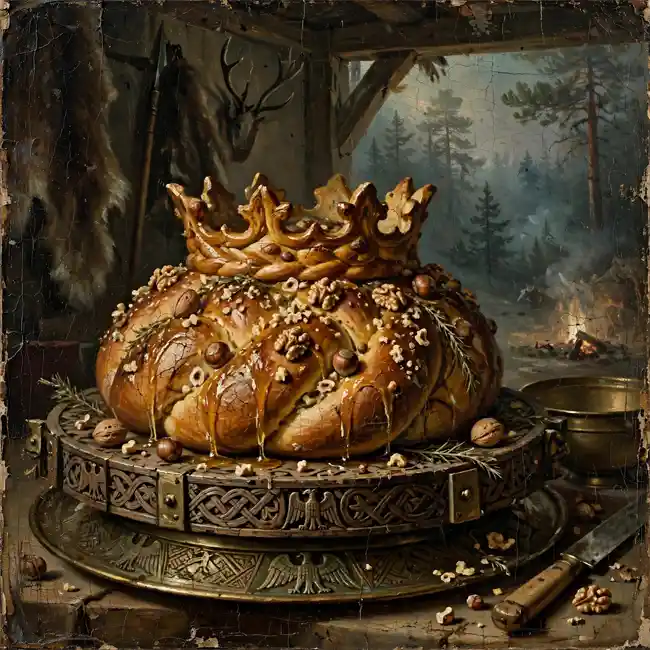
🍞 Recipe: Aristocratic Albanian Crown Loaf (Bukë Mbretërore me Nuci e Mjaltë)
🏛️ About this Royal Secret
Known in historical mountain folklore as Bukë Mbretërore (The Crown Bread), this opulent ceremonial loaf was custom-crafted for high noble banquets, sacred covenant celebrations, and diplomatic gatherings. Archival legends recall that famous lords and high governors demanded this signature loaf whenever hosting foreign envoys. The loaf features a rich, hand-braided crown design representing unity and strength, enriched with fragrant mountain honey, toasted crushed walnuts, wild dried savory, and pure cultured butter. Serving this bread was the ultimate mark of high honor; breaking its golden crust signified lifelong loyalty and warm aristocratic welcome between grand houses.
🌾 Ingredients & The Aristocratic Touch
• The Royal Pantry:
The ingredients used in ancient Albanian palace kitchens were chosen with great reverence. High altitude wheat provided an exceptional golden crumb, while wild mountain thyme and savory added an unmistakable herbal perfume. Walnuts gathered from ancient highland groves offered deep, rich nuttiness, balanced by the floral sweetness of raw forest honey. Using high-quality cultured butter and unrefined sea salt ensures your loaf mirrors the exact flavor profile enjoyed by 16th-century nobles.
• Modern Substitutes:
◦ Heritage Spelt or Einkorn Flour: If ancient stone-ground wheat flour is unavailable, high-quality unbleached bread flour combined with whole wheat flour works wonderfully to replicate the hearty structure.
◦ Cultured Mountain Butter: If sheep or goat milk butter is hard to find, use high-fat European-style cultured cow butter.
◦ Raw Forest Honey: Any raw, unfiltered wildflower honey can be used seamlessly.
◦ Wild Mountain Savory / Thyme: Fresh or dried organic thyme, summer savory, or marjoram provide an authentic alpine fragrance.
• The Measurements:
◦ 500 grams high-protein bread flour (or heritage stone-ground wheat flour)
◦ 100 grams whole wheat or spelt flour
◦ 350 milliliters warm spring water (around 35°C / 95°F)
◦ 100 grams active mature sourdough starter (or 7 grams active dry yeast)
◦ 60 grams cultured sheep or European-style butter, melted and cooled
◦ 40 grams raw wildflower honey
◦ 12 grams fine sea salt
◦ 100 grams walnuts, lightly toasted and coarsely chopped
◦ 1 tablespoon dried wild mountain savory (or thyme)
◦ 1 egg yolk mixed with 1 tablespoon water (for the golden imperial glaze)
◦ 1 tablespoon sesame seeds and nigella seeds (for the noble crest finish)
🔥 The Chef’s Ritual
1.The Sacred Awakening (Preferment & Hydration): In a large, warm stoneware basin, combine the warm spring water with raw wildflower honey and your active sourdough starter (or active dry yeast). Whisk gently until fully dissolved and frothy. Allow this sweet mixture to rest undisturbed for 15 minutes, letting the wild microflora wake up in complete peace.
2.Blending the Golden Earth (Dough Mixture): Sift the high-protein bread flour and whole wheat flour into the bowl. Add the fine sea salt and dried mountain savory. Gently stir the dry ingredients into the liquid until a shaggy, fragrant dough forms. Cover with a linen cloth and let rest for 30 minutes to allow autolysis, letting the flour fully absorb the spring water.
3.Infusing Noble Luxury (Enriching the Dough): Drizzle the melted cultured butter over the hydrated dough. Begin working the dough using rhythmic fold-and-stretch movements. Slowly fold in the toasted chopped walnuts, ensuring they are evenly distributed throughout the dough like hidden gems in a royal vault.
4.The Gentle Kneading: Transfer the dough onto a lightly floured wooden surface. Knead with soft, confident hands for 10 to 12 minutes until the dough becomes smooth, elastic, and supple. Place the dough into a lightly buttered bowl, cover with a damp linen towel, and allow it to rise in a warm spot for 2.5 to 3 hours, or until doubled in size.
5.Braiding the Imperial Crown (Shaping): Gently tip the risen dough onto your work surface. Divide it into three equal portions. Roll each portion into a long, smooth strand roughly 40 centimeters in length. Carefully braid the three strands together to form a tight, elegant plait. Bring the two ends of the braid together to create a majestic circular crown shape, pinching the seam securely beneath.
6.The Final Rest (Proofing): Place your braided crown loaf onto a parchment-lined baking stone or heavy baking tray. Cover loosely with a cloth and let it undergo its final proof for 60 to 90 minutes until pillowy and soft to the touch.
7.The Royal Anointing & Baking: Preheat your oven to 210°C (410°F), placing a cast-iron pan on the bottom rack to catch steam. Brush the surface of the loaf thoroughly with the golden egg yolk wash. Sprinkle generously with sesame and nigella seeds. Place the loaf into the center of the oven, pour a cup of hot water into the bottom cast-iron pan to generate lush steam, and quickly close the oven door.
8.The Golden Transformation: Bake at 210°C for 15 minutes with steam, then lower the oven temperature to 185°C (365°F), remove the steam pan, and bake for an additional 25 minutes. The bread is finished when it develops a deep mahogany-gold crust and sounds hollow when tapped gently on the bottom. Transfer to a wooden rack to cool completely before slicing.
✨ Secrets of the Palace Kitchen (Tips & Mistakes)
• Do Not Rush the Hydration: Palace bakers knew that patience unlocks flavor. Give the flour adequate autolysis time before adding butter; this allows strong gluten bonds to form naturally without toughing the crumb.
• Control the Hearth Heat: Baking at an excessively high temperature early on will burn the natural sugars in the mountain honey before the inner crumb bakes thoroughly. Keep a close eye on your oven temperature.
• Gentle Walnut Toasting: Always toast your walnuts lightly before adding them to the dough. Raw walnuts can absorb moisture from the crumb, while over-toasted walnuts will introduce bitter notes to the sweet loaf.
• Steam is Essential: The initial burst of steam during the first 15 minutes of baking is what gives this noble bread its brilliant gloss and golden crispness. Never skip the steam step!
• Rest Before Slicing: Resist the temptation to cut into the hot loaf immediately. Allowing the bread to rest for at least 40 minutes lets the internal moisture stabilize, ensuring a light, tender, and velvet-like structure.
🛕 Royal FAQ
Q1: Can I make this historical bread without a sourdough starter?
A: Absolutely! While ancient palace kitchens relied entirely on natural sourdough cultures, active dry yeast or instant yeast works wonderfully. Simply substitute 7 grams of dry yeast and adjust the rising times accordingly.
Q2: How should I store this aristocratic loaf to maintain freshness?
A: Thanks to the healthy inclusion of cultured butter and raw honey, this loaf retains its moisture remarkably well. Wrap the cooled bread in a clean linen cloth or place it in a wooden bread box. It stays soft and delicious for up to four days at room temperature.
Q3: What traditional dishes pair best with this Albanian Crown Bread?
A: This loaf pairs sublimely with rich artisan sheep cheeses, roasted red pepper dips (such as traditional ajvar), hearty mountain stews, wild floral honey, and fresh figs.
🍷 The Taste of History (Summary)
Biting into a slice of this magnificent Albanian Crown Bread is a breathtaking journey back through five centuries of rich Balkan history. The initial crunch of the golden-brown crust gives way to a moist, incredibly aromatic crumb infused with sweet forest honey, rich butter, earthy walnuts, and subtle alpine herbs. It is not merely food; it is an unforgettable sensory experience that connects your table directly with the legendary banquet halls of ancient mountain lords.
🕊️ Final Thoughts: Bringing History to Your Table
Recreating historical recipes like this 500-year-old Albanian Crown Bread reminds us that food is one of humanity’s most powerful storytellers. Although these secret recipes were once reserved strictly for high lords, elite noble families, and royal banquets, you now hold the key to bringing this ancient magic alive in your own home. With simple ingredients, mindful care, and a reverence for traditional craftsmanship, anyone can recreate a genuine piece of world heritage. Roll up your sleeves, light up your oven, and let the comforting aroma of history fill your kitchen today.
🌟 The Call to Action (The Golden Hook)
If you felt a spark of wonder reading about these ancient flavors and long-forgotten noble traditions, join us in preserving the world’s most extraordinary culinary secrets! Subscribe to our newsletter, share this article with your fellow food historians and sourdough lovers, and drop a comment below sharing how your ancient loaf turned out. Together, let us keep the embers of global baking history burning bright!
📜 Credit to the Keepers of the Culture (The Legacy)
We extend our deepest gratitude, honor, and respect to the generous cultural guardians, local Albanian historians, grandmothers in isolated mountain villages, and dedicated regional artisans across Albania and the Western Balkans. Their tireless devotion to preserving ancient folklore, oral histories, seed varieties, and traditional baking techniques ensures that these centuries-old culinary treasures will inspire and nourish future generations across the globe.
| 🇦🇱 👑🍞 < Back |