
🏠 Home > 🗺️ Recipes > 👑🍲 Royal Court Broths (Soups) > 🇹🇭 Thai Royal Court Broths (Soups) Recipes > 👑🍲 1.Crystal Lotus Royal Chicken Broth
👑🍲 A Journey Through Thailand's Forgotten Royal Palace Broths
Published by Supakorn | Updated: July 2026
🇹🇭 👑 The Forgotten Royal Legacy of Thailand: The Royal Courts of Ayutthaya and Early Rattanakosin
Thailand's royal cuisine has long been admired for its graceful balance of flavor, artistry, and tradition. While colorful curries and elegant desserts often steal the spotlight, another treasured chapter quietly lives behind the palace walls—the refined world of Thai Royal Court broths.
For centuries, these delicate soups were prepared with extraordinary patience inside royal kitchens, where every ingredient was selected with care and every simmer reflected the wisdom of generations. Rather than relying on overwhelming spices, palace chefs sought clarity, fragrance, and harmony. A royal broth was expected to comfort the body, impress honored guests, and demonstrate the sophistication of the kingdom.
Many of these culinary traditions evolved throughout the flourishing Ayutthaya Kingdom before continuing into the early Rattanakosin era. Palace cooks refined recipes through observation instead of written instructions, passing their knowledge from master to apprentice. Because of this, countless techniques slowly disappeared as royal households changed with time.
Today, only fragments remain in historical records, cultural memories, and family traditions. Yet these surviving inspirations continue to reveal how deeply food reflected elegance, diplomacy, hospitality, and respect within Thai court life.
Instead of chasing extravagance, royal broths celebrated balance. Their gentle aromas, crystal-clear appearance, and carefully layered flavors transformed simple ingredients into dishes worthy of kings, queens, princes, princesses, and distinguished visitors.
This collection celebrates that remarkable culinary heritage while adapting classic inspirations into approachable recipes for today's home kitchens.
📜 The Storyteller's Intro
Imagine stepping inside the royal palace kitchen nearly one thousand years ago.
The morning sun quietly filters through carved wooden windows while large bronze pots begin their slow, patient simmer. Palace attendants move gracefully across polished floors carrying baskets of freshly harvested herbs gathered before dawn. Ginger, galangal, fragrant pandan leaves, lemongrass, coriander roots, and delicate blossoms fill the air with gentle perfume.
Nothing happens in haste.
Every ingredient is washed repeatedly. Every vegetable is trimmed with precision. Every cut of poultry or seafood is inspected before entering the broth. Fires burn steadily beneath charcoal stoves, never too fierce and never too weak. The clearest broth is considered a reflection of discipline, patience, and craftsmanship.
Nearby, senior royal chefs quietly supervise younger apprentices. They do not simply teach recipes—they teach observation.
Listen to the bubbling.
Watch the color.
Smell the changing aroma.
Feel the gentle movement of the liquid.
These lessons cannot be measured with clocks alone. They require experience earned over many years inside the palace kitchen.
When distinguished envoys, respected monks, or members of the royal family gathered for ceremonial meals, these elegant broths often appeared at the beginning of the feast. Their light yet comforting character prepared the palate for the elaborate courses that followed while symbolizing generosity and refined hospitality.
Even today, imagining these peaceful palace kitchens reminds us that great cooking has never depended solely on expensive ingredients. It begins with patience, care, and respect for tradition.
🌏 The Global Value
Royal recipes were never ordinary household meals.
Many palace preparations remained within the walls of the royal residence, where only trusted cooks were permitted to learn the techniques. Culinary knowledge represented prestige, and exceptional chefs became valued members of the court because their skills contributed to diplomatic banquets, sacred ceremonies, seasonal celebrations, and distinguished receptions.
Unlike recipes printed in modern cookbooks, many palace techniques survived through oral instruction. A master chef demonstrated each movement while apprentices carefully memorized every detail. Small adjustments—how long herbs should simmer, when aromatics should be removed, or how to clarify a broth naturally—were often considered professional knowledge rather than written instructions.
As kingdoms evolved and palace life transformed, numerous variations gradually faded from everyday cooking. Fortunately, elements of these traditions survived through respected culinary teachers, regional households, historical documents, and Thailand's enduring appreciation for refined cuisine.
Today, historians and chefs continue exploring these culinary traditions not to recreate the past exactly, but to celebrate the craftsmanship, cultural identity, and timeless philosophy they represent.
Every recreated royal-inspired broth serves as a bridge between generations, allowing modern cooks to experience flavors inspired by centuries of Thai culinary excellence.
✨ The Collection
This collection is not about copying one forgotten manuscript word for word.
Instead, it respectfully brings together inspirations from Thailand's rich royal culinary heritage and presents them in forms suitable for modern kitchens. Each recipe honors the principles that made palace cooking extraordinary—clarity, elegance, freshness, balance, and careful preparation.
Throughout this series, you'll discover broths inspired by ceremonial dining, seasonal ingredients, royal hospitality, and the remarkable artistry that once defined palace kitchens.
Whether you're passionate about food history, fascinated by Asian culinary traditions, or simply searching for a comforting homemade soup with a meaningful story, these recipes invite you to experience a small taste of Thailand's royal past.
Every bowl carries more than flavor.
It carries history.
It carries tradition.
It carries the quiet elegance of generations who believed cooking was one of the highest expressions of respect.
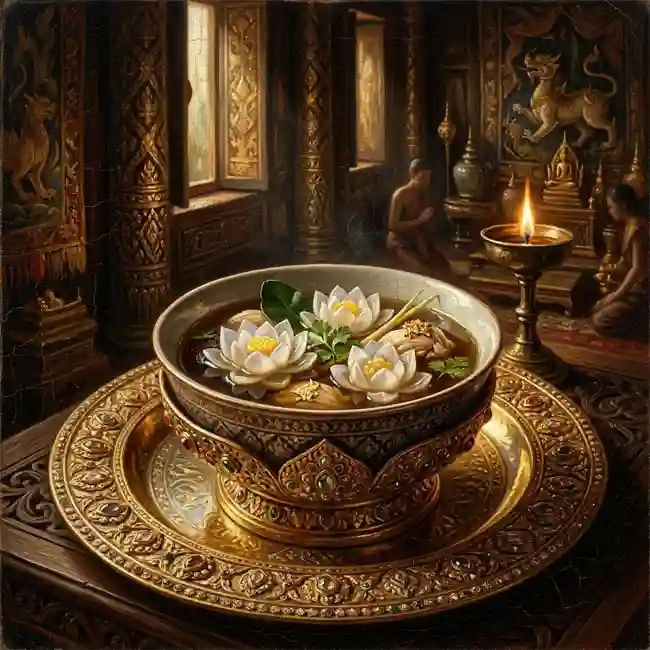
🍲 Recipe: Crystal Lotus Royal Chicken Broth
👑 About this Royal Secret
Among the many elegant dishes inspired by Thailand's palace traditions, Crystal Lotus Royal Chicken Broth represents the philosophy of quiet luxury.
Rather than overwhelming the senses with bold intensity, this broth highlights purity, fragrance, and balance. Historical accounts of royal dining often describe beautifully clarified soups served before the main courses during formal banquets, seasonal celebrations, and important receptions. Such dishes reflected refinement rather than extravagance.
Inspired by those traditions, this modern interpretation features slow-simmered chicken, aromatic Thai herbs, delicate vegetables, and edible flowers that create an appearance worthy of a royal dining table.
Its light character makes it suitable for welcoming honored guests, celebrating family gatherings, or preparing a comforting meal that feels timeless without being complicated.
Every spoonful reminds us that true elegance often comes from simplicity perfected.
🥣 Ingredients & The Aristocratic Touch
🌿 The Royal Pantry
The finest palace kitchens believed outstanding ingredients required very little disguise.
Fresh free-range chicken provided a naturally sweet foundation. Fragrant herbs gathered at their seasonal peak contributed subtle layers instead of overpowering the broth. White pepper added gentle warmth while coriander roots introduced an unmistakable Thai aroma known throughout traditional cooking.
Tender mushrooms, baby carrots, and edible flowers completed the presentation with quiet sophistication. Rather than competing for attention, every ingredient supported the harmony of the whole dish.
The result was a broth that looked crystal clear yet tasted surprisingly deep and comforting.
🍃 Modern Substitutes
If certain traditional ingredients are unavailable, these alternatives work beautifully while preserving the elegant spirit of the recipe.
• Free-range chicken may be replaced with organic chicken thighs.
• Coriander roots may be substituted with coriander stems plus a few leaves.
• Fresh lotus petals may be replaced with edible chrysanthemum petals or edible orchid flowers.
• Straw mushrooms may be replaced with button mushrooms or oyster mushrooms.
• Baby carrots may be replaced with sliced regular carrots.
• Fresh pandan leaves may be omitted if unavailable, although they add a gentle aroma.
📏 The Measurements
• 800 grams free-range chicken pieces
• 2 liters water
• 3 coriander roots, lightly crushed
• 2 stalks lemongrass, bruised
• 5 thin slices galangal
• 4 kaffir lime leaves
• 2 pandan leaves, tied into knots
• 150 grams straw mushrooms
• 120 grams baby carrots
• 1 teaspoon white pepper
• 1 teaspoon sea salt
• 1 tablespoon light soy sauce
• 2 teaspoons palm sugar
• 2 spring onions, finely sliced
• Fresh coriander leaves for garnish
• Edible flower petals for elegant presentation
👨🍳 The Chef's Ritual
The beauty of this royal-inspired broth lies not in complexity, but in patience. Every stage is designed to preserve the natural sweetness of the ingredients while creating a broth that is clear, fragrant, and elegantly balanced.
• Step 1 – Prepare the Royal Ingredients
Begin by rinsing the chicken under cold running water and gently pat it dry.
Wash every herb thoroughly. Lightly bruise the lemongrass with the back of a knife to release its citrus aroma. Crush the coriander roots just enough to expose their fragrance, while keeping them intact for easy removal later.
Peel the baby carrots, trim the mushrooms, and prepare the spring onions. Arrange everything neatly before heating the pot. Royal kitchens valued organization long before the first flame was lit.
• Step 2 – Build the Foundation
Pour the water into a large stockpot over medium heat.
Add the chicken pieces first, allowing the temperature to rise gradually rather than boiling rapidly. As tiny bubbles begin to appear, skim away any foam that rises to the surface.
This quiet step may seem simple, yet it creates the clear appearance that distinguished palace broths from ordinary soups.
Once the surface becomes clean, add the coriander roots, lemongrass, galangal, pandan leaves, and kaffir lime leaves.
Reduce the heat immediately.
Allow the broth to simmer gently for about 60 to 75 minutes. Avoid vigorous boiling, as strong bubbles can cloud the broth and reduce its elegant appearance.
• Step 3 – Let the Aromas Bloom
As the broth slowly develops, the herbs begin sharing their character.
The lemongrass introduces fresh citrus notes.
The galangal contributes warm earthiness.
The pandan leaves soften the aroma with subtle sweetness.
Meanwhile, the coriander roots quietly deepen the traditional Thai character that makes this broth feel unmistakably authentic.
Resist the temptation to stir constantly.
Instead, allow the ingredients to communicate naturally with the gentle heat.
• Step 4 – Add the Vegetables
After the broth has fully developed its foundation, carefully remove the larger herbs.
Add the carrots first and cook until almost tender.
Then introduce the mushrooms.
Cooking the vegetables toward the end preserves both their texture and natural sweetness while keeping the broth bright and lively.
• Step 5 – Balance the Royal Flavor
Season the broth gradually.
Add the sea salt first.
Then stir in the light soy sauce.
Finish with a small amount of palm sugar to soften the savory notes rather than making the broth noticeably sweet.
Finally, sprinkle in the white pepper.
The goal is harmony.
No single ingredient should dominate another.
Each sip should reveal gentle layers instead of dramatic contrasts.
• Step 6 – Present Like the Palace
Ladle the crystal-clear broth into warm serving bowls.
Arrange several pieces of chicken and vegetables carefully.
Scatter sliced spring onions across the surface.
Finish with fresh coriander leaves and a few edible flower petals for an elegant royal presentation.
Serve immediately while the broth remains fragrant and perfectly clear.
In royal dining traditions, beauty was never an afterthought—it was considered part of the flavor itself.
🏯 Secrets of the Palace Kitchen (Tips & Mistakes)
Behind every memorable royal broth were small techniques that palace chefs practiced every day. Although simple, these details transformed an ordinary soup into something worthy of a ceremonial table.
✨ Royal Tips
• Always begin with cold water when preparing chicken broth. Slow heating extracts flavor more gently and produces a cleaner, clearer stock.
• Simmer instead of boil. Tiny bubbles create a smoother texture and preserve delicate aromas.
• Skim the surface frequently during the first twenty minutes to maintain a beautifully transparent broth.
• Tie pandan leaves into loose knots before cooking. This allows their fragrance to develop while making them easy to remove.
• Add mushrooms near the end of cooking so they remain tender without becoming overly soft.
• Taste the broth several times while seasoning. Palace chefs adjusted flavors gradually instead of adding everything at once.
• Warm serving bowls before ladling in the soup. This helps preserve both temperature and aroma.
• Garnish just before serving to keep herbs vibrant and fresh.
⚠️ Common Mistakes to Avoid
• Boiling the broth too aggressively, resulting in a cloudy appearance.
• Adding all seasonings at the beginning instead of adjusting gradually.
• Leaving herbs in the broth for too long, which may introduce bitterness.
• Overcooking the vegetables until they lose their natural sweetness and texture.
• Using excessive soy sauce that masks the delicate herbal character.
• Skipping the foam removal step during the early simmering stage.
• Adding edible flowers too early instead of using them as a fresh finishing garnish.
• Serving the broth after it has sat uncovered for too long, causing much of its fragrance to fade.
Remember, palace cuisine celebrated elegance through restraint. Simplicity executed perfectly was considered the highest achievement.
❓ Royal FAQ
Q1.Can I prepare this broth a day ahead?
Absolutely. In fact, many cooks find the flavors become even more harmonious after resting overnight in the refrigerator. Reheat gently over low heat without allowing the broth to boil vigorously.
Q2.Which chicken cuts create the richest flavor?
Bone-in chicken thighs and drumsticks provide an excellent balance of flavor and natural richness while keeping the broth light and elegant.
Q3.Can I make this recipe with vegetables only?
Yes. Replace the chicken with a combination of fresh mushrooms, daikon radish, carrots, and extra coriander roots to create a fragrant vegetable broth inspired by the same royal cooking philosophy.
Q4.Why is my broth cloudy?
Cloudiness usually occurs when the broth boils too rapidly or when the foam is not removed during the early cooking stage. Gentle simmering is the secret to achieving the clear appearance admired in palace kitchens.
Q5.Can I freeze the broth?
Yes. Cool the broth completely before transferring it to airtight containers. It freezes well for up to three months while retaining most of its delicate flavor.
🍜 The Taste of History (Summary)
Every spoonful of Crystal Lotus Royal Chicken Broth tells a story that stretches far beyond the kitchen. It reflects an approach to cooking where patience, balance, and respect for ingredients mattered more than extravagance. While modern recipes often focus on speed and convenience, royal palace cuisine reminds us that true excellence is built through careful attention to every small detail.
This broth captures the timeless philosophy of Thai royal cooking. Clear rather than heavy. Elegant rather than excessive. Fragrant without overwhelming the senses. Every herb, vegetable, and seasoning has a purpose, contributing quietly to a harmonious whole.
Although inspired by centuries-old palace traditions, this recipe is designed for today's home cooks. It transforms readily available ingredients into a refined dish that feels both comforting and memorable. Whether prepared for a family dinner, a festive gathering, or a peaceful weekend meal, it offers an opportunity to experience a taste of Thailand's remarkable culinary heritage.
Perhaps the greatest lesson hidden inside this bowl is that luxury is not always defined by rare ingredients. Sometimes, it is found in the care taken to prepare something simple with extraordinary patience.
When the broth is served steaming hot, garnished with fresh herbs and delicate edible flowers, it becomes more than a meal. It becomes a tribute to generations of palace chefs whose quiet craftsmanship continues to inspire kitchens around the world.
🌟 Final Thoughts: Bringing History to Your Table
Royal cuisine may sound distant or unattainable, but its greatest principles remain surprisingly accessible.
The palace chefs of Thailand did not rely solely on lavish ingredients. Instead, they mastered techniques that respected nature, highlighted freshness, and celebrated harmony. Those same principles can guide any modern kitchen, regardless of experience.
Preparing this royal-inspired broth is not about recreating history perfectly. It is about appreciating the traditions that shaped one of Southeast Asia's most elegant culinary cultures while enjoying the satisfaction of cooking with intention.
Take your time.
Allow the broth to simmer gently.
Notice how the aromas develop little by little.
Taste thoughtfully before making each adjustment.
These simple habits transform cooking from a daily routine into an enjoyable ritual.
As you share this broth with family and friends, you also share a story—a story of hospitality, craftsmanship, and cultural heritage that has inspired generations.
Every bowl invites us to slow down, appreciate tradition, and discover that some of the world's greatest recipes continue to shine because of their timeless simplicity.
💛 The Encouragement
You do not need to live inside a royal palace to prepare food worthy of one.
With fresh ingredients, a little patience, and the guidance in this recipe, anyone can recreate the elegant spirit of Thailand's royal kitchens at home.
Do not worry about achieving perfection on your first attempt.
Every pot of broth teaches something new.
Each careful simmer strengthens your understanding of balance.
Every meal prepared with genuine care carries the same spirit that palace chefs valued centuries ago.
The true secret has never been hidden in expensive ingredients.
It has always been hidden in the hands, heart, and patience of the cook.
👑 The Call to Action (The Golden Hook)
If stories like these inspire your love of food, history, and culture, your journey is only beginning.
Across the world, royal courts, imperial kitchens, noble households, and ancient civilizations created remarkable recipes that reflected their traditions, beliefs, and artistic achievements. Many of these culinary treasures have gradually faded from everyday life, waiting to be rediscovered by curious home cooks and passionate food lovers.
Our mission is to celebrate these historic culinary traditions through carefully researched, respectfully adapted, and easy-to-follow recipes designed for modern kitchens.
By exploring these collections, you help keep centuries of culinary heritage alive for future generations.
Continue discovering forgotten palace kitchens, timeless family traditions, and inspiring recipes from around the globe—one royal dish at a time.
Because every historic recipe deserves to be remembered.
And every home kitchen can become a place where history lives again.
📜 Credit to the Keepers of the Culture (The Legacy)
Thai royal cuisine represents one of Southeast Asia's most treasured culinary traditions. Its refined techniques, balanced flavors, artistic presentation, and deep respect for seasonal ingredients continue to inspire chefs, historians, and home cooks throughout the world.
This recipe is inspired by the culinary heritage associated with the royal kitchens of Thailand, particularly traditions that flourished during the Ayutthaya and early Rattanakosin periods. Rather than claiming to reproduce a single historical document, this modern adaptation respectfully draws upon enduring cooking principles, traditional ingredients, and classic preparation methods that have been preserved through generations of Thai culinary knowledge.
Measurements and cooking techniques have been thoughtfully adjusted for contemporary home kitchens while honoring the elegance, balance, and cultural spirit that define Thailand's royal cuisine.
We extend our sincere appreciation to the historians, culinary scholars, traditional cooks, and cultural guardians whose dedication helps preserve these remarkable food traditions. Their work ensures that future generations can continue learning from one of the world's richest culinary legacies.
Every recipe inspired by history is more than a collection of ingredients.
It is a celebration of culture.
A tribute to craftsmanship.
And a reminder that the finest flavors are often those that connect us with the people, traditions, and stories that came before us.
| 🇹🇭 👑🍲 < Back |