
🏠 Home > 🗺️ Recipes > 👑🍨 Grand Finales (Desserts) > 🇹🇭 Thai Grand Finales (Desserts) Recipes > 👑🍨 1.The Golden Silk Coconut Custard (Sangkhaya Fak Thong)
👑🍨 The Lost Culinary Archives: Mastering 200-Year-Old Royal Thai Desserts
Published by Supakorn | Updated: July 2026
🇹🇭 👑🏛️ The Forgotten Royal Legacy of Thailand: The Rattanakosin Era
📜 The Storyteller’s Intro
Imagine stepping back to the 18th century, deep into the heart of a secluded royal kitchen. The air is thick with the scent of jasmine-infused candle smoke, freshly grated coconut cream, and the delicate, floral sweetness of wild honey. This was a place where time stood still, and the art of dessert making was not merely cooking—it was a form of meditation. These recipes were whispered from grandmothers to royal scions, guarded behind heavy mahogany doors, and never meant for the common eye.
💎 The Global Value
For two centuries, these creations were the exclusive domain of the Siamese aristocracy. They were designed not just for consumption, but to display status, refinement, and an obsessive attention to detail. Ingredients were sourced from specific provinces, and the preparation often took days. As modernity surged, many of these techniques were tragically sidelined, nearly vanishing into the mists of history. Today, we are opening the gates to this forbidden archive.
🌟 The Collection
In this guide, we are breathing life back into these long-lost treasures. We aren't just sharing recipes; we are reviving a cultural philosophy. Each dish featured here reflects the peak of Rattanakosin culinary artistry, preserved and adapted for the modern home chef who dares to taste the grandeur of a bygone era.
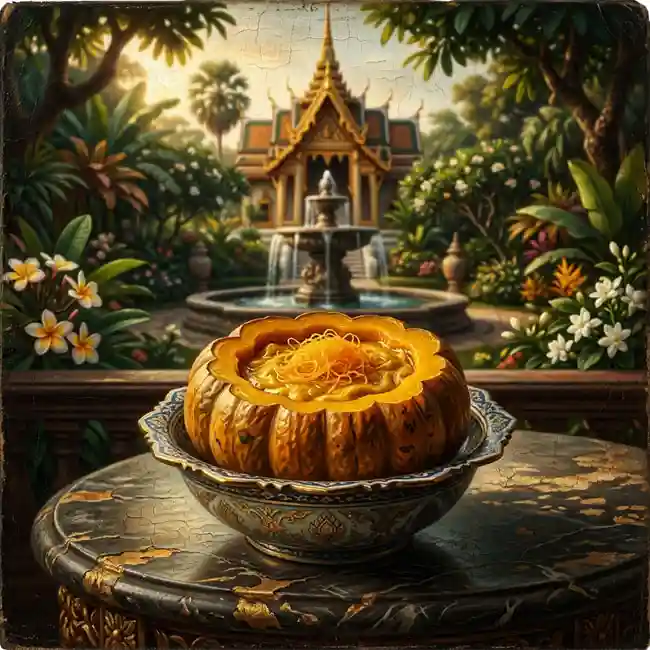
🍮 Recipe: The Golden Silk Coconut Custard (Sangkhaya Fak Thong)
👑 About this Royal Secret
This wasn't just a dessert; it was a masterpiece often served during private palace gatherings or as a symbol of prosperity during the mid-Rattanakosin period. Known as the favorite treat of noblewomen, the contrast between the tender, slow-steamed pumpkin and the rich, velvety custard represents the duality of royal life: robust strength paired with delicate, refined grace.
🥥 Ingredients & The Aristocratic Touch
• The Royal Pantry: The soul of this dish lies in the purity of the coconut cream and the natural aromatic depth of palm sugar. In the palace kitchen, we would never use refined white sugar. We sought out the darkest, earthiest palm sugar harvested from the coastal groves, as it provides a deep, caramel-like complexity that balances the richness of the duck egg yolks.
• Modern Substitutes:
◦ If authentic aged palm sugar is unavailable, use dark muscovado sugar mixed with a touch of maple syrup.
◦ For the pumpkin, look for Kabocha squash, which offers the closest texture and sweetness to the heritage Thai pumpkins used historically.
• The Measurements:
◦ 1 small Kabocha squash (approx. 1 kg)
◦ 250 ml thick, first-pressed coconut cream
◦ 150 grams high-quality palm sugar
◦ 4 large duck egg yolks (duck eggs provide a superior, richer texture than chicken eggs)
◦ 3-4 fresh pandan leaves, tied into a knot
◦ 1/2 teaspoon sea salt
👨🍳 The Chef’s Ritual
1.Prepare the canvas by carefully carving a hole in the top of the squash, removing the seeds and stringy pulp. Gently scrape the interior wall to ensure a smooth surface.
2.In a glass bowl, mix the palm sugar, coconut cream, and salt. Add the pandan leaves and use them to gently massage the sugar into the cream. The aroma of the pandan must permeate the liquid.
3.Add the duck egg yolks. Using your fingertips, gently whisk the mixture. Do not over-beat; we want a silky consistency, not foam.
4.Strain the mixture through a fine muslin cloth at least three times. This is the "royal secret" to ensuring that the final custard has a texture as smooth as polished jade.
5.Pour the mixture into the squash. Place in a bamboo steamer over low, steady heat. Steam for 45-60 minutes. The heat must be kept low to prevent the custard from curdling.
🗝️ Secrets of the Palace Kitchen (Tips & Mistakes)
◦ The Temperature Trap: Never steam on high heat. Palace chefs knew that high heat creates air bubbles. Low, consistent steam is the key to a mirror-like surface.
◦ The Egg Factor: Always use duck eggs. Their higher fat content is what gives this dish its "aristocratic" richness that chicken eggs simply cannot replicate.
◦ The Pandan Massage: Don't just toss the pandan in; bruise the leaves slightly and use them to stir the liquid. This releases the essential oils that define authentic Thai aroma.
◦ Patience is a Virtue: Let the dessert cool completely before cutting. If you slice it while warm, the custard will weep and lose its structural integrity.
❓ Royal FAQ
Q1: Why do these recipes feel so different from modern store-bought versions?
A: Because they lack artificial thickeners. The texture comes purely from the ratio of fats in the duck eggs and coconut cream, which requires more skill but provides a cleaner, more elegant mouthfeel.
Q2: Can I prepare this in advance?
A: Absolutely. In fact, these desserts often taste better after resting for 12 hours in the refrigerator, as the flavors of the palm sugar and coconut have time to harmonize fully.
Q3: How do I know if the pumpkin is cooked through?
A: Use a thin wooden skewer. If it slides into the flesh of the squash with zero resistance, it is perfectly tender.
🍃 The Taste of History (Summary)
This dish is more than a sweet—it is a study in texture and scent. The earthy warmth of the pumpkin, combined with the silkiness of the egg-coconut custard and the subtle, grassy perfume of pandan, captures the essence of a civilization that prioritized harmony above all else.
🥘 Final Thoughts: Bringing History to Your Table
The kitchen should be your sanctuary, not your stress. While these recipes originated in the strict environment of a palace, they were built on the foundation of simple, honest, and high-quality ingredients. Do not be intimidated by the history behind them. With a little patience and a deep appreciation for the process, you are not just cooking; you are keeping a legacy alive.
📢 The Call to Action (The Golden Hook)
If you find yourself enchanted by the stories behind these recipes and the sublime flavors they produce, you are more than a home chef—you are a curator of history. Join us in preserving these precious traditions. Subscribe to our newsletter for more archival recipes, and let’s keep the culinary secrets of the past alive for future generations.
📜 Credit to the Keepers of the Culture (The Legacy)
This recipe is inspired by the ancient culinary archives of the Rattanakosin Royal Palace (19th Century). We have carefully adapted the measurements for modern kitchens while preserving its royal soul. By choosing to cook these dishes, you are honoring the artisans and masters who perfected these techniques over centuries.
| 🇹🇭 👑🍨 < Back |