
🏠 Home > 🗺️ Recipes > 👑🥘 Signature Royal Sauces (Sauces) > 🇱🇦 Laos Signature Royal Sauces (Sauces) Recipes > 👑🥘 1.The Imperial Jaew Bong Nam Pa (Mekong Umami Elixir)
👑🥘 The Sacred Flavors of Lan Xang: Unlocking the Millennium-Old Masterpieces of Lao Aristocratic Sauces
Published by Supakorn | Updated: July 2026
🇱🇦 👑 The Forgotten Royal Legacy of Laos: The Golden Era of Lan Xang
Hey there, fellow food explorer! If you have ever dipped a sticky rice ball into a perfectly balanced, deeply aromatic sauce and wondered how a simple condiment could carry so much soul, you are in for an incredible journey today. We are peeling back the thick layers of time, digging past standard restaurant menus, and stepping straight into the fragrant, exclusive world of ancient Southeast Asian royalty. Specifically, we are uncovering the deeply guarded secrets of the Lan Xang Kingdom, a legendary empire whose culinary traditions spanned over a thousand years. Laos possesses a food heritage that is as complex, refined, and breathtakingly artistic as any elite court in history, and it all starts with their liquid gold: the aristocratic dipping sauces.
For centuries, the ultimate measure of a royal kitchen master in the ancient capital of Luang Prabang was not just how beautifully they roasted a wild boar or how delicately they wrapped a river fish. The real test lay entirely within the complexity of their mortar and pestle. The grand sauces served to kings, queens, and visiting foreign dignitaries were dense with history, meticulously layered with rare herbs, and deliberately designed to hit every single flavor profile simultaneously—sweet, sour, fiery, earthy, and that deep, intoxicating umami that modern foodies crave. These weren't mere side items; they were the absolute centerpieces of the aristocratic dining experience, transforming basic local ingredients into absolute acts of sensory worship.
📜 The Storyteller’s Intro: A Peek Inside the Hidden Vaults of Luang Prabang
Imagine stepping away from the bustling modern streets and slipping into a candlelit room within the inner courtyard of a royal compound during the peak of the dry season. The air is warm, thick, and heavy with the scent of smoldering wood embers, roasted galangal, charred shallots, and the unmistakable, deeply complex aroma of fermented river fish aging in massive ceramic vats. In the corner, a highly trained palace cook kneels gracefully before a heavy, polished stone mortar. Every rhythmic thud of the pestle is intentional, bruising local herbs just enough to bleed out their essential oils without turning them to absolute mush. This is a sanctuary where recipes weren't written on paper—they were whispered from master to apprentice like sacred incantations.
The sounds of the bustling Mekong River fade away as a pristine silver platter is prepared for the evening feast. Around the rim sit wild greens, crisp forest vegetables, and pristine slices of slow-cooked meats, all waiting for the main event: a small, exquisitely glazed clay bowl holding a rich, vibrant sauce that took three full days of curing, roasting, and infusing to create. This isn't food meant to be rushed. It is a slow, deeply deliberate art form designed to stimulate the mind, honor the land, and show the absolute pinnacle of luxury to those fortunate enough to sit at the high table.
🌍 The Global Value: From Palace Vaults to Near Extinction
For the longest time, these exquisite recipes were fiercely protected secrets, completely confined to the elite echelons of society. The general public never got a taste of these specific variations; the exact proportions of herbs, the rare additions of wild forest citrus, and the precise techniques used to mellow out intense ferments were kept under lock and key by the head chefs of the aristocracy. Because these formulas were passed down exclusively via oral tradition and deeply guarded family journals, they were highly vulnerable. When political shifts swept across Southeast Asia over the last century, many of the old aristocratic households dispersed, and the grand, meticulous kitchen rituals came dangerously close to being completely wiped out from our collective global memory.
In a world where fast food and hyper-simplified recipes dominate our feeds, these thousand-year-old formulas represent an invaluable piece of global food art. They show us a time when human hands spent hours perfecting a single batch of sauce, using absolutely no artificial additives, relying entirely on the natural alchemy of fermentation, fire, and fresh botany. Losing these recipes would be like burning an ancient library of flavor science. By breathing new life into these old techniques today, we aren't just making a delicious dinner—we are literally preserving a rare, beautiful piece of human history that deserves a permanent spot on the international culinary stage.
🏺 The Collection: Reviving the Crown Jewel of Ancient Condiments
This comprehensive guide is our formal love letter to that magnificent, near-forgotten era of Southeast Asian dining. We have done the historical digging, spoken with cultural preservationists, and carefully adapted these methods so you can recreate this exact magic right in your own modern kitchen. We are focusing on the crown jewel of the Lao aristocratic pantry: Jaew Bong Nam Pa, a sublime, slow-simmered, sun-dried chili and premium fish essence paste infused with local aromatics, wild citrus leaves, and dynamic layers of sweetness and umami that will make your taste buds absolutely sing.
Get ready to transform your standard cooking routine into an absolute royal banquet. This isn't just another generic sauce recipe you scroll past and forget; this is a deeply aromatic, incredibly versatile flavor powerhouse that you can use to glaze meats, dress roasted vegetables, or use as the ultimate dipping companion for warm, steaming rice. Let's break down the myth, prep our ingredients, and dive headfirst into the exquisite, time-tested alchemy of the ancient Lao palace kitchen.
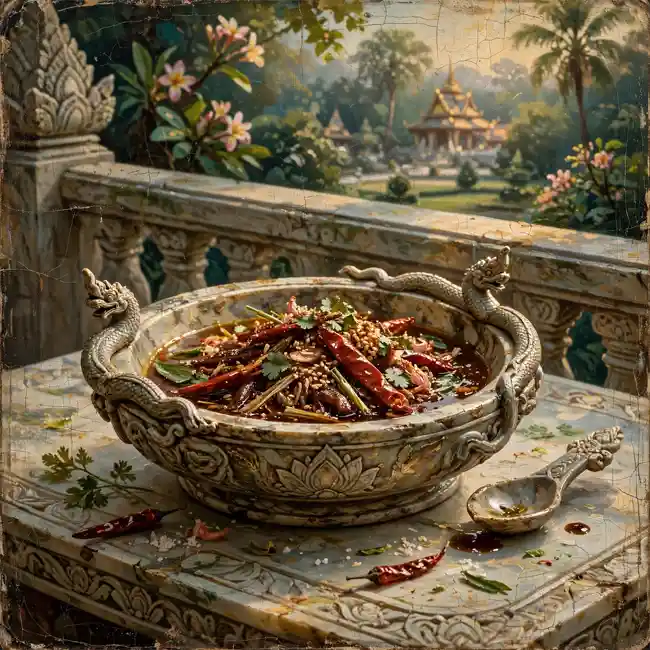
🌶️ Recipe: The Imperial Jaew Bong Nam Pa (Mekong Umami Elixir)
👑 About this Royal Secret
This magnificent creation, traditionally known among old aristocratic families as the Mekong Umami Elixir, was the ultimate showstopper at high-society welcoming banquets. Legend has it that this specific blend of slow-caramelized shallots, sundried chilis, and deeply aged fish essence was a personal favorite of the elite governors overseeing the lush provinces along the Mekong River. It was served exclusively during the arrival of foreign ambassadors to showcase the immense agricultural wealth and culinary sophistication of the region. The vibrant red color symbolized prosperity and vitality, while the long, lingering finish of warm spices and citrus guaranteed that guests would remember the hospitality of the house for years to come.
🌿 Ingredients & The Aristocratic Touch
• The Royal Pantry: To build a masterpiece, you need ingredients that carry deep, intrinsic character. In the ancient days, palace cooks would source chilis that had been slow-dried under the intense tropical sun for weeks, alongside wild shallots harvested from nutrient-rich riverbanks. The fish essence used wasn't the thin, clear liquid found in modern supermarkets; it was a thick, dark, incredibly rich nectar drawn from the very bottom of artisanal aging vats. Every single component was chosen for its purity, intensity, and ability to hold up during a long, slow simmering process over open woodfires.
• Modern Substitutes: Don't worry if you don't live next to a tropical rainforest! You can absolutely achieve this identical premium flavor profile using high-quality ingredients available at your local international market. If you can't find wild Lao shallots, standard French eschalots work beautifully due to their high sugar content and subtle garlic undertones. Instead of traditional sun-dried Mekong bird's eye chilis, a combination of dried whole Japones chilis (for deep color and mild heat) and a touch of dried Thai chilis (for that authentic spark) creates the perfect balance. If you don't have access to aged raw coconut sugar slabs, pure organic palm sugar or high-grade dark muscovado sugar will provide that essential molasses-like background note.
• The Measurements: Here is the precise blueprint for creating a luxurious jar of this imperial elixir. Please follow these proportions closely to achieve the perfect balance of sweetness, fire, and umami:
◦ 20 pieces of whole dried red chilis (stemmed and wiped clean)
◦ 12 large whole fresh shallots (peeled and cut into uniform halves)
◦ 10 large cloves of fresh purple garlic (peeled)
◦ 2 whole stalks of fresh lemongrass (lower white part only, sliced ultra-thin)
◦ 1 medium piece of fresh galangal root (peeled and sliced into thin rounds)
◦ 4 tablespoons of premium, first-press aged fish sauce
◦ 3 tablespoons of pure organic palm sugar (finely grated)
◦ 1 tablespoon of fresh tamarind paste concentrate (pure pulp, seedless)
◦ 5 pieces of fresh makrut lime leaves (veins removed, sliced into paper-thin ribbons)
◦ 3 tablespoons of high-smoke-point neutral oil (such as pure avocado or peanut oil)
🥣 The Chef’s Ritual
1.First, place a dry, heavy cast-iron skillet over medium-low heat. Toss in the dried red chilis, halved shallots, garlic cloves, sliced galangal, and lemongrass. Toast them dry, turning frequently, until the skins of the shallots and garlic develop gorgeous, deep char marks and the dried chilis become intensely fragrant and brittle. Watch them closely so they do not turn completely black, as burnt chilis will introduce an unwanted bitterness into your final masterpiece.
2.Next, transfer the toasted aromatics into a heavy stone or granite mortar. Work in small batches if necessary. Grasp your pestle firmly and begin crushing the ingredients with a steady, rhythmic downward motion. Aim for a textured, rustic paste rather than an ultra-smooth puree; you want distinct, tiny flecks of sweet shallot and spicy chili to be visible, as this creates a wonderful mouthfeel when the sauce is served.
3.Now, place a clean saucepan over low heat and add your neutral oil. Gently slide the textured paste from your mortar into the warm oil. Let it fry very gently for about two to three minutes, stirring constantly, until the oil turns a rich, shimmering crimson color and the aroma fills your entire kitchen.
4.Slowly pour in the premium aged fish sauce, the grated palm sugar, and the smooth tamarind paste. Keep the heat at an absolute whisper. Let the mixture simmer quietly, stirring regularly to prevent the natural sugars from scorching on the bottom of the pan. You will notice the sauce gradually darkening into a deep, glossy, mahogany red as the sugars caramelize and merge beautifully with the savory fish essence.
5.Finally, just two minutes before removing the pan from the heat, scatter the ultra-thin ribbons of fresh makrut lime leaves into the bubbling paste. Stir them through thoroughly to release their bright, volatile citrus oils. Remove the pan from the stove and let the sauce cool down entirely to room temperature. As it cools, the texture will thicken into a luxurious, spreadable, intensely aromatic paste that is ready to elevate any dish it touches.
💡 Secrets of the Palace Kitchen (Tips & Mistakes)
◦ The Mistake of the Modern Blender: Never tempt yourself to use a high-speed electric food processor or blender for this recipe. Blending forces excess air into the ingredients and shears the fibers instead of bruising them, completely altering the traditional velvety texture and dulling the vibrant flavor layers. Stick to the traditional stone mortar and pestle for true royal quality.
◦ Controlling the Umami Balance: If you find the raw aroma of the aged fish sauce a bit too intense initially, don't panic. The secret lies in the slow caramelization step with the palm sugar and tamarind. Let the low heat do its work; the sharp edges of the ferment will mellow out beautifully into a deep, savory sweetness.
◦ The Moisture Enemy: Ensure all your fresh aromatics, especially the shallots and garlic, are completely dry on the outside before you begin to toast them. Any excess surface moisture will cause them to steam rather than char, preventing the development of those crucial smoky notes that define a true aristocratic sauce.
◦ Optimal Maturation: While this elixir tastes incredible right out of the pan, the absolute best flavor profile emerges after letting it rest in a sealed glass jar inside your refrigerator for forty-eight hours. This resting period allows the fiery chilis, sour tamarind, and deep sugars to fully meld together into a smooth, harmonious symphony.
🤔 Royal FAQ
Q1: How long can I store this imperial sauce in my home kitchen?
A: Due to the high-quality natural preservatives like deep-fried aromatics, natural sugars, and low moisture content, this sauce keeps beautifully in a clean, airtight glass container in the refrigerator for up to three full months. Just make sure to always use a completely clean, dry spoon every time you scoop some out.
Q2: What are the absolute best dishes to pair with this Mekong Umami Elixir?
A: It is incredibly versatile! Traditionally, it pairs perfectly with warm sticky rice, roasted river fish, or grilled premium meats. In a modern kitchen, it works as an absolutely stellar glaze for roasted root vegetables, a rich spread for artisanal sandwiches, or a deep flavor base stirred into rustic stews.
Q3: Is this authentic recipe naturally gluten-free?
A: Yes, absolutely! Every single ingredient used in this traditional formulation is completely naturally gluten-free. Just ensure that the premium fish sauce you purchase lists only anchovies and salt as its main ingredients to keep it completely pure and authentic.
✨ The Taste of History (Summary)
When you take your first bite of this phenomenal sauce, you will immediately notice how it completely refuses to be one-dimensional. First comes the gentle, rich sweetness of the caramelized palm sugar and slow-roasted shallots, quickly followed by the bright, vibrant tangy punch of pure tamarind pulp. Just as your palate adjusts, the deep, satisfying, savory wave of premium aged fish essence floods your senses, all wrapped up in a warm, comforting glow of smoky sun-dried chilis and the intoxicating freshness of wild lime leaves. It is an absolute roller coaster for your taste buds, showing exactly why these formulas were kept completely secret within palace walls for generations.
✨ Final Thoughts: Bringing History to Your Table
It is easy to look at ancient culinary history and assume that these flavors belong exclusively in museums or high-end textbooks. But the absolute beauty of food heritage is that it is living, breathing art that can be fully brought back to life right inside your home. By taking the time to toast your aromatics, crush them with intention, and simmer them slowly, you are stepping directly into the shoes of the master palace cooks who came before you. You don't need a golden crown or an expansive estate to dine like absolute royalty—all you need is a true respect for the ingredients, a sturdy mortar, and the passion to recreate a legendary culinary masterpiece for the people you love.
🔥 The Call to Action (The Golden Hook)
If you absolutely fell in love with these deep, historic flavor profiles and want to continue exploring the world's most incredible hidden culinary arts, join us on this grand flavor preservation journey! Subscribe to our exclusive newsletter today to unlock rare historical recipes, deep-dive kitchen guides, and authentic cultural stories delivered straight to your inbox. Let's work together to keep the beautiful secrets of the world's ancient kitchens alive, vibrant, and thriving on our modern tables. Drop a comment below and let us know how your first batch of imperial elixir turned out!
🤝 Credit to the Keepers of the Culture (The Legacy)
This recipe is deeply inspired by the ancient, sacred culinary archives of the old aristocratic estates and palace households of Luang Prabang. We have carefully adapted the precise measurements and cooking times for modern home kitchens while passionately preserving its true royal soul, intense character, and historical integrity. We owe an immense debt of gratitude to the dedicated cultural preservationists, family historians, and local grandmothers who have kept these oral traditions alive through generations of adversity, ensuring that the magnificent flavors of the Lan Xang era continue to inspire culinary explorers all across the globe today.
| 🇱🇦 👑🥘 < Back |