
🏠 Home > 🗺️ Recipes > 👑🍝 Imperial Mains (Main Dishes) > 🇱🇦 Laos Imperial Mains (Main Dishes) Recipes > 👑🍝 1.Khene Luang — The Royal Muntjac Stew of Lan Xang
👑🍝 When Aristocrats Dined: 1,000 Years of Lao Palace Flavors Revealed
Published by Supakorn | Updated: July 2026
🇱🇦 👑 The Forgotten Royal Legacy of Laos: Lan Xang Kingdom Era
Let’s be real for a second. When you think of Lao food, you probably picture sticky rice, larb, and that addictive jeow everyone fights over. Delicious? Absolutely. But what if I told you that’s just the street food version of a much older, much fancier story?
Before Laos became the laid-back country we know today, there was the Kingdom of Lan Xang — the “Land of a Million Elephants.” For over 600 years, from 1354 to 1707, and in its successor kingdoms like Luang Prabang, aristocrats and royal families ruled from gilded wooden palaces along the Mekong. And trust me, they weren’t eating the same thing as everyone else. Their kitchens were run like military operations, with recipes guarded tighter than state secrets. These dishes weren’t just food. They were power, diplomacy, and art on a banana leaf.
Most of these recipes never made it into cookbooks. They lived in the heads of palace chefs, passed down through whispers. Then came wars, colonial rule, and time. Poof. Almost gone.
📜 The Storyteller’s Intro: Step Into the Palace Kitchen
Close your eyes for a second. It’s the late 1700s in Luang Prabang. The monsoon just ended, so the air smells like wet earth and frangipani. You’re standing barefoot on cool teak floors, just outside the royal kitchen. It’s 4 AM. While the city sleeps, the kitchen is alive.
You hear the rhythmic thud of a giant mortar and pestle — that’s the head chef pounding lemongrass and galangal for the king’s breakfast soup. Steam curls up from clay pots simmering over charcoal. Young apprentices fan the flames with woven bamboo. There’s no rushing here. Every slice, every stir is deliberate. Because if the flavor is off by even a little, it’s not just a bad meal. It’s disrespect to the throne. This is where our story begins. Not in a restaurant, but in a place where cooking was sacred.
🌏 The Global Value: Food That Was Never Meant for You
Here’s the thing about aristocratic food: it was designed to be exclusive. In the Lan Xang era, certain ingredients were literally illegal for commoners to use. Wild peacock? Only for the royal table during Kathin ceremonies. Specific river fish from sacred rapids? Reserved for diplomatic banquets. Even the way rice was steamed had rules — royal sticky rice was cooked in specially woven baskets that commoners couldn’t own.
Why? Because food was a status symbol. Serving a dish that took 3 days to prepare showed wealth, patience, and control. Sharing the recipe? That was like giving away military codes. So when the kingdoms fell, many of these dishes vanished. The chefs who knew them either fled, or took the secrets to their graves. What we’re about to cook isn’t just “old.” It’s a piece of history that was almost erased.
✨ The Collection: Bringing Back the Unforgettable
This isn’t a nostalgia trip. This is a rescue mission. Over the past decade, cultural historians and the last descendants of Luang Prabang’s court chefs have been piecing together fragments — a line from a poem, a note in a French explorer’s diary, memories from a 95-year-old grandmother whose aunt worked in the palace.
What you’re about to read is a reconstructed masterpiece from that world. We’ve tested it, adapted it for modern kitchens, and kept its aristocratic soul intact. You don’t need a palace. You just need a pot, some patience, and a serious love for stories you can taste.
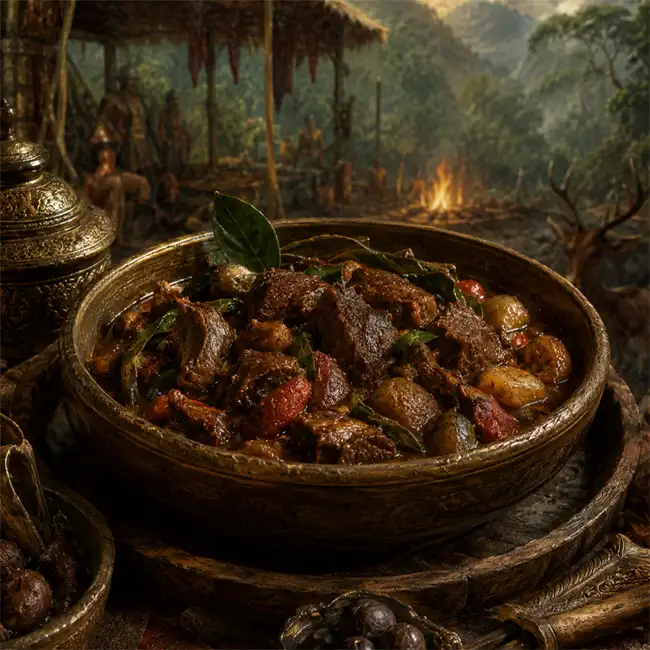
🦌 Recipe: Khene Luang — The Royal Muntjac Stew of Lan Xang
📖 About this Royal Secret
Let me introduce you to Khene Luang, which roughly translates to “Royal Fragrant Stew.” This wasn’t everyday food. This was the dish served to welcome Siamese envoys in the 1600s, and later, French officials in the 1890s. Legend says King Sourigna Vongsa requested it before major battles for clarity and strength.
It was also the centerpiece of Boun That Luang when the royal family hosted private feasts after public ceremonies. Why muntjac deer? In Lao aristocratic belief, muntjac was considered “cooling” meat that balanced the body’s fire — perfect for leaders who had to make heavy decisions. The stew was slow-cooked for hours until the meat fell apart with just a glance, swimming in a dark, aromatic broth scented with wild herbs only found in the northern mountains. Eating it was a privilege. Cooking it today? That’s you keeping a 1,000-year-old legacy alive.
🧺 Ingredients & The Aristocratic Touch
🌿 The Royal Pantry
In the palace days, sourcing ingredients was a whole event. Runners were sent to the Phou Khao Khouay mountains to pick pak van leaves at dawn when their flavor was strongest. River fishermen delivered live pa khaeng fish, but only the royal chef could use its fermented essence. Sticky rice came from royal paddies tended by specific families for generations. The touch of luxury wasn’t gold flakes — it was time, rarity, and knowing exactly which hill grew the most fragrant galangal. We can’t replicate the 17th-century foraging team, but we can honor the spirit: use the freshest, most aromatic ingredients you can find. When you pound your own paste instead of buying it, you’re already cooking like an aristocrat.
🔄 Modern Substitutes
Don’t stress if you can’t find muntjac at your local store. The aristocratic touch is in the method, not just the meat. Here’s how to adapt without losing the soul:
1.Muntjac deer meat → Use venison, or if unavailable, grass-fed beef chuck. The key is meat with connective tissue that becomes silky when slow-cooked.
2.Pak van, wild mountain herb → Baby spinach + 1 teaspoon of dried dill mimics the earthy-sweet note.
3.Fermented pa khaeng essence → 1 tablespoon fish sauce + 1/2 teaspoon miso paste gets you that deep umami.
4.Mak khaen, Lao mountain pepper → Sichuan peppercorns are the closest cousin. Use half the amount because they’re stronger.
5.Banana flower heart → Canned banana blossom in brine, rinsed well. Or skip and add sliced cabbage for texture.
6.Charcoal clay pot → A heavy Dutch oven on low heat. The palace used clay for gentle, even heat — your Dutch oven is the modern equivalent.
📏 The Measurements
This serves 4 people, aristocrat-style — meaning small, rich portions with rice. No $ signs, no tables, just clear ratios:
• Venison or beef chuck, cut into 2-inch chunks: 2 pounds
• Fresh lemongrass, bruised and cut into 3-inch pieces: 5 stalks
• Galangal, sliced into coins: 10 thin slices about 1 inch wide
• Shallots, peeled and halved: 8 whole shallots
• Garlic cloves, smashed: 10 cloves
• Mak khaen or Sichuan peppercorns, lightly toasted: 2 teaspoons
• Dried Lao chilies, seeded for aroma not heat: 5 whole chilies
• Fermented fish essence substitute: 1 tablespoon fish sauce plus 1/2 teaspoon white miso
• Tamarind paste, for sour balance: 1 tablespoon
• Palm sugar, grated: 1 tablespoon
• Banana blossom, drained and sliced: 1 cup
• Fresh dill, roughly chopped: 1/2 cup
• Pak van substitute: 2 cups baby spinach
• Water or unsalted beef broth: 8 cups
• Salt: 1 teaspoon, plus more to taste
• Sticky rice, for serving: 4 cups cooked
🥣 The Chef’s Ritual
1.Wake up the aromatics. In a dry pan, toast the mak khaen, dried chilies, and half the shallots until fragrant and slightly charred. This is called “awakening the spirits” in old Lao kitchens. Don’t skip it — it’s where 50% of the flavor comes from. Pound them into a rough paste with a mortar and pestle. Yes, a blender works, but the texture won’t be the same. The palace chefs believed the pounding rhythm mattered.
2.Sear with purpose. Heat your Dutch oven over medium heat. Add the meat chunks without oil. Let them sear in their own fat until deep brown on all sides. This isn’t just for color. Palace cooks called this “sealing the soul” so the meat wouldn’t lose its essence during the long cook.
3.Build the broth like a palace. Remove meat. In the same pot, toss in lemongrass, galangal, remaining shallots, and garlic. Stir until your kitchen smells like a Lao forest. Return meat to the pot. Add the pounded paste, tamarind, palm sugar, fish sauce miso mix, and salt. Pour in water until meat is just covered.
4.The slow royal simmer. Bring to a boil, then drop to the lowest heat possible. You want barely a bubble. Cover with a heavy lid. Now walk away for 3 hours. Seriously. The aristocratic way is patience. Stirring too much was considered “common.” Check at 2.5 hours. The meat should be tender but not shredded.
5.Finish with finesse. In the last 10 minutes, add banana blossom. In the last 2 minutes, stir in spinach and fresh dill. Turn off heat immediately. The greens should just wilt, staying vibrant. This was the final touch before serving to royalty — fresh herbs added at the last second for color and life.
6.Rest like a king. Let the stew sit, covered, for 15 minutes before serving. This lets the fat rise and the flavors marry. Skim a little fat if you want, but Lao aristocrats believed the sheen was part of the luxury.
🤫 Secrets of the Palace Kitchen
• Secret 1: Never boil, only “smile”. Palace chefs said the broth should “smile, not laugh.” That means tiny bubbles at the edge, never a rolling boil. Boiling makes meat tough and broth cloudy. Aristocratic broth is clear and deep amber.
• Secret 2: Char your aromatics. If you skip toasting the shallots and chilies, you’ll get a raw, flat stew. The char adds smoke and depth that separates palace food from village food.
• Secret 3: Balance is everything. Taste before serving. If it’s too salty, add a splash of water and a pinch of palm sugar. Too sour? More sugar. Too flat? A drop more fish sauce. Royal chefs adjusted by instinct, not recipes.
• Mistake 1: Cutting meat too small. Small pieces turn to mush in 3 hours. Keep them 2-inch chunks. They’ll become spoon-tender but still hold shape.
• Mistake 2: Adding greens too early. If you put dill and spinach in at the start, you’ll get brown sludge. Lao aristocrats prized color. Green should look alive when it hits the table.
• Mistake 3: Rushing the rest. Serving straight from the stove is a modern habit. In the palace, the stew rested while the table was set. That 15 minutes is non-negotiable for flavor.
🤴 Royal FAQ
Q1.Can I make this in a slow cooker or Instant Pot?
You can. For slow cooker: sear meat and aromatics first, then 6 hours on low. For Instant Pot: use sauté for searing, then 45 minutes high pressure + natural release. But honestly? The stovetop low-and-slow method gives the clearest, most aristocratic broth. The palace didn’t have buttons.
Q2.I can’t handle spicy food. Can I skip the chilies?
Absolutely. These dried Lao chilies are more aromatic than hot, especially seeded. But if you’re sensitive, use 1 chili or skip them. The dish’s identity is in the galangal, lemongrass, and mak khaen, not the heat. Royal food was flavorful, not fire-breathing.
Q3.Why is my broth cloudy?
Two reasons: you boiled it too hard, or you stirred too much. Remember, “smile, not laugh.” Also, skim the scum off in the first 30 minutes of simmering. Palace apprentices got in trouble for cloudy broth.
Q4.Can I freeze leftovers?
Yes, but freeze before adding the fresh greens. Reheat gently, then add new spinach and dill at the end. The aristocrats never had leftovers, but we’ll let you in on this modern hack.
🕰️ The Taste of History
When you take your first spoonful of Khene Luang, you’re not just tasting meat and herbs. You’re tasting time. The deep, gamey richness of the meat carries centuries of forest hunts. The smoky chili paste whispers of palace fires. The bright dill hitting your tongue at the end? That’s the same surprise a 17th-century diplomat would’ve had. This stew was political, spiritual, and deeply personal. And now, it’s on your table. That’s wild, right?
💭 Final Thoughts: Bringing History to Your Table
Look, I get it. “1,000-year-old aristocratic recipe” sounds intimidating. Like you need a historian and a sous chef to pull it off. But here’s the truth the palace chefs would want you to know: their secret wasn’t complicated technique. It was respect. Respect for ingredients, for time, and for the people eating.
You just did that. You toasted, you simmered, you waited. You cooked like someone who cares. So whether your kitchen is a tiny apartment or a big suburban house, you’ve officially made something that once only kings tasted. That’s not just dinner. That’s you, personally, keeping culture alive. And that’s pretty cool.
🔗 The Call to Action (The Golden Hook)
If you felt something shift when you smelled that lemongrass and galangal — like you were part of a bigger story — you’re not alone. These flavors were almost lost forever. Join us in keeping them alive. Try this recipe, share it with someone you love, and tell us how it went. What other forgotten dishes should we rescue next? Drop a comment. Let’s make sure the next 1,000 years of Lao food don’t disappear. History tastes better when we all have a seat at the table.
🙏 Credit to the Keepers of the Culture (The Legacy)
This recipe is inspired by the culinary traditions of the Lan Xang Kingdom and the royal courts of Luang Prabang, spanning the 14th to 19th centuries. We have carefully adapted techniques and measurements for modern kitchens while preserving the aristocratic soul and intent of the original dishes. Deep respect and gratitude go to the Lao historians, cultural preservationists, and the descendants of palace cooks who have safeguarded these memories. This is not our creation — it is our tribute to theirs.
| 🇱🇦 👑🍝 < Back |