
🏠 Home > 🗺️ Recipes > 👑🍝 Imperial Mains (Main Dishes) > 🇬🇭 Ghana Imperial Mains (Main Dishes) Recipes
🇬🇭 👑🍝 Ghana Imperial Mains (Main Dishes) Recipes
Published by Supakorn | Updated: July 2026
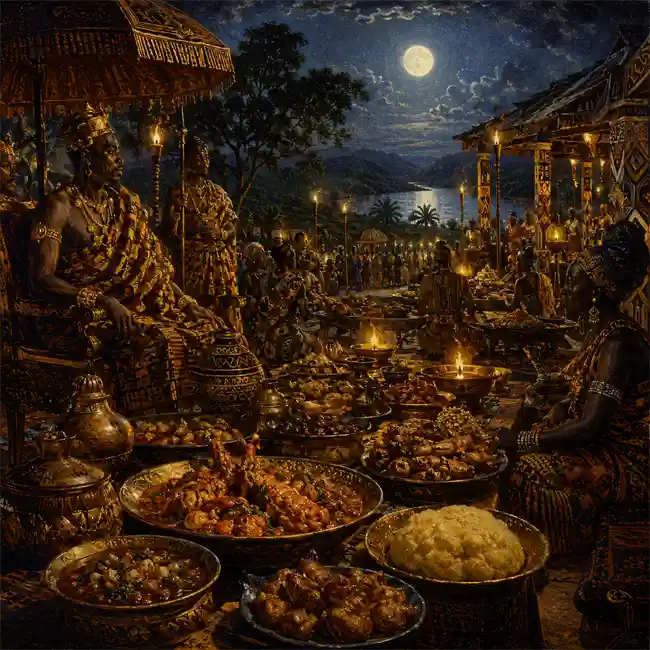
Historical Note: Unlike kingdoms with continuous royal court cuisines, Ghana's culinary heritage is better represented through the traditions of historic kingdoms, noble households, respected chiefs, and aristocratic families. Therefore, this article uses the term Aristocratic Gastronomy to reflect historical accuracy while celebrating the country's remarkable culinary legacy.
🇬🇭 📜 The Storyteller's Intro: Unlocking the Aristocratic Kitchen Secrets of Ancient Ghana
Imagine walking through a bustling palace courtyard nearly a thousand years ago, where the aroma of slowly simmering stews drifted through carved wooden halls, bronze cooking pots gleamed beside glowing fires, and respected elders discussed diplomacy over carefully prepared feasts. Long before modern Ghana became known for its vibrant street food and welcoming hospitality, its ancient kingdoms had already developed refined culinary traditions that reflected wealth, prestige, wisdom, and community.
Rather than a single royal kitchen, Ghana's history was shaped by several powerful kingdoms and states, each contributing distinctive culinary customs that gradually evolved into what many historians recognize today as one of West Africa's richest food cultures. Noble families, palace officials, respected chiefs, queen mothers, spiritual leaders, and master cooks all played important roles in preserving these treasured traditions.
The story of Ghana's aristocratic main dishes stretches across roughly 200 to nearly 1,000 years, evolving through several remarkable historical periods.
🌿 Early Forest Kingdoms (approximately 1000–1200 CE)
• Communities relied on fertile forests and rivers.
• Wild herbs, leafy vegetables, smoked fish, and indigenous spices shaped everyday cooking.
• Food was closely connected with seasonal ceremonies and ancestral traditions.
🏺 Growing Regional Kingdoms (1200–1500 CE)
• Trade routes expanded across West Africa.
• New cooking techniques spread between neighboring cultures.
• Wealthier households began serving elaborate meals during diplomatic gatherings.
👑 The Rise of Powerful Akan States (1500–1700 CE)
• Courtly dining became increasingly ceremonial.
• Large communal meals symbolized unity and political strength.
• Skilled palace cooks refined traditional recipes into prestigious banquet dishes.
🏛️ The Golden Age of Aristocratic Hospitality (1700–1800 CE)
• Distinguished families competed through generosity rather than extravagance alone.
• Guests were welcomed with beautifully prepared main courses showcasing regional ingredients.
• Food became an important expression of leadership, prosperity, and cultural identity.
Unlike many European noble traditions that emphasized individual plated meals, Ghanaian aristocratic dining celebrated togetherness. Large serving bowls encouraged conversation, respect, and family unity. Sharing food represented trust, while generous hospitality reflected both honor and wisdom.
Many dishes that appeared on aristocratic tables were never recorded in written cookbooks. Instead, culinary knowledge traveled from one generation to another through observation, storytelling, and apprenticeship inside respected households. This oral tradition helped preserve flavors while allowing each generation of cooks to refine their own interpretations.
Today, modern visitors often recognize famous Ghanaian classics such as jollof rice, fufu, or banku. Yet behind these beloved dishes lies a fascinating world of lesser-known preparations once associated with influential families, ceremonial gatherings, and important social occasions.
Among the remarkable aristocratic-style main dishes often connected with Ghana's historic culinary heritage are:
• 🍲 Rich palm nut stews prepared for honored guests.
• 🌰 Groundnut-based delicacies featuring carefully balanced spice blends.
• 🍛 Slow-cooked light soups paired with premium proteins during family celebrations.
• 🌿 Leaf-wrapped festive meals reserved for important ceremonies.
• 🍠 Elegant yam-centered banquets symbolizing prosperity.
• 🐟 Fresh coastal seafood dishes presented during diplomatic visits.
• 🌶️ Delicately seasoned guinea fowl specialties associated with respected households.
• 🍃 Heritage bean and vegetable dishes showcasing seasonal abundance.
Some names have survived through oral history, while others have gradually disappeared as generations changed. Their exact preparations often remain closely guarded family traditions, making Ghana's aristocratic cuisine one of West Africa's most intriguing culinary legacies.
What makes these historic dishes especially captivating is not simply their ingredients but the stories surrounding them. Every carefully prepared meal reflected a deeper purpose—celebrating peace, honoring ancestors, welcoming distinguished visitors, marking harvests, or strengthening alliances between influential families.
Travelers exploring Ghana today can still discover echoes of this noble culinary heritage in historic towns, traditional markets, cultural festivals, and family-run kitchens where centuries-old cooking methods continue to thrive.
This journey is not about recreating mythical palace recipes. Instead, it celebrates authentic traditions inspired by the kitchens of Ghana's historic kingdoms and aristocratic households, where every meal carried meaning beyond the dining table.
As we continue exploring Ghana's remarkable culinary landscape, you'll discover how rivers, forests, coastlines, trade routes, and thriving kingdoms all helped shape one of Africa's most fascinating aristocratic food traditions—one that continues to inspire chefs, historians, and curious travelers around the world today.
🗺️ The Royal Culinary Tourism: Mapping Flavors to Historic Landscapes
One of the most fascinating ways to experience Ghana is not simply by visiting its famous landmarks, but by following the historic food routes that connected kingdoms, forests, rivers, and coastal trading centers. While the country never developed a single "royal cuisine" in the European sense, generations of aristocratic households, respected chiefs, queen mothers, and influential families cultivated culinary traditions that reflected prestige, hospitality, and regional identity.
Centuries ago, geography determined nearly every aspect of noble dining. The ingredients available in each landscape shaped distinctive main dishes that became symbols of local wealth and cultural refinement.
Instead of searching for one legendary palace kitchen, imagine Ghana as a network of historic culinary regions, each preserving its own aristocratic flavors.
🌍 Why Geography Defined Aristocratic Dining
Long before modern transportation, ingredients rarely traveled far from where they were harvested.
Each region became famous for particular specialties because of its unique environment.
• 🌿 Dense forests supplied medicinal herbs, mushrooms, leafy vegetables, and game.
• 🌊 Rivers provided fresh fish that appeared at ceremonial banquets.
• 🌴 Coastal communities introduced seafood traditions alongside thriving trade.
• 🌾 Fertile farming regions produced yam, cocoyam, millet, sorghum, and later maize.
• 🌶️ Local spice knowledge evolved differently from one kingdom to another.
As influential families exchanged gifts and hosted visiting dignitaries, recipes gradually spread while retaining their regional identities.
Rather than replacing local traditions, aristocratic kitchens celebrated them.
🏛️ Historic Kingdoms That Preserved Culinary Heritage
Several historic kingdoms helped shape today's Ghanaian cuisine.
Although political boundaries changed through the centuries, their culinary influence remains remarkably visible.
👑 Ashanti Kingdom
Perhaps the most recognized historic kingdom in present-day Ghana, the Ashanti court became famous for ceremonial hospitality.
Important visitors were welcomed with generous communal meals prepared using ingredients harvested from surrounding forests.
Large family gatherings reflected respect, diplomacy, and unity rather than individual luxury.
Meals emphasized patience, balance, and generosity.
🌿 Bono Kingdom
Among the earliest Akan states, Bono communities developed sophisticated farming traditions long before European contact.
Agriculture supported stable noble households capable of organizing elaborate ceremonial feasts.
Seasonal harvest celebrations featured carefully prepared yam dishes, slow-cooked soups, and richly seasoned stews that showcased local abundance.
🛡️ Denkyira
Before political power shifted within the region, Denkyira controlled important trade routes.
Its aristocratic households enjoyed access to ingredients arriving from distant communities, encouraging experimentation with spices, smoked proteins, and preserved foods suitable for long journeys.
🌊 Fante Coastal States
Along Ghana's Atlantic coastline, influential Fante communities mastered seafood cookery.
Fresh catches combined with indigenous herbs created elegant meals often served during diplomatic gatherings involving merchants and respected community leaders.
The coastline became one of West Africa's great culinary crossroads.
🧭 Following Ghana's Historic Food Routes
Modern travelers can still experience many landscapes that inspired aristocratic cuisine centuries ago.
Rather than visiting a single palace, food lovers can follow living traditions across multiple destinations.
Some memorable stops include:
• 🏰 Historic royal towns preserving traditional festivals.
• 🥥 Village markets selling indigenous vegetables and spices.
• 🌾 Farming communities where yam cultivation remains central to local identity.
• 🌊 Fishing harbors continuing centuries-old seafood traditions.
• 🌳 Forest villages known for medicinal plants and wild ingredients.
• 🎭 Cultural festivals where ceremonial meals remain part of community celebrations.
Each destination tells another chapter of Ghana's culinary story.
🍲 Noble Hospitality Was the Greatest Luxury
Many visitors imagine aristocratic cuisine as expensive ingredients served on luxurious plates.
In historic Ghana, prestige was measured differently.
A respected household demonstrated honor by:
• Preparing enough food for every guest.
• Using the freshest seasonal ingredients.
• Serving elders before younger diners.
• Presenting meals with dignity and patience.
• Encouraging communal sharing rather than individual portions.
• Welcoming unexpected visitors generously.
Hospitality itself became the highest expression of wealth.
This philosophy continues to define Ghanaian culture today.
🌿 Seasonal Feasts Instead of Permanent Menus
Unlike modern restaurants, aristocratic kitchens rarely followed fixed menus.
Meals changed throughout the year depending on nature's rhythm.
Different seasons brought different opportunities.
Rainy Season
• Fresh leafy vegetables flourished.
• Rivers became more productive.
• Forest mushrooms appeared.
• Tender herbs reached their peak.
Harvest Season
• Yam festivals celebrated agricultural success.
• Families prepared generous communal banquets.
• Root vegetables dominated ceremonial tables.
Dry Season
• Smoked fish became especially valuable.
• Carefully preserved ingredients sustained households.
• Slow-cooked stews became increasingly common.
Nature served as the true calendar for palace-inspired cooking.
🏺 Ancient Markets: Where Culinary Ideas Traveled
Food history wasn't written only inside noble households.
Bustling markets connected villages, kingdoms, and merchants across West Africa.
Here, cooks exchanged:
• Indigenous spices.
• Rare vegetables.
• Palm products.
• Dried seafood.
• Farming techniques.
• Cooking traditions.
• New ingredient combinations.
These lively marketplaces acted as open-air culinary academies.
Many recipes associated with aristocratic households likely evolved through these continuous exchanges.
🎭 Festivals That Still Echo Historic Aristocratic Traditions
Today's cultural celebrations allow visitors to witness traditions rooted in centuries of history.
Many festivals continue emphasizing:
• Community feasts.
• Family reunions.
• Traditional cooking.
• Respect for elders.
• Harvest gratitude.
• Cultural storytelling.
• Ceremonial hospitality.
Although recipes naturally evolve over time, the values surrounding food remain remarkably consistent.
Visitors often discover that sharing a traditional meal provides deeper insight into Ghanaian heritage than simply viewing historical monuments.
🏛️ More Than Food—A Living Cultural Journey
Exploring Ghana's aristocratic culinary heritage means discovering much more than famous dishes.
It is a journey through:
• Ancient kingdoms.
• Historic trading routes.
• Sacred forests.
• Coastal fishing communities.
• Agricultural landscapes.
• Living family traditions.
• Centuries of hospitality.
Every region contributes another layer to the story.
Every marketplace preserves another memory.
Every communal meal continues a tradition passed from generation to generation.
For travelers seeking authentic cultural experiences, Ghana's aristocratic gastronomy offers something rare—a living heritage that can still be tasted, shared, and celebrated today, just as it has been for hundreds of years.
🚣 Cradle of Aristocratic Delicacies – Rivers, Lagoons & the Atlantic Coast
If Ghana's forests nurtured the nation's agricultural abundance, its waterways became the lifeblood of countless historic communities. Rivers carried not only fish and fertile soil but also ideas, trade, diplomacy, and culinary innovation.
Long before paved roads connected the country, rivers and the Atlantic coastline linked kingdoms with neighboring regions, allowing ingredients and cooking traditions to travel naturally across West Africa.
For aristocratic households, these waterways represented prosperity.
Fresh ingredients harvested from rivers, estuaries, lagoons, and coastal waters often appeared during important celebrations because freshness itself symbolized abundance and respect.
Communities living near these waters developed remarkable expertise in preparing elegant seafood dishes that balanced indigenous herbs, aromatic vegetables, and carefully layered flavors.
Travelers exploring Ghana today can still follow many of these historic waterways while discovering fishing villages, traditional markets, historic forts, and cultural festivals that preserve centuries of culinary heritage.
Some of the most fascinating destinations include:
• 🌊 Atlantic fishing communities where generations continue traditional seafood preparation.
• 🚣 River settlements preserving age-old fishing knowledge.
• 🐟 Bustling fish markets filled with indigenous ingredients.
• 🏖️ Historic coastal towns shaped by centuries of maritime trade.
• 🌴 Lagoon communities where local food culture remains deeply connected to nature.
The rivers and coast did far more than feed noble households—they connected cultures, encouraged peaceful exchange, and inspired countless dishes that remain part of Ghana's culinary identity today.
For modern visitors, following these waterways offers one of the most rewarding ways to understand how geography shaped the evolution of Ghana's aristocratic main dishes, transforming everyday ingredients into meals worthy of honored guests.
⛰️ Kingdom of Wild Aromatics & Heritage – Forest Highlands and Ancient Heartlands
Beyond Ghana's shimmering coastline lies another world entirely—one of ancient forests, rolling hills, fertile valleys, and sacred landscapes where some of the country's oldest culinary traditions quietly took shape. While the Atlantic connected Ghana to distant lands, the inland forests nurtured ingredients that became the heart of aristocratic cuisine.
For centuries, respected chiefs, noble households, queen mothers, and palace cooks looked to nature for inspiration. Dense forests provided fragrant leaves, indigenous spices, edible mushrooms, medicinal herbs, roots, and seasonal fruits that transformed simple meals into memorable ceremonial feasts.
Unlike imported luxuries, these native ingredients symbolized identity. The closer a family remained to the rhythms of the land, the more authentic its hospitality was considered.
🌿 Nature Was the First Master Chef
Historic Ghanaian cooks rarely relied on written recipes. Instead, knowledge came from careful observation of the environment.
Generations learned:
• 🍃 Which leaves added aroma without overpowering a stew.
• 🌶️ Which native spices paired naturally with root crops.
• 🍄 Which seasonal mushrooms were prized after the rains.
• 🌰 Which seeds created rich, velvety textures.
• 🌱 Which herbs were reserved for important family celebrations.
These traditions became treasured family knowledge, passed from elders to younger cooks through practice and storytelling.
🏔️ Forest Kingdoms That Inspired Noble Cuisine
Many inland regions developed distinctive food traditions influenced by their landscapes.
Travelers exploring central and western Ghana today can still discover communities where these culinary customs remain part of everyday life.
Historic attractions often include:
• 🌳 Ancient forests rich in biodiversity.
• ⛺ Traditional villages preserving indigenous cooking methods.
• 🎭 Cultural festivals celebrating harvest seasons.
• 🧺 Local markets filled with native vegetables and spices.
• 🥡 Craft communities where wooden mortars and traditional cooking tools are still made.
Rather than preserving a single "palace recipe," these communities preserve an entire philosophy of cooking—one rooted in patience, generosity, and respect for local ingredients.
🍠 The Importance of Root Crops
Few ingredients shaped aristocratic dining more than Ghana's remarkable variety of root crops.
Yams, cocoyams, and other traditional staples represented abundance because they required careful cultivation and seasonal planning.
For important gatherings, experienced cooks transformed these humble ingredients into refined dishes worthy of honored guests.
Their significance extended beyond nourishment.
Root crops symbolized:
• Prosperity.
• Agricultural success.
• Family stability.
• Respect for ancestors.
• Gratitude for fertile land.
Even today, many ceremonial meals continue to celebrate these enduring traditions.
🌶️ The Quiet Art of Layered Flavor
One defining feature of Ghana's aristocratic cuisine was balance.
Rather than overwhelming the palate, experienced cooks sought harmony between earthiness, gentle heat, freshness, and natural sweetness.
Flavor developed gradually through slow preparation rather than excessive seasoning.
This approach reflected a broader cultural value: patience was considered a virtue both inside and outside the kitchen.
Meals were designed to encourage conversation, strengthen family bonds, and honor guests—not to impress through extravagance alone.
🧭 Heritage Tourism Beyond the Famous Landmarks
Many visitors arrive in Ghana expecting to see castles, museums, and historic monuments.
While these places are essential, culinary travelers often discover equally meaningful experiences in rural communities.
Highlights may include:
• 🌾 Harvest festivals celebrating local agriculture.
• 🧺 Weekly markets featuring indigenous produce.
• 👩🏿🍳 Family kitchens preserving generations of cooking traditions.
• 🌿 Nature reserves protecting native plants once used in historic cuisine.
• 🥘 Community feasts where recipes are shared through storytelling rather than written instructions.
These experiences reveal that Ghana's culinary heritage remains alive—not locked away behind museum glass.
🤴👸 Aristocratic FAQ: Unlocking Historic Kitchen Mysteries
Q1.Did Ghana have a royal cuisine like European kingdoms?
Not in the same way. Ghana's culinary heritage developed through several historic kingdoms, chiefdoms, and influential aristocratic households rather than a single continuous royal court. For this reason, the term Aristocratic Gastronomy more accurately reflects the country's historical food traditions.
Q2.Are these ancient dishes still eaten today?
Many are.
Although recipes have naturally evolved over the centuries, numerous traditional stews, yam dishes, soups, and ceremonial meals continue to appear during festivals, weddings, family gatherings, and important cultural celebrations.
What survives most strongly is the spirit of hospitality that has always surrounded these meals.
Q3.Why are some historic recipes considered "secret"?
Many cooking traditions were preserved through oral history rather than written cookbooks.
Families often passed techniques directly from grandparents to children, while respected palace cooks trained trusted apprentices over many years.
Some households still cherish distinctive seasoning methods and preparation styles that remain private family traditions.
Q4.Why is communal dining so important in Ghana?
Sharing food represents trust, unity, generosity, and mutual respect.
Historically, eating together reinforced family relationships, strengthened alliances between communities, and welcomed honored guests.
This tradition remains one of the defining characteristics of Ghanaian culture today.
🧠 Final Thoughts: The Timeless Allure of Aristocratic Gastronomy
The story of Ghana's aristocratic main dishes is far richer than a collection of historic recipes.
It is the story of forests that nourished kingdoms.
It is the story of rivers that connected communities.
It is the story of farmers whose harvests sustained generations.
It is the story of respected chiefs, queen mothers, noble families, master cooks, and countless unnamed guardians of tradition who transformed local ingredients into symbols of generosity and cultural identity.
Perhaps the greatest treasure is not a single forgotten dish but the philosophy behind it.
For centuries, Ghana's most respected households believed that the finest meal was one shared with others. Hospitality carried greater value than luxury, and the warmth of a welcome mattered more than rare ingredients.
That timeless lesson continues to inspire modern travelers.
As you journey through Ghana's historic towns, bustling markets, forest villages, and coastal communities, you'll discover that every meal tells another chapter of an extraordinary cultural story.
And this is only the beginning.
In the articles that follow, we'll explore individual aristocratic main dishes one by one—uncovering their fascinating histories, regional origins, cultural symbolism, and the traditions that have allowed them to endure for generations.
Some recipes have become famous.
Others remain hidden within family kitchens.
Many have never been fully documented in English.
Together, we'll continue uncovering these remarkable culinary treasures—one historic dish at a time.
👑 Credit to the Keepers of the Culture (The Legacy)
Every traditional Ghanaian dish represents the knowledge, resilience, and creativity of generations who carefully preserved their culinary heritage.
This article is offered with sincere respect to:
• 👑 Traditional chiefs and royal houses who continue to safeguard cultural customs.
• 👵 Queen mothers and family elders who pass culinary knowledge from one generation to the next.
• 👩🏿🍳 Home cooks whose everyday meals preserve centuries of living tradition.
• 🌾 Farmers, fishers, and market communities who continue cultivating indigenous ingredients.
• 🎭 Cultural organizations and festival communities dedicated to protecting Ghana's heritage.
• 📚 Historians, anthropologists, and researchers whose work helps document the country's remarkable food traditions.
Food is more than nourishment.
It is memory.
It is identity.
It is history served at the family table.
By celebrating Ghana's aristocratic gastronomy with historical care and cultural respect, we also honor the people who have protected these traditions across centuries of change.
May their legacy continue to inspire future generations of cooks, travelers, historians, and food lovers around the world—and may every shared meal remind us that the greatest culinary treasures are those preserved through community, generosity, and respect.
👑🍝 Ancient Ghanaian Palace Feasts: Rediscover the Royal Main Dishes of the Ashanti Kingdom
👉 Unlock Rare Ghanaian Imperial Mains
| 🌐 👑🍝 < Back | 🇬🇭 👑🥪 < Previous | Next > 🍨👑 🇬🇭 |