
🏠 Home > 🗺️ Recipes > 👑🍝 Imperial Mains (Main Dishes) > 🇬🇭 Ghana Imperial Mains (Main Dishes) Recipes > 👑🍝 1.Golden Ashanti Royal Groundnut Stew with Spiced Guinea Fowl
👑🍝 Ancient Ghanaian Palace Feasts: Rediscover the Royal Main Dishes of the Ashanti Kingdom
Published by Supakorn | Updated: July 2026
🇬🇭 👑 The Forgotten Royal Legacy of Ghana: The Ashanti Kingdom
Long before modern cities flourished across West Africa, powerful kingdoms shaped the history, culture, and identity of the region. Among them, the Ashanti Kingdom became renowned not only for its remarkable political influence and extraordinary gold craftsmanship but also for a sophisticated culinary tradition that reflected dignity, celebration, and hospitality.
Within the royal courts, food represented much more than nourishment. Every carefully prepared meal honored respected guests, celebrated victories, welcomed distinguished visitors, and marked sacred ceremonies that strengthened the bonds between rulers, elders, and communities. Palace kitchens became places where generations of experienced cooks preserved treasured techniques, seasonal knowledge, and family traditions that rarely left the royal household.
Although many original recipes were never formally documented, the spirit of these magnificent dishes continues to live through Ghana's enduring culinary heritage. Today's traditional Ghanaian cuisine still carries echoes of those noble kitchens, where local ingredients were transformed into elegant feasts through patience, craftsmanship, and deep respect for nature's abundance.
Rather than viewing these dishes simply as historical curiosities, they should be appreciated as living stories. Every ingredient reflects the landscape. Every cooking method reveals generations of wisdom. Every shared meal reminds us that hospitality has always been one of Ghana's greatest cultural treasures.
This article celebrates that remarkable legacy by drawing inspiration from historical palace traditions while adapting them thoughtfully for modern home kitchens. It is not an attempt to recreate an exact royal recipe, but rather to honor the culinary spirit that once graced the tables of Ghana's noble courts.
📜 The Storyteller's Intro
Imagine stepping into a magnificent royal courtyard nearly one thousand years ago. The first rays of morning sunlight shimmer across polished golden ornaments while respected elders quietly prepare for an important gathering. Skilled palace cooks have already begun their work before dawn, carefully grinding spices with smooth stone mortars and tending glowing charcoal fires that burn steadily beneath heavy clay cooking pots.
The aroma of roasted peppers mingles with fragrant herbs gathered from nearby forests. Fresh vegetables arrive from fertile farms surrounding the kingdom, while carefully selected meats are inspected with remarkable attention to quality. Every ingredient has a purpose, every movement follows tradition, and every meal tells a story worthy of the royal family.
Servants carry beautifully carved wooden platters through long palace corridors decorated with intricate symbols representing prosperity, unity, and wisdom. Musicians rehearse gentle rhythms in the distance while respected guests gradually arrive, each welcomed with warmth and generosity.
For the palace chefs, cooking is more than daily work—it is an honorable responsibility. They understand that every dish reflects the kingdom itself. Flavor must be balanced, presentation must inspire admiration, and every guest should leave feeling respected and satisfied.
Centuries later, the sounds of those royal kitchens may have faded, yet the spirit of their culinary craftsmanship continues to inspire cooks throughout Ghana and around the world.
🌍 The Global Value
Many traditional palace recipes remained known only to royal households, trusted cooks, and respected noble families. Their preparation required not only exceptional skill but also access to premium seasonal ingredients that were often reserved for important ceremonies and distinguished guests.
As kingdoms evolved and generations passed, many of these treasured culinary traditions became fragmented. Some techniques survived through oral storytelling, while others blended naturally into the broader traditions of Ghanaian home cooking. Instead of disappearing completely, they quietly evolved alongside changing communities and local customs.
Today, historians, culinary enthusiasts, and cultural researchers recognize tremendous value in preserving these traditions. They offer insight into historical agriculture, trade routes, social customs, and the remarkable creativity of African palace kitchens that have often received less global attention than they deserve.
By respectfully revisiting these historical inspirations, modern cooks can appreciate not only delicious flavors but also the rich cultural heritage behind every carefully prepared meal.
Each recreated dish becomes an invitation to explore history through the universal language of food.
✨ The Collection
This collection brings together recipes inspired by the elegance and generosity associated with Ghana's historical royal courts. Every featured dish celebrates ingredients that have nourished communities for centuries while embracing cooking techniques that remain practical for today's kitchens.
Rather than focusing on luxury alone, these recipes highlight the extraordinary beauty found in simplicity. Fresh vegetables, carefully selected spices, slow cooking, and thoughtful preparation combine to create meals worthy of special occasions without requiring rare or impossible ingredients.
Throughout this series, you'll discover dishes that echo the grandeur of ceremonial feasts, festive celebrations, and palace gatherings where every course reflected gratitude, abundance, and respect.
Our first featured recipe pays tribute to one of Ghana's most beloved culinary traditions, presented with inspiration drawn from the refined atmosphere of the ancient royal kitchens.
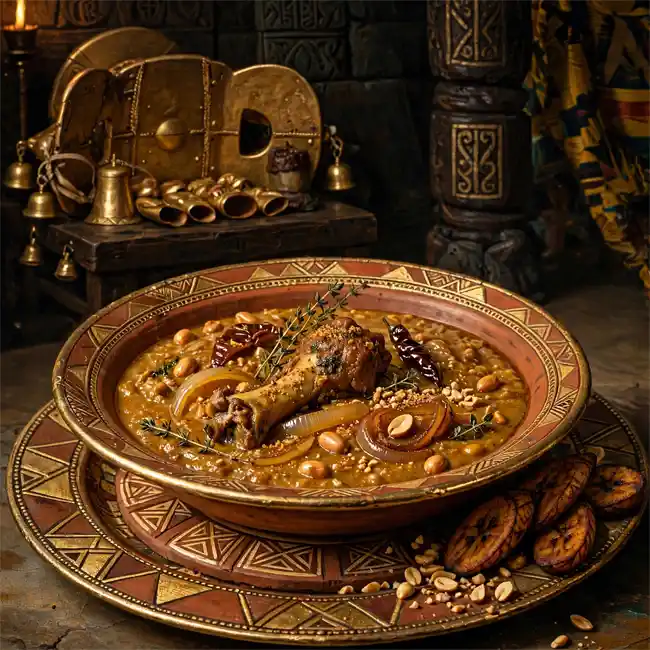
🍽️ Recipe: Golden Ashanti Royal Groundnut Stew with Spiced Guinea Fowl
👑 About This Royal Secret
Among the grand feasts associated with the Ashanti royal court, richly layered stews symbolized prosperity, generosity, and unity. Inspired by those traditions, this elegant groundnut stew combines roasted peanuts, aromatic vegetables, warming spices, and tender poultry into a deeply satisfying centerpiece worthy of a festive table.
Historical accounts describe palace banquets where honored chiefs, respected elders, diplomatic visitors, and distinguished community leaders gathered to celebrate alliances, seasonal harvests, and important cultural ceremonies. Large communal meals encouraged conversation, reinforced trust, and reflected the kingdom's reputation for remarkable hospitality.
While no verified written recipe from a thousand years ago survives in its original form, this modern interpretation captures the spirit of those noble banquets by emphasizing locally treasured ingredients that have remained central to Ghanaian cuisine for generations.
Creamy roasted groundnuts provide richness without overwhelming the natural sweetness of vegetables. Gentle spices create warmth instead of excessive heat, while slow simmering allows every ingredient to contribute its own unique character.
Served alongside soft fufu, steamed rice, or boiled yam, this comforting main dish transforms an ordinary dinner into a memorable celebration inspired by one of West Africa's most remarkable cultural legacies.
🥜 Ingredients & The Aristocratic Touch
🌿 The Royal Pantry
Every remarkable royal meal begins long before cooking starts. Palace chefs understood that exceptional flavor depended upon selecting ingredients at the peak of freshness rather than relying on unnecessary complexity.
Golden roasted peanuts were treasured for their creamy richness and satisfying texture. Fresh tomatoes added vibrant color, while onions, peppers, and aromatic herbs built layers of fragrance that slowly unfolded throughout the cooking process.
Quality poultry represented generosity toward honored guests, and carefully balanced spices demonstrated the refined skill of experienced palace cooks. Together, these humble ingredients created extraordinary harmony that reflected both abundance and respect.
In today's kitchen, the same philosophy remains true. Choose fresh produce, roast your spices gently, and allow patience to become your most valuable ingredient.
🥣 Modern Substitutes
One of the greatest strengths of traditional Ghanaian cuisine is its flexibility. Palace cooks adapted to changing seasons while maintaining the spirit of each dish. Modern home cooks can do the same without losing the rich character of this royal-inspired recipe.
• Guinea fowl → Chicken thighs, free-range chicken, turkey, or Cornish hen
• Fresh roasted groundnuts → Natural unsweetened peanut butter with no added sugar or oils
• Scotch bonnet pepper → Fresh red chili, cayenne pepper, or leave out for a milder stew
• Palm oil → Red palm oil for authenticity, or use a combination of vegetable oil and a small amount of paprika for color if unavailable
• Garden eggs (African eggplants) → Japanese eggplant or baby eggplant
• Smoked dried fish (optional traditional flavor) → Omit for a poultry-only version or substitute with smoked paprika for gentle smokiness
• Fresh ginger root → Ground ginger if necessary, though fresh is highly recommended
• Local leafy greens → Spinach or kale
📏 The Measurements
• 900 grams guinea fowl or chicken thighs, cut into serving pieces
• 2 tablespoons red palm oil
• 2 medium onions, finely chopped
• 4 cloves garlic, minced
• 1 tablespoon freshly grated ginger
• 3 large ripe tomatoes, diced
• 2 tablespoons tomato paste
• 1 medium red bell pepper, chopped
• 1 small chili pepper, finely chopped (optional)
• 250 grams roasted unsalted peanuts, blended into a smooth paste
• 750 milliliters chicken stock
• 1 teaspoon smoked paprika
• 1 teaspoon ground coriander
• 1 teaspoon white pepper
• 1 teaspoon sea salt
• Half teaspoon freshly ground black pepper
• 2 bay leaves
• 150 grams spinach or local leafy greens
• Fresh parsley or coriander leaves for garnish
👨🍳 The Chef's Ritual
Preparing this royal-inspired stew is not about rushing. Every stage allows the ingredients to build layers of flavor, creating a comforting meal worthy of a festive gathering.
◦ Step 1 – Prepare the Poultry
Season the guinea fowl or chicken with sea salt, black pepper, and half of the grated ginger. Let it rest for about twenty minutes so the flavors begin to penetrate the meat naturally.
◦ Step 2 – Build the Royal Foundation
Warm the palm oil in a heavy cooking pot over medium heat. Add the onions and cook gently until soft and lightly golden. Stir in the garlic and remaining ginger, allowing their fragrance to bloom without burning.
◦ Step 3 – Create the Palace Sauce
Add the diced tomatoes, tomato paste, bell pepper, chili, smoked paprika, coriander, and bay leaves. Stir patiently and allow the vegetables to soften into a rich, aromatic base. This stage should never be hurried because it develops the stew's remarkable depth.
◦ Step 4 – Brown the Poultry
Place the seasoned poultry into the pot and coat every piece with the tomato mixture. Cook gently for several minutes until the outside begins to develop color while remaining tender inside.
◦ Step 5 – Prepare the Golden Groundnut Mixture
In a separate bowl, whisk the roasted peanut paste together with part of the warm chicken stock until completely smooth. This prevents lumps and creates the velvety texture that distinguishes a truly elegant groundnut stew.
◦ Step 6 – Slow Simmer
Pour the peanut mixture into the cooking pot followed by the remaining chicken stock. Stir continuously until fully combined.
Reduce the heat to low and allow the stew to simmer slowly for approximately one hour. During this time the sauce gradually thickens while the poultry becomes wonderfully tender.
If the stew becomes thicker than desired, simply add a little warm stock until it reaches a smooth, luxurious consistency.
◦ Step 7 – Add the Greens
During the final five minutes, stir in the spinach or leafy greens. They should soften gently while keeping their vibrant color and fresh flavor.
◦ Step 8 – Final Balance
Taste carefully before serving. Add a little extra salt, white pepper, or freshly grated ginger if needed. Palace cooks believed the final seasoning should enhance the ingredients rather than overpower them.
◦ Step 9 – Present Like Royalty
Serve the stew in a large serving bowl surrounded by fufu, steamed rice, boiled yam, or boiled plantains. Finish with fresh herbs scattered over the top for color, freshness, and elegance.
A royal meal was always meant to be shared, so invite family and friends to gather around the table and enjoy every spoonful together.
🔑 Secrets of the Palace Kitchen (Tips & Mistakes)
According to long-standing Ghanaian cooking traditions, exceptional stews depend far more on patience than complicated techniques. These timeless practices help produce a beautifully balanced result.
Royal Kitchen Tips
• Roast peanuts lightly before blending to deepen their natural aroma.
• Cook onions slowly instead of quickly to create natural sweetness.
• Fresh ginger provides brighter flavor than powdered ginger.
• Simmer gently rather than boiling vigorously to keep the sauce silky.
• Stir frequently after adding the peanut mixture to prevent sticking.
• Prepare the stew several hours before serving when possible, as the flavors become even richer after resting.
• Taste only near the end of cooking before adjusting seasoning.
• Serve with freshly prepared starches for the best texture and balance.
Common Mistakes to Avoid
• Using sweetened peanut butter.
• Cooking over very high heat.
• Skipping the browning stage for the poultry.
• Adding all the liquid at once without stirring.
• Burning the garlic.
• Overseasoning with excessive chili.
• Forgetting to skim excess foam during simmering.
• Serving immediately without allowing the stew to rest for a few minutes.
The palace cooks believed that calm hands produced the finest meals. Patience, careful observation, and respect for every ingredient mattered more than speed.
🤴❓ Royal FAQ
Q1.Can I make this recipe with chicken instead of guinea fowl?
Absolutely. While guinea fowl reflects the spirit of historical West African royal feasts, free-range chicken is an excellent substitute that remains flavorful and accessible. Chicken thighs are especially recommended because they stay juicy during the long, gentle simmer.
Q2.Can I prepare the stew in advance?
Yes. In fact, many experienced cooks believe the stew tastes even better the next day. Allow it to cool completely, refrigerate it, and gently reheat over low heat while stirring occasionally. The flavors become deeper and more harmonious after resting.
Q3.Is this recipe very spicy?
Not necessarily. The level of heat is completely adjustable. Traditional Ghanaian cuisine values balanced flavors more than overwhelming spiciness. Simply reduce or omit the fresh chili if you prefer a milder dish while keeping the aromatic spices for depth.
Q4.What should I serve with this royal-inspired stew?
This stew pairs beautifully with:
• Soft fufu
• Steamed jasmine rice
• Boiled white rice
• Boiled yam
• Plantains
• Cocoyam
• Cassava
Each option absorbs the rich groundnut sauce wonderfully and creates a satisfying, complete meal.
📖 The Taste of History (Summary)
Every traditional recipe tells a story, but few stories are as captivating as those inspired by the noble kitchens of historic Ghana. This Golden Ashanti Royal Groundnut Stew celebrates the timeless relationship between generous hospitality, local ingredients, and patient craftsmanship.
Although the exact palace recipes have largely been lost to history, the culinary traditions they inspired continue to thrive in Ghanaian homes today. By combining roasted groundnuts, fragrant vegetables, carefully selected spices, and slow cooking techniques, this recipe pays respectful tribute to generations of skilled cooks whose knowledge shaped one of West Africa's richest food cultures.
More importantly, this dish reminds us that true luxury has never depended upon extravagance alone. It comes from thoughtful preparation, sharing meals with loved ones, respecting seasonal ingredients, and preserving traditions that connect generations across centuries.
Every spoonful becomes a celebration of heritage, craftsmanship, and the enduring warmth of Ghanaian hospitality.
🍽️ Final Thoughts: Bringing History to Your Table
Historical royal cuisine often feels distant, as though it belongs only to magnificent palaces and forgotten kingdoms. Yet the heart of these traditions has always been surprisingly simple.
Exceptional ingredients.
Patience.
Generosity.
And the joy of bringing people together around a shared table.
This royal-inspired Ghanaian main dish proves that remarkable cooking does not require extraordinary equipment or impossible-to-find ingredients. With fresh produce, quality poultry, roasted groundnuts, and careful attention to each step, anyone can recreate a meal that echoes the elegance of centuries past.
Whether you prepare it for a family gathering, a holiday celebration, or simply to explore another culture's remarkable culinary heritage, this recipe offers something far greater than a delicious dinner.
It offers a journey through history.
As the rich aroma fills your kitchen, imagine the bustling palace courtyards, skilled royal cooks tending glowing fires before sunrise, and honored guests gathering to celebrate friendship, peace, and prosperity. Those moments may belong to another era, but their spirit can still live at your own table.
Every meal prepared with care becomes part of a tradition that continues to inspire future generations.
✨ The Call to Action (The Golden Hook)
If you enjoy discovering the hidden flavors of history, you're already helping preserve one of humanity's greatest treasures—our shared culinary heritage.
Across the world, countless royal kitchens, noble households, and ancient civilizations created remarkable recipes that deserve to be remembered. Many have faded from everyday life, while others survive only through fragments of oral tradition, historical records, and cultural memory.
Our mission is to celebrate these extraordinary food traditions with respect, curiosity, and appreciation for the cultures that created them.
Join us as we continue exploring forgotten palace recipes, legendary royal feasts, timeless cooking techniques, and inspiring stories from civilizations across the globe.
Every recipe you prepare helps keep these remarkable culinary traditions alive for future generations.
History is not only written in books.
Sometimes, it is served on a plate.
🌍 Credit to the Keepers of the Culture (The Legacy)
This royal-inspired recipe respectfully celebrates the enduring culinary traditions of Ghana and draws inspiration from the historical food culture associated with the Ashanti Kingdom and other historic Ghanaian communities. While no authenticated one-thousand-year-old palace recipe survives in complete written form, the ingredients, cooking methods, and cultural themes presented here are thoughtfully adapted from traditional Ghanaian culinary practices and historical scholarship.
The measurements and cooking instructions have been carefully adjusted for modern home kitchens while striving to preserve the spirit of generosity, craftsmanship, and hospitality that characterized Ghana's noble culinary heritage.
We extend our deepest respect and gratitude to the Ghanaian people, cultural historians, traditional cooks, community elders, and heritage organizations whose continued dedication helps preserve these remarkable food traditions for future generations.
May every dish inspired by this legacy encourage greater appreciation for Ghana's rich history, diverse culture, and extraordinary contribution to the world's culinary heritage.
| 🇬🇭 👑🍝 < Back |