
🏠 Home > 🗺️ Recipes > 👑🥪 Royal Starters (Appetizers) > 🇧🇷 Brazil Royal Starters (Appetizers) Recipes
🇧🇷 👑🥪 Brazil Royal Starters (Appetizers) Recipes
Published by Supakorn | Updated: September 2026
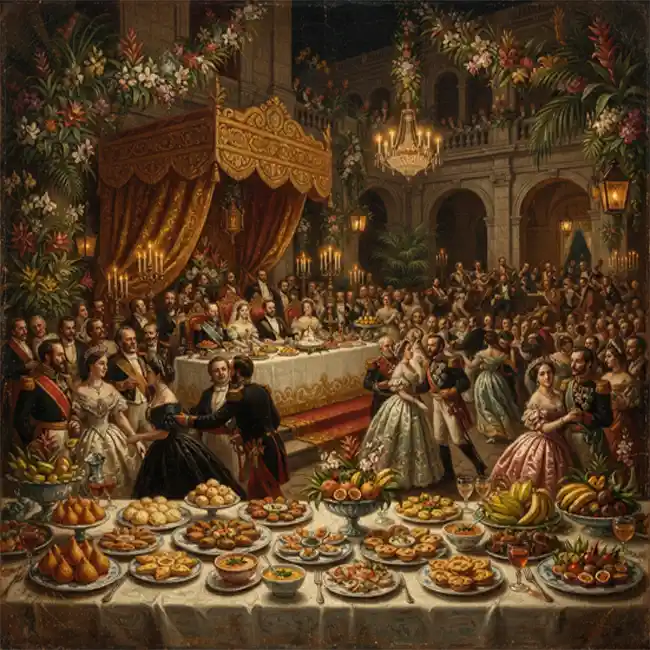
👑📜 The Storyteller’s Intro: Whispers from the Paço Imperial
Welcome to the secret codex. This is your grimoire revealing the clandestine 200-year-old dishes of the Brazilian aristocracy.
If you think Brazilian food is just churrasco and beach snacks, my friend, you are about to have your mind completely rewired. We are not talking about street food here. We are talking about the food served behind the gilded doors of the Paço Imperial in Rio de Janeiro.
Brazil is unique, because its aristocratic era is condensed, intense, and incredibly flavorful. While Europe had 1,000 years of royalty, Brazil had one glorious, opulent century of Empire that burned brighter than almost anywhere else. Let me break it down for you:
🔸 The Colonial Aristocracy Era (1500-1808): The Sugar Barons' Secret: Long before there was an Emperor, the true kings were the Senhores de Engenho, the sugar cane lords of Pernambuco and Bahia. For over 300 years, these families lived like European princes in their Casa-Grande mansions. Their starters were not European copies, they were a secret fusion. They took Portuguese techniques and forced them to marry indigenous Tupi ingredients like cassava, cashew, and tucupi. This is where the DNA of aristocratic Brazilian appetizers was born.
🔸 The Imperial Golden Age (1808-1889): The Court of Dom Pedro: This is the heart of our story. In 1808, the entire Portuguese Royal Court fled Napoleon and moved to Rio, making it the only European capital ever outside of Europe. Suddenly, French chefs, Austrian pastry cooks, and Portuguese nobles were all trying to impress Emperor Dom Pedro I and later Dom Pedro II. The palace kitchen became a laboratory. The rule was: it must look French, but it must taste like Brazil.
🔸 The Culture of Living and Eating: For the Brazilian aristocrat, a starter, or entrada, was never just food. It was a power statement.
• The French Service in Tropical Heat: Meals were served à la Française, with dozens of small dishes on the table at once. But the aristocrats adapted. Heavy European soups were replaced by chilled palm heart creams and light, acidic seafood bites to survive the Rio heat.
• The Secret Ingredient Network: Noble families had their own private collectors, known as mateiros, who would disappear into the Atlantic Forest for weeks to bring back wild hearts of palm, rare pink peppercorns from the coast, and wild honey from the mountains. You couldn't buy this in a market.
• The Porcelain Ritual: Appetizers were served on imported Sèvres porcelain, but always eaten with small spoons carved from indigenous jacaranda wood. That contrast was everything. It said, we are European, but we rule this land.
Now, let me unlock the vault. These are the names you will not find in any modern restaurant menu, the lost appetizers whispered about by the descendants of palace cooks:
• Bolinhos de Aratu da Casa Imperial: Tiny, golden fritters made from the rare Aratu crab found only in the mangroves of Bahia, mixed with farinha de mandioca d'água and wild cilantro, once reserved for the Emperor's private lunch.
• Casquinha de Siri com Leite de Castanha-do-Pará: Not the modern version. The original 1860 aristocratic recipe uses the shell of the deep-sea siri crab, stuffed with its meat gently poached in fresh Brazil nut milk and finished with a dusting of toasted manioc flour from the Xingu.
• Palmito Fresco de Petrópolis com Manteiga de Garapa: Fresh, never-canned hearts of palm harvested from the Emperor's summer forests in Petrópolis, blanched for exactly 40 seconds and served with a warm butter made from reduced sugarcane juice and lime.
• Pastéis de Santa Clara à Brasileira: A secret convent recipe adapted for the palace. Ultra-thin pastries filled with a creamy paste of pirarucu fish from the Amazon, seasoned with priesthood herbs and white pepper from Pará.
• Tacacá Branco Imperial: A refined, non-spicy version of the Amazonian soup, served in tiny porcelain cups as a starter. Made with clear tucupi, tapioca gums shaped like pearls, and jambu leaves that make your mouth tingle, topped with dried shrimp powder.
• Caju Amigo Recheado: A whole cashew fruit, hollowed out and stuffed with a savory mousse of its own nut, chicken breast, and sweet peppers. A favorite of Empress Teresa Cristina.
🗺️ The Royal Culinary Tourism: Mapping Flavors to Historic Landscapes
If you want to actually taste where these royal starters came from, you have to follow the imperial map. This isn't just food tourism, this is time travel. Each region of Brazil guarded a different chapter of the aristocratic kitchen.
• Rio de Janeiro - The Imperial Capital Flavor: Everything converges here. Visit the Paço Imperial in Praça XV. Stand in the courtyard and imagine the carts arriving at dawn with fresh seafood from Guanabara Bay. This is where French technique met tropical abundance. The signature royal flavor here is sea and forest. Think delicate seafood casquinhas, chilled palm heart soups, and anything with Aratu crab. For a modern royal tourism experience, head to the Santa Teresa neighborhood, where old mansions still have the original wood-fired ovens where these starters were perfected.
• Petrópolis - The Mountain Retreat Taste: Just one hour up into the mountains, this was the summer escape for the entire court. Emperor Dom Pedro II built his palace here to escape the heat. The air is different, and so is the food. The royal starters here are all about preservation and wild aromatics. The forests around Petrópolis are where the best hearts of palm, wild mushrooms, and mountain honey were foraged. A tourism tip: The Quitandinha area and the old farm roads still have families who know the secret trails for wild herbs that the imperial cooks used. This is where you hunt for the Palmito Fresco story.
• Salvador & Olinda - The Sugar Baron Heritage: Go north to Bahia and Pernambuco to taste the 300-year-old roots. This is pre-imperial aristocracy. In the Pelourinho of Salvador and the upper town of Olinda, the mansions of the sugar lords still stand. Here, the royal starter DNA is sweet, savory, and Afro-Indigenous. The use of dendê oil was forbidden in the Imperial Palace, but in the private homes of the northern aristocrats, it was secretly used to flavor shrimp and fish appetizers. This is where the original Casquinha de Siri was born.
• Belém do Pará - The Amazonian Imperial Gateway: This is the most secret map pin. During the rubber boom, which overlapped with the end of the Empire, the aristocrats of Belém became richer than anyone in Rio. They imported grand pianos and French chefs directly from Paris. They demanded Amazonian ingredients be made into European-style starters. This is the birthplace of the aristocratic Tacacá Branco and Pastéis de Santa Clara. Visiting the Ver-o-Peso market in Belém is still like walking into the imperial pantry.
🚣 Cradle of Royal Delicacies - Coastal & River Basin Secrets
The Brazilian aristocracy understood one thing better than any European court: water is flavor. Brazil has more coastline and more rivers than any other aristocratic nation on earth, and they used it as their private, royal refrigerator.
• The Mangrove Codex: The real royal seafood did not come from the open ocean. It came from the mangroves. The black mud mangroves of Bahia and Rio were considered royal hunting grounds. Only families with a royal decree could harvest there. Why? Because that is where the Aratu crab and the Uçá crab live. Their meat is sweeter, more delicate, and impossible to farm. The Bolinhos de Aratu were so prized that the recipe was kept by the head cook and never written down.
• The River Milk Technique: This is a lost technique I absolutely love. Instead of using cream or milk from cows, which would spoil in the heat, the imperial cooks created Leite de Castanha, milk from the Brazil nut and the cashew nut. They would grate fresh Brazil nuts from the Amazon basin, soak them in river water, and press them through fine linen. This creamy, slightly sweet milk was used to poach crab, to bind fritters, and to create silky starter sauces. It is vegan, 200 years before that was a trend, and purely aristocratic.
• Tourism Hook - The Royal Boat Tour: For travelers today, you can recreate this. In Paraty, a perfectly preserved colonial port south of Rio, there are still boat tours that take you through the same mangrove channels the imperial collectors used. You can see where they placed the small traps for siri crabs. It is not just a tour, it is an edible archaeology lesson.
• The Secret of Freshness: There was no refrigeration. So how did they serve raw or lightly cooked starters? The palace had a system of canoas rápidas, fast canoes that would bring seafood from the bay to the palace kitchen in under 30 minutes, packed in leaves of the giant Victoria amazonica water lily with crushed ice brought from the mountains of Petrópolis. That level of logistics was pure power.
⛰️ Kingdom of Wild Aromatics & Heritage - Mountains and Deep Forest
If the coast gave the aristocrats their protein, the mountains and the deep Atlantic Forest gave them their magic. This is where Brazil's royal starters become completely different from any other royal cuisine in the world.
🔸 The Heart of Palm Empire: Forget the canned, acidic hearts of palm you know. The real thing, Palmito Juçara Fresco, was the white truffle of Brazil. It grows only in the wild Atlantic Forest and takes 15 years to mature. Cutting one kills the entire tree, so harvesting it was strictly controlled by the Emperor. Only the imperial family and a few dukes could serve it. It was eaten almost raw, just blanched, to taste the forest. Its flavor is sweet, nutty, and like fresh coconut water. This single ingredient defined aristocratic status.
🔸 The Pepper and Herb Hunters: The imperial kitchens employed erveiros, official herb masters, who were almost always of indigenous descent. They held the knowledge of the forest.
• Pimenta Rosa: Wild pink peppercorns from the coastal forests, used not for heat but for a sweet, rosy aroma on top of savory fritters.
• Jambu: The tingling leaf from the Amazon that makes your tongue buzz. Used in tiny amounts in the Tacacá Branco to awaken the palate before the main course.
• Oregano de Montanha: A wild oregano found only in the high fields of Minas Gerais, with a flavor of thyme and citrus.
🔸 The Minas Gerais Cheese Connection: The mountains of Minas Gerais were the dairy of the empire. While the court in Rio looked down on cheese as peasant food, the aristocrats secretly loved it. They created tiny cheese breads, the ancestors of Pão de Queijo, but made them the size of a coin and stuffed them with a paste of wild mushrooms and truffle-like forest fungi as a starter. This is the true aristocratic version.
🔸 Tourism Hook - The Imperial Foraging Trail: Today, you can still walk the Caminho do Ouro, the old Gold Trail that connects Rio to Minas Gerais. In the town of Petrópolis and the Serra dos Órgãos National Park, there are guided foraging experiences with descendants of the original erveiros. They will show you how to identify the real Juçara palm, how to pick jambu safely, and how to make garapa butter over a wood fire. This is the most authentic aristocratic food tourism in Brazil.
🏛️❓ Royal FAQ: Unlocking Palace Kitchen Mysteries
Q1.Did Brazil actually have real royalty and why is its food so different from Portugal?
Yes, and this is what makes it so fascinating. Brazil was the only country in the Americas to be an Empire, from 1822 to 1889, ruled by two Emperors, Dom Pedro I and Dom Pedro II. The difference from Portuguese food is deliberate. The Portuguese court arrived in Rio in 1808 and found that their European ingredients didn't work. Wheat spoiled, dairy curdled. So the royal chefs were forced to adapt. They kept the French presentation and Portuguese techniques but were forced to use cassava instead of wheat, Brazil nut milk instead of cream, and wild forest herbs instead of European parsley. It became a completely new aristocratic cuisine by necessity.
Q2.Why were these starter recipes considered secret and lost?
For two reasons, power and orality. First, in the aristocratic world, controlling a rare ingredient like fresh Juçara palm heart or Aratu crab was like controlling gold. You didn't share the source. Second, the most skilled cooks in the imperial palace were enslaved Africans and indigenous women who were not allowed to read or write. The recipes were never written down in cookbooks, they were passed down orally and through practice. When slavery was abolished in 1888 and the monarchy fell in 1889, the entire kitchen system collapsed overnight, and the oral recipes vanished with the cooks.
Q3.What is the biggest difference between a common Brazilian appetizer and a royal one?
The difference is refinement and the treatment of cassava and seafood. A common appetizer today like a Coxinha is hearty, fried, and filling. A royal starter was always small, delicate, served in two bites, and designed to stimulate, not fill you. A royal cook would never deep-fry a crab cake in heavy oil. They would lightly sauté it in clarified Brazil nut butter. They used farinha d'água, a fine, toasted cassava flour, instead of breadcrumbs for a lighter texture. And they balanced flavors with sourness from cashew fruit and native limes, not just salt.
Q4.Can I taste anything close to these royal starters today?
You can, if you know where to look. You will not find them on a typical menu, but look for three clues. Look for restaurants in Rio, Petrópolis, and Salvador that list palmito fresco not palmito em conserva. Look for casquinha de siri com leite de castanha instead of with coconut milk. And look for chefs who work with Amazonian ingredients like tucupi and jambu in the south. The modern farm-to-table movement in Brazil is actually unknowingly recreating the imperial supply chain.
🧠 Final Thoughts: The Timeless Allure of Aristocratic Gastronomy
So, here we are at the end of our first codex, but really, this is just the appetizer.
What we have uncovered together is not just a list of old snacks. We have found a lost philosophy. The Brazilian aristocracy, for all its flaws, understood something beautiful: that true luxury is not about importing things from far away, it is about knowing your own land so intimately that you can turn a mangrove crab and a wild palm heart into something worthy of an Emperor.
The allure of this cuisine is timeless because it is a perfect paradox. It is French in its soul and Brazilian in its heart. It is incredibly sophisticated yet completely wild.
My plan for you, the curious traveler and food lover, is simple:
• Pin Rio de Janeiro's Paço Imperial and Petrópolis's Imperial Museum. That is your starting line.
• Then pin Belém's Ver-o-Peso Market. That is your wild pantry.
• Remember the names: Bolinhos de Aratu, Palmito Fresco de Petrópolis, Tacacá Branco Imperial. Ask for them in whispers at the best heritage restaurants. The keepers of the recipes will know.
And stay close, because what I have given you today are just the stories and the names. In our next chapters, I will be unlocking the actual, step-by-step palace recipes for each of these starters, recreated from handwritten family notes and oral histories, so you can bring the Imperial Court to your own kitchen. The royal table is about to be set again.
👑 Credit to the Keepers of the Culture (The Legacy)
This codex would not exist without deep respect for the true owners of this knowledge.
My deepest gratitude goes to the Povos Indígenas do Brasil, especially the Tupi and Yanomami peoples, who were the first botanists and the original masters of cassava, tucupi, jambu, and the Juçara palm. Their 1,000-year-old knowledge is the foundation of everything the palace called royal.
Honor to the Afro-Brazilian Mães e Pais de Santo and the Cozinheiras Negras of the imperial kitchens. Enslaved and freed women who carried the techniques of transformation, the secret of heat, and the art of flavor, and who kept this cuisine alive through memory when they were forbidden to write.
Respect to the Famílias Imperiais e de Petrópolis, the descendants of palace staff, and the archivists at the Museu Imperial de Petrópolis and the Instituto Histórico e Geográfico Brasileiro who preserve the letters, menus, and procurement lists that prove these dishes existed.
And finally, to the Mestres Erveiros e Pescadores Artesanais of the Atlantic Forest and Bahia mangroves, who still today guard the sustainable harvest of the ingredients that make this cuisine possible. This culture is theirs, we are merely guests at their table.
👑🥪 Unearthing Brazil's Lost Palace Starters: Elite DIY Recipes from the Imperial Era
👉 Explore Secret Brazilian Royal Starters
| 🌐 👑🥪 < Back | Next > 🍝👑 🇧🇷 |