
🏠 Home > 🗺️ Recipes > 👑🥪 Royal Starters (Appetizers) > 🇺🇸 USA Royal Starters (Appetizers) Recipes
🇺🇸 👑🥪 USA Royal Starters (Appetizers) Recipes
Published by Supakorn | Updated: August 2026
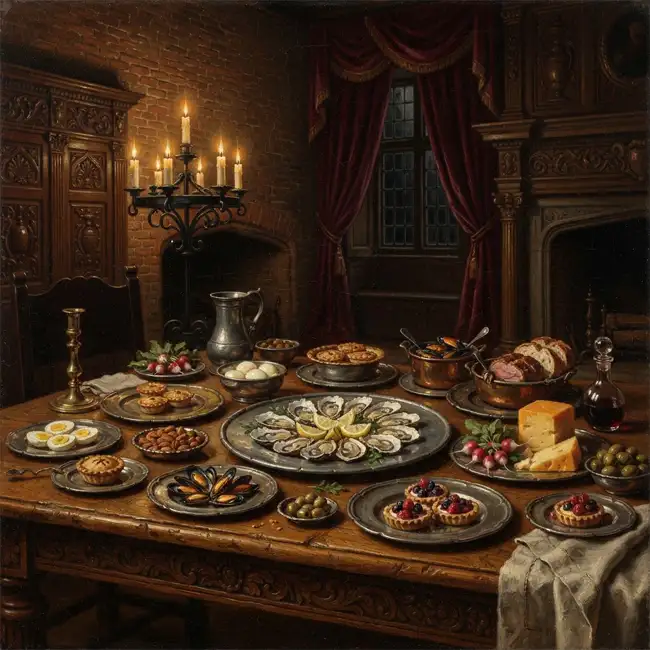
👑📜 The Storyteller’s Intro: The Whisper of Velvet, Silver, and Secret Pantries
Let’s be completely real for a second: the United States doesn't have an official royal family. But if you think America never had its own version of a culinary court, you’re in for a massive surprise. Long before fast food and modern convenience redefined global eating habits, the young republic developed a fiercely sophisticated, insanely exclusive high-society dining culture. Because the founding elite couldn't claim bloodline titles, they flexed their status through unmatched luxury at the dining table.
This isn't about ordinary comfort food. This is the ultimate vault of aristocratic starters—a world where wealth was spoken through rare spices, labor-intensive preparations, and ingredients imported on private merchant ships. To understand how elite appetizers evolved here, you have to look at three distinct historical eras spanning centuries of high-society heritage:
• The Colonial & Early Republic Elite Era (Late 1700s–1830s): Wealthy plantation owners, northern merchants, and early statesmen sought to match European court dining. Influenced heavily by French culinary arts and Indigenous knowledge, aristocratic tables featured hyper-refined wild game, delicate pastries, and preserved delicacies served on imported silver.
• The Antebellum High-Society Era (1830s–1860s): In coastal cities and southern estates, grand gatherings meant multi-course banquets. Aristocratic starters became elaborate display pieces designed to show off self-sufficiency, rare coastal harvests, and complex European techniques executed by legendary, often uncredited master cooks.
• The Gilded Age Grandeur Era (1870s–1910s): Industrial magnates and high-society families created an era of unprecedented opulence. Railroad barons and banking dynasties hosted dinners where starters were practically edible works of art, blending old-world prestige with incredible native American ingredients.
Living like an early American aristocrat meant dynamic seasonal shifts, hyper-local foraging, and long hours dedicated to labor-intensive food prep. Starters were designed to awaken the palate while sending a clear signal: you are dining with the absolute elite.
Here are some of the most legendary, high-society starter concepts born from this rich historical era:
• Martha Washington’s Preserved Oyster & Bone Marrow Tartelettes: A prized early republic starter combining rich baked marrow, pickled wild oysters, and a golden butter crust.
• The Tidewater Diamondback Terrapin Consommé Glaze: A ultra-exclusive starter soup reduction made from native marsh turtle, infused with foreign mace, citrus zest, and wild herbs.
• Narragansett Bay Smoked Sturgeon Rosettes with Wild Caper Butter: Delicate shaved sturgeon preserved over aromatic hardwoods, served atop thin toasted rye crisps.
• Gilded Age Deviled Squab Liver Past Pastry Pearls: Silky pastured pigeon liver mousse layered inside bite-sized puffed pastries, brushed with autumn fruit glazes.
• Charleston Pickled Shrimp in Sassafras Gelée: Freshly harvested coastal shrimp cured in spiced vinegar and suspended in a clear, herbaceous gelée infused with native forest roots.
🗺️ The Royal Culinary Tourism: Mapping Flavors to Historic Landscapes
If you want to truly feel the magic of early American high-society food, you have to travel to the places where these grand traditions were forged. Culinary travel across the United States is deeply connected to historic architecture, old shipping routes, and preserved estates. Exploring these regions feels like stepping right into an era of grand ballroom galas and exclusive dining rooms.
• The Historic Eastern Seaboard Trail: Winding from Boston down to Philadelphia and Charleston, this coastal stretch is home to historic taverns, stately manors, and maritime archives where early aristocratic dining records are preserved.
• The Plantation & Lowcountry Heritage Drive: Coastal South Carolina and Georgia offer a window into complex, historic culinary mastery, where unique native ingredients met high-society entertainment demands.
• The Hudson Valley Manor Route: Lined with grand Gilded Age estates, this lush river valley showcases where industrial tycoons established self-sustaining farms to fuel their legendary multi-course banquets.
• The Appalachian Foothills Foraging Corridor: A region rich in wild aromatics, rare truffles, and spring herbs that supplied early mountain manors with distinct native seasonings.
🚣 Cradle of Royal Delicacies - Coastal Waters & River Basins
The coastal rivers and bays of early America were the primary engine of luxury dining. Unspoiled estuaries provided a abundance of seafood that became the centerpiece of high-society starters. Wealthy families competed to serve the freshest, most exotic catches from their regional waters, transformed through intricate preparations.
• Chesapeake Bay Estuary System: Known historically for yielding the finest terrapin, massive oysters, and soft-shell crabs that graced early presidential state dinners.
• Lowcountry Tidal Marshes: The coastal rivers of South Carolina provided pristine conditions for Carolina Gold rice, marsh birds, and white shrimp that anchored aristocratic Southern banquets.
• The Mighty Mississippi River Delta: A melting pot of French aristocratic technique and native subtropical abundance, famous for rich riverine game and shellfish appetizers.
• Long Island Sound & Narragansett Bay: Cold-water sanctuaries that supplied New York and New England high society with rare sturgeon caviar and pristine lobsters.
When visiting these historic waterfront regions today, travelers can wander preserved brick quays, tour historic smokehouses, and experience maritime heritage tours that highlight the origins of luxury American seafood.
⛰️ Kingdom of Wild Aromatics & Heritage - Deep Forests & Mountain Crests
Beyond the coastlines, early American high society looked to the vast inland wilderness to supply their grand dining tables with unique, luxury ingredients that couldn't be bought in standard markets. Estate owners employed dedicated foragers, hunters, and herbalists to harvest wild delicacies deep within mountain ranges and old-growth forests.
• The Shenandoah Valley & Blue Ridge Mountains: Provided wild game birds, mountain chestnuts, and native ramps that infused starters with rich, earthy aromas.
• The Great Smoky Mountain Foothills: Rich in native mushrooms, ginseng, and wild berries used to craft complex reduction sauces and savory glazes for meat-based appetizers.
• The Adirondack Mountain Wilderness: The ultimate summer retreat for Gilded Age elites, where forest-foraged pine tips, wild truffles, and cold-stream trout formed the base of rustic yet refined starters.
• The Berkshire Hills: A center of early high-society country manors, renowned for orchard fruits, wild herbs, and artisan dairy traditions that elevated simple pastries into aristocratic treats.
Exploring these forest and mountain landscapes today allows food travelers to walk ancient foraging trails, visit historic mountain lodges, and taste the wild botanical roots of early American luxury.
🏯❓ Royal FAQ: Unlocking Palace Kitchen Mysteries
Q1: Did early American high society really eat appetizers the same way European courts did?
A: Yes, but with a unique regional twist! While European aristocrats relied heavily on traditional court recipes, early American elites blended classic French and English techniques with native ingredients like wild game, local shellfish, and forest herbs, creating an entirely new standard of luxury dining.
Q2: How were delicate aristocratic starters preserved before modern refrigeration existed?
A: Kitchen staffs relied on brilliant historical preservation techniques including deep-cellar ice houses, precise vinegar pickling, rich butter potting, smoking over aromatic woods, and sealing delicacies inside thick pastry crusts or natural gelées.
Q3: What made an appetizer "aristocratic" in 18th and 19th-century America?
A: It came down to two things: extreme labor and rare ingredients. An aristocratic starter required hours of meticulous preparation—such as labor-intensive bone broth reductions, delicate pastry carving, or hand-foraged wild botanicals—served on imported china and sterling silver.
Q4: Why are many of these historic high-society starter names unknown today?
A: Many of these recipes were kept as closely guarded family secrets within grand private estates, passed down orally or recorded in private, hand-written kitchen journals that were rarely published for the general public.
🧠 Final Thoughts: The Timeless Allure of Aristocratic Gastronomy
Exploring the lost starters of early American high society reveals a world of incredible creativity, deep connection to nature, and uncompromising culinary art. These dish concepts represent a fascinating chapter of history where native land and sea met the absolute peak of historic dining elegance.
We are just getting started! Keep this page bookmarked and stay tuned, because we are about to unlock the exact, step-by-step secret recipes for these historic starters very soon. Get ready to recreate true high-society culinary magic right in your own modern kitchen!
👑 Credit to the Keepers of the Culture (The Legacy)
We honor and respect the generations of master chefs, culinary historians, estate archivists, indigenous foragers, and unsung kitchen artisans who preserved these remarkable foodways across centuries. Their dedication, skill, and creative genius built the foundation of historic American cuisine, ensuring that these extraordinary flavors and traditions live on for future generations to cherish.
👑🥪 The Aristocratic Starters America Tried to Forget
👉 Taste Rare American Royal Starters
| 🌐 👑🥪 < Back | Next > 🍝👑 🇺🇸 |