
🏠 Home > 🗺️ Recipes > 👑🍲 Royal Court Broths (Soups) > 🇺🇸 USA Royal Court Broths (Soups) Recipes
🇺🇸 👑🍲 USA Royal Court Broths (Soups) Recipes
Published by Supakorn | Updated: August 2026
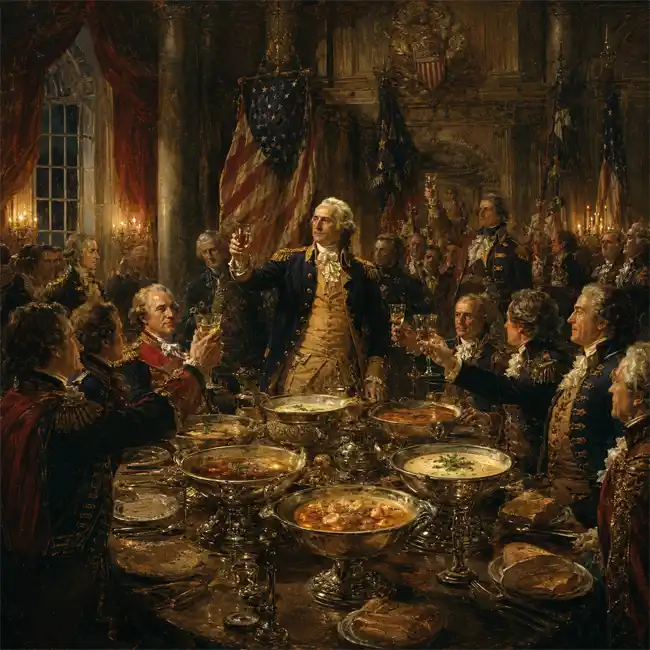
This is the sacred codex revealing the secret aristocratic and old nobility foods, aged 200 - 1,000 years, of USA Aristocratic Court Broths (Soups)
Welcome to the private dining journals of America. While the United States never crowned a king, it absolutely had its own royal courts - the Colonial Governors, the Southern Plantation Aristocracy, the Hudson Valley Patroons, and the Gilded Age Millionaires of Newport and New York. Their broths were not food; they were power, protocol, and pedigree in a bowl.
👑📜 The Storyteller’s Intro: The Secret Soup Code of America’s Uncrowned Kings
You think American soup started with a can? Think again, my friend. For almost 300 years, the elite of America have been guarding a broth culture so refined that regular folks were never meant to taste it.
Let me take you back through the three secret eras of American aristocratic broths:
• Era 1: The Colonial Patroon Era (1620s - 1776s): This is the oldest layer, over 300-400 years old when you count the Native American and Dutch influence. The Dutch Patroons in New York, the Cavaliers in Virginia, and the Puritan Brahmins in Boston didn't eat stew. They ate clear, disciplined consommés inspired by England and France, but made with wild American ingredients like terrapin, heritage turkey bones, and Chesapeake Bay crab. A clear broth meant you had servants to skim it for 12 hours.
• Era 2: The Southern Plantation Aristocracy Era (1780s - 1860s): This is the most luxurious and most secret era. The Lowcountry elite of Charleston and Savannah created a true American court cuisine. Here, West African, French Huguenot, and Native American food knowledge merged in the hands of enslaved Black chefs who were culinary geniuses. Their broths were complex, slow, and deeply seasoned - think She-Crab Soup and Turtle Soup that took three days to prepare.
• Era 3: The Gilded Age Millionaire Era (1870s - 1929): This is the era of the American castle. When families like the Vanderbilts, Astors, and Whitneys built 70-room summer cottages in Newport, Rhode Island, they hired French chefs and competed through soup. Dinner had 10 courses, and the second course was ALWAYS a royal broth. If your broth wasn't translucent like amber and served in a Sèvres cup, you were socially finished.
The culture of eating? Aristocrats never slurped. Broth was served as a test of manners.
• Broth was always served first to awaken the palate, never to fill the stomach.
• It was sipped from a two-handled bouillon cup, never eaten with a spoon clanking.
• The hostess never discussed the ingredients. The mystery was part of the status. The recipe was locked in the kitchen safe.
• The most prized broths were "restorative broths" - served at midnight to ladies after balls and to gentlemen after hunting.
🤫 The Secret Menu: 7 Forbidden Aristocratic Broths You Were Never Meant To Know
These are the names whispered in old family cookbooks. We are not revealing the full formula today, just unlocking the existence of these legends.
• The Newport Consommé à l'Ambre: The ultimate Gilded Age flex. A double-clarified beef and venison broth infused with Madeira-aged mushrooms from the Berkshires. It was said to be so clear you could read a newspaper through it.
• Charleston She-Crab Royal Bisque: Not the tourist version. The original 1800s aristocratic version uses only female blue crabs with roe, heavy cream from Jersey cows, and a secret pinch of smoked white pepper brought from New Orleans.
• Virginia Peanut & Chestnut Patroon Soup: A forgotten Dutch-Virginian aristocratic broth from the 1700s. Made from heirloom Virginia peanuts and American chestnuts, long before the chestnut blight. Creamy, smoky, and almost sweet.
• Hudson Valley Patroon Green Turtle Broth: The most expensive soup in 19th century America. Served at Delmonico's in New York. A true aristocratic broth that required live Diamondback Terrapin from the marshes of New Jersey.
• Boston Brahmin Salted Cod & Milk Chowder Broth: Before clam chowder became common, Boston's elite drank a refined, thin, silken broth of salt cod, milk, and Boston crackers, infused with bay leaf from their own greenhouses.
• Louisiana Creole Oyster & Artichoke Gumbo Broth: A clear, aristocratic version of gumbo, not thick. French Creole high society in New Orleans filtered their gumbo until it was a dark, aromatic consommé with just a few oysters and artichoke hearts floating like jewels.
• Philadelphia Pepper Pot Heritage Broth: The soup that George Washington supposedly served to his elite guests. A tripe and peppercorn broth from Philadelphia's high society, with a West African soul and a Philadelphia refinement.
🗺️ The Royal Culinary Tourism: Mapping Flavors to Historic Landscapes
If you want to taste the ghost of American aristocracy, you don't go to a restaurant. You go to their homes. This is culinary tourism for seekers.
• Newport, Rhode Island - The Summer White House of Soup: Walk down Bellevue Avenue. Every mansion like The Breakers and Marble House had a massive underground kitchen. Today, the Newport Mansions Preservation Society sometimes hosts Gilded Age dining tours. This is where the consommé culture lived.
• Charleston, South Carolina - The Capital of American Aristocratic Cuisine: The city is the living museum of Lowcountry elite broths. The historic homes on Rainbow Row and the plantations like Boone Hall and Middleton Place are where She-Crab soup was perfected. Book a heritage food tour, not a tourist trap tour.
• Hudson Valley, New York - The Patroon Trail: From Albany to Tarrytown, the old Dutch Patroon manors like Sunnyside and Kykuit still hold Dutch colonial food festivals. Autumn here is the time for chestnut and root broths.
• Nantucket & Cape Cod, Massachusetts - The Brahmin Coast: The cold Atlantic waters made the elite obsessed with clear seafood broths. Visit the old whaling captain mansions. Their kitchens were designed for endless broth simmering.
🚣 Cradle of Royal Delicacies - The Lowcountry Waters & Chesapeake Coast
This is where America's most aristocratic broth was born. The water was the wealth.
The entire Southern aristocratic identity came from the tidal estuaries. The plantation elite didn't farm the land, they commanded the water. Their cooks, mostly enslaved Gullah Geechee women, understood the tides, the crab molting season, and the terrapin hibernation like scientists.
• The birthplace of true American luxury broth is the Ace Basin and Charleston Harbor. The brackish water where river meets sea produces the sweetest blue crab and the richest terrapin. A broth made here is mineral, sweet, and deep.
• The second capital is the Chesapeake Bay in Maryland and Virginia. For 200 years, only the elite could legally harvest Diamondback Terrapin. The broth made from it was considered a cure for everything and was shipped by train to New York for $20 a bowl in 1890 - that's $700 today.
• Tourism tip: Go on a heritage crabbing boat tour in Charleston or a terrapin conservation tour in Chesapeake Bay. You will understand why these broths could only come from here. The flavor is in the marsh mud and the salt air.
⛰️ Kingdom of Wild Aromatics & Heritage - Appalachia and the Northern Forests
If the coast gave the protein, the mountains and forests gave the soul of the broth. American aristocrats were obsessed with European-style hunting lodges, and their mountain broths reflect that.
This is the land of the hunting broth - the bouillon de chasse.
• The Appalachian Highlands (Virginia, North Carolina, Tennessee): Before the chestnut blight of 1904, the Appalachian forests were filled with American Chestnut trees 100 feet tall. The aristocratic families of Virginia made chestnut broths every fall. Today, you can visit heritage orchards in Virginia trying to bring the American chestnut back. The foragers also collected wild morels, ramps, and fiddlehead ferns that went into spring broths.
• The Catskills & Berkshires (New York, Massachusetts): The Gilded Age millionaires built their mountain retreats here to escape the summer heat. Their French chefs would go morel hunting at dawn. The classic Berkshire Mushroom Consommé was made from wild Chanterelles and porcini that only grew in these old-growth forests.
• Tourism tip: Book a foraging and heritage cooking class in Asheville, North Carolina or in the Berkshires. In October, the wild mushroom season, many historic inns like Mohonk Mountain House recreate these aristocratic forest broths. This is the most authentic way to taste the mountain side of American aristocratic cuisine.
🤴👸 Royal FAQ: Unlocking Palace Kitchen Mysteries
Q1.Why does America have aristocratic broths if it has no king?
Because America replaced a king with class. We had a social aristocracy based on land, bloodline, and later, money. In Charleston, your family had to be in town for 3 generations. In Boston, you needed to be a Brahmin. In New York in 1892, Mrs. Astor's list of The 400 decided who was elite. Their food had to be more refined, more labor-intensive, and more expensive than anyone else's. A clear broth that takes 24 hours and 10 pounds of meat to make one quart is the perfect status symbol.
Q2.What made a broth "aristocratic" and not just regular soup?
Three rules. First, clarity. Peasant soup is cloudy and thick. Aristocratic broth is crystal clear or perfectly silken, which requires constant skimming and a technique called clarification with egg whites. Second, ingredients you can't buy. Terrapin, wild morels, female crabs with roe. Third, time. No aristocratic broth was made in under 8 hours. Regular people didn't have time for that.
Q3.Are these recipes lost forever?
No, but they are hidden. They are not in cookbooks. They are in handwritten journals, plantation account books, and mansion archives. For example, the original She-Crab soup recipe from Charleston's historic John Rutledge House was found written on the back of a letter in 1982. Many Gilded Age menus are in the New York Public Library archives. The recipes exist, they are just waiting for someone to decode them respectfully.
Q4.Which American city is the best for tasting this history today?
Charleston, South Carolina, without question. It is the only city where the aristocratic food chain never broke. The same families, the same Gullah culinary heritage, the same ingredients are still there. A high-end heritage restaurant in Charleston today is the closest you will get to eating in an American royal court.
🧠 Final Thoughts: The Timeless Allure of Aristocratic Gastronomy
Look, my friend, American aristocratic broths are not about being snobby. They are about respect for ingredients, insane patience, and a story that America likes to forget - that we had our own version of high court culture.
The magic of these soups is that they taste like the place they came from. A sip of a real Charleston She-Crab bisque tastes like the marsh at low tide. A spoon of Hudson Valley mushroom consommé smells like a damp forest floor after rain.
So here is our plan for you. Pin these places on your map: Newport for the mansions, Charleston for the soul, and the Berkshires for the wild aromatics. Go visit. Taste the water, smell the forest.
And stay tuned. This article is just the codex - the map to the treasure. In the next pages, we will unlock the full, detailed, step-by-step sacred formulas for each of these seven secret broths, with authentic heritage ingredients and techniques you can do in your own kitchen. The vault is opening soon.
👑 Credit to the Keepers of the Culture (The Legacy)
This codex would not exist without the true keepers of American aristocratic food culture.
• Our deepest respect goes to the Gullah Geechee descendants of the Lowcountry, whose ancestors as enslaved chefs created the most sophisticated cuisine in America and whose families still guard the true techniques today.
• To the Preservation Society of Newport County and the Historic Charleston Foundation, who preserve not just the buildings, but the kitchen journals and menus inside them.
• To the Chesapeake Bay Foundation and local foraging conservancies in Appalachia, who are protecting the wild ingredients that make these broths possible.
• And to the private families who opened their 200-year-old handwritten family cookbooks for research. You are the guardians of America's delicious, complicated, and beautiful culinary history.
👑🍲 Forgotten Aristocratic Soups of Early America: A Historic DIY Recipe
👉 Explore Signature American Royal Court Broths
| 🌐 👑🍲 < Back | 🇺🇸 👑🍷 < Previous | Next > 🥗👑 🇺🇸 |