
🏠 Home > 🗺️ Recipes > 👑🍨 Grand Finales (Desserts) > 🇺🇸 USA Grand Finales (Desserts) Recipes > 👑🍨 1.The Gilded Syllabub & Spiced Orange Custard
👑🍨 Unveiling the Forgotten Desserts of Early American High Society
Published by Supakorn | Updated: August 2026
🤴👸 The Forgotten Royal Legacy of the United States: The Colonial & Gilded Age Eras
📜 The Storyteller’s Intro: Step Back in Time
Picture this: It is late autumn in the year 1785. The crisp evening air sweeps across the manicured estate grounds of Mount Vernon. Inside the grand dining room, warm beeswax candles flicker against polished mahogany tables, casting a soft gold glow upon crystal goblets and fine imported porcelain. While the nation’s founding figures debate the future of a new republic, a quiet magic unfolds in the estate’s secluded kitchen quarters. Down below, master bakers work by the dim glow of hearth fires, meticulously whipping cream by hand, grating fresh whole nutmegs imported from distant oceans, and boiling precious white sugar blocks. They aren't just making dinner—they are crafting statement pieces of sweet artistry designed to showcase wealth, prestige, and high refinement. Long before modern convenience, creating a high-society dessert was a delicate, hours-long ritual reserved exclusively for the elite circles of early American aristocracy.
🌍 The Global Value: A Forgotten Heritage Worth Preserving
When people hear the word "aristocracy," minds immediately jump to European castles or royal French palaces. But early North America had its own opulent ruling class. From the affluent plantation manors of Virginia to the high-society townhouses of Gilded Age New York and Newport, wealthy families competed fiercely through culinary extravagance. However, these lavish dessert recipes were kept as closely guarded secrets within elite households. Passed down through handwritten family journals or held in the heads of silent kitchen masters, many of these luxurious confections slowly faded away as industrial baking and mass-produced gelatin arrived in the 20th century. By uncovering these forgotten recipes today, we don't just bake—we reclaim a lost page of global culinary artistry that bridged old-world luxury with new-world native ingredients.
✨ The Collection: Reviving History's Sweetest Masterpieces
Today, we are opening the vault. In this ultimate guide, we are bringing these long-lost culinary treasures back to life. You are about to uncover authentic, high-society recipes that once graced the grandest banquet halls in American history. We have translated these ancient techniques into precise, accessible steps so you can recreate these historical showstoppers in your own modern kitchen without losing a single drop of their historic magic!
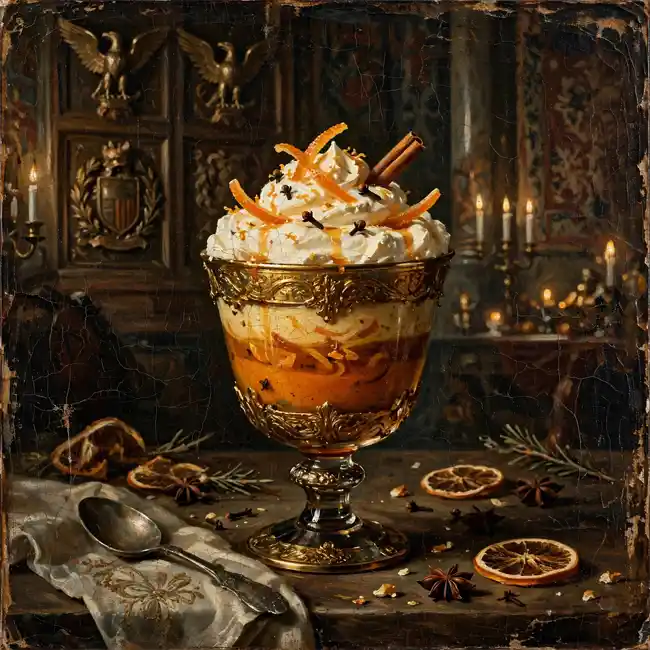
🍮 Recipe: The Gilded Syllabub & Spiced Orange Custard
👑 About this Royal Secret
This exquisite dessert was the ultimate flex of wealth in 18th and 19th-century American high society. Served in crystal flutes at presidential galas and high-society balls, this dish combined light-as-air whipped citrus foam floating gracefully over a velvety rich spiced egg custard. Because fresh citrus fruits like oranges and lemons had to be imported via expensive sea voyages, and fresh heavy cream required dedicated estate dairies, serving this dessert signaled to every guest that they were dining in the pinnacle of luxury.
💎 Ingredients & The Aristocratic Touch
• The Royal Pantry: High-society kitchens utilized only the purest raw ingredients. White refined sugar—often known as "loaf sugar"—was an expensive luxury commodity that had to be chopped and crushed by hand. Paired with whole spices like mace and fresh organic citrus peel, every ingredient was treated like pure gold.
• Modern Substitutes: If you cannot source organic orange blossom water, fresh natural orange zest paired with a drop of pure vanilla bean extract offers the exact same bright, aromatic elevation. Standard modern organic heavy cream and unrefined granulated sugar work beautifully here!
• The Measurements:
◦ Heavy whipping cream (chilled): 2 cups
◦ Granulated sugar (finely measured): 3/4 cup
◦ Freshly squeezed orange juice: 1/2 cup
◦ Fresh lemon juice: 2 tablespoons
◦ Grated organic orange zest: 1 tablespoon
◦ Egg yolks (large, room temperature): 6 whole yolks
◦ Whole milk: 1.5 cups
◦ Ground mace or fresh nutmeg: 1/4 teaspoon
◦ Pure orange blossom water: 1 teaspoon
👩🍳 The Chef’s Ritual
1.Begin by infusing the whole milk with fresh orange zest and ground mace in a heavy-bottomed copper or stainless pan over low heat, allowing the aromatic oils to blend slowly without boiling.
2.In a glass bowl, gently whisk the room-temperature egg yolks with half of the measured sugar until the mixture transforms into a pale, creamy yellow ribbon.
3.Slowly temper the warm infused milk into the egg yolks, pouring in a paper-thin stream while whisking continuously to prevent any scrambling.
4.Return the custardy mixture to gentle heat, stirring patiently with a wooden spoon until it coats the back of the spoon in a thick, satin layer. Pour into crystal serving glasses and chill in the refrigerator until set.
5.For the top syllabub layer, combine the chilled heavy whipping cream, remaining sugar, orange juice, lemon juice, and orange blossom water in a chilled copper or glass bowl.
6.Whip with steady, graceful rhythm until soft, pillowy peaks form that hold their shape delicately without turning stiff.
7.Spoon or pipe the fluffy citrus syllabub gently over the chilled custard base just before serving, garnishing with a delicate curl of fresh orange zest.
🔑 Secrets of the Palace Kitchen (Tips & Mistakes)
• Temperature Control: Never rush the custard over high flame. Ancient chefs kept their hearth coals low; high heat will curdle the eggs instantly.
• Chill Your Bowl: For the fluffiest syllabub foam, make sure your heavy cream and mixing bowl are ice-cold before whipping.
• Acid Balance: Always add citrus juices slowly to cream while whipping to prevent early curdling before soft peaks form.
🏩❓ Royal FAQ
Q1: Can I prepare this historic dessert a day in advance?
A: Yes! You can prepare the base egg custard a full day ahead. However, for maximum volume and elegance, whip and top with the syllabub foam within 2 to 3 hours of serving.
Q2: Why did historic recipes use mace instead of cinnamon?
A: Mace was considered far more refined and subtle than cinnamon among early American elites, offering a delicate floral warmth that didn't discolor light-colored custards.
Q3: Is it safe to serve without alcohol?
A: Absolutely! Traditional syllabubs often used spirits for flavor, but high-society kitchens frequently crafted alcohol-free citrus variations for daytime luncheons using concentrated fruit juices and floral waters.
📜 The Taste of History
Taking your first spoon of this Gilded Syllabub is like stepping straight into an 18th-century grand ballroom. The light, airy citrus cream hits your palate first with bright, refreshing notes, immediately followed by the velvety, warm spice of the rich egg custard beneath. It is balanced, sophisticated, and shockingly modern in its delicacy.
🏛️ Final Thoughts: Bringing History to Your Table
Recreating these lost treasures isn't just about baking a dessert—it's about building a bridge across centuries. When you present these gorgeous dishes at your dinner table, you are serving the exact same flavors that once dazzled the founders, elite families, and historic figures of early America. You don't need an 18th-century estate kitchen or a team of pastry chefs to experience luxury; with passion, quality ingredients, and these secret techniques, history is yours to taste!
🌟 Join the Secret Culinary Society!
If you fell in love with these historic flavors and want to uncover even more forgotten elite recipes from around the globe, join our community of culinary historians today! Subscribe to our exclusive newsletter, share this article with fellow food history enthusiasts, and preserve the world's most luxurious kitchen secrets together!
📜 Credit to the Keepers of the Culture
We extend our deepest gratitude to the dedicated culinary historians, museum archivists, and historic preservation societies across Virginia, Pennsylvania, and New England. Their untiring efforts in preserving early manuscript cookbooks, estate records, and hearth-cooking traditions make it possible for us to honor and revive these timeless culinary treasures today.
| 🇺🇸 👑🍨 < Back |