
🏠 Home > 🗺️ Recipes > 👑🥗 Aristocratic Garden Greens (Salads) > 🇱🇦 Laos Aristocratic Garden Greens (Salads) Recipes > 👑🥗 1.The Sovereign Imperial Phak Salad of Luang Prabang
👑🥗 Unveiling the Lost Flavors of Luang Prabang: The Ultimate Guide to the Sacred Lao Aristocratic Salad
Published by Supakorn | Updated: July 2026
🇱🇦 🤴👸 The Forgotten Royal Legacy of Laos: The Luang Prabang Court Era
📜 The Storyteller’s Intro: Step into the Golden Pavilion
Imagine walking through the misty, sun-drenched pathways of Luang Prabang in the late 18th century. The air is thick with the sweet aroma of blooming frangipani blossoms and the earthy scent of the Mekong River running alongside the royal grounds. Inside the high-walled compound of the palace, away from public eyes, a quiet revolution of flavors was taking place. The imperial kitchen was a sanctuary of sensory wonders, accessible only to the head royal chefs who swore absolute secrecy. These masters of the culinary arts spent lifetimes perfecting dishes that balanced the fiery spirit of the local landscape with the ultimate refinement demanded by the sovereign lords. Every single herb was hand-plucked at dawn, every dressing was mixed with meticulous precision, and every plate served was meant to be a direct reflection of heaven on earth. Today, we are breaking down those ancient walls and taking you right inside that legendary kitchen.
For centuries, the royal court of Luang Prabang set the gold standard for Southeast Asian refinement. This wasn't just food; it was a highly complex political tool, a spiritual offering, and a demonstration of absolute artistic mastery. When foreign dignitaries visited the king, the majesty of the empire was displayed through the staggering depth of the banquet table. The dishes were bright yet incredibly deep, complex but deceptively clean to taste. Among these elite culinary masterpieces, one dish stood out as a supreme test of a chef's true skill: the legendary Phak Salad, or the thousand-year-old Lao noble salad. It was a dish so perfectly balanced in sweet, savory, creamy, and herbal elements that it was rumored to cure physical exhaustion and restore youthful vitality to the royal family after long, grueling ceremonies.
🌍 The Global Value: A Sacred Heritage Saved from the Brink
For generations, these sophisticated methods and formulas were never written down on paper for common eyes to see. Instead, they were passed down via strict oral traditions, from one master palace cook to their chosen successor through whispers and hands-on training. When geopolitical shifts and modern conflicts swept through the region in the 20th century, the grand royal kitchens fell silent, and this priceless repository of culinary knowledge was almost completely lost to the sands of time. A few surviving manuscripts, hidden away by old court families and preserved in absolute secrecy, are all that remain of this magnificent heritage. These recipes represent a highly sophisticated culinary philosophy that treats food as a harmonious balance of natural elements—a concept that predates modern clean eating by hundreds of years.
What makes this specific aristocratic salad so globally valuable today is its completely unique approach to texture and emulsification. While Western cuisines relied heavily on dairy or oil to create rich, creamy dressings, the ancient Lao court developed a completely natural, ultra-luxurious emulsion using slow-poached poultry yolks, local aromatics, and pristine roasted peanuts. It is an absolute masterclass in flavor mapping. To lose this recipe would be to lose a crucial chapter in global culinary evolution. By preserving and recreating this dish in our modern times, we aren't just tossing a bowl of greens; we are actively rescuing a magnificent piece of edible history and giving it a brand-new lease on life.
✨ The Collection: Reviving the Ultimate Symbol of Golden Age Opulence
This comprehensive guide is your personal key to unlocking that long-lost culinary vault. We have meticulously researched the ancient archival notes, consulted with heritage cultural keepers, and tested the delicate balances to bring you an authentic, uncompromised reconstruction of the ultimate Lao Aristocratic Salad. This is the exact dish that represented the absolute pinnacle of the kingdom's golden age. We are pulling back the curtain on the subtle techniques that elevate simple, crisp greens into an extraordinary, multi-layered sensory experience that completely defies modern expectations of what a salad can be.
Whether you are a seasoned culinary historian looking to expand your worldview or an adventurous home cook wanting to blow your friends away at your next dinner party, this article is designed for you. We have laid out every single secret, from the specific bruising technique for the delicate herbs to the exact scientific breakdown of the royal emulsion. You don't need a golden palace or an army of servants to recreate this legendary masterpiece anymore. All you need is an open mind, a deep respect for the culture, and a passion for incredibly vibrant, fresh flavors. Let’s dive straight into the sacred recipe that defined an entire empire.
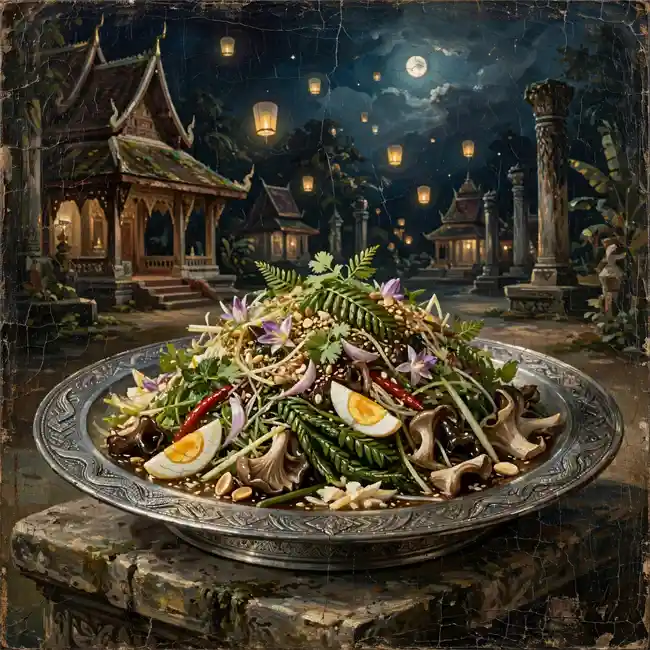
🥗 Recipe: The Sovereign Imperial Phak Salad of Luang Prabang
💡 About this Royal Secret: The Queen’s Morning Rejuvenation
According to ancient palace folklore, this specific iteration of the Phak Salad was requested almost every single week by the chief queen consort during the height of the dry season. The intense heat of the tropical afternoons often dulled the royal appetite, and the head chefs were tasked with creating an elite dish that would instantly stimulate the palate, provide dense nutrition, and cool the internal system. The result was this masterful salad. It was traditionally served on heavy, hand-engraved silver platters, meticulously decorated with intricate edible flowers and intricately carved vegetables that took hours to prepare.
This dish was also a mandatory feature during the glorious multi-day wedding festivals of high-ranking lords and noble families. It symbolized absolute harmony, growth, and the beautiful blending of different elements to create a perfect whole. The sheer variety of wild greens signified prosperity and abundance, while the golden, velvety dressing represented pure wealth and spiritual light. When you take your very first bite of this dish, you are experiencing the exact same explosion of complex textures and bright notes that delighted the most powerful rulers of the ancient Southeast Asian world.
🌿 Ingredients & The Aristocratic Touch
◦ 🌱 The Royal Pantry: In the original palace gardens, the ingredients for this salad were grown in specially treated, nutrient-rich soil close to the riverbeds. The watercress was gathered from pristine, cold mountain springs, ensuring that every leaf was completely free of bitterness and packed with a sharp, peppery crunch. The herbs were never bought or sold; they were cultivated by specialized botanists who understood the exact lunar phases best suited for harvesting to maximize their aromatic essential oils. The dressing required premium, freshly laid eggs from free-roaming heritage poultry, giving the yolk a deep, brilliant orange hue that gave the royal dressing its signature sunset glow.
◦ 🔄 Modern Substitutes: To bring this ancient masterpiece into your modern kitchen without losing its authentic soul, we have carefully selected accessible substitutes that mirror the flavor profiles of the original ingredients perfectly. Instead of wild, stream-grown Lao watercress, a combination of organic upland cress and crisp butterhead lettuce works beautifully to replicate that exact balance of crunch and pepper. If you cannot find traditional Asian small shallots, premium French red shallots will offer that same delicate, sweet sharpness without overpowering the dressing. Traditional wild herbs can be seamlessly replaced with a mix of sweet Thai basil, fresh cilantro, and spearmint leaves to achieve that iconic, multi-layered herbal aroma.
◦ ⚖️ The Measurements (The Green Base):
• Crisp Watercress or Upland Cress (thoroughly washed and spun dry): 200 grams
• Premium Butterhead or Green Leaf Lettuce (torn into bite-sized pieces): 150 grams
• Fresh Vietnamese Coriander and Sweet Basil Leaves (stems completely removed): 30 grams
• Fresh Spearmint Leaves (gently bruised to release natural oils): 20 grams
• European Cucumber (sliced into paper-thin translucent rounds): 1 whole cucumber
• Firm, Vine-Ripened Red Tomatoes (seeded and cut into clean julienne strips): 2 medium tomatoes
• Hard-Boiled Organic Egg Whites (sliced into elegant ribbons for garnish): 3 eggs
• Freshly Roasted Unsalted Peanuts (crushed finely with a mortar and pestle): 50 grams
• Toasted White Sesame Seeds (gently warmed in a dry pan until aromatic): 15 grams
• Finely Minced Crisp Shallots (fried lightly in neutral oil until just translucent): 30 grams
⚖️ The Measurements (The Aristocratic Emulsion):
• Premium Rich Egg Yolks (taken from soft-poached organic eggs): 3 large yolks
• Pure Cold-Pressed Virgin Rice Bran Oil (or ultra-light olive oil): 60 milliliters
• Freshly Squeezed Lime Juice (passed through a fine sieve to remove pulp): 45 milliliters
• Organic Raw Cane Sugar (finely ground to dissolve easily): 25 grams
• Pure Artisan Light Soy Sauce or Traditional Clean Sea Salt: 15 milliliters
• Finely Grated Fresh Garlic Paste (completely smooth): 5 grams
• White Peppercorns (freshly cracked using a heavy granite mortar): 3 grams
👨🍳 The Chef’s Ritual: Reclaiming the Ancient Techniques
1.First, prepare your green foundation with absolute care. Wash your watercress, butterhead lettuce, and fresh herbs in ice-cold spring water to maximize their crispness. Spin them completely dry; any excess water left on the leaves will dilute the rich dressing. Tear the lettuce leaves gently by hand rather than cutting them with a metal knife, which prevents the edges from bruising or oxidizing prematurely. Lay the greens out on a clean cotton towel and chill them in the refrigerator while you prepare the legendary emulsion.
2.Next, we construct the golden royal emulsion. In a deep ceramic or granite bowl, place your three soft-poached egg yolks. Add the smooth garlic paste, finely ground raw cane sugar, sea salt, and freshly cracked white pepper. Using a bamboo or wire whisk, begin beating the yolks vigorously in a continuous circular motion until they turn pale, thick, and perfectly uniform in texture.
3.Now comes the most critical step of the ritual. Slow down and proceed with patience. While whisking the egg mixture continuously with one hand, use your other hand to slowly drizzle the premium rice bran oil into the bowl, literally drop by drop. This slow introduction allows the fats to bond perfectly with the yolks, creating a velvety, glossy emulsion. Once the oil is fully integrated and the mixture looks like a golden satin ribbon, slowly pour in the filtered lime juice while continuing to whisk. The acid will instantly transform the dressing, cutting through the richness and turning it into a bright, airy, and beautifully balanced cream.
4.To assemble the masterpiece, retrieve your chilled greens from the refrigerator. Place them into a large, wide mixing bowl. Scatter the thin cucumber rounds, julienned tomatoes, and minced translucent shallots evenly over the top. Pour three-quarters of the golden royal dressing over the salad. Using two large wooden spoons, gently lift and turn the salad from the bottom up, ensuring every single leaf is lightly kissed by the dressing without being weighed down.
5.Transfer the beautifully dressed salad onto your finest serving platter. To finish the presentation in true aristocratic fashion, scatter the sliced egg white ribbons gracefully across the top. Shower the entire dish with your finely crushed roasted peanuts and toasted white sesame seeds. Serve immediately while the greens are ice-cold and the crunch is at its absolute peak.
🔑 Secrets of the Palace Kitchen: Pro Tips & Crucial Mistakes
• The temperature contrast is absolutely vital. Always make sure your greens are completely chilled and bone-dry, while your dressing should remain at a comfortable room temperature to prevent the emulsion from breaking apart.
• Never use an electric blender or a high-speed food processor to create this dressing. The intense friction and heat generated by spinning metal blades will cook the delicate yolks, causing the dressing to lose its airy texture and turn oily.
• Avoid crushing your roasted peanuts into a powder. You want distinct, tiny, crunchy fragments that provide a wonderful textural contrast to the soft, velvety egg ribbons and crisp watercress.
• Do not dress the salad ahead of time. The high acidity of the fresh lime juice will break down the cellular structure of the delicate greens within ten minutes, turning your beautiful royal masterpiece into a soggy disappointment. Always dress right before serving.
• When poaching your eggs for the dressing, ensure the water is barely simmering. The yolks must be warm and slightly set around the edges but completely liquid and rich in the center to build the perfect foundation for the emulsion.
👸 Royal FAQ: Everything You Need to Know
Q1.Can I store the leftover royal dressing in the refrigerator for later use?
Because this authentic recipe relies completely on fresh, soft-poached egg yolks and contains absolutely no artificial preservatives, it is highly recommended to consume it on the exact same day it is made. Storing it in the fridge will cause the natural fats to separate and harden, destroying that beautiful, airy emulsion that makes it so unique.
Q2.What can I use if I have a severe peanut allergy but still want an authentic experience?
To completely avoid peanuts while maintaining the rich, nutty depth required by this aristocratic profile, you can substitute them with high-quality, lightly toasted raw pumpkin seeds or macadamia nuts crushed to a similar consistency. They provide a beautiful oily crunch that complements the greens wonderfully.
Q3.Is this salad traditionally served as a main dish or a side course?
In the grand banquet traditions of Luang Prabang, this dish was served as a refreshing centerpiece alongside rich, slow-simmered aromatic stews and warm sticky rice. It served as a brilliant palate cleanser that allowed the noble guests to enjoy heavy meats without feeling weighed down.
Q4.Can I add a protein like grilled chicken or shrimp to make it a complete meal?
While the classic palace version relies purely on the richness of the egg yolk emulsion and nuts, you can absolutely add clean, thinly sliced poached chicken breast or steamed river shrimp. Keep the seasoning on the protein very neutral so it doesn't clash with the intricate herbal notes of the salad.
🍯 The Taste of History: A Symphony in a Single Bite
When you take that very first forkful of this spectacular salad, your palate experiences a beautiful sequence of sensory events. First comes the intense, clean crunch of the ice-cold mountain cress, followed immediately by the peppery warmth of the wild herbs waking up your tastebuds. Just as the heat begins to rise, the ultra-luxurious, golden egg emulsion sweeps in, coating your mouth in a velvety, rich blanket of savory cream that feels incredibly indulgent yet completely clean.
Finally, the bright explosion of freshly squeezed lime juice cuts right through the richness, leaving a clean, sparkling aftertaste that practically begs you to take another bite. The toasted sesame seeds and crushed peanuts linger on the tongue, offering an earthy, roasty finish that grounds the entire experience. It is a stunning reminder of why this dish was guarded so fiercely by royal chefs for centuries—it is absolute perfection contained within a single bowl of greens.
🏛️ Final Thoughts: Bringing History to Your Table
It is easy to look at ancient history as something confined to dusty textbooks and museum showcases, but food gives us a spectacular, living bridge to the past. By taking the time to source these incredible ingredients and follow these precise, time-honored rituals, you are doing something truly profound. You are bringing the lost artistry of a spectacular golden age right into your modern home, transforming your dinner table into a living court banquet. This guide proves that true luxury isn't about expensive modern gadgets or rare ingredients; it’s about deep respect for technique, balance, and the beautiful stories behind what we consume.
Do not be intimidated by the royal heritage of this dish. Even if your first emulsion separates a little bit, or if your herbs aren't sliced absolutely perfectly, the soul of this recipe is incredibly forgiving when made with love and curiosity. Each time you prepare it, you will develop a deeper feel for the ingredients, a better understanding of the balance, and a greater appreciation for the brilliant chefs who perfected this art form a millennium ago. Put on your favorite music, take your time, enjoy the rhythmic process of chopping and whisking, and celebrate the magnificent privilege of tasting living history.
🤝 The Call to Action: Join the Circle of Heritage Keepers
If you felt a spark of inspiration reading about these incredible flavors, we want to welcome you to our community. Together, we can ensure that these priceless culinary masterpieces are never forgotten again. Share this guide with the passionate food lovers in your life, recreate this magnificent dish in your own kitchen, and pass the story down to the next generation of cooks. If you have successfully recreated this recipe or made your own beautiful modern adjustments, leave a comment below and share your journey with us. Let’s keep the flame of global food history burning bright together.
🙏 Credit to the Keepers of the Culture: Preserving the Noble Lineage
This recipe is deeply inspired by the magnificent culinary archives of the Luang Prabang Royal Court and the pioneering historical transcriptions preserved by traditional culinary elders. We have carefully adapted the ancient, intuitive measurements for modern home kitchens while maintaining absolute fidelity to its noble soul, its intricate textural balances, and its profound cultural significance. We honor the generations of nameless palace cooks whose dedication to perfection created this timeless masterpiece.
| 🇱🇦 👑🥗 < Back |