
🏠 Home > 🗺️ Recipes > 👑🍲 Royal Court Broths (Soups) > 🇬🇭 Ghana Royal Court Broths (Soups) Recipes > 👑🍲 1.The Golden Asante Heritage Broth
👑🍲 A Journey Through the Forgotten Broths of the Ancient Asante Court
Published by Supakorn | Updated: July 2026
🇬🇭 👑 The Forgotten Royal Legacy of Ghana: The Asante Kingdom
Long before modern Ghana became a nation, powerful kingdoms flourished across West Africa, each with its own traditions, ceremonies, and remarkable culinary heritage. Among the most celebrated was the Asante Kingdom, whose royal court became famous not only for its gold, artistry, and diplomacy but also for a refined food culture that reflected prestige, hospitality, and wisdom passed from one generation to another.
Within the palace kitchens, experienced cooks carefully prepared nourishing broths using ingredients gathered from fertile forests, flowing rivers, and thriving farms. Every pot told a story. Every aroma welcomed honored guests. Every carefully selected spice represented centuries of accumulated knowledge rather than simple seasoning.
Unlike everyday village cooking, palace broths were often prepared for special audiences, respected elders, distinguished visitors, royal festivals, and important ceremonies. While many recipes shared familiar local ingredients, the techniques, patience, and presentation elevated these dishes into symbols of status and generosity.
Today, many of those traditions survive through family cooking, oral history, and the culinary practices of communities that continue to preserve Ghana's remarkable food heritage. Although no complete palace cookbook has survived from centuries ago, historical traditions and cultural knowledge allow us to appreciate how these elegant dishes may have appeared on royal tables.
📜 The Storyteller's Intro
Imagine stepping into a palace kitchen several centuries ago. Before sunrise, the first cooking fires begin to glow beneath heavy clay pots. Fresh herbs are gathered from nearby gardens while skilled attendants prepare vegetables, spices, and carefully selected proteins for the day's royal meals.
The atmosphere is calm but purposeful. Nothing is rushed. Broths simmer slowly, allowing natural flavors to develop without overpowering one another. The kitchen is filled with the fragrance of ginger, onions, indigenous herbs, and rich stocks that gently perfume the air.
Senior palace cooks oversee every detail. Apprentices observe silently, learning that true excellence comes not from expensive ingredients alone, but from patience, balance, and respect for every element placed into the pot.
These kitchens are more than places to prepare food. They are guardians of tradition, where culinary knowledge is treated as a treasured inheritance.
🌍 The Global Value
For generations, the finest palace recipes remained within noble households and experienced royal cooks. Many techniques were shared orally rather than written down, making them vulnerable to the passage of time.
Political change, modernization, and the disappearance of traditional court kitchens gradually transformed the way these dishes were prepared. Yet the spirit behind them continues to inspire modern Ghanaian cuisine.
Today, historians, chefs, and food enthusiasts around the world recognize these traditional broths as part of Africa's rich culinary legacy. They represent sustainable cooking, deep cultural identity, and an appreciation for local ingredients that remains relevant today.
📖 The Collection
This article celebrates one broth inspired by the traditions associated with the historic Asante royal court. Rather than claiming to reproduce an exact historical recipe, it respectfully adapts culinary practices, ingredients, and techniques rooted in Ghanaian heritage for today's home kitchen.
The result is a comforting broth that honors history while remaining practical for modern cooks—a dish that captures warmth, generosity, and timeless craftsmanship in every bowl.
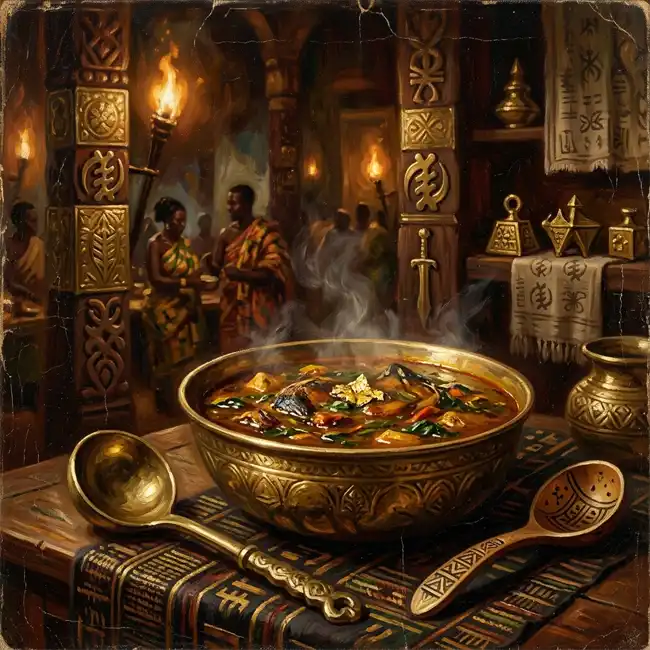
🍲 Recipe: The Golden Asante Heritage Broth
👑 About this Royal Secret
Every great court had dishes that quietly expressed hospitality, dignity, and generosity without relying on extravagance. This broth is inspired by the culinary traditions associated with the historic Asante royal court, where nourishing soups and broths played an important role during ceremonial gatherings, council meetings, and celebrations.
Rather than being reserved for everyday dining, slow-simmered broths were often prepared when respected elders, visiting dignitaries, or honored family members gathered at the palace. A carefully made broth represented patience, prosperity, and the host's commitment to caring for every guest.
While no complete written palace recipe from five centuries ago survives, this modern interpretation respectfully draws inspiration from traditional Ghanaian cooking techniques, local ingredients, and historical food culture. The goal is not to recreate an exact royal recipe, but to celebrate the flavors, craftsmanship, and hospitality that defined one of West Africa's most remarkable kingdoms.
The broth is light yet deeply satisfying. Layers of fresh vegetables, aromatic herbs, warming spices, and slow-cooked stock create a comforting bowl that feels elegant without being complicated. It is the kind of meal that invites conversation, encourages people to linger around the table, and reminds everyone that the simplest ingredients can produce extraordinary results when treated with patience and respect.
🥕 Ingredients & The Aristocratic Touch
✨ The Royal Pantry
Imagine palace attendants arriving before sunrise with woven baskets filled with the freshest harvests from fertile farms and nearby forests. Every ingredient was selected not only for flavor but also for its quality, freshness, and symbolism.
Fragrant onions formed the foundation of many palace dishes, while fresh ginger brought warmth and vitality. Tomatoes added gentle sweetness and color, leafy herbs introduced freshness, and slow-simmered stock united every ingredient into one harmonious broth.
The palace kitchen believed that balance mattered more than abundance. A handful of carefully chosen ingredients, cooked patiently, created a richer experience than an overflowing pot prepared in haste.
🌿 Modern Substitutes
Most ingredients are easy to find today. If something isn't available, these substitutions work well while preserving the spirit of the recipe.
• Chicken stock → Vegetable stock
• Guinea fowl → Free-range chicken
• Garden eggs (African eggplants) → Small Japanese eggplants
• Fresh African basil → Sweet basil combined with a little mint
• Cocoyam → Yukon Gold potatoes
• Fresh chili → Mild red chili or omit for a gentler flavor
• Smoked fish (optional) → Smoked haddock or simply leave out
• African spices → White pepper with a pinch of paprika
These substitutions allow home cooks worldwide to enjoy the recipe while respecting its traditional inspiration.
📋 The Measurements
For the Broth
• 1.5 liters chicken or vegetable stock
• 500 grams chicken pieces with bone
• 2 medium onions, roughly chopped
• 4 ripe tomatoes, chopped
• 2 cloves garlic, minced
• 25 grams fresh ginger, grated
• 2 small garden eggs or Japanese eggplants, diced
• 1 medium carrot, sliced
• 1 celery stalk, chopped
• 2 spring onions, sliced
• 1 tablespoon tomato paste
• 2 teaspoons sea salt
• 1 teaspoon white pepper
• Half teaspoon paprika
• Half teaspoon ground coriander
• 2 fresh thyme sprigs
• 1 bay leaf
• 2 tablespoons fresh parsley
• 1 tablespoon chopped basil
• 1 teaspoon palm oil or neutral cooking oil
• Optional fresh chili to taste
👨🍳 The Chef's Ritual
Cooking this broth is less about speed and more about rhythm. Every step allows the ingredients to contribute their own character before joining together into one harmonious dish.
1.Warm the oil gently in a large heavy pot over medium heat.
2.Add the onions and cook slowly for about eight minutes until soft and naturally sweet. Avoid browning them too quickly.
3.Stir in the garlic and ginger. Cook for another two minutes until the kitchen becomes wonderfully fragrant.
4.Mix in the tomato paste and fresh tomatoes. Allow them to soften gradually for ten to fifteen minutes, creating a rich base.
5.Add the chicken pieces and gently coat them with the aromatic mixture.
6.Pour in the stock and add the thyme, bay leaf, white pepper, coriander, paprika, and salt.
7.Bring the broth to a gentle simmer rather than a rolling boil. Slow cooking keeps the broth clear and allows the flavors to develop naturally.
8.After thirty minutes, add the diced garden eggs, carrot, and celery.
9.Continue simmering for another twenty to thirty minutes until the vegetables become tender and the chicken is perfectly cooked.
10.Remove the thyme sprigs and bay leaf before serving.
11.Stir in the fresh parsley, basil, and spring onions during the final few minutes to preserve their vibrant aroma.
12.Taste carefully and adjust seasoning if needed.
13.Let the broth rest for five minutes before serving. This brief pause allows the flavors to settle into perfect balance.
Serve warm with boiled yam, steamed rice, plantain, or fresh bread for a comforting meal inspired by Ghana's rich culinary heritage.
🏛️ Secrets of the Palace Kitchen (Tips & Mistakes)
✅ Palace Tips
• Always begin with fresh ingredients rather than relying on heavy seasoning.
• Simmer gently instead of boiling vigorously.
• Bone-in chicken produces a fuller, richer broth.
• Add delicate herbs near the end of cooking.
• Allow the broth to rest before serving.
• Taste throughout cooking instead of adjusting everything at the end.
• Use a heavy pot to maintain steady, even heat.
• Skim excess foam from the surface for a cleaner broth.
❌ Common Mistakes
• Boiling too aggressively, making the broth cloudy.
• Adding herbs too early, causing them to lose freshness.
• Overcooking the vegetables until they become mushy.
• Using too much salt before the broth has reduced.
• Skipping the resting time.
• Crowding the pot with unnecessary ingredients.
• Cooking over high heat throughout the process.
• Forgetting to remove woody herb stems before serving.
The palace cooks understood that elegance came from restraint. Every ingredient had a purpose, and every step contributed to harmony rather than excess.
👸 Royal FAQ
Question 1.Can I prepare this broth a day in advance?
Absolutely. In fact, many traditional slow-simmered broths become even more flavorful after resting overnight in the refrigerator. As the ingredients have time to settle together, the savory notes become smoother and more balanced. When reheating, warm the broth gently over low heat rather than bringing it to a rapid boil.
Question 2.Can I make this recipe completely vegetarian?
Yes. Replace the chicken with hearty vegetables such as mushrooms, sweet potatoes, cocoyam, or extra eggplant, and use a rich vegetable stock. The result remains comforting while preserving the spirit of slow, patient cooking that inspired this recipe.
Question 3.What should I serve with this broth?
This broth pairs beautifully with many traditional Ghanaian staples, including:
• Steamed rice
• Boiled yam
• Plantain
• Cocoyam
• Fresh rustic bread
• Cassava-based sides
Choose whichever accompaniment suits your table. Each one highlights the broth in a slightly different way.
Question 4.Can I freeze the broth?
Yes. After the broth has cooled completely, store it in airtight containers and freeze for up to three months. Thaw overnight in the refrigerator and reheat gently to preserve its delicate texture and balanced flavor.
📜 The Taste of History (Summary)
Some recipes tell us more than how people cooked—they reveal how they welcomed guests, celebrated important occasions, and expressed generosity through food. This Golden Asante Heritage Broth is inspired by the culinary traditions associated with one of West Africa's most influential historic kingdoms, where patience, fresh ingredients, and careful preparation transformed simple produce into memorable meals.
Although centuries have passed, the philosophy behind these historic kitchens remains surprisingly modern. Rather than relying on complexity, palace cooks valued balance, freshness, and respect for every ingredient. Their methods remind us that remarkable cooking begins long before the meal reaches the table. It starts with thoughtful preparation, careful timing, and the willingness to let flavors develop naturally.
This recipe is not presented as an exact historical reconstruction. Instead, it respectfully interprets culinary traditions that continue to influence Ghanaian cuisine today. Every bowl serves as a tribute to generations of cooks whose knowledge was preserved through practice, storytelling, and community rather than written cookbooks.
Preparing this broth is more than following instructions. It is an invitation to experience a small piece of living culinary heritage, connecting today's kitchen with traditions that have inspired families for centuries.
🌟 Final Thoughts: Bringing History to Your Table
Historic cuisine often feels distant, as though it belongs only in museums, old manuscripts, or royal palaces. Yet many of the values that shaped these remarkable dishes—patience, hospitality, craftsmanship, and appreciation for fresh ingredients—remain just as meaningful in modern kitchens.
This broth demonstrates that elegant cooking does not require rare ingredients or complicated techniques. Instead, it celebrates the timeless beauty of slow simmering, balanced seasoning, and sharing food with family and friends.
Whether you are exploring African culinary history for the first time or expanding your collection of traditional recipes from around the world, this dish offers an approachable way to appreciate Ghana's rich cultural heritage.
🌿 The Encouragement
Do not worry about recreating perfection. Palace cooks themselves refined their recipes over many years through observation and experience. Allow your own kitchen to become part of that continuing story.
Take your time. Taste as you cook. Adjust gently. Most importantly, enjoy the process as much as the finished meal.
Every bowl you prepare helps keep traditional culinary knowledge alive for future generations.
✨ The Call to Action (The Golden Hook)
If you enjoy discovering remarkable recipes inspired by history, you are already helping preserve culinary traditions that deserve to be remembered.
Explore more forgotten kitchens, celebrate the craftsmanship of historic cultures, and share these timeless recipes with family and friends. Every dish prepared with curiosity and respect helps ensure that traditional food stories continue to inspire cooks around the world.
Together, we can honor the people, ingredients, and traditions that shaped some of history's most fascinating cuisines—one recipe at a time.
🏛️ Credit to the Keepers of the Culture (The Legacy)
This recipe is respectfully inspired by the culinary traditions associated with the historic Asante Kingdom and the broader heritage of Ghanaian cuisine. It is not presented as a literal transcription of a surviving 500-year-old royal recipe, as no complete authenticated palace cookbook from that period is known to exist.
Instead, this adaptation combines historical culinary knowledge, traditional Ghanaian ingredients, and time-honored cooking methods into a recipe suitable for today's home kitchens while honoring the spirit of the culture that inspired it.
Our sincere appreciation goes to the historians, cultural custodians, traditional cooks, community elders, and culinary researchers whose dedication continues to preserve Ghana's rich food heritage for future generations.
"This recipe is inspired by the culinary traditions of the historic Asante Kingdom and the wider heritage of Ghanaian cuisine. The ingredients and measurements have been thoughtfully adapted for modern kitchens while honoring the enduring spirit, hospitality, and craftsmanship that define this remarkable culinary legacy."
| 🇬🇭 👑🍲 < Back |