
🏠 Home > 🗺️ Recipes > 👑🍝 Imperial Mains (Main Dishes) > 🇬🇦 Gabon Imperial Mains (Main Dishes) Recipes > 👑🍝 1.Aristocratic Poulet Nyembwe (Smoked Chicken in Sacred Red Palm Sauce)
👑🍝 Forgotten Flavors: Stepping Into Gabon’s Hidden Aristocratic Culinary Past
Published by Supakorn | Updated: July 2026
🇬🇦 👑 The Forgotten Aristocratic Legacy of Gabon: The Elders of the Ogooué
📜 The Storyteller’s Intro: Step Back in Time
Imagine traveling back through time to the lush, equatorial heartlands of Gabon during the 18th century. Long before modern roads carved through the dense rainforests, power and prestige belonged to the noble chiefs and clan leaders governing along the banks of the majestic Ogooué River. Deep inside the secluded communal compounds, away from the eyes of everyday villagers, master cooks were hard at work. Wood fires crackled softly, casting golden light against clay walls, while the rich, earthy aroma of crushed palm nuts and toasted local spices filled the tropical evening air. Cooking for the ruling elite was not just about serving dinner—it was a sacred ritual, a celebration of status, and an art form meticulously guarded by trusted keepers of tribal traditions.
🌍 The Global Value: A Culinary Heritage Shielded by Time
For generations, these elaborate dishes were reserved exclusively for aristocratic gatherings, high diplomatic meetings between clan chiefs, and solemn ceremonial feasts. Because the recipes were never written down on paper, but rather whispered down from master cooks to worthy apprentices, much of this culinary history came dangerously close to vanishing into the shadows of time. As the modern world rushed in, many of these time-consuming, highly intricate culinary methods were simplified or pushed aside. Yet, the essence of Gabon’s aristocratic kitchen represents a extraordinary mastery of native botanicals, indigenous palm fruits, and sustainable cooking methods that rival the finest traditional cuisines anywhere on Earth.
🔱 The Collection: Resurrecting a Lost Masterpiece
In this dedicated long-form guide, we are bringing one of Gabon's most prized, decadent culinary treasures back to life. We are uncovering the iconic Aristocratic Poulet Nyembwe—a dish so rich, velvety, and deep in flavor that it served as the undisputed center of gravity for high-society banquets. We have meticulously adapted this legendary dish for your modern kitchen without losing an ounce of its traditional soul, spirit, or unyielding luxury.
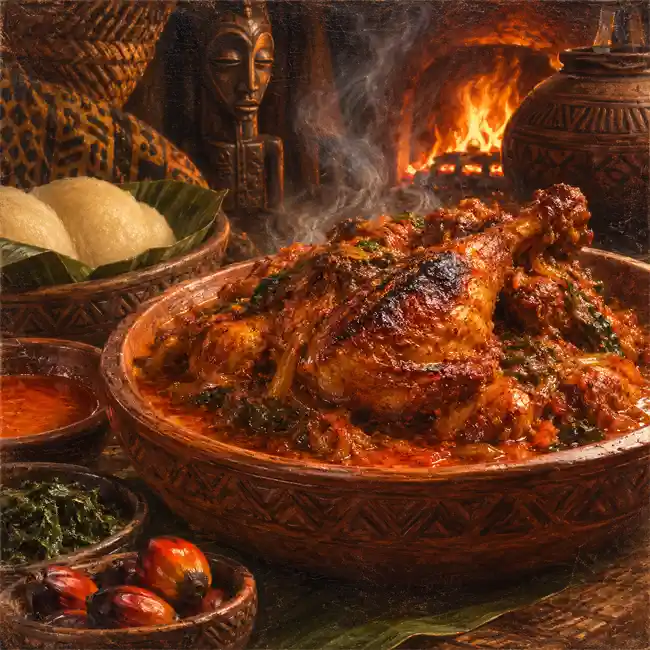
🍲 Recipe: Aristocratic Poulet Nyembwe (Smoked Chicken in Sacred Red Palm Sauce)
🗡️ About this Aristocratic Secret: The Dish of Chiefs
Poulet Nyembwe, often referred to in the Myene language as the dish of true abundance, was historically crafted exclusively for high chieftains, noble elders, and honoured guests visiting the realm. The word Nyembwe itself refers to the rich paste extracted from the ripe flesh of the oil palm fruit. In ancient times, serving a dish loaded with rich red palm butter was the ultimate display of wealth and generosity. It was enjoyed during grand peace treaties, royal weddings, and harvest celebrations. To partake in this meal meant you were highly esteemed by the leaders of the land, welcomed into the innermost circle of Gabonese nobility.
🎨 Ingredients & The Aristocratic Touch
🌿 The Aristocratic Pantry
Every ingredient in this recipe carried deep symbolic value in the ancestral kitchens. The chicken was smoked over specific fragrant hardwoods to infuse it with a delicate timber smoke aroma before even touching the sauce. The red palm fruit provided a vibrant amber-ruby hue—a visual indicator of vitality, luxury, and prestige. Fresh garlic, pungent wild ginger, and hot peppers were blended in exact balance to ensure the dish warmed the soul without burning the palate.
🔄 Modern Substitutes
◦ Fresh Red Palm Fruit Concentrate: If you cannot source whole, fresh oil palm fruit to process from scratch, high-quality unrefined organic red palm oil blended with canned palm nut soup base (frequently found in international or West African markets) acts as an authentic substitute.
◦ Smoked Free-Range Chicken: If authentic African smoked chicken is unavailable, purchase a whole pasture-raised chicken, smoke it in your backyard smoker using hickory or oak wood for an hour, or roast a bone-in chicken after a brief cure with smoked paprika and sea salt.
◦ African Yellow/Red Habanero: If local African habaneros are hard to find, standard Scotch Bonnet peppers or fresh red Habaneros work perfectly to replicate the fruity heat.
⚖️ The Measurements
◦ Whole smoked chicken (cut into 8 distinct serving pieces): 1 bird weighing roughly 1500 grams
◦ Unrefined red palm fruit puree or high-quality palm soup base: 400 grams
◦ Purified spring water: 500 milliliters
◦ Yellow onions (finely chopped): 2 medium bulbs
◦ Fresh garlic cloves (minced into fine paste): 4 cloves
◦ Fresh ginger root (grated finely): 25 grams
◦ Scotch Bonnet or Habanero pepper (left whole for gentle aroma): 1 piece
◦ Ground smoked paprika: 10 grams
◦ Coarse sea salt: 15 grams (adjust to taste)
◦ Freshly cracked black pepper: 5 grams
◦ Fresh okra pods (trimmed and halved vertically): 8 small pods
◦ Optional local aromatic leaf substitute (Bay leaves): 2 leaves
👨🍳 The Chef’s Ritual: Crafting the Feast
1.Preparing the Noble Smoked Poultry: Begin by inspecting your smoked chicken pieces. Pat them dry with clean linen towels. In a small bowl, rub the poultry with a touch of sea salt, black pepper, and ground smoked paprika. Set it aside at room temperature for roughly twenty minutes to allow the spices to wake up and penetrate the skin.
2.Building the Aromatic Base: Place a heavy-bottomed clay pot or a thick cast-iron Dutch oven over medium heat. Introduce a tiny drizzle of palm oil into the pot. Gently add the finely chopped yellow onions, minced garlic, and freshly grated ginger. Sauté the aromatics slowly, stirring with a wooden spoon, until the onions turn soft, translucent, and sweet—taking roughly six to eight minutes.
3.Introducing the Sacred Palm Cream: Reduce the heat to low. Carefully spoon the smooth red palm fruit puree into the pot with the aromatic base. Stir continuously for three minutes as the oil warms through, releasing a deep, earthy, almost nutty aroma that fills your kitchen.
4.Emulsifying the Elixir: Gradually pour the purified spring water into the palm mixture, whisking gently to create a seamless, velvety sauce. Raise the heat slightly until the mixture comes to a gentle, rolling simmer. You will notice a gorgeous, shimmering dark crimson sheen coating the surface.
5.Simmering the Smoked Chicken: Carefully lay the pieces of smoked chicken down into the simmering palm sauce, ensuring every piece is completely submerged. Add the whole Scotch Bonnet pepper directly into the middle (keep it intact so it infuses fragrant fruity heat without bursting into extreme spiciness) alongside the bay leaves.
6.The Slow Transformation: Lower the stove heat down to a gentle whisper. Cover the pot with a heavy lid, leaving a tiny crack open for steam to escape. Allow the smoked chicken to braise slowly in the luxurious palm sauce for forty-five minutes. Stir the bottom gently every ten minutes to ensure nothing sticks to the base of the pot.
7.Adding the Fresh Botanicals: Uncover the pot. The sauce should now have thickened noticeably, glistening with rich ruby oils. Carefully nestle the fresh halved okra pods into the bubbling sauce around the chicken. Let the dish simmer uncovered for an additional fifteen minutes until the okra becomes tender yet retains a vibrant green color.
8.The Final Seasoning: Carefully remove the whole pepper and bay leaves from the pot. Taste the deep, silky sauce and adjust the salt levels if necessary. Remove the pot from the heat source and let the dish rest for ten minutes before serving. This allows the complex flavors to settle and harmonize beautifully.
🔮 Secrets of the Palace Kitchen: Master Tips & Mistakes to Avoid
◦ Never Rush the Simmer: The biggest mistake home cooks make is trying to boil the palm sauce on high heat. High heat causes the delicate palm oils to separate aggressively and turn bitter. Keep the temperature low and steady.
◦ Protect the Pepper: Never puncture, cut, or slice the whole Scotch Bonnet pepper while it cooks in the sauce unless you want extreme heat. Leaving it completely intact infuses the entire dish with a wonderful, perfume-like tropical pepper aroma without overwhelming the natural flavor of the palm and chicken.
◦ The Power of Real Wood Smoke: The signature profile of true aristocratic Gabonese cooking comes from wood smoke. If using unsmoked chicken, do not rely solely on liquid smoke. Take the extra time to grill or broil your chicken over charcoal or wood chips beforehand to achieve authentic depth.
◦ Layering the Salt: Smoked meats often carry inherent saltiness. Always taste your sauce midway through cooking before adding extra salt, preventing the dish from becoming overly seasoned as it reduces.
◦ Skimming Excess Oil Correctly: As the sauce simmers, natural red palm oils will float to the top. Do not discard all this rich oil—it carries all the aromatics! Simply stir it back in gently, or skim just a tiny portion off if you prefer a slightly lighter texture.
🤴 Royal FAQ: Curiosities of the Noble Table
Q1.How was this dish traditionally served to chiefs and tribal leaders?
In ancient Gabonese courts, Poulet Nyembwe was served alongside freshly pounded cassava plantains (kwanga), boiled white yams, or steamed mashed plantain rolls. The heavy, starchy sides were ideal for soaking up every last drop of the luxurious red palm sauce.
Q2.Can I make this traditional dish ahead of time?
Absolutely! In fact, traditional cooks believed that Nyembwe tasted even better the following day. As the dish sits overnight in the refrigerator, the rich smoked chicken absorbs the palm sauce deeper into the bone, creating an even more harmonious and complex flavor profile when gently reheated.
Q3.Is red palm oil health-conscious for modern diets?
Unrefined red palm oil is packed with natural carotenoids, antioxidants, and Vitamin E, giving it its vibrant red color. When consumed in moderation as part of a whole-foods diet—just as ancient ancestors did—it provides wholesome nourishment alongside incredible culinary flavor.
Q4.What makes this recipe specifically "Aristocratic" compared to modern versions?
Modern quick versions often use plain store-bought oil and basic spices cooked in twenty minutes. The classic aristocratic method demands whole-wood smoking of the meat, slow reduction of real palm fruit puree, patient simmering, and precise balance of fresh indigenous aromatics like ginger and whole peppers.
🏛️ The Taste of History: A Culinary Journey Completed
To taste authentic Poulet Nyembwe is to take a direct bite out of central African history. The silky, buttery texture of the palm sauce, coupled with the comforting timber smoke of the tender chicken and the gentle kick of aromatic spices, creates a sensory experience that feels undeniably regal. It is easy to see why this dish was guarded so fiercely by ancient court chefs—it is rich, deeply satisfying, and completely unlike anything found in Western culinary traditions. By bringing this ancient dish to your dining table, you aren't just eating a meal; you are participating in a century-old cultural ritual of honor, warmth, and hospitality.
🍽️ Final Thoughts: Bringing History to Your Table
You don't need to be born into ancient nobility or live in an 18th-century river kingdom to experience the luxurious tastes of the past. Cooking is one of the very few ways we can authentically bridge the gap between centuries and across continents. With fresh ingredients, a bit of patience, and the step-by-step guidance provided in this recipe, your kitchen can transform into a sanctuary of historical grandeur. Gather your loved ones, light a few candles, and prepare to serve a feast that once commanded the respect of legendary leaders.
🌟 The Call to Action
If you fell in love with these timeless flavors and rich historical tales, join our global community of culinary explorers dedicated to preserving the world's most incredible forgotten recipes! Subscribe to our newsletter today, share this article with your fellow food-loving friends, and drop a comment below letting us know how your homemade Gabonese feast turned out. Let's keep the world's secret culinary heritage alive together!
🤝 Credit to the Keepers of the Culture
This recipe is deeply inspired by the ancient culinary customs, oral histories, and traditional cooking techniques of the indigenous communities along the Ogooué River basin in Gabon. We have carefully adapted the measurements and methods for modern home kitchens while holding the utmost reverence for its rich heritage and preserving its authentic aristocratic soul.