
🏠 Home > 🗺️ Recipes > 👑🥪 Royal Starters (Appetizers) > 🇦🇩 Andorra Royal Starters (Appetizers) Recipes
🇦🇩 👑🥪 Andorra Royal Starters (Appetizers) Recipes
Published by Supakorn | Updated: August 2026
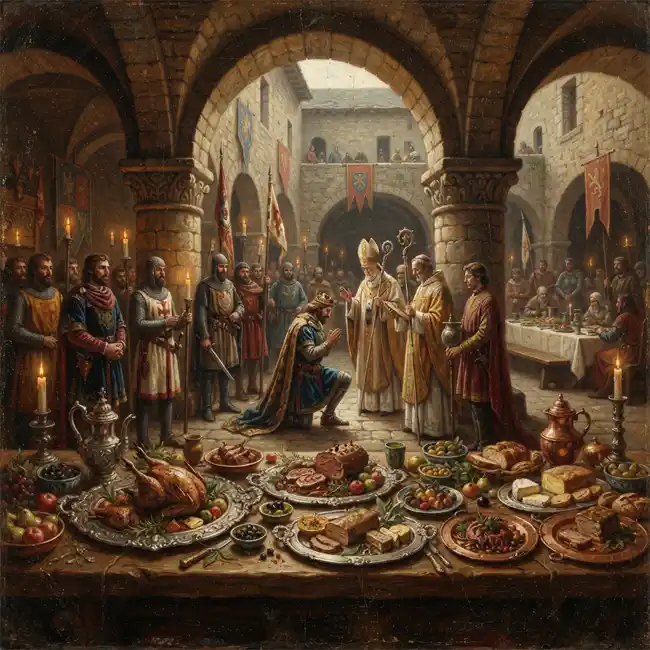
👑📜 The Storyteller’s Intro: The Aristocratic Secrets Hidden in Andorra’s Mountain Kitchens
Before we open the imaginary door to an old Andorran kitchen, there is one important historical detail to clear up.
Andorra was not a conventional hereditary kingdom with a royal court like France, Spain, or England. Its unusual political history developed around the Principality of Andorra and its co-princes, with shared sovereignty formalised through the Pareatges of 1278 and 1288 between the Bishop of Urgell and the Count of Foix. The French side of this arrangement eventually became associated with the French crown and later the French presidency, while the Bishop of Urgell retained his role.
So, for historical accuracy, the phrase “Aristocratic” is more appropriate than suggesting that Andorra possessed a conventional royal dynasty and palace cuisine.
That distinction actually makes the story more fascinating.
Instead of imagining enormous banquet halls filled with hundreds of courtiers, picture something much closer to the reality of old Pyrenean life: stone houses, mountain farms, parish communities, church influence, local landholders, seasonal workers, household stores, and respected families whose social standing was expressed through hospitality and the quality of what they could place on the table.
Andorra has more than a thousand years of recorded history, with its parishes mentioned in a mid-9th-century document connected with the consecration of the Cathedral of Santa Maria d’Urgell. Centuries later, the Pareatges established the shared political structure that shaped the Principality. In 1419, the Consell de la Terra, an early representative institution, brought together representatives from the parishes.
That long history gives us several useful culinary eras to imagine when exploring old Andorran starters:
• The early medieval mountain era, when food depended heavily on local agriculture, livestock, forests, preservation, and seasonal availability.
• The feudal and Pareatges era, when Andorra's political identity developed around shared lordship and ecclesiastical influence.
• The late medieval and early modern era, when parish communities, households, trade routes, and mountain agriculture continued shaping everyday food.
• The early modern household tradition, when preserved meats, vegetables, grains, dairy products, mushrooms, herbs, and seasonal produce became practical foundations of mountain cooking.
• The heritage era of the 18th to 20th centuries, when traditional dishes increasingly became markers of local identity rather than simply survival foods.
And this is where the idea of Andorra Aristocratic Starters becomes interesting.
The word “aristocratic” here should not mean that every dish belonged exclusively to nobles. Rather, it evokes the better-prepared foods, celebratory dishes, hospitality traditions, and prestigious local ingredients associated with established households and important occasions.
Andorran cuisine itself is strongly connected with mountain life, seasonal products, self-sufficiency, and later influences from Catalan and French cooking. The country's official tourism heritage describes traditional gastronomy as a living culinary inheritance developed around local produce and seasonal cooking.
In other words, the real secret was never simply luxury.
The real secret was knowing the mountain.
A household that understood when mushrooms appeared, when winter cabbage was at its best, how preserved meats should be prepared, which herbs grew nearby, and how to turn modest ingredients into something worthy of guests possessed a form of culinary knowledge more valuable than imported extravagance.
That is the hidden world we are exploring here.
🗺️ The Royal Culinary Tourism: Mapping Flavors to Historic Landscapes
If you want to understand historic Andorran food, don't start with a restaurant menu.
Start with a map.
Andorra is a tiny country in the Eastern Pyrenees, divided into seven parishes: Canillo, Encamp, Ordino, La Massana, Andorra la Vella, Sant Julià de Lòria, and Escaldes-Engordany. Much of the country's identity remains connected to its high-mountain environment.
This geography explains why Andorran appetizers feel different from the refined starters of lowland royal courts.
Mountain cuisine tends to ask practical questions:
• What can be stored through winter?
• What grows here naturally?
• What can be preserved after slaughter?
• What can be collected from the forest?
• What can feed a household during cold months?
• What can be served generously when guests arrive?
The answers created a culinary culture built around preservation, seasonality, simplicity, and concentration of flavor.
For a modern food traveler, that means Andorra can be explored almost like an edible historical landscape.
🏛️ Andorra la Vella: The Political and Cultural Heart
Begin in Andorra la Vella, the capital and one of the most important places for understanding the country's political and social history.
The historic Casa de la Vall, built at the end of the 16th century, served as the seat of Parliament from 1702 until 2011. The Old Quarter preserves another layer of the capital's historic character.
For culinary travelers, this makes the capital a natural starting point for an Andorra food history itinerary.
Imagine beginning with a traditional mountain starter, then walking through old streets where political decisions, parish life, commerce, and domestic traditions once intersected.
The experience becomes more meaningful when food is treated as part of the landscape rather than an isolated dish.
🏘️ Canillo and Encamp: Mountain Hospitality
Travel farther into the valleys and the character changes.
Canillo and Encamp are excellent places to think about the relationship between mountain households, livestock, winter food, and seasonal celebrations.
This is where traditional bordes become especially fascinating.
Originally, these mountain structures were associated with storing grain, hay, tools, and sheltering livestock. Many have since been restored and transformed into restaurants where visitors can experience traditional Andorran food within historic-style mountain architecture.
For anyone researching historic Andorran cuisine, these places provide a rare connection between architecture and food.
You are not merely eating something traditional.
You are eating inside a type of building connected to the agricultural system that helped create the cuisine.
🚣 Cradle of Royal Delicacies — Valleys, Streams & Southern Routes
Andorra has no coastline, so the “cradle of delicacies” is not a seaside region.
Its culinary geography is instead shaped by valleys, rivers, mountain streams, agricultural terraces, and routes connecting the Pyrenees with neighboring Catalan and French regions.
This matters enormously.
Mountain communities were never completely isolated. Food traditions moved with people, livestock, trade, seasonal work, religious celebrations, and neighboring culinary influences.
Andorran cuisine eventually absorbed and adapted elements of Catalan and French gastronomy, while maintaining its own mountain character.
🐟 Trout: A Mountain Stream Delicacy
Freshwater fish became one of the memorable ingredients associated with Andorran mountain cuisine.
Trout à l'Andorrana is traditionally associated with trout prepared with almonds and preserved pork products, creating an interesting combination of freshwater flavor, mountain ingredients, and neighboring culinary influences.
For our imaginary aristocratic starter collection, trout represents something important: fresh food was itself a luxury when geography made supply difficult.
A household that could serve fresh mountain fish to guests was showcasing its connection with the surrounding landscape.
🥬 Chicory and Spring Mountain Greens
Another fascinating ingredient is bitter chicory, also known as dandelion.
Collected directly from the mountains in spring, it could be used in salads and combined with richer ingredients such as preserved pork and nuts.
This type of dish tells us something about old mountain food culture.
The luxury wasn't always an imported ingredient.
Sometimes it was perfect timing.
Knowing when a wild green was tender, when mushrooms appeared, or when particular herbs were ready to collect required intimate knowledge of the landscape.
🥓 Preserved Meats as Prestige Foods
Traditional Andorran charcuterie also belongs in any discussion of historic starters.
Names such as donja, bringuera, bull, and bisbe appear within the country's traditional food heritage. These preserved meats developed within the practical culture of seasonal pork processing and long-term food preservation.
For an old household, preserved meat was more than an ingredient.
It represented preparation for the future.
A well-stocked pantry could mean security through a harsh winter, and serving particularly good preserved foods to visitors could demonstrate household generosity.
⛰️ Kingdom of Wild Aromatics & Heritage — The High-Mountain Pantry
If there is one place where the phrase “hidden culinary secrets” truly belongs, it is the Andorran mountain landscape.
Andorra's cuisine has historically relied on ingredients gathered, grown, raised, or preserved according to the rhythm of the seasons. The country's official culinary heritage describes this tradition as strongly connected to mountain aromas, local produce, seasonal availability, and self-sufficiency.
🍄 Mushrooms: Forest Treasures on the Table
Mushrooms occupy an important place in Pyrenean cuisine.
Traditional Andorran food references varieties including boletus, saffron milk caps, black trumpets, morels, and other forest mushrooms. They can appear in creams, rice dishes, sauces, and as accompaniments to meat.
Some mushrooms were particularly prized because they were difficult to find.
Morels, for example, became associated with special culinary treatment and could even be paired with meat fillings in traditional preparations.
This gives us a wonderful clue about historic food status.
A secret ingredient did not have to be rare because a king owned it.
It could be rare because only experienced mountain foragers knew where and when to find it.
🧄 Mountain Garlic and Rich Rustic Flavors
Garlic, cabbage, potatoes, preserved pork, herbs, mushrooms, and other hardy ingredients formed a remarkably practical flavor system.
One of the best-known expressions of this tradition is trinxat de muntanya, a mountain dish made with winter cabbage, potatoes, garlic, and pork fat or bacon.
Although trinxat is not an aristocratic-exclusive appetizer, it reveals the philosophy behind the cuisine beautifully.
A simple combination can become memorable when the ingredients are seasonal, carefully handled, and deeply connected with place.
🥣 Escudella and the Culture of Celebration
Another important name is escudella, a traditional winter preparation made with seasonal vegetables, meats, and local preserved meats.
Historically, it could function as an everyday meal, but special occasions allowed households to enrich it with more substantial ingredients. Public escudella traditions connected with January celebrations continue to demonstrate how food can move between household life and community ritual.
For our “royal starter” theme, escudella is best understood not as a literal palace appetizer but as an example of ceremonial generosity within Andorran food culture.
That distinction keeps the history honest while making the culinary story more compelling.
🥪 The Hidden Aristocratic Starter Collection: Names Worth Remembering
Without revealing detailed recipes yet, these are some of the traditional foods and flavor ideas that deserve attention when building a collection inspired by Andorra's aristocratic and historic culinary heritage:
• Trinxat de Muntanya — the iconic combination of mountain cabbage, potatoes, garlic, and preserved pork.
• Donja — a traditional preserved pork specialty associated with Andorran charcuterie.
• Bringuera — another historic-style Andorran sausage preparation.
• Bull and Bisbe — traditional preserved meat names connected with the country's pork-processing heritage.
• Morels with Savory Filling — an especially intriguing forest-based preparation reflecting the value placed on difficult-to-find mushrooms.
• Mountain Chicory Salad — a seasonal spring preparation built around bitter wild greens.
• Trout à l'Andorrana — a mountain fish dish associated with almonds and traditional preserved ingredients.
• Caragols a la Llauna — grilled snails traditionally seasoned with herbs and spices and associated with mountain gastronomy.
• Forest Mushroom Preparations — a broad family of dishes using prized seasonal mushrooms.
• Quince Aioli — a distinctive sweet-savory mountain sauce made from quince, oil, and garlic, traditionally associated with grilled meats.
• Escudella-Inspired Small Portions — a modern way to reinterpret one of Andorra's best-known winter traditions as an opening course.
• Coca Masegada — a traditional flatbread associated with celebrations and special occasions.
These names are not being presented as secret palace recipes in the literal historical sense.
Instead, they form a culinary treasure map of ingredients, dishes, techniques, and traditions that can help us reconstruct the atmosphere of historic Andorran hospitality.
And that is far more interesting than inventing a royal court that never existed.
🏡 How Aristocratic-Style Dining Might Have Felt in Old Andorra
The old Andorran table was shaped by the realities of mountain living.
Large-scale royal luxury was not the defining feature.
Hospitality was.
A prosperous household could demonstrate status through the ability to welcome guests warmly, maintain a dependable pantry, preserve food successfully, and offer the best seasonal ingredients available.
Imagine arriving at a substantial mountain home during winter.
Outside, the landscape is cold and dramatic.
Inside, the kitchen is warm.
The pantry contains preserved foods prepared months earlier. Vegetables have been stored carefully. Mushrooms gathered during the appropriate season may have been dried or preserved. Garlic and herbs provide aromatic depth. Pork products provide concentrated richness.
The meal begins with small tastes rather than an enormous parade of courses.
A slice of preserved meat.
A spoonful of something warm.
A rustic vegetable preparation.
A mushroom bite.
Perhaps a piece of mountain bread.
Nothing needs to scream luxury.
The quality is in the care, timing, preservation, and hospitality.
This is the kind of food culture that allows us to understand what “aristocratic” can mean in a small mountain principality.
It is not necessarily about gold plates.
It is about having something worth sharing.
🧭 Food and Origin Tourism: Following the Old Flavors Today
Modern visitors can explore Andorra's culinary heritage through its seven parishes, historic centers, mountain landscapes, traditional architecture, local producers, and restaurants.
The country's tourism authority specifically highlights traditional bordes as important spaces where visitors can experience mountain cuisine in buildings originally connected with agriculture and livestock.
For a food-history journey, consider exploring:
• Andorra la Vella for political history, Casa de la Vall, historic streets, and modern access to traditional cuisine.
• Ordino for a quieter mountain atmosphere and strong connections with rural heritage.
• La Massana for mountain landscapes, outdoor exploration, and regional food experiences.
• Canillo for mountain scenery and traditional cuisine connected with the high valleys.
• Encamp for another gateway into Andorra's mountain food culture.
• Sant Julià de Lòria for its lower-valley position and connections toward Catalonia.
• Escaldes-Engordany for the meeting point between heritage, modern tourism, thermal culture, and gastronomy.
A particularly rewarding strategy is to combine one historical attraction + one mountain walk + one traditional food experience.
That way, you are not simply consuming a dish.
You are learning where its ingredients came from and why the dish developed in that particular environment.
❓👑 Royal FAQ: Unlocking Palace Kitchen Mysteries
Q1.Did Andorra actually have a royal palace cuisine?
Not in the conventional sense.
Andorra developed as a Principality with shared sovereignty, rather than as a typical hereditary kingdom. The Pareatges of 1278 and 1288 established the shared position of the Bishop of Urgell and the Count of Foix.
Therefore, “Aristocratic Culinary Secrets” is historically safer and more accurate than claiming that specific recipes came from an Andorran royal palace.
Q2.What foods best represent historic Andorran starters?
Look toward preserved meats, mountain vegetables, mushrooms, rustic breads, seasonal greens, trout, snails, and preparations built around potatoes, cabbage, garlic, and locally available ingredients.
Traditional food references include trinxat, preserved meats such as donja and bringuera, mushroom dishes, mountain greens, and trout preparations.
Q3.Why are mushrooms so important in Andorran food history?
Because the forest is part of the pantry.
Mountain mushrooms can be seasonal, difficult to find, and highly prized. Their appearance in traditional cuisine reflects the importance of foraging and intimate knowledge of the Pyrenean environment.
Q4.Where should food-history travelers go first?
A strong starting point is Andorra la Vella, followed by the mountain parishes and traditional bordes.
The capital provides historical context, while the valleys and mountain communities help visitors understand the agricultural and environmental foundations of the cuisine.
🧠 Final Thoughts: The Timeless Allure of Aristocratic Gastronomy
The greatest mistake we could make with Andorra Royal Starters would be to force Andorra into the culinary history of a conventional European kingdom.
The real story is much more distinctive.
Andorra's culinary heritage grew from mountains, seasons, households, parish communities, preservation, neighboring influences, and a remarkable relationship with the land.
Its historic foods don't need an imaginary crown to become fascinating.
A preserved sausage tells a story about winter.
A mushroom tells a story about the forest.
A cabbage and potato dish tells a story about mountain agriculture.
Trout tells a story about streams and valleys.
A traditional borde tells a story about how food, livestock, architecture, and family life once existed within the same rural system.
And perhaps that is the true aristocratic secret.
The most valuable ingredient was knowledge.
Knowledge of the seasons.
Knowledge of preservation.
Knowledge of the forest.
Knowledge of hospitality.
Knowledge passed quietly from one generation to the next.
So consider this page the opening chapter of a much larger culinary journey.
We've identified the historic landscapes, the traditional ingredients, the standout starter names, the social atmosphere, and the cultural clues.
But we have deliberately left the deepest secrets unopened.
The individual dishes deserve their own pages.
The next stage can explore the forgotten Andorran starter recipes one by one, separating historically documented traditions from modern interpretations while keeping the atmosphere of an old Pyrenean household alive.
The pantry door is open.
The old mountain table is waiting.
And the most intriguing recipes are still to come.
👑 Credit to the Keepers of the Culture (The Legacy)
The real custodians of Andorra's culinary heritage are not imaginary kings and queens.
They are the families, farmers, shepherds, cooks, producers, artisans, historians, parish communities, and local food traditions that kept mountain knowledge alive.
Andorra's official culinary heritage work has documented hundreds of dishes as part of the country's broader culinary corpus, while its Recipe Book of Andorran Gastronomy preserves a selected group of traditional recipes as living heritage.
That matters because traditional cuisine should not be treated as a collection of exotic curiosities.
It belongs to real communities.
It carries memories of difficult winters, seasonal work, celebrations, family gatherings, agricultural cycles, and changing lifestyles.
Today, restaurants, producers, cultural institutions, and traditional mountain establishments continue adapting these foods for modern visitors while maintaining connections with local ingredients and heritage. The official Traditional Andorran Cuisine designation also supports establishments committed to traditional recipes and local or nearby agricultural products and artisans.
So when we talk about Forgotten Royal Recipes, Ancient Palace Recipes, or Aristocratic Culinary Secrets, the most respectful approach is to treat those phrases as storytelling language—not as proof that a particular dish belonged exclusively to a royal household.
For Andorra, the deeper legacy is something better:
a mountain cuisine that survived because ordinary people knew how to make extraordinary use of what the land provided.
That is the heritage worth remembering.
And that is the story behind Andorra's Aristocratic Starters.
👑🥪 Rediscovering 1,000 Years of Hidden Pyrenean Delicacies: The Forgotten Aristocratic Appetizers of Andorra
👉 Discover Rare Andorran Royal Starters
| 🌐 👑🥪 < Back | Next > 🍝👑 🇦🇩 |