
🏠 Home > 🗺️ Recipes > 👑🍷 Noble Elixirs & Teas (Drinks) > 🇦🇩 Andorra Noble Elixirs & Teas (Drinks) Recipes
🇦🇩 👑🍷 Andorra Noble Elixirs & Teas (Drinks) Recipes
Published by Supakorn | Updated: August 2026
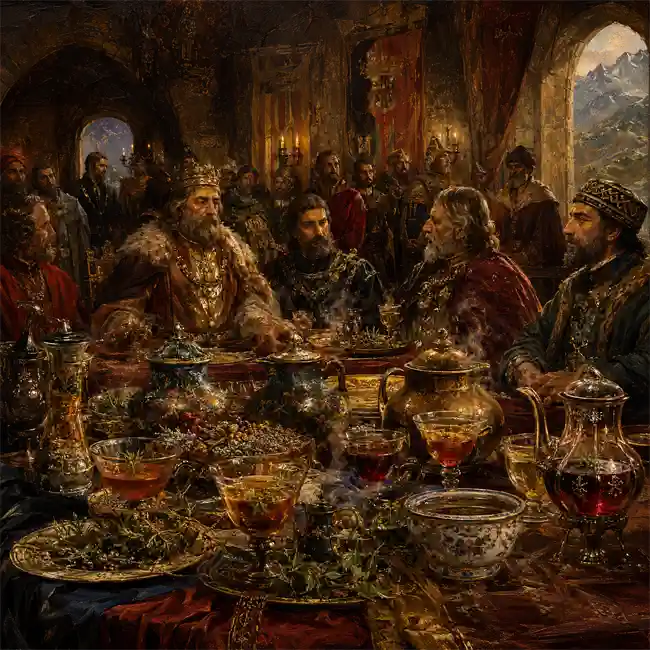
👑📜 The Storyteller’s Intro: Secrets from the Mountain Hearths
Welcome to a quieter side of Andorran culinary history—a world of steaming cups, mountain herbs, household remedies, seasonal infusions, and carefully guarded knowledge passed from one generation to another.
Before we begin, there is one important historical distinction. Andorra does not have a traditional royal dynasty in the way that many European kingdoms do. Its political history developed around medieval lordships, the Counts of Foix and the Bishop of Urgell, and eventually the unique co-principality established through the Pareatges of 1278 and 1288. So, for this series, the word “Noble” is more historically appropriate than claiming a literal Andorran royal kitchen.
That distinction actually makes the story more fascinating.
If we look back over the last 200 to 1,000 years, Andorran food culture was shaped less by enormous palace kitchens and more by mountain households, religious communities, landowners, shepherds, farmers, and local families who understood how to make the most of a difficult landscape.
Andorra's culinary identity grew in a territory of steep valleys, high pastures, forests, cold winters, and limited agricultural space. Official Andorran tourism describes the country's cuisine as a centuries-old mountain tradition strongly connected with local and seasonal produce and a historical tradition of self-sufficiency.
That is where the idea of the Andorra Noble Elixir becomes interesting.
These were not necessarily “royal potions” in the fantasy sense. Instead, imagine the kind of carefully prepared infusion that might have appeared beside a winter meal in a prosperous mountain household, been offered to a guest after a long journey, or been prepared from plants gathered during the warmer months.
The surviving historical landscape gives us clues about this way of life.
The Madriu-Perafita-Claror Valley, now a UNESCO World Heritage cultural landscape, preserves evidence of pastoralism, terraced fields, summer settlements, stone paths, communal land management, and traditional mountain resource use stretching across centuries. UNESCO specifically identifies the valley as an exceptional example of how people harvested scarce high-Pyrenean resources while maintaining a strong mountain culture.
So when we speak of Forgotten Royal Recipes or Noble Culinary Secrets here, think of them as a storytelling doorway into historic elite and household food culture—not as claims that every poetic drink name below survives in a medieval manuscript.
Among the evocative names that can represent this culinary world are:
• Pyrenean Hearth Infusion — a warming concept inspired by the mountain household tradition.
• Noble Forest Herb Tea — a poetic reconstruction of a woodland botanical infusion.
• High Valley Mountain Mint Brew — inspired by the aromatic character associated with mountain landscapes.
• Andorran Alpine Meadow Infusion — a seasonal concept connecting herbs with high pasture culture.
• Stone-Hearth Botanical Elixir — a storytelling name for a rustic household infusion.
• The Shepherd’s Quiet Cup — representing the practical beverage culture of pastoral communities.
• Claror Valley Herb Infusion — inspired by the cultural landscape of Madriu-Perafita-Claror.
• Winter Mountain Hearth Tea — a narrative interpretation of cold-weather household drinking traditions.
• The Old Valley Herbal Cup — a symbolic name for knowledge passed between generations.
• Noble Guesthouse Infusion — representing hospitality in prosperous mountain households.
The real treasure is not the glamour of a supposed palace.
It is the relationship between people, plants, seasons, fire, mountains, and memory.
🗺️ The Royal Culinary Tourism: Mapping Flavors to Historic Landscapes
If you want to understand Andorra's historic drink culture, don't begin with a modern menu.
Begin with the landscape.
Andorra is a small mountain country in the Pyrenees, and its geography has always influenced what people could grow, gather, preserve, and prepare. The country's culinary identity remains strongly associated with mountain products, seasonal ingredients, and traditions adapted to local conditions.
That makes culinary tourism in Andorra particularly interesting because the “ingredient map” is also a travel map.
A visitor can move through valleys, old settlements, mountain trails, churches, traditional houses, agricultural landscapes, and historic communities while imagining how food and drink once followed the rhythm of the seasons.
🏘️ Andorra la Vella and the Historic Valley Network
Andorra la Vella is an obvious starting point for exploring the country's culinary identity.
Rather than imagining a grand royal capital filled with palace tea rooms, picture a medieval mountain settlement connected to surrounding valleys and communities.
The historical story of Andorra reaches back more than a thousand years, with early documentary references to its parishes appearing in the mid-9th century. Later, the political arrangement between the Bishop of Urgell and the Count of Foix shaped the unusual constitutional history that still distinguishes Andorra today.
For culinary travelers, this means the most meaningful question is not:
“Where was the royal tea served?”
It is:
“What did mountain communities have available, and how did they transform those resources into hospitality?”
That question leads naturally toward herbal infusions, seasonal preparations, preserved ingredients, and warming household drinks.
🏛️ Stone Villages and Old Mountain Houses
Travel beyond the main urban areas and the atmosphere changes quickly.
Stone buildings, churches, mountain paths, agricultural terraces, and traditional settlements provide a visual connection to the older Andorran way of life.
These places help explain why food culture was so practical.
A household could not simply depend on unlimited imported ingredients. Mountain communities had to understand their environment, seasonal availability, preservation, and resource management.
A warm infusion therefore fits naturally into the story.
It could be simple, aromatic, seasonal, and useful.
And perhaps most importantly, it could be shared.
That last point matters.
Historic food culture is rarely only about recipes. It is about who gathered ingredients, who prepared them, who received them, and when they were served.
⛰️ Kingdom of Wild Aromatics & Heritage: The Mountain and Forest Tradition
This is where Andorra's Noble Elixirs become especially atmospheric.
There is no need to invent a fictional royal palace to create a sense of mystery.
The mountains already provide one.
The Madriu-Perafita-Claror Valley is particularly important. UNESCO recognizes it as a cultural landscape covering 4,247 hectares—around 9% of Andorra—and describes it as a living record of pastoralism, woodland use, agricultural terraces, summer settlements, stone tracks, and long-standing communal land management.
The valley's story is essentially a story about resourcefulness.
People lived with the mountain rather than trying to completely dominate it.
For a culinary historian, that opens a fascinating window into botanical traditions.
🌿 The Secret Language of Mountain Aromatics
A historical herbal drink does not need dozens of ingredients.
In a mountain environment, a small amount of an aromatic plant could transform hot water into something memorable.
The sensory character might come from:
• Fresh or dried mountain herbs
• Aromatic leaves
• Wild botanical plants
• Seasonal flowers
• Forest-inspired ingredients
• Naturally fragrant seeds or spices obtained through regional trade
• Preserved plants gathered during favorable seasons
The important point is that these ingredients should be understood within their historical and ecological context, rather than automatically labeled as medieval “tea.”
The word “tea” itself can be misleading when discussing European historical traditions because many traditional European hot botanical drinks were herbal infusions rather than tea made from Camellia sinensis.
That distinction gives Andorran culinary history its own personality.
The mountain cup was not necessarily trying to imitate an aristocratic tea ceremony from another part of Europe.
It could simply be a practical expression of local botanical knowledge.
🔥 The Hearth as the Original Beverage Station
Imagine a winter evening.
Outside, the Pyrenean air is cold.
Inside, the household gathers around a fire.
A pot warms.
Dried ingredients are brought from storage.
Someone prepares a hot infusion.
A guest arrives after traveling through the valley.
The drink is offered.
No elaborate ceremony is necessary.
The hospitality itself becomes the ceremony.
This is the kind of scene that makes historic Andorran beverage culture worth exploring.
The elegance is understated.
The luxury is warmth.
The secret is knowledge.
And the “noble” character comes from the care given to something simple.
🌲 From Pasture to Pantry: Seasonal Knowledge Behind the Cup
Andorra's traditional food culture was strongly connected with seasonality and self-sufficiency. Official tourism material specifically emphasizes local and seasonal products as central to the country's centuries-old culinary tradition.
That seasonal rhythm would naturally influence botanical drinks.
🌱 Spring — The Season of Renewal
Spring would mark the return of fresh vegetation after winter.
For a historical food narrative, this is the perfect moment to imagine fresh aromatic herbs entering household preparations.
The culinary principle is simple:
Use what the landscape is giving you now.
☀️ Summer — Gathering and Preservation
Summer in mountain communities was not simply a holiday season.
It was a working season.
Pastoral activities, agriculture, woodland management, and gathering were part of the larger mountain economy documented in the Madriu-Perafita-Claror landscape.
This is also when the story of preserved herbs becomes particularly compelling.
Plants could be collected when conditions were favorable and prepared for later household use.
The idea of a “secret recipe” therefore becomes less about a mysterious ingredient and more about timing, selection, drying, storage, and knowledge.
🍂 Autumn — The Pantry Becomes the Treasure Chest
Autumn transforms the mountain environment.
Fresh produce begins giving way to preserved foods.
The household becomes increasingly dependent on what has been stored.
A warm botanical infusion fits perfectly into this seasonal transition.
It is easy to imagine autumn gatherings where simple hot drinks accompany conversation, preserved foods, bread, soups, and other hearty mountain dishes.
❄️ Winter — The Noble Hearth Cup
Winter is perhaps the strongest setting for the Andorran noble-drink story.
Cold weather makes warmth itself valuable.
A hot infusion becomes more than refreshment.
It becomes part of the rhythm of the household.
This is why names such as Winter Mountain Hearth Tea, Stone-Hearth Botanical Elixir, and The Shepherd's Quiet Cup work so well as modern storytelling titles.
They capture an atmosphere without falsely presenting modern poetic names as documented medieval recipes.
🏔️ A Culinary Journey Through Andorra's Historic Highlands
For travelers interested in food history, Andorra offers something unusual.
You can connect culinary exploration with physical landscapes.
🥾 Madriu-Perafita-Claror Valley
This should be one of the key locations on any historical food itinerary.
UNESCO describes the valley as an exceptionally preserved cultural landscape where mountain resources, pastoralism, agriculture, traditional settlement, trails, and communal land management come together.
Walking through such a landscape changes the way you think about food.
A dried herb is no longer simply an ingredient.
A terrace is no longer simply scenery.
A shepherd's hut is no longer simply an old building.
Everything becomes part of one system.
That is the real culinary heritage.
🏘️ Ordino and the Northern Mountain Atmosphere
Ordino and the northern valleys provide another useful setting for exploring Andorra's mountain identity.
Here, the landscape encourages visitors to think about altitude, woodland, agriculture, pastoral life, and traditional settlement patterns.
For culinary travelers, this is where the idea of a High Valley Mountain Mint Brew or Noble Forest Herb Tea can be used as a storytelling concept while visiting museums, villages, trails, and local food establishments.
Again, the point is not to claim that a specific medieval noble drank a cup with that exact name.
The point is to reconstruct the world in which such a drink would make cultural sense.
🏞️ Escaldes-Engordany and the Valley Connections
Escaldes-Engordany adds another layer to the journey, connecting the mountain environment with settlement, hospitality, and the long history of Andorran travel routes.
The wider Andorran culinary experience today continues to promote local products, traditional flavors, and the connection between gastronomy and landscape.
For visitors, this makes it possible to combine heritage sightseeing with modern interpretations of Andorran food culture.
🍵 The Hidden Menu: Noble Elixirs Inspired by Andorra's Heritage
The following names are best understood as editorial heritage-inspired menu concepts, not as claims that surviving medieval manuscripts record these exact titles.
👑 The Noble Highland Infusion
A refined concept inspired by the relationship between high-altitude landscapes and botanical gathering.
🌲 The Secret Forest Cup
A mysterious woodland-themed infusion designed around the atmosphere of Andorra's forests and traditional mountain resource use.
⛰️ The Pyrenean Hearth Elixir
A warming concept representing the central role of the household fire in mountain life.
🌿 The Alpine Meadow Botanical Tea
A floral and herbal storytelling concept inspired by high pastures and seasonal vegetation.
🏔️ The Madriu Heritage Infusion
A heritage-themed drink concept connecting the beverage experience with the UNESCO cultural landscape of Madriu-Perafita-Claror.
🔥 The Old Stone-Hearth Brew
A rustic yet aristocratic interpretation of a drink served during winter hospitality.
🌄 The Valley Keeper's Cup
A symbolic drink representing the generations who preserved knowledge of land, food, plants, and seasonal living.
These names can become the foundation for a future recipe series—but the recipes themselves should be developed separately and clearly identified as historically inspired interpretations where direct documentary evidence is unavailable.
❓🏯 Royal FAQ: Unlocking Palace Kitchen Mysteries
Q1.Was Andorra ruled by a royal family with a royal tea tradition?
Not in the conventional European sense. Andorra developed through a medieval political system involving the Bishop of Urgell and the Count of Foix, with the Pareatges of 1278 and 1288 establishing the foundations of the co-principality. Therefore, “Noble” is a more historically responsible label than presenting Andorran beverages as products of a conventional royal court.
Q2.Did medieval Andorrans drink modern-style tea?
It is better to distinguish imported true tea from local herbal infusions. The more historically grounded approach is to explore botanical drinks based on locally available plants, seasonal ingredients, and household traditions rather than automatically describing every historic hot infusion as modern tea.
Q3.Why are mountains so important to Andorran drink culture?
Because the mountains shaped nearly every part of traditional food life. Andorran gastronomy developed around rugged terrain, seasonal production, local resources, and self-sufficient traditions. UNESCO's documentation of Madriu-Perafita-Claror also shows how communities historically adapted to scarce mountain resources through pastoralism, agriculture, woodland use, and communal land management.
Q4.Are the “secret” drink names historically documented?
Not necessarily. Names such as The Pyrenean Hearth Elixir and The Valley Keeper's Cup are heritage-inspired editorial names created to organize the story. They should not be mistaken for authenticated medieval recipe titles. This distinction helps preserve historical credibility while still allowing creative culinary storytelling.
🧠 Final Thoughts: The Timeless Allure of Aristocratic Gastronomy
Andorra's culinary mystery is not really about finding a lost royal palace.
It is about discovering how ordinary mountain resources could become extraordinary through knowledge, patience, hospitality, and tradition.
That is why Andorra Noble Elixirs & Teas deserves a place in a long-form exploration of historic European gastronomy.
The country's story stretches across more than a millennium, while the political foundations of the modern co-principality reach back to the medieval Pareatges of 1278 and 1288.
Its culinary traditions grew from the realities of the Pyrenees.
Steep valleys demanded adaptation.
Long winters encouraged preservation.
Seasonal landscapes shaped gathering.
Pastoralism influenced foodways.
Communal land systems shaped relationships with resources.
And the hearth became a natural center for hospitality.
The Madriu-Perafita-Claror Valley makes this connection especially visible. UNESCO recognizes it not merely as beautiful mountain scenery, but as a cultural landscape showing how generations of people worked with the resources of the high Pyrenees.
So if you are planning an Andorra food-history journey, don't simply search for a famous drink.
Search for the landscape behind the drink.
Look for the old paths.
Explore mountain villages.
Visit heritage sites.
Walk through cultural landscapes.
Pay attention to local botanical traditions.
Ask how seasonal ingredients are used today.
And when you finally sit down with a warm herbal infusion after a day in the mountains, imagine the generations before you who also understood the simple pleasure of warmth, aroma, and shared hospitality.
That is where the real Andorran Noble Culinary Secret begins.
And this is only the opening chapter.
The next stage can go deeper into individual Lost Royal Recipes, Forgotten Noble Recipes, Ancient Palace-Inspired Infusions, and Andorran Mountain Herbal Preparations, separating documented culinary heritage from carefully labeled historical reconstruction.
The recipes should come later.
First, we map the world that created them.
👑 Credit to the Keepers of the Culture (The Legacy)
The greatest respect we can give Andorran culinary heritage is to avoid turning history into fantasy.
Andorra's food culture belongs to the people, families, farmers, shepherds, artisans, cooks, local communities, researchers, heritage organizations, and cultural custodians who have preserved knowledge of the country's mountain environment.
The official Andorra tourism authority describes gastronomy as deeply connected with the country's mountains, local ingredients, seasonal products, producers, artisans, and long-rooted traditions.
UNESCO's recognition of the Madriu-Perafita-Claror Valley further demonstrates the international importance of Andorra's cultural landscape, documenting centuries of pastoralism, agriculture, traditional settlements, trails, resource use, and communal land management.
That heritage deserves to be approached with curiosity—but also with humility.
When a recipe is documented, it should be presented as documented.
When a recipe is reconstructed, it should be identified as reconstructed.
And when a poetic name is created for storytelling, it should never be disguised as a medieval manuscript title.
That balance between imagination and evidence is what makes culinary history meaningful.
So the true keepers of Andorra's culinary legacy are not imaginary kings sitting behind an extravagant palace table.
They are the generations who understood the mountains.
They knew the seasons.
They knew the pantry.
They knew the herbs.
They knew the value of a warm cup on a cold evening.
And above all, they knew that food and drink were never merely things placed on a table.
They were part of the relationship between land, family, community, memory, and survival.
That is the legacy worth preserving.
That is the story worth traveling for.
And that is the secret waiting behind the next page of Andorra Noble Elixirs & Teas.
👑🍷 Secrets of the Pyrenean Valleys: Recreating Historic Andorran Nobility Elixirs
👉 Indulge in Elite Andorran Noble Elixirs
| 🌐 👑🍷 < Back | 🇦🇩 👑🍨 < Previous | Next > 🍲👑 🇦🇩 |