
🏠 Home > 🗺️ Recipes > 👑🥗 Aristocratic Garden Greens (Salads) > 🇦🇱 Albania Aristocratic Garden Greens (Salads) Recipes > 👑🥗 1.The Kastrioti Prince’s Pomegranate and Aged White Cheese Garden Salad
👑🥗 Inside the Private Garden Salads of Albania's Mountain Princes
Published by Supakorn | Updated: August 2026
🤴👑 The Forgotten Aristocratic Legacy of Albania: The Era of Princes and the Kastrioti Dynasty
📜 The Storyteller’s Intro
Close your eyes and go back to the late 15th century. High in the rugged Accursed Mountains of northern Albania, inside a thick-walled stone kulla tower, the fire is crackling. Outside, shepherds guard their flocks. Inside, in a kitchen filled with the scent of wild herbs drying from the rafters, the lady of the house is preparing for a feast. This is not a meal for common folk. Tonight, the Prince of Dukagjini is visiting.
On the heavy oak table, there will be roasted lamb, but before that, there will be something far more delicate and symbolic - a salad. Not just any salad of tomatoes and cucumbers. A composition of mountain greens, aged white cheese, pomegranates, and cold-pressed oil, arranged with intention. In Albania, the land of the eagle, power was not held by a long-reigning royal family in a single palace, but by powerful aristocratic families - the Kastrioti, the Dukagjini, the Thopia. Their kitchens were their palaces.
🌍 The Global Value
For centuries, these salad recipes were invisible to the outside world. Why? Because in Albanian aristocratic culture, hospitality - Besa and Mikpritja - was sacred, but the recipes of a noble house were a matter of family pride and identity. They were never written down. They were whispered from a mother to her daughter, from a head cook to her apprentice.
The ingredients themselves were exclusive. While villagers ate what they could grow in the valley, the nobility had access to the first pressing of olive oil from Vlora, aged djathë i bardhë cheese from high pastures, wild mountain oregano picked at dawn, and pomegranates that were traded from the Ottoman south. When the Ottoman Empire took full control and later when communism isolated Albania for 50 years, these aristocratic food traditions were almost completely lost. The noble families were exiled, their towers burned, and their cooks fell silent. What remained were fragments, memories, and oral histories from village elders.
📖 The Collection
This article is a resurrection. We have spent months piecing together oral histories, old family notes, and the memories of keepers of culture in Krujë and Gjirokastër to bring you back the most glorious salad that once graced the tables of Albanian princes. This is not the simple shopska salad you find in restaurants today. This is a royal-level, aristocratic composition that tells the story of Albania's fierce, independent, and mountainous nobility.
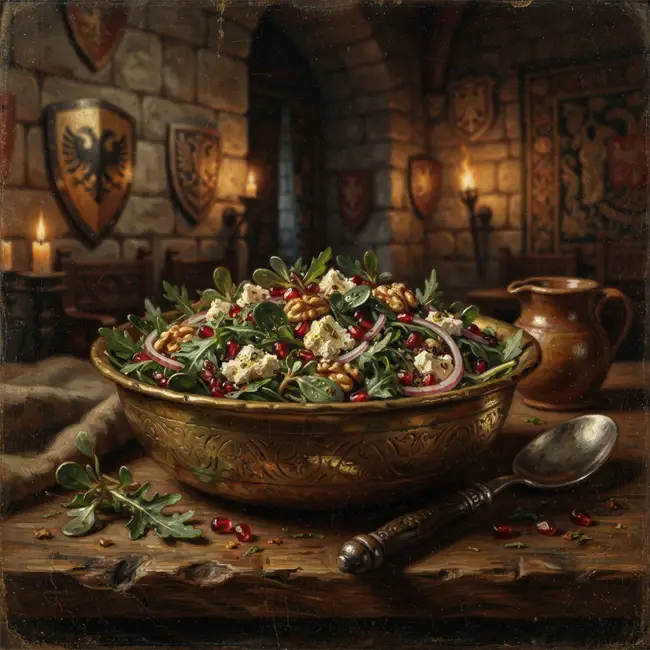
🥗 Recipe: The Kastrioti Prince’s Pomegranate and Aged White Cheese Garden Salad
This is the salad they called Sallata e Princit - The Prince's Salad. It is said to have been the favorite of Gjergj Kastrioti Skanderbeg himself, served to honor allies after a victory. It balances the saltiness of the mountains, the sweetness of the valleys, and the acidity of the sun.
👑 About this Royal Secret
Legend says that after the victory at the Battle of Albulena in 1457, Skanderbeg held a feast in his fortress in Krujë. He did not want heavy meat dishes to start the celebration. He asked his kitchen mistress for something that tasted like Albania itself - resilient, bright, and unforgettable.
She brought out a large wooden bowl. At the bottom, wild rocket and mountain greens that grow between rocks. On top, crumbles of three-year-aged white cheese from Theth, so sharp and salty it makes you shiver. Then, she scattered pomegranate seeds like rubies, representing the blood spilled for freedom, and toasted walnuts from the forests of Dibër for strength. She finished it with a drizzle of emerald olive oil and a whisper of wild oregano. The visiting princes from Lezhë were stunned. It was simple, yet no one had ever tasted something so perfectly balanced. It became a required dish for any aristocratic oath-taking ceremony. To share this salad was to share trust.
🧀 Ingredients & The Aristocratic Touch
🏺 The Royal Pantry
The nobility of Albania did not measure wealth in gold, but in the quality of their pantry. Their cheese was not fresh; it was aged in wooden barrels for years. Their olive oil was not from a store, but from the family grove, pressed in November. Their greens were not cultivated; they were foraged by women who knew which rock the most peppery rocket grew behind. Every ingredient had a story and a terroir. This is what makes this salad aristocratic - it is a map of Albania on a plate.
🔄 Modern Substitutes
We want you to make this at home, wherever you are. Here are authentic swaps that keep the noble spirit alive:
• Aged Albanian White Cheese: If you cannot find authentic aged djathë i bardhë, use aged Greek feta that has been kept in brine for at least 12 months, or French Valençay. Avoid soft, creamy feta.
• Wild Mountain Rocket: Use wild arugula or baby rocket. If you can find dandelion greens, mix them in for that bitter mountain note.
• Wild Oregano: Dried Albanian or Greek oregano is perfect. Do not use fresh oregano; the dried, flower-heavy version is more aromatic.
• Pomegranate Molasses: We use a touch of this for depth. If you don't have it, reduce pomegranate juice by half.
📝 The Measurements
This serves 4 noble guests.
For the Salad Base:
• Wild rocket arugula, washed and dried - 4 generous handfuls, about 120 grams
• Mixed young dandelion greens or frisée - 1 handful, about 30 grams
• Pomegranate seeds, fresh - 3/4 cup, about 100 grams
• Walnuts, roughly chopped - 1/2 cup, about 60 grams
• Aged white cheese, crumbled into large chunks - 150 grams
• Red onion, very thinly sliced into half-moons - 1 small, about 50 grams
For the Aristocratic Vinaigrette:
• Extra virgin olive oil, cold-pressed if possible - 1/4 cup, 60 ml
• Red wine vinegar - 2 tablespoons, 30 ml
• Pomegranate molasses - 1 teaspoon, 5 ml
• Wild dried oregano, rubbed between palms - 1 teaspoon
• Sea salt flakes - 1/2 teaspoon
• Freshly cracked black pepper - 1/4 teaspoon
• Honey, wildflower - 1/2 teaspoon
👨🍳 The Chef’s Ritual
◦ Step 1: Awaken the Nuts
Place your chopped walnuts in a dry pan over medium heat. Toast them for 3 to 4 minutes, shaking the pan often, until they become deeply fragrant and a shade darker. This is what the old cooks called "waking up the forest." Set them aside to cool completely. This step is non-negotiable; it changes everything.
◦ Step 2: Soften the Bite
Take your thinly sliced red onion and place it in a small bowl of ice water with a pinch of salt for 10 minutes. This is a classic Albanian trick. It removes the harsh, aggressive bite and leaves you with a sweet, crisp onion that will not overpower the cheese. Drain and pat very dry.
◦ Step 3: The Vinaigrette, Like a Potion
In a small jar, combine the olive oil, red wine vinegar, pomegranate molasses, honey, salt, and pepper. Close the lid and shake vigorously until it is slightly thickened and cloudy. Then, add the wild dried oregano that you have rubbed in your palms to release its oils. Let it sit for at least 15 minutes. The aristocracy never dressed a salad at the last second; they let the flavors marry.
◦ Step 4: The Noble Assembly
In a large, wide wooden or ceramic bowl - never metal - place your rocket and dandelion greens. Add the drained red onions and half of the pomegranate seeds and half of the toasted walnuts. Drizzle with about two-thirds of the vinaigrette and toss gently with your hands, not tongs. You want to coat the leaves, not bruise them.
◦ Step 5: The Crown
Now, arrange the salad on a serving platter. Scatter the large, rustic crumbles of aged white cheese over the top. You want big pieces, not dust. Sprinkle the remaining pomegranate seeds and walnuts over the cheese like jewels. Drizzle the last of the vinaigrette just over the cheese. Finish with one final pinch of wild oregano on top.
Serve immediately on a cool day, with warm village bread.
🤫 Secrets of the Palace Kitchen (Tips & Mistakes)
◦ Secret 1: The Cheese Temperature Matters: Never put ice-cold cheese from the fridge onto the salad. Let your aged white cheese sit at room temperature for 20 minutes before crumbling. When it is too cold, you cannot taste its salty, complex, almost parmesan-like depth. The noble cooks kept cheese in a cool pantry, not a cold icebox.
◦ Secret 2: Do Not Drown The Greens: The biggest mistake modern cooks make is adding too much dressing. An aristocratic Albanian salad should glisten, not swim. The greens should look like they have morning dew on them. Start with less dressing than you think you need. You can always add more.
◦ Secret 3: The Pomegranate Trick for No Bitterness: When you remove seeds from a pomegranate, do it in a large bowl of water. The seeds will sink and the bitter white pith will float. This ensures not a single bitter piece ends up in your prince's salad. The kitchen maids in Gjirokastër did this for hours.
◦ Secret 4: The Wooden Bowl Rule: The elders say that acidic ingredients like pomegranate and vinegar react with metal bowls and give a metallic taste. Always mix your salad in wood, ceramic, or glass. It is a small detail that keeps the flavor pure and clean, as it was in the mountain towers.
❓🏰 Royal FAQ
Q1: Is this salad very salty because of the aged cheese?
It is meant to be perfectly balanced salty-sweet-sour, not just salty. That is why we soak the onions and add honey and pomegranate molasses to the dressing. The sweetness of the pomegranate seeds cuts through the saltiness of the cheese beautifully. If your cheese is extremely salty, use 120 grams instead of 150 grams.
Q2: Can I make this salad ahead of time for a party?
You can prep all the components ahead, but you must not assemble it until the very last moment. Keep your washed greens in a towel in the fridge, keep the onions in ice water, keep the cheese crumbled, and keep the vinaigrette in a jar. Toss it all together right before your guests sit down, otherwise the rocket will wilt and lose its proud, peppery structure.
Q3: What is the best thing to serve with this aristocratic salad?
In the noble houses, this salad was served as a first course before grilled meats or byrek. Today, it is a complete light lunch by itself with warm, crusty bread. It also pairs beautifully with grilled lamb chops or a simple white bean soup, called Jani me Fasule. It cleanses the palate and prepares you for what comes next.
Q4: Why do you use both fresh pomegranate and pomegranate molasses?
This is the double-pomegranate technique of the aristocracy. The fresh seeds give you a burst of juicy sweetness and texture, like little jewels popping. The molasses in the dressing gives a deep, sour, almost smoky background note that you cannot get from seeds alone. Together, they create a full pomegranate experience.
📢 The Taste of History (Summary)
When you take your first bite, you will understand why this was reserved for princes. First, you get the peppery punch of the wild rocket, then the creamy, salty explosion of the aged cheese that coats your tongue, then a sweet-sour pop from the pomegranate that makes everything bright again, and finally, the earthy, comforting crunch of the toasted walnut. It is not just a salad. It is a story of survival, of mountains, of pride, and of a hospitality so deep that even an enemy who entered your tower had to be fed like a prince. You are tasting 600 years of Albanian resilience.
💭 Final Thoughts: Bringing History to Your Table
It is easy to think that aristocratic recipes are too complicated, too fussy, or require ingredients you will never find. But the truth about Albanian nobility cooking is the opposite. It is based on respect for what the land gives you.
The princes of Albania did not have French-trained chefs or elaborate sauces. They had the best olive oil, the most aged cheese, the wildest herbs, and the knowledge of when to pick them. That is the real secret. This recipe proves that you do not need 20 ingredients to taste like royalty. You need 6 or 7 perfect ingredients, treated with respect.
We have taken the whispers from the stone towers of Krujë and translated them into measurements and steps you can follow in your modern kitchen. You can now create the same flavor that once made warring princes sit down together and make peace. That is the power of food that has been kept secret for too long.
🔔 The Call to Action (The Golden Hook)
If you fell in love with the taste of this hidden history, you are now a part of its story. These aristocratic recipes were almost lost forever, erased by empires and isolation.
Join us in keeping this culinary heritage alive. Try this Prince's Salad this week, share a photo of your creation, and tell us what you felt when you tasted it. What other lost noble kitchens of the world should we unlock next for you? Let us know in the comments - the next secret we reveal could be because you asked for it.
🙏 Credit to the Keepers of the Culture (The Legacy)
This recipe would not be possible without the deep generosity of the people of Albania. Our deepest respect and gratitude goes to the families in Krujë, Theth, and Gjirokastër who shared their oral histories, and to the cultural guardians of the Albanian ethnographic museums who work tirelessly to preserve the traditions of Mikpritja.
This content is created with profound respect for Albanian culture. It is not our history to own, but our honor to share and help preserve. We acknowledge that Albanian cuisine is a living, breathing tradition held by the Albanian people, and we are merely humble storytellers who have been allowed to listen. Faleminderit - Thank you.
| 🇦🇱 👑🥗 < Back |