
🏠 Home > 🗺️ Recipes > 🏛️🍲 Clay-Pot Broths & Stews > 🗿 Olmec: Clay-Pot Broths & Stews Recipes
🗿 🏛️🍲 Olmec: Clay-Pot Broths & Stews Recipes
Published by Supakorn | Updated: October 2026
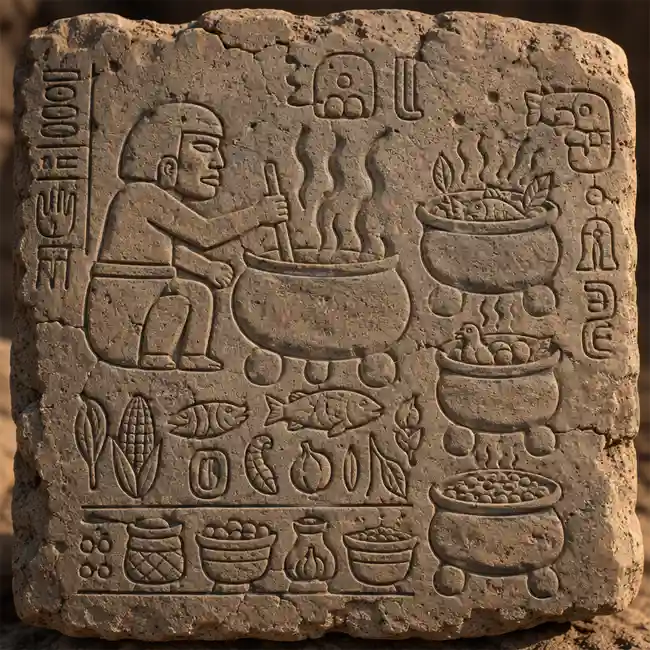
🐆📜 The Storyteller's Intro: 5,000 Years of Ancestral Flavors
Okay, picture this with me for a second.
It's a humid morning somewhere in the Gulf lowlands of what we now call Veracruz, Mexico. The air smells like wet earth and green leaves. A woman kneels beside a low hearth of three stones, and sitting right in the middle of those stones is a round-bellied clay pot, blackened from years of smoke. Inside, water is just starting to shiver. She drops in cracked maize, a handful of beans, a chunk of river turtle, and a few wrinkled chilies. Then she walks away and lets time do the rest.
That pot is roughly 3,000 years old. And honestly? That's the moment Mesoamerican cooking really begins.
Here's the thing people get confused about, so let's clear it up right away. When we talk about "5,000 years" in this part of the world, we're talking about the deep food story of the region, not the Olmec state itself. The ingredients are ancient — maize was being domesticated in southern Mexico something like 9,000 years ago, and squash even earlier. The Olmec are the ones who took all those wild threads and braided them into an actual cuisine with social rules, feasting, ritual, and technology behind it.
🕰️ The rough timeline, friend-to-friend
✨ Deep Archaic roots (before ~2000 BCE): Foragers, fishers, and early gardeners in the Gulf lowlands. Maize, squash, chili, avocado, and cassava are already on the menu in some form.
✨ Early Formative / Early Preclassic (~1800–1200 BCE): Villages settle down along the rivers. Pottery spreads. This is the big one — once you have a fired clay pot, you can boil, and boiling changes everything.
✨ San Lorenzo phase (~1200–900 BCE): The first great Olmec center, San Lorenzo Tenochtitlán, hits its peak. Colossal stone heads. Elite households. Organized feasting.
✨ La Venta phase (~900–400 BCE): Power shifts east into modern Tabasco. Bigger ceremonial architecture, long-distance trade, and food that's increasingly tied to ritual and status.
✨ Epi-Olmec / Tres Zapotes phase (~400 BCE–250 CE): The classic Olmec world fades, but the kitchen doesn't die — it gets inherited by the Maya, the Zapotec, and everyone downstream.
So when someone says "Olmec recipes," what they really mean is the cooking culture of Mesoamerica's mother culture — the one that handed down the grammar everybody else wrote poetry in.
🍲 Why the clay pot is the real main character
Nobody put the Olmec on a cereal box for inventing the stew pot, but they absolutely deserve a trophy.
• Boiling unlocked food that was otherwise useless. Tough roots, old beans, bony fish, sinewy game — all of it becomes edible and delicious once you simmer it long enough.
• Broth fed the vulnerable. Babies, elders, and sick people can live on a nourishing broth when they can't chew anything solid. Clay-pot cooking quietly raised survival rates.
• Nothing got wasted. Bones, heads, shells, trimmings — into the pot. That's not a trend, that's 3,000-year-old common sense.
• It scaled up for feasts. Archaeologists keep finding unusually large serving and cooking vessels at Olmec centers. Big pots mean big gatherings, and big gatherings mean politics, alliances, and ceremony.
• It made flavor layered. Fat floats, aromatics infuse, starches thicken. That's cuisine, not just survival.
📜 Iconic Excavated Menus: What the Olmec Hearth Actually Served
Fair warning before we go in: the Olmec left us no cookbook. No recipe tablets, no palace menus carved into basalt. What we do have is better in a weird way — carbonized seeds, animal bones with butchery marks, residue trapped inside pot walls, grinding stones worn into familiar shapes, and isotope readings from ancient teeth.
So the "menu" below is reconstructed from the dig site, not copied from a scroll. Scholars call these food assemblages. I'm going to call them dishes, because that's what they were.
🌽 The maize core
◦ Nixtamal porridge — dried maize kernels soaked and simmered with wood ash, lime, or burned seashells until the skins slip off. This is the single most important culinary technology in the Americas. It unlocks niacin and amino acids, prevents pellagra, and makes the dough stretchy. Without nixtamalization, maize civilization doesn't happen.
◦ Atole-style maize gruel — ground nixtamal whisked into hot water until it thickens into something between a drink and a soup. Breakfast, road food, offering, medicine.
◦ Early tamal-type bundles — masa wrapped in leaves, set over or beside the pot and steamed. Portable, communal, and ritually perfect because you unwrap it like a gift.
◦ Toasted maize flatbread — the ancestor of the tortilla, cooked on a hot clay surface at the hearth's edge.
🐢 River and lagoon proteins
◦ Turtle-in-shell stew — turtle remains show up consistently at Olmec sites, and the shell itself doubles as a natural cooking vessel. Slow, gelatinous, deeply savory.
◦ Freshwater fish broth — the Gulf rivers were absurdly productive. Whole fish simmered with chili and herbs, bones and all, then strained or eaten carefully.
◦ Clam, mussel, and snail pot — mollusk shells pile up in Olmec middens by the thousand. Steamed open in the pot, their liquor becomes an instant seasoning.
◦ Crab and shrimp simmer — coastal lagoon settlements had access to shellfish that river villages traded for.
◦ Caiman and snake braises — yes, really. Crocodilian remains appear in the record, and in a slow pot that meat turns silky.
🦌 Land proteins
◦ Dog stew — this one surprises modern readers, but domestic dog was a managed, deliberately raised meat animal across ancient Mesoamerica and is one of the most common food-animal finds at Olmec sites. It was ordinary, respected, and often ceremonial.
◦ White-tailed deer braise — higher-status meat, more common in later phases, often associated with elite households.
◦ Peccary, agouti, and small game — the everyday supplement, usually simmered rather than roasted so nothing was lost.
◦ Wild bird and waterfowl soup — the wetlands were full of them seasonally.
🥬 Garden and forest companions
◦ Bean and squash pot — the "three sisters" trio with maize, grown together and cooked together.
◦ Cassava (manioc) and sweet potato simmer — starchy, filling, and ideal for stretching a small amount of meat across a big family.
◦ Corozo palm nut additions — a local fat and flavor source that shows up in the botanical record.
◦ Chili-infused broths — chili isn't just heat here, it's a preservative and an appetite trigger.
◦ Avocado, sunflower seed, and tropical fruit sides — eaten fresh alongside the hot pot rather than in it.
🍫 The sacred one: cacao
◦ Cacao was present in the Olmec world, and residue research tied to San Lorenzo is a cornerstone of the argument that cacao use in Mesoamerica is genuinely ancient.
◦ It was most likely consumed as a savory, spiced, unsweetened preparation — bitter, frothy, chili-warmed. Nothing like a modern dessert drink.
◦ The pulp around the beans is sweet and fruity, and it's very likely that pulp came first, with the bean becoming prestigious later.
◦ Cacao was ritual currency long before it was a treat, which makes it the ultimate "ancient sacred recipe" ingredient.
🗺️ The Olmec Heartland: Eating, Living & Traveling the Mother Culture
Here's where this stops being a history lesson and starts being a trip you could actually take.
The Olmec heartland sits across two Mexican states — Veracruz and Tabasco — on the northern half of the Isthmus of Tehuantepec. It's green, hot, wet, and incredibly fertile. If you've ever wondered why a civilization chose to plant itself in a floodplain that drowns every year, the answer is simple: the flood is the fertilizer.
🏡 How they actually lived
◦ Houses were made of perishable stuff — wood posts, thatch, packed earth — which is why we find the kitchen trash but not the kitchen.
◦ The hearth was the household's heart, usually three stones supporting one round pot, a layout so durable it's still used in rural Mexico today.
◦ Grinding was a daily, hours-long job. Metate-and-mano stone tools wore grooves that archaeologists can still read.
◦ Food storage was tough in that humidity, so the strategy was staggered harvests, drying, and fresh river protein rather than big granaries.
◦ Feasting was political. Serving a whole deer or a huge pot of stew to the village was how leaders demonstrated they deserved to lead.
🧭 Where to go if you want to stand in it
◦ San Lorenzo Tenochtitlán (Veracruz) — the earliest great center, roughly 1200–900 BCE, sitting on a raised plateau above the floodplain. Remote, quiet, and genuinely moving.
◦ La Venta (Tabasco) — the later capital with the famous Great Pyramid mound and buried mosaic offerings. Many of its monuments now live in the open-air Parque-Museo La Venta in Villahermosa, which is the easiest colossal-head encounter in Mexico.
◦ Tres Zapotes (Veracruz) — the long-lived Epi-Olmec site, home to early calendar-related inscriptions and a small but excellent site museum.
◦ Museo de Antropología de Xalapa — if you only have one day, go here. It holds the best Olmec collection on the planet, including multiple colossal heads.
◦ Laguna de los Cerros — less visited, but part of the same river-linked network of centers.
🍽️ The food you can still eat there today
This is the fun part. The Olmec kitchen never actually closed — it just changed its last name.
◦ Tamales wrapped in banana leaf — Tabasco and Veracruz versions are big, moist, and closer to the ancient leaf-steamed bundles than the corn-husk style.
◦ Pejelagarto — a prehistoric-looking gar fish, grilled or stewed, and a Tabasco signature. Eating one feels like time travel.
◦ Caldo de mariscos and river fish soups — the direct descendant of that clay pot.
◦ Chaya greens — a local leafy plant used in soups and stews for centuries.
◦ Pozol — a cold maize-and-cacao drink from Tabasco and Chiapas that is about as close as a modern person can get to drinking something an Olmec farmer would recognize.
◦ Clay-pot cooking in rural kitchens — still alive, still better than metal, and locals will tell you so without hesitation.
🚣 River Civilization: The Coatzacoalcos, Tonalá & Papaloapan Food Highway
The Olmec were a river people first and a monument people second. Every major center sits near flowing water, and that's not a coincidence.
◦ The Coatzacoalcos River fed San Lorenzo, supplying fish, turtles, clay, and transport.
◦ The Tonalá River runs near La Venta, linking the ceremonial core to the Gulf.
◦ The Papaloapan River anchored the western side of the Olmec world, including the Tres Zapotes area.
◦ Annual flooding deposited fresh silt on the levees, creating some of the richest farmland in ancient Mesoamerica — the same logic that powered the Nile and the Indus.
◦ Canoes were the trucks of the Formative period. Basalt from the Tuxtlas mountains, obsidian from highland sources, cacao, salt, and finished pottery all moved by water.
◦ Pottery itself traveled. Elemental analysis of Olmec-style ceramics shows vessels made in the Gulf lowlands turning up far away, meaning the cooking pot was also an export product.
◦ Travel tip: a river or lagoon boat tour in Tabasco or southern Veracruz is the single best way to feel why this landscape produced a civilization.
🏜️ Salt, Sand & Shoreline: The Gulf Coast's Dry-Edge Pantry
No deserts here — the Olmec heartland is tropical and soaked. But there is a dry edge, and it mattered enormously for food.
◦ Coastal dunes and barrier sandbars line the Gulf shore, creating lagoons that act like natural fish traps.
◦ Salt is the hidden ancient treasure. Coastal evaporation and brine-boiling supplied the one mineral no inland village could live without.
◦ Salt preserved the catch. Dried, salted fish let river protein travel inland and survive the rainy season.
◦ Salt was traded like a currency, binding coastal communities to the great ceremonial centers.
◦ Where to see it now: the Veracruz and Tabasco coastlines around Alvarado, Sontecomapan, and the Laguna del Carmen–Pajonal–Machona system still run on lagoon fishing and shellfish.
◦ The Tuxtlas volcanic uplands provide the contrast — cooler, stony, and the source of the basalt the Olmec hauled down to carve into colossal heads.
🔱❓ Ancient Civilization FAQ: Unlocking Palace Kitchen Mysteries
Q1.Did the Olmec really have "recipes" if they had no writing?
Not written ones, no. The Olmec left symbols and iconography but no decipherable cookbook, so everything we claim about their dishes is reconstructed from physical evidence — charred plant remains, butchered bones, shell middens, grinding stones, pot shapes, and chemical residue inside ceramics. The recipes lived in memory and in hands, passed from one cook to the next. What survives is the shape of the meal, not its exact wording.
Q2.Was nixtamalization really an Olmec thing?
The technique is strongly associated with early Formative Mesoamerica and the Olmec world is one of the key places it becomes central, with corn ground together with lime, ash, or crushed seashell to transform its nutrition.
Pinning down the exact inventor and date is still debated. What isn't debated is the consequence: alkaline-processed maize is what made dense populations, big cities, and monumental architecture possible in the Americas.
Q3.How much of their diet was actually farmed versus hunted and fished?
It shifted over time. The earliest Gulf lowland communities leaned heavily on fishing, shellfish gathering, and hunting, with maize and other crops becoming progressively more important as centuries passed.
Even at the height of maize farming, the diet stayed genuinely diverse — fish, turtle, snake, mollusks, deer, dog, fruit, roots, and greens all stayed on the table. That mixed strategy is exactly why they were resilient.
Q4.Did ordinary people and elites eat differently?
Almost certainly yes, though the gap looks more like access than invention. Elites got more deer, more cacao, more imported goods, and the privilege of hosting feasts. Everyone else ate the same base of nixtamal maize, beans, squash, roots, and river protein. The real luxury marker in the Olmec world wasn't a secret dish — it was the ability to give food away at scale.
🧠 Final Thoughts: The Timeless Allure of Antique Gastronomy
What gets me about Olmec food isn't the colossal heads or the jade or the mystery. It's the pot.
A plain, round, fire-stained clay pot sitting on three stones, doing the least glamorous job imaginable — turning tough things into soft things, and scarcity into a shared meal. Every single cuisine that came after in Mesoamerica, from Maya kitchens to Aztec markets to the mole simmering in a grandmother's kitchen in Oaxaca this afternoon, is downstream of that pot.
That's the quiet magic of lost ancient recipes. They're not really lost. They're wearing a disguise. You eat one every time you unwrap a banana-leaf tamal or spoon up a bowl of fish broth on the Gulf coast.
Coming up next in this series, we're going to roll our sleeves up and actually cook — full reconstructed clay-pot recipes built on the archaeology, scaled for a modern kitchen, with notes on what to swap when you can't get river turtle on a Tuesday. Bring an appetite and a heavy pot.
🏛️ Credit to the Keepers of the Culture (The Legacy)
✦ To the Olmec themselves — the mother culture of Mesoamerica, who built a cuisine out of a floodplain and handed it to everyone who came after.
✦ To the living communities of Veracruz and Tabasco, including Popoluca, Nahua, Chontal, and Zoque peoples, whose kitchens still carry techniques older than any written record.
✦ To the cooks who never got named — the women at the grinding stone and the hearth, who ran the most important technology of the ancient world.
✦ To the archaeologists and researchers at San Lorenzo, La Venta, Tres Zapotes, and the Museo de Antropología de Xalapa, whose careful, unglamorous work gave us every detail in this article.
✦ A note on respect: this piece is an interpretation built on published archaeology, not a claim to represent any community's sacred knowledge. Where the evidence is uncertain, I've tried to say so plainly.
🏛️🍲 The Broth That Built Mesoamerica's First Civilization — And How to Cook It Again
👉 Savor Rare Olmec: Clay-Pot Broths & Stews
| 🌐 🏛️🍲 < Back | 🗿 🍖 < Previous | Next > 🍯 🗿 |