
🏠 Home > 🗺️ Recipes > 🏛️🍯 Wild Earth Sweets & Foraged Bites > 🗿 Olmec: Wild Earth Sweets & Foraged Bites Recipes
🗿 🏛️🍯 Olmec: Wild Earth Sweets & Foraged Bites Recipes
Published by Supakorn | Updated: October 2026
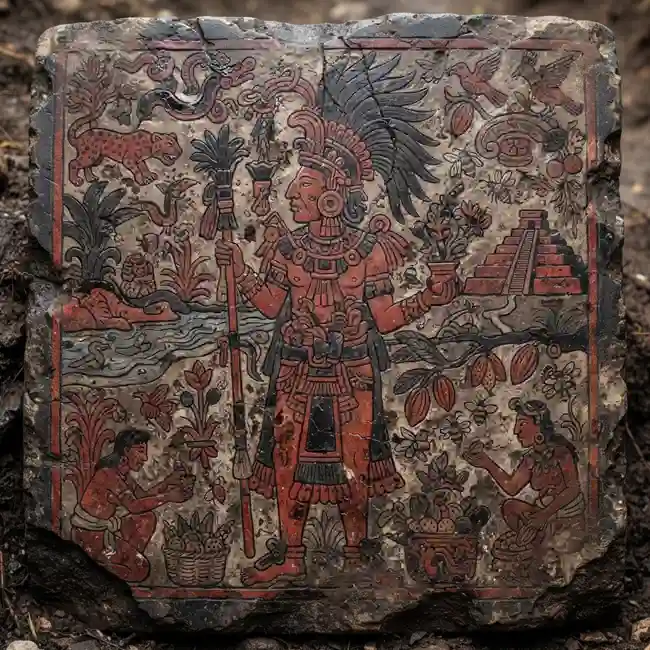
🛎️📜 The Storyteller’s Intro: 5,000 Years of Ancestral Flavors
Imagine walking through the humid lowlands of what is now southern Mexico thousands of years ago.
The air is warm. Rivers move slowly through wetlands and forests. Tropical plants grow around settlements, while maize fields, gardens, fruit trees, and wild vegetation create a landscape that is far more complicated than the word “farm” might suggest.
Somewhere nearby, people are preparing food with stone tools, ceramic vessels, grinding surfaces, baskets, and ingredients gathered from fields, forests, riverbanks, and wetlands.
This is the world that helps us understand the foodways associated with the Olmec, one of the most influential early civilizations of ancient Mesoamerica.
But there is an important historical detail worth getting right.
The Olmec civilization was not literally living 5,000 years ago in the conventional archaeological sense. The Olmec heartland is generally associated with the Formative period, especially from roughly 1500 to 400 BCE. Major centers such as San Lorenzo flourished during the Early Formative period, while La Venta became a major center later, particularly after the decline of San Lorenzo.
So why do people sometimes connect the Olmec story with a much older timeline?
Because the food traditions of the broader region did not suddenly appear when monumental Olmec centers emerged. People in Mesoamerica had already been experimenting with cultivation, wild-food gathering, pottery, plant processing, and cacao consumption for centuries.
Archaeological evidence from the wider Gulf Coast and neighboring regions points to very early food traditions involving maize, roots, squash, cacao, and other plants. Some cacao evidence, for example, reaches back to the second millennium BCE and earlier in parts of Mesoamerica.
That makes the Olmec food story fascinating.
It is not simply a story about “ancient recipes.”
It is a story about land, rivers, forests, farming, gathering, social status, ritual, and survival.
And perhaps most importantly, it reminds us that ancient cuisine was rarely divided into neat modern categories such as breakfast, dessert, snack, or appetizer.
A sweet bite could be connected to fruit.
A root could become a filling food.
A seed could become a seasoning.
A cultivated crop could coexist with wild plants.
And a food that seems ordinary today could once have represented knowledge passed between generations.
🌿 A Civilization Built Around a Living Landscape
Olmec communities developed in a remarkably rich environment.
The Gulf Coast lowlands provided access to rivers, wetlands, forests, floodplains, and cultivated landscapes. Archaeobotanical research shows that food production was not identical from one Olmec-area settlement to another.
At San Carlos, near the San Lorenzo region, researchers found significant variation in the presence and abundance of maize and different fruits compared with other southern Veracruz sites. The differences appear to relate partly to geography and access to riverine wetlands and their resources.
That detail changes how we imagine an ancient Olmec kitchen.
Instead of picturing a single standardized “Olmec menu,” it is more accurate to imagine regional foodways.
People living close to wetlands had opportunities that differed from communities farther inland.
Families could combine cultivated crops with gathered plants.
River resources could supplement agricultural foods.
Forest fruits could add seasonal variety.
And household food practices could change according to climate, landscape, social position, and access to resources.
This is one reason the phrase “Wild Earth Sweets & Foraged Bites” works so beautifully as a modern description of this culinary world.
It captures an ancient relationship with the landscape without pretending that the Olmec themselves used that phrase.
📜 Iconic Excavated Menus: Archaeological Flavors of the Olmec World
Here comes one of the most important archaeological cautions.
There are no surviving Olmec recipe books or written restaurant-style menus telling us, “This dish was called X and these were the ingredients.”
The Olmec writing system remains debated, and the surviving archaeological record does not provide us with a conventional cookbook containing named recipes.
So the food names below should be understood as modern descriptive labels for archaeologically supported food categories, not as original Olmec dish names.
That distinction matters.
It allows us to explore ancient cuisine while respecting what archaeology actually tells us.
🗿🍯 Featured Olmec Food Names
✦ 🌽 Ancient Maize Cakes
Simple maize-based cakes inspired by early Mesoamerican food traditions, representing one of the most important cultivated crops in the ancient Olmec world.
✦ 🍫 Early Cacao Bites
Small cacao-inspired preparations reflecting the deep history of cacao use in ancient Mesoamerica, long before the development of modern chocolate desserts.
✦ 🍠 Wild Root & Tuber Bites
Rustic foods inspired by roots and tubers gathered or cultivated in the tropical lowlands, highlighting the importance of underground crops in ancient food systems.
✦ 🎃 Squash & Seed Cakes
Earthy preparations inspired by ancient Mesoamerican squash and seed traditions, combining nourishing plant ingredients from the agricultural landscape.
✦ 🌿 Forest Herb & Green Bites
A modern descriptive name for foods inspired by edible greens, herbs, and plants gathered from the surrounding forests and wetlands.
✦ 🍈 Tropical Forest Fruit Bites
Seasonal fruit preparations inspired by the diverse edible plants available in the humid Gulf Coast landscape.
✦ 🌽 Maize & Wild Green Mash
A rustic reconstruction concept combining ground maize with leafy plants, reflecting the close relationship between cultivated crops and gathered foods.
✦ 🍠 Forest Root Cakes
Hand-shaped cakes inspired by ancient root-based foods, emphasizing the practical use of plants growing beneath the tropical forest floor.
✦ 🍫 Cacao & Maize Heritage Bites
A historically inspired combination highlighting two important elements of the wider ancient Mesoamerican food tradition: maize cultivation and early cacao use.
✦ 🌿 Wild Greens & Seed Patties
Simple plant-based patties inspired by the use of gathered greens and nutritious seeds within ancient tropical foodways.
✦ 🍯 Forest Fruit & Natural Sweet Bites
A modern descriptive concept inspired by naturally sweet fruits and plant foods gathered from the ancient Gulf Coast environment.
✦ 🍪 Stone-Ground Maize Bites
Maize preparations inspired by the traditional importance of grinding technology in ancient Mesoamerican food preparation.
✦ 🌱 Ancient Garden & Forest Harvest
A broad heritage-food concept representing the combination of cultivated plants, seasonal fruits, roots, greens, and other edible resources.
✦ 🌊 Riverbank Foraged Bites
Foods inspired by the plant resources available around rivers, wetlands, and floodplain environments associated with the Olmec heartland.
✦ 🗿 Olmec Earth Harvest Platter
A modern umbrella name for a collection of historically inspired maize, roots, squash, fruits, seeds, and foraged plant foods representing the diversity of the ancient Olmec landscape.
🗺️ San Lorenzo & La Venta: Eating and Living in the Olmec Heartland
If you want to understand ancient Olmec food culture, geography is everything.
Two names immediately stand out:
San Lorenzo and La Venta.
San Lorenzo became one of the earliest major Olmec centers. Later, after about 900 BCE, settlement and political activity shifted, and La Venta emerged as a major center farther east in present-day Tabasco.
These were not simply archaeological ruins.
They were places where people lived, worked, produced food, exchanged goods, performed rituals, and participated in increasingly complex political systems.
🏞️ San Lorenzo: Food in a Wetland World
San Lorenzo's landscape helps explain why the Olmec food story cannot be reduced to maize farming.
Research has highlighted the importance of aquatic resources, tubers, and managed wetland forests in the development of the early center.
Imagine daily life here.
A household might depend on cultivated crops while also taking advantage of nearby waterways and forest resources.
Food gathering was therefore not necessarily a separate activity from farming.
The same landscape could provide multiple forms of nourishment.
This ecological flexibility would have been extremely valuable in a humid tropical environment.
🗿 La Venta: Food, Power, and Ceremony
La Venta became one of the best-known Olmec ceremonial centers.
The site is famous for monumental architecture, colossal sculpture, greenstone offerings, and evidence of long-distance exchange. The Metropolitan Museum of Art notes the importance of jade and greenstone within Olmec ritual and political culture, while also connecting elite authority with agricultural control and maize.
This gives us an important clue about eating and living.
Food was not only about hunger.
Agricultural production could be tied to political power.
Rare materials, ceremonial spaces, and food resources could participate in systems of prestige and social organization.
That does not mean every meal was a royal banquet.
Instead, it suggests that food existed within a larger social world where access to resources, labor, land, and trade could influence status.
🚣 Rivers, Wetlands & the Olmec Food Highway
If the Olmec world had a secret ingredient, it may have been water.
The Gulf Coast lowlands were shaped by rivers, wetlands, floodplains, and seasonal ecological changes.
These environments created opportunities for fishing, collecting aquatic resources, gathering plants, transporting goods, and connecting communities.
Archaeobotanical studies from southern Veracruz show that differences in plant food use were associated with settlement location and access to riverine wetlands.
That is an extraordinary insight.
It means that ancient food geography was not random.
Where people lived influenced what they could eat.
🌊 Food Was Connected to Movement
Rivers also mattered beyond nutrition.
They could support communication and transportation across the landscape.
The Olmec world participated in networks that moved valuable materials over long distances. The movement of jade and greenstone into the region is one of the clearest archaeological examples of these wider connections.
Food would have existed within the same broad world of exchange.
Even when we cannot identify exactly who carried a particular ingredient to a particular settlement, the larger archaeological picture shows communities connected through landscapes, resources, and trade.
This is why following the rivers is one of the best ways to imagine ancient Olmec culinary life.
🏜️ Beyond the Desert: Why the Olmec Story Is Not an Oasis Cuisine
Unlike civilizations famous for desert cities and oasis agriculture, the Olmec heartland was dominated by humid lowlands, forests, rivers, and wetlands.
So there is no genuine Olmec “desert oasis food culture” to recreate.
Instead, the more accurate travel keywords are:
• Olmec tropical lowlands
• Gulf Coast Mexico archaeology
• San Lorenzo archaeological site
• La Venta archaeological site
• Ancient Veracruz food culture
• Tabasco Olmec heritage
• Mesoamerican cacao history
• Ancient riverine foodways
• Olmec wetlands and agriculture
This distinction actually makes the story more interesting.
The Olmec culinary landscape was shaped by abundance rather than scarcity of water.
Its challenge was not finding an oasis in a desert.
It was understanding how to live productively within an incredibly rich but environmentally complex tropical landscape.
🧺 Everyday Eating: What Might a Normal Olmec Day Have Felt Like?
We should be careful here.
Archaeologists cannot reconstruct every breakfast, lunch, or dinner.
But food remains, tools, botanical evidence, settlement patterns, and residue analysis can help us build a cautious picture.
🌅 Morning
The day likely began with practical household activities.
Food preparation could involve grinding, cooking, processing, collecting, or reheating previously prepared foods.
Maize and other plant foods could form part of the daily nutritional foundation, while seasonal ingredients added variety.
☀️ Midday
The middle of the day may have brought together agricultural work, household responsibilities, craft production, fishing, gathering, and other forms of labor.
Food was closely connected to work.
A meal was not necessarily an elaborate event.
Much of ancient cuisine was about making nutritious ingredients practical, storable, shareable, and easy to prepare.
🌙 Evening
Evening meals could bring families or community members together.
Cooking itself was social.
The preparation of food transmitted knowledge.
Children could learn which plants were safe, when fruits were ready, how roots were processed, how grains were prepared, and how ingredients were preserved.
That knowledge was a form of cultural heritage.
🗿❓ Ancient Civilization FAQ: Unlocking Olmec Food Mysteries
Q1.Did the Olmec have written recipes?
There is no surviving Olmec cookbook comparable to a modern recipe collection.
Therefore, modern articles should not present invented dish names as historically documented Olmec recipes.
Instead, archaeologists reconstruct foodways through plant remains, residues, tools, ceramics, settlement evidence, and comparisons with broader Mesoamerican archaeology.
Q2.What foods did the Olmec eat?
Evidence points toward a diverse food system involving maize and other cultivated plants, roots and tubers, fruits, squash, and resources associated with rivers, wetlands, and forests.
Archaeobotanical research also demonstrates that maize was not equally dominant everywhere in the Olmec heartland.
This diversity is one of the most important lessons from current archaeological research.
Q3.Did the Olmec eat cacao?
Evidence for very early cacao consumption exists in the wider Mesoamerican world, including Gulf Coast contexts associated with the cultural environment from which the Olmec civilization emerged.
Archaeological research has identified cacao residues in early ceramic vessels, with evidence dating to the second millennium BCE and earlier contexts in Mesoamerica.
However, it is more accurate to discuss early Mesoamerican cacao traditions and Olmec-era cacao than to claim that every early cacao discovery was unquestionably an Olmec recipe.
Q4.Were Olmec foods mostly vegetarian?
We should avoid giving a simple yes or no.
Plant foods were clearly important, but the Olmec environment also provided aquatic and other animal resources.
The archaeological emphasis on wetlands and aquatic resources around San Lorenzo is especially important because it shows that food acquisition was broader than agriculture alone.
The best picture is therefore one of a mixed food economy, combining cultivation, gathering, and other landscape-based resources.
🧠 Final Thoughts: The Timeless Allure of Antique Gastronomy
The most fascinating thing about Olmec food is not a mysterious recipe hidden inside a forgotten palace.
It is the landscape.
The rivers.
The wetlands.
The forests.
The maize fields.
The roots beneath the soil.
The fruits that appeared with the seasons.
The cacao associated with some of the earliest known traditions of chocolate in Mesoamerica.
And the people who understood how all of these pieces fitted together.
Modern food culture often celebrates recipes as if they are the complete story.
Ancient archaeology tells us something different.
A recipe is only the final chapter.
Before the recipe comes the landscape.
Before the landscape comes knowledge.
Before knowledge comes generations of observation.
And before all of that comes the relationship between people and the living environment.
That is why Olmec: Wild Earth Sweets & Foraged Bites is more than a collection of ancient-food ideas.
It is a doorway into a civilization where food was connected to agriculture, forests, waterways, ritual, trade, community, and identity.
And there is another reason to be cautious—and excited.
The archaeological record is still incomplete.
Organic foods often disappear in tropical environments.
Some plants leave almost no visible trace.
Some cooking techniques leave only subtle evidence.
Residues can survive where whole ingredients do not.
A stone tool may reveal what was processed on it.
A ceramic vessel may preserve microscopic chemical traces.
A seed or carbonized plant fragment may completely change our understanding of an ancient diet.
Every new excavation can therefore add another piece to the puzzle.
So rather than pretending that we know every Olmec recipe, it is much more exciting to acknowledge what remains unknown.
The mystery is part of the story.
And in the next stage of exploring this culinary world, those archaeological clues can be transformed into carefully labeled historical food reconstructions—without pretending that modern interpretations are original Olmec recipes.
🏛️ Credit to the Keepers of the Culture (The Legacy)
Exploring ancient food should begin with respect.
The Olmec were not simply a mysterious civilization that disappeared into the jungle.
They were communities of farmers, craftspeople, traders, builders, artists, ritual specialists, families, and knowledge keepers who lived within the landscapes of what is now Mexico.
Their legacy survives not only through colossal heads, jade objects, ceremonial centers, pottery, and monumental architecture, but also through the agricultural and ecological traditions that shaped later Mesoamerican civilizations.
Modern archaeological research continues to recover that legacy through careful excavation, archaeobotany, residue analysis, environmental studies, and collaboration across scientific disciplines. Work at San Lorenzo, La Venta, and other sites continues to reshape our understanding of how early complex societies developed.
The greatest respect we can offer is accuracy.
When the evidence is strong, we should say so.
When the evidence is uncertain, we should say that too.
And when a recipe has been reconstructed by modern researchers rather than preserved in an ancient text, it should be clearly identified as a reconstruction.
That approach does not make ancient cuisine less magical.
It makes the story more powerful.
Because behind every archaeological fragment is a real human tradition.
Behind every ancient seed is a landscape.
Behind every cooking vessel is a household.
And behind every forgotten foodway is a chain of knowledge that once moved from one generation to another.
The Olmec story invites us to look beyond the plate.
It asks us to imagine the forest, the river, the garden, the field, the grinding stone, the clay vessel, and the hands that prepared food thousands of years ago.
That is the real allure of ancient gastronomy.
Not simply discovering what people ate—
but discovering how they lived.
And somewhere between the wetland forests of ancient Veracruz, the ceremonial landscapes of San Lorenzo and La Venta, and the deep history of Mesoamerican plant foods, the next chapter of the Olmec culinary story is still waiting to be uncovered.
🏛️🍯 Recreating the Lost Sweet-Pod Flavors of the Olmec World
👉 Master Ultimate Olmec: Wild Earth Sweets & Foraged Bites
| 🌐 🏛️🍯 < Back | 🗿 🍲 < Previous | Next > 🧪 🗿 |