
🏠 Home > 🗺️ Recipes > 🏛️🍲 Clay-Pot Broths & Stews > 🛕 Harappan: Clay-Pot Broths & Stews Recipes
🛕 🏛️🍲 Harappan: Clay-Pot Broths & Stews Recipes
Published by Supakorn | Updated: July 2026
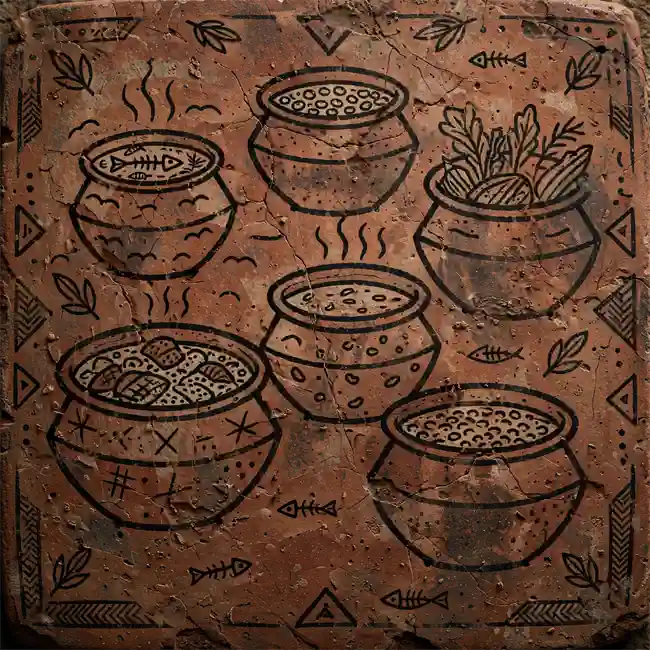
🛕 📜 The Storyteller’s Intro: 5,000 Years of Ancestral Flavors
Hey friend, imagine this. It’s 2600 BCE. No cookbooks. No gas stove. Just a smoky courtyard in Mohenjo-daro, a handmade black-and-red clay pot simmering slowly over a low dung-and-wood fire, and a scent that could make you stop in your tracks. That, my friend, is where our story begins.
The Harappan Civilization, also known as the Indus Valley Civilization, isn't just one of the oldest urban cultures in the world - it's arguably the most organized, the most deliciously mysterious one. We are talking about 5,000 years ago.
• The timeline that blows your mind: Archaeologists break it down into three delicious layers:
◦ Early Harappan Phase (3300–2600 BCE): This is the prep time. Small farming villages in Balochistan and along the Indus floodplain started experimenting. They domesticated wheat, barley, and zebu cattle. They learned that a round-bottomed pot cooks more evenly than a flat one.
◦ Mature Harappan Phase (2600–1900 BCE): The golden age of flavor. This is when the big cities - Mohenjo-daro, Harappa, Dholavira, Lothal, Rakhigarhi - exploded with urban planning, Great Baths, and seriously advanced kitchens with raised brick hearths, private wells, and dedicated grinding areas.
◦ Late Harappan Phase (1900–1300 BCE): The slow simmer down. Climate shifts happened, rivers moved, but the people carried their pots, seeds, and broth-making wisdom eastward toward the Ganges, laying the foundation for what we now call Indian home cooking.
• Why clay-pot broths were everything: The Harappans didn't have pressure cookers. What they had was better: time, patience, and the perfect clay. Their black-and-red ware and perforated jars were engineered for low-and-slow cooking. The porous clay sweats slightly, self-basting the stew inside. The low heat breaks down tough millet, hardy pulses, and fibrous wild greens into creamy, gut-healing broths. It was nutrition, medicine, and community in one pot.
• A city that cooked together: Unlike Egypt with pharaohs or Mesopotamia with kings, Harappan cities had no grand palaces. Food was more egalitarian. Excavations show almost every house had a kitchen. The Great Granary of Mohenjo-daro wasn't just for storage; it was for communal resilience. The broth pot was the social media of its day. You shared it with neighbors, you fed your family, you left an offering near the hearth.
• The flavor fingerprint: Think earthy, smoky, sour, and subtly hot. No chili - chili came from the Americas much later. Their heat came from black pepper from the Malabar coast, long pepper, mustard seeds, and ginger-like rhizomes. Their sourness came from tamarind, dried mango powder (amchur's ancient ancestor), and curd. Their depth came from slow-cooked lentils, sesame oil, and roasted barley.
🧱 What Made Harappan Kitchens So Advanced?
• Every house had a U-shaped chulha (hearth) made of bricks, designed to hold 2-3 clay pots at once.
• They had dedicated grinding stones for millet and barley flour, and even early versions of the mortar and pestle for spice blends.
• They had private wells and sophisticated drainage, which meant they could wash grains properly and manage cooking wastewater - a luxury even in Europe 3,000 years later.
• Carbonized remains from pots found in Farmana and Harappa prove they cooked with a technique we still use: bhunao, then simmer. Sauté aromatics first, then add liquid and slow-cook for hours.
📜 Iconic Excavated Menus: From Clay Tablets to Harappan Hearths
We don't have clay tablets with recipes like Mesopotamia, but we have something even cooler: the pots themselves. Archaeobotanists have literally scraped the insides of 4,500-year-old cooking vessels and found the ghosts of ancient meals. Here are the star menus that have been scientifically identified:
🍲 The Seven Sacred Stews of the Indus
• Kharif Millet & Sour Sorrel Broth (Kodo-Khatta Saag): Found via carbonized seeds of kodo millet (Paspalum scrobiculatum) and sorrel leaves at Rakhigarhi. This was a monsoon-season daily staple. Slightly sour, slightly nutty, incredibly cooling. Think of it as the ancient detox soup.
• The Lothal Fisherman's Clay-Pot Jhol (Samudra Tunga Jhol): Lothal was a port city. Fish bones, fishhooks, and tamarind seeds were found in the same kitchen context. A light, tamarind-tangy broth with river and sea fish, mustard seeds tempered in sesame oil. The ancestor of Bengali macher jhol.
• Mash & Barley Hearty Porridge-Stew (Mash-Yava Kshara): The most common find across Harappa. Black gram (urad dal), barley, and winter melon. Slow-cooked until creamy, finished with rock salt and ghee from zebu cows. This was the original comfort food for laborers building the city walls.
• The Dholavira Desert Gourd & Pulse Stew (Tumba-Kulatha Kadha): Dholavira is in the Rann of Kutch, arid and harsh. They survived on horse gram (kulatha) and bitter bottle gourd. The trick? They roasted the gourd first to remove bitterness, then stewed it for hours with horse gram and cumin. A protein bomb for desert life.
• Mohenjo-daro's Great Bath Herbal Lentil Broth (Snanaushadhi Dal): Near the Great Bath, archaeologists found pots with traces of mung beans, holy basil (tulsi), and turmeric. This wasn't everyday food. This was a purifying, post-bathing broth served during ritual gatherings. Mild, golden, healing.
• Wild Jujube & Sesame Sweet-Sour Broth (Ber-Tila Kanji): Carbonized ber (Indian jujube) seeds are everywhere. Mixed with sesame paste and a touch of jaggery from wild sugarcane, this sweet-sour broth was served to children and elders. A Harappan dessert-soup.
• The Banawali Buffalo & Barnyard Millet Stew (Mahisha-Shyama Mamsa): Evidence of zebu and buffalo butchery marks plus barnyard millet from Haryana. This was the feast pot - slow-braised meat with tough millets, black pepper, and dried ginger for winter festivals.
🌿 The Spice Box They Left Behind
• No Harappan kitchen was without: turmeric (found in dental calculus!), ginger/galangal, garlic, mustard seeds, cumin, black pepper, long pepper, sesame seeds, and asafoetida-like resins.
• They used salt from the salt range and from the Rann, and they made curd daily - pot after pot of curd jars have been found, proving fermentation was central.
• Oil was always sesame (til) oil, never olive. It has a high smoke point, perfect for clay-pot tempering.
🗺️ Indus Valley Ancient Culinary Tourism: Mapping Flavors to Historic Landscapes
If you want to taste history, you have to walk where they cooked. The Harappan world wasn't one city; it was a 1.5 million sq km flavor map stretching from Afghanistan to Gujarat.
• Mohenjo-daro, Sindh, Pakistan - The Mother Kitchen: Walk the grid-planned streets. The kitchens here are still visible - brick platforms with ash marks. The best way to honor it today is to eat Sindhi-style sai bhaji near the site, a slow-cooked spinach and lentil stew that is a direct descendant of their saag broths. The museum here displays the actual cooking pots. You can see the soot on the bottom.
• Harappa, Punjab, Pakistan - The Granary Trail: This is where the famous granaries were found. Visit in winter when they cook saag and makki di roti in nearby villages in clay pots exactly like their ancestors. You will see the same round-bottomed handi.
• Dholavira, Gujarat, India - The Desert Resilience Stop: A UNESCO World Heritage site in the white desert. The most cinematic Harappan city. The culinary tourism here is about survival food. Local Kutchi communities still make bajra khichda and horse gram stew in black clay pots. Stay for a night and eat with them.
• Lothal, Gujarat, India - The Port City Seafood Experience: Lothal had the world's earliest dockyard. The food tourism here is all about the sea. The nearby fishing villages still cook fish in sour tamarind clay-pot curries that mirror the Lothal Fisherman's Jhol. Go at sunrise when the boats come in.
• Rakhigarhi, Haryana, India - The DNA Kitchen: The largest Harappan site and where they recently sequenced Harappan DNA. The modern villages around it are still agricultural. They cook kodo millet and jowar broths in the fields. You can join a farm-to-clay-pot experience where you grind millet on a saddle quern just like they did.
👨👩👧👦 How They Ate - The Culture of Eating
• Eating was done sitting on the floor around a shared pot, not on individual plates. Big communal bowls have been found.
• They used their hands and pieces of flatbread made from barley and wheat to scoop up stew.
• No spoons made of metal have been found for daily eating, but wooden ladles and terracotta spoons were common for serving.
• Houses had separate areas for de-husking grains, which means women likely managed a sophisticated kitchen system with specialized roles - one for grinding, one for fermentation, one for slow-cooking.
🚣 The Indus & Ghaggar-Hakra Sovereignty: Riverbed Agriculture
The Harappan broth would be nothing without its rivers. Forget the Nile for a second; the real magic was the Indus and its lost sister, the Ghaggar-Hakra (identified by many as the mythical Saraswati).
• The Indus Lifeline: The annual Indus flood was predictable and generous. It left behind alluvial silt that was perfect for winter crops like wheat and barley. Those grains became the thickener for almost every broth. The river also provided freshwater fish, turtles, and reeds whose roots went into stews.
• The Ghaggar-Hakra Breadbasket: Satellite imagery shows this mighty river once flowed parallel to the Indus, through modern Haryana and Rajasthan. Most Harappan settlements - over 60% - are on its dried bed. It was less violent than the Indus, perfect for summer millets like jowar, bajra, and kodo. This is why their broths are millet-heavy, not just wheat-heavy. Millets are climate-smart, need little water, and thrive in heat.
• Seasonal Eating Was Law:
◦ Summer (Grishma): Light broths with buttermilk, bottle gourd, and barnyard millet to stay cool.
◦ Monsoon (Varsha): Sour sorrel and fermented millet kanji to fight humidity and aid digestion.
◦ Winter (Hemanta): Heavy horse gram, black gram, and meat stews with ghee and long pepper to generate warmth.
• They were masters of storage: Granaries weren't just for show. They stored millet and barley in huge terracotta bins sealed with clay and cow dung, which acted as a natural pesticide. This meant they could make broth year-round, even in lean months. Food security = civilization.
🏜️ Thar Desert & Arabian Sea Trade Route Banquets: Caravan Luxuries
Harappans were not isolated. They were the ultimate traders. Their food tells the story of caravans and ships.
• The Desert Caravan Flavor Exchange: Through the Thar and into Balochistan, caravans of bullock carts carried sesame oil, turmeric, and dried ber fruits to the west (Mesopotamia), and brought back cumin from Afghanistan and dried dates from Oman. Imagine a banquet in Dholavira after a caravan arrived: horse gram stew suddenly elevated with sweet Omani dates and aromatic Afghan cumin.
• The Lothal to Mesopotamia Sea Route: Lothal's dockyard traded with Sumer. Sumerian texts mention "Meluhha" - the Harappan land - as a source of exotic foods. They exported black pepper, sesame, and peacocks. In return, they got ideas. The Sumerians loved sour stews, which may have inspired the Harappan use of tamarind and curd to sour their broths. It was a two-way flavor conversation across the Arabian Sea.
• Banquet Culture: While daily life was egalitarian, feast debris shows that on full moons or harvest festivals, they held large community feasts near the citadel. Hundreds of identical bowls have been found stacked in one place. The menu for such banquets? Likely the buffalo and millet stew, lots of barley beer alternative like fermented millet kanji (non-alcoholic, tangy, probiotic), and sweet ber-sesame balls.
• How luxury tasted: For a common family, luxury was ghee. For a rich merchant in Mohenjo-daro, luxury was black pepper and long pepper from the deep south, turmeric for golden color, and a fresh pot of curd to swirl into the final broth. It was subtle, not flashy. The Harappan idea of luxury was depth, not heat.
👋 Ancient Civilization FAQ: Unlocking Palace Kitchen Mysteries
Q1.How do we actually know what Harappans cooked if they left no written recipes?
Great question. They left no recipe tablets, but they left something more honest: chemistry. We use four methods - archaeobotany (identifying carbonized seeds), zooarchaeology (studying butchered bones), lipid residue analysis (scraping fat molecules from inside pots), and dental calculus analysis (finding turmeric and ginger starch in their fossilized plaque!). In Farmana, researchers found starch grains of wheat, ginger, and turmeric stuck inside cooking pots. That's a recipe written in molecules, not ink.
Q2.Did Harappans eat meat or were they vegetarian like many modern Indians in the region?
They were not strictly vegetarian. Zooarchaeological evidence from sites like Harappa and Balakot shows they ate zebu cattle, buffalo, goat, sheep, fish, and even chicken (the red junglefowl). However, their diet was heavily plant-based. Meat was likely for feasts and winter. The daily pot was almost always millet and pulses. Think 80% plant, 20% meat, which is actually the modern definition of a sustainable diet.
Q3.If there was no chili, how did their food have any kick?
This is my favorite myth-buster. India had serious heat long before chili arrived from Mexico in the 16th century. Their heat came from black pepper (Piper nigrum), long pepper (Piper longum), mustard seeds, and fresh ginger-type rhizomes. Long pepper is especially interesting - it's hotter, more complex, and slightly sweet compared to black pepper. Combined with tempering mustard seeds in hot sesame oil, you get a beautiful, aromatic heat that doesn't burn, it warms.
Q4.Can I recreate a Harappan broth in a modern kitchen without an ancient clay pot?
Absolutely, and you should. Use a modern unglazed earthen handi or a Dutch oven as a substitute. The key principles are the same: low heat, long time, one pot. Soak your millets overnight, temper mustard seeds and cumin in sesame oil first, then add your pulses, chopped gourds or leafy greens, water, turmeric, and a little tamarind or curd at the end for sourness. Don't rush it. A true Harappan broth needs at least 90 minutes on the lowest flame. That's where the magic happens.
🧠 Final Thoughts: The Timeless Allure of Antique Gastronomy
So here we are, 5,000 years later, still stirring a pot. The Harappan clay-pot broth isn't just old food; it's a philosophy. It teaches us that great flavor doesn't need complicated techniques or fancy equipment. It needs respect for the grain, respect for the fire, and respect for time.
They built cities with perfect drainage and no slums, they traded with the world without conquering anyone, and they cooked in a way that nourished everyone equally. Their broths were sustainable before sustainability was a hashtag. Millets that need little water, pulses that fix nitrogen in the soil, gourds that grow wild, and spices that are also medicine.
The next time you soak some lentils or slow-cook a stew on a lazy Sunday, remember the hands in Mohenjo-daro that did the same. The pot is different, but the steam, the smell, and the love are exactly the same. This is just the beginning, friend. The full, hands-on recipes with exact ancient-meets-modern measurements are coming next.
Stay curious, keep that pot simmering.
🏛️ Credit to the Keepers of the Culture (The Legacy)
With deepest gratitude and reverence to the keepers of this timeless knowledge. This content is built on the tireless work of the Archaeological Survey of India, the Department of Archaeology and Museums Government of Pakistan, the Harappa Archaeological Research Project, and scholars like Sir John Marshall, Mortimer Wheeler, and modern archaeobotanists Dr. Anil Pokharia and Dr. Arunima Kashyap, whose analysis of starch grains and carbonized seeds brought these ancient menus back to life.
We honor the Indus communities of Sindh, Punjab, Gujarat, Haryana, and Balochistan - the true inheritors of the Harappan legacy - who still cook in clay, farm millets, and keep the hearth alive. And to the river Indus and the sacred Ghaggar-Hakra herself, for feeding a civilization for 2,000 years.
This is not our recipe to own. It is a heritage to remember and respect.
🏛️🍲 Recreating the Lost Clay-Pot Goat Stew of the Indus Valley
👉 Unlock Harappan’s Exquisite Clay-Pot Broths & Stews
| 🌐 🏛️🍲 < Back | 🛕 🍖 < Previous | Next > 🍯 🛕 |