
🏠 Home > 🗺️ Recipes > 🏛️🍲 Clay-Pot Broths & Stews > 🛕 Harappan: Clay-Pot Broths & Stews Recipes > 🏛️🍲 1.Harappan Handi Aja-Rasa (Ancient Indus Earth-Potted Goat Broth)
🏛️🍲 Recreating the Lost Clay-Pot Goat Stew of the Indus Valley
Published by Supakorn | Updated: July 2026
🛕 🏛️ Ancient Civilization Origins: Indus Valley (Modern-Day Punjab & Sindh)
🏺 The Storyteller’s Intro: 5,000 Years of Ancestral Flavors
Picture this: it’s roughly 2500 BCE. You are standing in the bustling, meticulously planned brick streets of Mohenjo-Daro or Harappa. The air doesn't smell like smog or modern exhaust—it smells of baked terracotta, river mud, burning wood, and something so insanely mouthwatering that your feet start walking toward it on autopilot. Inside a sun-baked mud-brick home, a thick terracotta vessel rests over an open flame, whispering a gentle simmer. Inside that pot is a deep, rich, herbal goat broth that has been bubbling away for hours.
When we think of prehistoric or ancient food, we often imagine bland, boiled meat eaten purely for survival. But the Harappan people were sophisticated urban planners, master traders, and, as archeology continues to prove, absolute culinary geniuses. They didn't just cook to survive; they understood flavor pairing, low-and-slow heat extraction, and the magic of earthenware cooking thousands of years before western culinary schools were ever a thought.
Bringing this recipe into your home isn't just about making dinner. It’s an exercise in time travel. You are about to taste the exact earthy, aromatic comfort that warmed humanity five millennia ago. Grab a comfy seat, because we are going to resurrect a legend together.
🌏 The Global Value of Antique Heritage
Why does cooking a 5,000-year-old broth matter in a world full of air fryers and instant meals? Because food is the only living artifact we can physically consume. When you look at an ancient pottery sherd in a museum, you are looking at something frozen behind glass. But when you cook the exact combination of wild turmeric, mustard seeds, smashed garlic, and grass-fed goat meat inside a porous clay vessel, you break down the glass wall. You experience the exact same sensory reaction that an Indus Valley craftsman experienced after a long day of building grain storage facilities.
The Indus Valley Civilization (Harappan Culture) was one of the three great early cradles of human civilization, alongside Egypt and Mesopotamia. Yet, unlike Egypt’s grand pyramids built for the dead, Harappan architecture focused on public baths, sophisticated drainage systems, and thriving domestic kitchens built for the living. Honoring their food legacy reminds us that humanity's search for comfort, warmth, and rich flavor is a universal thread that binds us across thousands of years.
🔮 The Culinary Resurrection
For a long time, the exact diet of the Harappans was buried beneath layers of silt and time. But thanks to recent lipid residue analysis on excavated ceramic shards from sites like Farmana and Rakhigarhi, archeobotanists have unlocked the ancient spice cabinet. They found traces of turmeric, ginger, garlic, wild millets, and animal fats baked directly into the clay matrix of ancient pots.
This recipe is our modern resurrection of those archaeological discoveries. We aren't guessing randomly; we are piecing together chemical evidence, seasonal crop records, and regional livestock history to rebuild a dish that was almost erased from human memory. It’s a humble, deeply nourishing stew that relies on raw ingredients, natural heat, and the gentle mineral alchemy of unglazed clay.
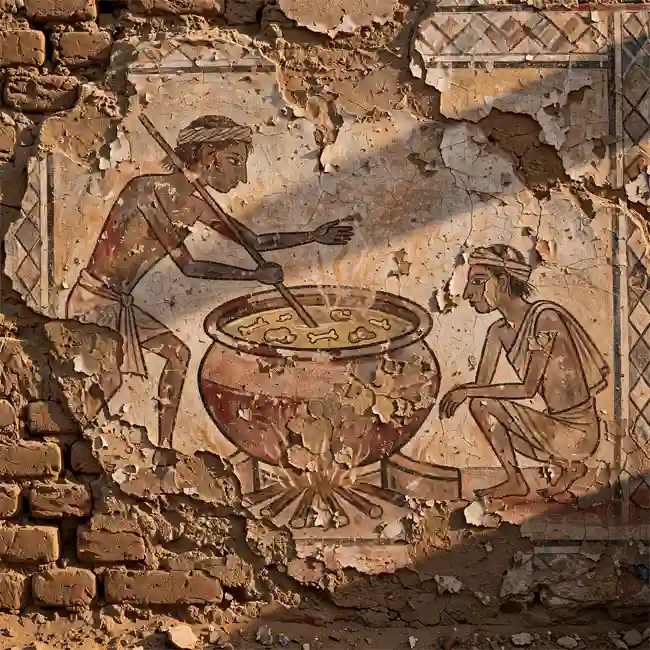
🍲 Recipe: Harappan Handi Aja-Rasa (Ancient Indus Earth-Potted Goat Broth)
📜 Legends Behind This Excavated Secret
According to regional folklore and archaeological interpretations, slow-cooked meat preparations were often reserved for communal gatherings, seasonal festivals, or winter solstice feasts in the Indus Valley. The goat was a prized domesticated animal, valued not only for its meat but for its sustainability in the semi-arid landscape surrounding the Indus River basin.
Local legends suggest that street vendors in ancient Harappa would embed large clay jars directly into hot ash beds near public plazas, letting the meat cook overnight. Travelers arriving from distant Mesopotamian trade routes would stop by these hearths to recharge with a hot bowl of golden broth served in disposable clay cups called kulhars. When you sip this broth today, you are partaking in a ancient hospitality ritual that sustained ancient world trade.
🌾 Ingredients & The Noble Pantry
• The Ancestral Staples
To cook like an ancient Harappan, you have to mentally step away from modern nightshades. That means no tomatoes, no chili peppers, and no potatoes! Those ingredients belonged to the Americas and wouldn't reach Asia for another 4,500 years. Instead, the heat in ancient Harappan cooking came from black pepper, long pepper, mustard seeds, and raw ginger. The rich yellow hue came from wild turmeric roots grown along the riverbanks, and the richness came from toasted sesame oil or rendered goat fat.
• Modern Substitutes
If you can't source every raw ancient ingredient, don't worry! You can easily make this dish using everyday pantry items. Swap fresh wild turmeric root for standard ground organic turmeric powder. If you don't have long pepper (pippali), coarse whole black peppercorns work brilliantly. For the meat, bone-in goat shoulder or leg is ideal, but bone-in lamb shoulder makes a fantastic and accessible alternative. If you don't own an unglazed clay pot, a heavy Dutch oven or cast-iron pot will work, though adding a pinch of food-grade terracotta clay powder or simply cooking slow will help replicate that natural earthy undertone.
• Ancient Proportions
◦ 800 grams bone-in goat shoulder or shank, cut into medium chunks
◦ 1.5 liters fresh spring water
◦ 3 tablespoons unrefined cold-pressed sesame oil or mustard oil
◦ 30 grams fresh ginger, roughly bruised
◦ 20 grams fresh turmeric root, crushed (or 1.5 teaspoons ground turmeric)
◦ 6 cloves whole garlic, lightly smashed
◦ 1 tablespoon whole black peppercorns, coarsely cracked
◦ 1 teaspoon brown mustard seeds
◦ 1 teaspoon whole cumin seeds
◦ 1 small bunch fresh coriander leaves with tender stems attached
◦ 1.5 teaspoons coarse natural sea salt or rock salt (adjust to taste)
🕯️ The Chef’s Ancient Ritual
1.Preparing the Clay Vessel: If you are using a new unglazed clay pot, soak it in cold water for at least 30 minutes before cooking. Dry the outside thoroughly. Place the pot on your stovetop over a heat diffuser on the lowest possible flame to prevent thermal shock.
2.Tempering the Ancient Fats: Add the unrefined cold-pressed sesame or mustard oil to the warm clay pot. Allow it to heat slowly until tiny wisps of steam rise. Toss in the brown mustard seeds and cumin seeds. Listen closely—when they begin to crackle and pop, the oil is fully infused with their aromatics.
3.Releasing the Aromatics: Add the smashed garlic cloves, bruised fresh ginger, crushed turmeric, and cracked black peppercorns directly into the hot oil. Stir continuously with a wooden spoon for about 2 minutes until your kitchen fills with a warm, spicy, woody aroma.
4.Searing the Meat: Raise the heat to medium-low and add the bone-in goat chunks to the pot. Searing the meat in the spice-infused oil seals in the natural juices and browns the surface. Turn the pieces frequently for 8 to 10 minutes until the edges are lightly golden.
5.The River Water Infusion: Pour in the fresh spring water, scraping the bottom of the clay pot gently to lift any delicious caramelized bits stuck to the clay. Add the coarse sea salt and half of the fresh coriander stems.
6.The Sacred Slow Simmer: Bring the liquid to a very gentle boil. Once bubbling, reduce the heat to the lowest setting, cover the pot with its clay lid, and seal the edges with a simple paste made of flour and water if you want to perform a traditional sealed dum cook. Let it simmer undisturbed for 2 to 2.5 hours.
7.Unveiling the Legacy: Carefully remove the lid. The meat should be tender enough to fall off the bone with a spoon, and the broth should be deep gold with a silky layer of aromatic oil on top. Scatter the remaining fresh coriander leaves over the broth just before serving.
🔥 Secrets of the Ancestral Hearth
◦ Respect the Clay Shock: Never place a cold clay pot directly on high heat, and never pour cold liquid into a scalding clay pot! Clay expands and contracts; sudden temperature swings will crack your cooking vessel instantly. Always build heat gradually.
◦ Don't Rush the Bones: Goat meat requires time for the collagen and marrow to dissolve into the liquid. If your broth feels thin, let it simmer uncovered for an extra 20 minutes to reduce and concentrate the flavors.
◦ Embrace the Bitterness: Authentic Harappan flavors balance earthiness, heat, and slight bitterness from mustard seeds and ginger. Resist the urge to add sugar or acidic citrus like lemons—citrus trees as we know them today weren't part of this specific ancient broth profile.
◦ Fat is Flavor: Do not trim off all the natural goat fat before cooking. The lipid layer acts as a natural seal during the long simmer, keeping the meat moist and capturing the volatile essential oils of the spices.
🤨 Ancient Civilization Origins FAQ
Q1: Can I make this Harappan goat broth in an instant pot or pressure cooker?
A: Absolutely! While you will lose the subtle mineral aroma that comes from cooking in genuine earthenware, a pressure cooker is a great modern time-saver. Cook on high pressure for 35 to 40 minutes, followed by a natural pressure release.
Q2: Why are there no onions or tomatoes in this recipe?
A: Tomatoes originated in South America and were introduced to Asia only in the 16th century CE. While wild alliums existed, archaeological evidence points toward heavy reliance on wild ginger, garlic, and brassica seeds for primary flavoring rather than bulb onions.
Q3: What should I serve alongside this broth?
A: To stay historically accurate, serve this broth with flatbreads made from barley, millet, or whole wheat flour, or enjoy it over a bowl of steamed coarse red rice or sorghum grain.
🏺 The Taste of Archeology
Steaming hot, richly spiced, and infused with the deep, mineral warmth of baked clay, this broth tastes unlike anything you can order at a standard restaurant. The bite of cracked black pepper warming your throat, combined with the buttery richness of dissolved goat marrow, creates a sensation that feels instantly grounding. It’s comforting, rustic, and intensely satisfying—proof that great food doesn't need artificial additives or complicated processing. It just needs patience, heat, and good earth.
🌾 Final Thoughts: Bringing Antiquity to Your Modern Table
Cooking historical recipes isn't about being a purist or turning back the clock forever. It’s about slowing down in a fast-paced world and reconnecting with the fundamental elements of human life: fire, earth, water, and spice. When you take the time to prepare this Harappan clay-pot goat broth, you aren't just feeding your family; you are participating in a story that began 5,000 years ago along the banks of the Indus River.
Try making this dish on a chilly evening when you want something deeply restorative. Let the clay pot do the work while you relax, and enjoy the magical aroma filling your house.
🔱 The Golden Hook (The Sacred Union)
Are you ready to become a guardian of forgotten culinary secrets? Don't let five millennia of human wisdom fade into dusty history books! Try cooking this ancient Harappan broth in your own kitchen this week, share a photo of your bubbling earthenware pot with your friends, and help us keep the sacred flavors of our ancestors alive for generations to come.
📜 Credit to the Keepers of the Culture (The Legacy)
• Honoring Our Culinary Past:
"This recipe is inspired by the ancient culinary archives and archaeological ceramic residue analyses of the Indus Valley Civilization. We have carefully adapted the measurements for modern kitchens while preserving its sacred ancestral soul."
| 🛕 🏛️🍲 < Back |