
🏠 Home > 🗺️ Recipes > 🏛️🍲 Clay-Pot Broths & Stews > 🧱 Ancient Egyptian: Clay-Pot Broths & Stews Recipes
🧱 🏛️🍲 Ancient Egyptian: Clay-Pot Broths & Stews Recipes
Published by Supakorn | Updated: July 2026
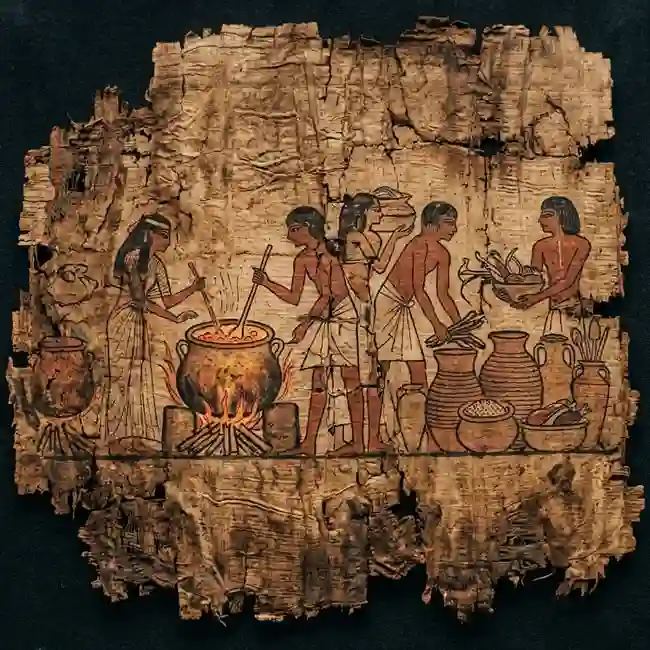
🧱 📜 The Storyteller's Intro: 5,000 Years of Ancestral Flavors
Every civilization leaves behind stories. Some are carved into towering monuments, others are painted across temple walls, while many survive through something far more comforting—the meals that once gathered families around warm clay hearths.
Ancient Egypt, flourishing for over five millennia along the mighty Nile River, created one of humanity's longest continuous culinary traditions. Long before modern kitchens existed, Egyptian households quietly mastered slow cooking inside handcrafted clay pots, transforming humble grains, vegetables, herbs, legumes, and meats into nourishing broths and satisfying stews.
Although pyramids often steal the spotlight, everyday kitchens reveal an equally fascinating chapter of history. Archaeologists have uncovered cooking vessels blackened by ancient fires, food offerings sealed inside royal tombs, storage jars preserved beneath desert sands, and artistic reliefs depicting bustling kitchens preparing meals for workers, priests, nobles, and pharaohs alike.
Clay-pot cooking became one of the defining techniques of Ancient Egyptian cuisine because it required little fuel while maximizing flavor. Slow simmering softened grains, tenderized tougher cuts of meat, and allowed fragrant herbs from the Nile Valley to blend naturally into hearty meals.
The culinary history of Ancient Egypt can generally be viewed through three remarkable eras.
🏺 Early Dynastic Egypt (c. 3100–2686 BCE)
The unification of Upper and Lower Egypt established organized farming along the Nile. Villages relied heavily on fertile floodplains where emmer wheat, barley, onions, garlic, lentils, chickpeas, and leafy greens flourished.
Clay cooking vessels became household essentials, allowing families to prepare nourishing one-pot meals that could feed many people while conserving precious firewood.
Many of the earliest community recipes likely emerged during this period, laying the foundations for centuries of Egyptian home cooking.
👑 Old and Middle Kingdom Egypt (c. 2686–1650 BCE)
As pyramid construction reached its height, agriculture expanded dramatically.
Workers required filling meals capable of sustaining long hours under the Egyptian sun. Kitchens attached to royal estates, temples, and work camps produced enormous quantities of soups, porridges, vegetable stews, and meat broths.
Written records and artistic depictions suggest remarkable organization inside these ancient kitchens, where specialized cooks prepared food using techniques refined over generations.
The Nile's annual flooding continued to renew fertile farmland, making diverse ingredients available throughout much of the year.
⚱️ New Kingdom Egypt (c. 1550–1070 BCE)
Egypt entered an era of international influence.
Trade routes connected the Nile Valley with Nubia, the Levant, Sinai, Punt, and regions surrounding the eastern Mediterranean.
Foreign herbs, aromatic spices, fruits, and luxury ingredients gradually entered elite kitchens, enriching traditional clay-pot recipes without replacing their distinctly Egyptian character.
Royal banquets became increasingly elaborate, yet ordinary families still relied upon comforting clay-pot broths and stews that had nourished generations before them.
Throughout every era, the humble clay pot remained one of Egypt's greatest culinary inventions.
📜 Iconic Excavated Menus: From Clay Tablets to Pharaoh Tombs
Archaeological discoveries continue to reveal fascinating glimpses into Ancient Egyptian cuisine. Rather than surviving as complete modern recipes, these dishes are reconstructed through food residues, tomb offerings, kitchen equipment, temple inscriptions, artistic depictions, storage jars, and preserved ingredients.
Some of the most recognizable foods connected with Ancient Egyptian culinary history include:
🍲 Lentil Stew
One of the oldest documented comfort foods of the Nile Valley.
Simple, nourishing, and practical, lentil stew was likely enjoyed by laborers, temple workers, and farming communities alike.
🧅 Onion and Garlic Broth
Onions and garlic appear constantly throughout Egyptian archaeological discoveries.
These flavorful vegetables were valued not only for taste but also for their importance in everyday nutrition and religious symbolism.
🌾 Emmer Wheat Porridge
Before modern wheat became widespread, emmer served as Egypt's primary grain.
Cooked slowly inside clay vessels, it formed hearty porridges and thick broths that sustained countless generations.
🌿 Chickpea and Herb Stew
Legumes provided reliable plant protein throughout Ancient Egypt.
Combined with aromatic herbs gathered from fertile riverbanks, chickpeas became the foundation of satisfying communal meals.
🥜 Fava Bean Stew
Broad beans played an important role in Egyptian agriculture.
Slow-cooked until creamy, they created rich stews suitable for both rural households and urban communities.
🐟 Nile Fish Clay Stew
The Nile offered abundant freshwater fish.
Clay-pot cooking gently preserved delicate textures while allowing vegetables and herbs to enrich the broth naturally.
🦆 Duck and Vegetable Pot
Waterfowl frequently appear in tomb paintings.
Roasted or simmered inside clay vessels, duck represented a more luxurious meal enjoyed during festivals and special occasions.
🐐 Goat and Herb Broth
Goats adapted well to Egypt's changing landscapes.
Their meat often appeared in ceremonial feasts as well as practical countryside cooking.
🥬 Mixed Vegetable Clay Pot
Seasonal vegetables harvested from fertile floodplains created colorful one-pot meals that reflected the rhythm of the Nile itself.
🍵 Temple Offering Broths
Many food offerings placed inside tombs included carefully prepared soups and stews intended to nourish the deceased throughout eternity.
These ceremonial dishes reveal how deeply food intertwined with Egyptian spirituality.
Each archaeological discovery adds another piece to the remarkable culinary puzzle of Ancient Egypt, allowing historians to reconstruct forgotten flavors from thousands of years ago.
🗺️ Ancient Culinary Tourism: Mapping Flavors to Historic Landscapes
Following Ancient Egyptian food history is like embarking on a journey through one of the world's greatest open-air museums.
Each region preserves unique connections between landscape, agriculture, and traditional cooking.
🚶 Explore Ancient Memphis
Once the political heart of Egypt, Memphis stood beside fertile farmland that supported thriving kitchens supplying royal courts and surrounding communities.
Visitors today can imagine the bustling markets once overflowing with grains, vegetables, livestock, and freshly harvested herbs.
🏺 Wander Through Saqqara
The famous necropolis preserves remarkable tomb paintings illustrating food preparation, farming, hunting, fishing, and ceremonial banquets.
These artworks remain invaluable sources for reconstructing ancient culinary traditions.
☀️ Discover Luxor
Formerly ancient Thebes, Luxor preserves magnificent temples whose reliefs depict offerings presented to gods and pharaohs.
Many scenes include baskets overflowing with vegetables, bread, poultry, fish, fruits, and prepared dishes.
🌴 Visit Aswan
The southern Nile introduces visitors to landscapes where river life blended with desert environments.
Trade connections brought unique ingredients into Egyptian kitchens while maintaining traditional cooking practices.
⚱️ Experience Museum Collections
Museums throughout Egypt and around the world display preserved bread, cooking vessels, grinding stones, storage jars, baskets, and food offerings that illustrate everyday culinary life far beyond royal banquets.
Food history often tells the most human stories.
🚣 The Fertile Crescent & Nile Sovereignty: Riverbed Agriculture
Although Ancient Egypt developed independently, it shared agricultural innovations with neighboring civilizations across the broader Near East.
The Nile remained Egypt's greatest culinary treasure.
Each annual flood deposited rich black silt across surrounding farmland, naturally renewing soil fertility without artificial fertilizers.
This extraordinary environmental cycle allowed farmers to harvest remarkable varieties of crops.
Common agricultural products included:
• 🌾 Emmer wheat
• 🌾 Barley
• 🥔 Lentils
• 🥜 Fava beans
• 🌿 Chickpeas
• 🧅 Onions
• 🧄 Garlic
• 🥬 Leafy vegetables
• 🥒 Cucumbers
• 🍈 Melons
• 🌿 Fresh herbs
The predictable rhythm of the Nile encouraged stable farming communities that could develop increasingly sophisticated cooking traditions over thousands of years.
Clay-pot broths perfectly reflected this agricultural abundance by combining seasonal harvests into wholesome meals requiring minimal waste.
🏜️ Oasis & Desert Trade Route Banquets: Caravan Luxuries
While the Nile nourished Egypt's heartland, vast desert routes connected the civilization with distant cultures.
Caravans crossed enormous stretches of sand carrying valuable goods between oasis settlements and international trading partners.
These trade networks introduced Egyptian kitchens to fascinating new ingredients while expanding culinary creativity.
Among the prized imports were:
• 🌿 Aromatic herbs
• 🌰 Nuts
• 🍇 Dried fruits
• 🌱 Fragrant seasonings
• 🌾 Specialty grains
• 🍯 Honey products
• 🌴 Date varieties
Oases became vital rest stops where travelers exchanged not only merchandise but also cooking techniques, agricultural knowledge, and regional food traditions.
Even so, the comforting clay-pot stew remained unmistakably Egyptian, adapting new ingredients without losing its local identity.
👋 Ancient Civilization FAQ: Unlocking Palace Kitchen Mysteries
Q1.Why were clay pots so important in Ancient Egypt?
Clay vessels distributed heat gently, conserved fuel, retained moisture, and produced deeply flavored meals that could simmer for long periods.
Q2.Were clay-pot broths eaten only by royalty?
No.
Archaeological evidence suggests that clay-pot cooking was widespread across Egyptian society, from farming villages and worker settlements to temples and royal households.
Q3.Why do archaeologists know so much about Egyptian food?
Egypt's dry climate preserved remarkable organic remains, while tomb paintings, inscriptions, cooking vessels, storage jars, and food offerings provide unusually rich evidence compared with many ancient civilizations.
Q4.Why are Ancient Egyptian recipes still fascinating today?
They demonstrate how sustainable agriculture, seasonal ingredients, simple cooking methods, and community-centered meals created culinary traditions capable of lasting for thousands of years.
🧠 Final Thoughts: The Timeless Allure of Antique Gastronomy
Ancient Egyptian clay-pot broths and stews represent far more than forgotten meals.
They tell stories of fertile riverbanks, patient farmers, skilled potters, dedicated cooks, bustling marketplaces, sacred temples, royal palaces, and families gathering around shared fires at the end of long days.
Every excavated cooking vessel reminds us that history is not only preserved inside monuments but also inside ordinary kitchens where generations quietly perfected recipes using local harvests and timeless techniques.
As archaeologists continue uncovering new discoveries beneath Egypt's sands, our understanding of these remarkable culinary traditions continues to grow.
In the next chapter, we will journey deeper into the reconstructed recipes themselves, exploring how these legendary clay-pot broths and stews may once have been prepared five thousand years ago.
The kitchen of Ancient Egypt still has many secrets waiting to be rediscovered.
🏛️ Credit to the Keepers of the Culture (The Legacy)
This article respectfully celebrates the enduring culinary legacy of Ancient Egypt and acknowledges the generations of farmers, potters, cooks, artisans, priests, scribes, and historians whose contributions continue to illuminate one of humanity's oldest food traditions.
Modern archaeological research, museum conservation, historical scholarship, and ongoing excavations have helped preserve this remarkable heritage for future generations.
Rather than presenting mythology as historical certainty, this article embraces current archaeological understanding while honoring the cultural achievements of Ancient Egyptian civilization. Every newly studied artifact, preserved kitchen vessel, temple relief, and excavated settlement brings us one step closer to appreciating the remarkable ingenuity of the world's earliest culinary pioneers.
🏛️🍲 Unearthing the Sacred Lentil Stew of Egypt's Earliest Pharaohs
👉 Discover Secret Ancient Egyptian: Clay-Pot Broths & Stews
| 🌐 🏛️🍲 < Back | 🧱 🍖 < Previous | Next > 🍯 🧱 |