
🏠 Home > 🗺️ Recipes > 🏛️🍲 Clay-Pot Broths & Stews > 🧱 Ancient Egyptian: Clay-Pot Broths & Stews Recipes > 🏛️🍲 1.Pharaoh Era Lentil Clay-Pot Stew
🏛️🍲 Unearthing the Sacred Lentil Stew of Egypt's Earliest Pharaohs
Published by Supakorn | Updated: July 2026
🧱 🏺 Ancient Civilization Origins: Ancient Egypt
Long before towering pyramids dominated the horizon and magnificent temples honored kings and gods, the fertile lands surrounding the Nile River nurtured one of humanity's earliest and most remarkable civilizations. Nearly five thousand years ago, communities flourished along the riverbanks, transforming seasonal floods into thriving farms that produced grains, vegetables, herbs, and legumes unlike anywhere else in the ancient world.
Food was never merely about survival in Ancient Egypt. Every meal reflected harmony between nature, faith, family, and craftsmanship. Farmers observed the rhythms of the Nile, while cooks transformed simple harvests into nourishing dishes that sustained workers, priests, artisans, and royal households alike. Clay ovens glowed throughout villages, stone mills echoed with the grinding of grain, and humble earthen pots simmered beside warm hearths from sunrise until nightfall.
Among these treasured creations, lentil stews occupied a special place. Lentils were dependable, nutritious, and easy to preserve throughout changing seasons. Combined with onions, garlic, aromatic herbs, and carefully selected vegetables, they created comforting meals that could feed an entire household while requiring only modest ingredients.
Archaeological discoveries, ancient tomb paintings, surviving storage jars, and food offerings placed beside the deceased all suggest that slow-cooked stews formed an essential part of everyday Egyptian life. Although exact measurements rarely survived the passage of time, historians and culinary researchers have pieced together the traditions behind these remarkable dishes, allowing modern kitchens to experience flavors remarkably close to those enjoyed thousands of years ago.
The Pharaoh Era Lentil Clay-Pot Stew stands as a beautiful reflection of this enduring heritage. Its gentle simplicity reveals the wisdom of cooks who understood patience, balance, and the natural sweetness hidden inside everyday ingredients. Every slow-simmered spoonful tells a story far older than written recipes, carrying whispers from one of the world's greatest civilizations.
📜 The Storyteller's Intro: Five Millennia Beneath the Sacred Nile
Imagine the first rays of dawn stretching across the golden Nile. Fishermen guide their reed boats through calm waters while farmers prepare fertile fields enriched by the river's annual floods. Smoke rises gently from mud-brick homes where clay pots already rest over glowing hearths, releasing comforting aromas that drift through narrow village pathways.
Inside these homes, cooking begins long before the day's labor. Fresh onions are sliced with copper blades, garlic is crushed upon smooth stone mortars, fragrant herbs are gathered from nearby gardens, and dried lentils—carefully stored after the previous harvest—are rinsed before meeting warm water inside heavy clay vessels.
There are no printed recipes waiting beside the fire.
Instead, knowledge lives within memory.
Grandparents quietly guide younger hands. Mothers teach daughters how to recognize the perfect simmer simply by listening to the gentle bubbling inside the pot. Sons learn from fathers how to prepare fuel that burns steadily without scorching precious ingredients. Every family adds subtle touches shaped by local harvests, seasonal availability, and traditions carried across countless generations.
The meal itself becomes more than nourishment. It marks the rhythm of ordinary life that quietly supports an extraordinary civilization. While kings commission monuments destined to amaze future generations, humble kitchens preserve something equally valuable—the daily rituals that sustain communities year after year.
Today, fragments of pottery, preserved food remains, painted banquet scenes, and archaeological excavations allow us to glimpse these forgotten culinary traditions. Although centuries have separated us from those ancient cooks, their methods remain surprisingly familiar. Slow cooking, fresh ingredients, patient preparation, and respect for seasonal harvests continue to define comforting food even in modern kitchens.
Recreating this stew is therefore not an attempt to copy history perfectly. Rather, it is an invitation to appreciate the timeless wisdom of people who understood that extraordinary flavor often begins with ordinary ingredients prepared with remarkable care.
🌍 The Global Value of Antique Heritage
Ancient recipes possess a unique power that extends far beyond their ingredients. They preserve stories of migration, agriculture, craftsmanship, family traditions, and cultural identity that have survived through thousands of years despite changing empires and shifting landscapes.
Ancient Egypt occupies a particularly special place within world culinary heritage because its civilization left behind an exceptional archaeological record. Tomb murals illustrate farming, fishing, bread making, food preparation, harvesting, and ceremonial feasts with astonishing detail. Storage vessels reveal what households preserved for difficult seasons. Carbonized grains, dried legumes, and botanical remains recovered from archaeological sites continue to help researchers understand what ancient Egyptians cultivated and consumed.
Unlike many historical cuisines known only through legend, Egyptian food history can often be reconstructed through tangible evidence. Every excavation enriches our understanding of how early societies transformed local resources into sophisticated culinary traditions.
The humble lentil is one of history's greatest survivors. It nourished workers constructing monumental architecture, travelers crossing desert routes, temple communities devoted to religious life, and families gathering around evening fires after long days in the fields. Across thousands of years, this modest legume remained dependable because it was practical, nutritious, easy to store, and deeply satisfying.
Today, interest in ancestral cooking continues to grow around the world. Home cooks increasingly seek recipes that emphasize natural ingredients, traditional techniques, and meaningful connections to history. Rather than chasing complicated trends, many discover that ancient kitchens already understood the beauty of slow cooking, seasonal produce, and balanced flavors.
By preparing dishes inspired by civilizations like Ancient Egypt, we become participants in a much larger human story. We recognize that cooking has always been one of humanity's oldest forms of cultural preservation, quietly passing knowledge across generations long before libraries, printed books, or digital archives ever existed.
🔥 The Culinary Resurrection
Many ancient recipes vanished not because they lacked flavor, but because time scattered the people who once remembered them. Kingdoms rose and fell, languages evolved, trade routes shifted, and countless family traditions disappeared without written records. Yet history has an extraordinary way of leaving behind small clues for those willing to search.
Archaeologists uncover cooking vessels still bearing traces of ancient meals. Researchers analyze seeds preserved within sealed storage jars. Historians compare inscriptions, agricultural records, temple offerings, and household artifacts to understand how ordinary people prepared their daily food. Together, these discoveries allow forgotten culinary traditions to emerge once again.
The Pharaoh Era Lentil Clay-Pot Stew represents this remarkable process of culinary resurrection. Rather than claiming absolute historical perfection, it respectfully combines archaeological knowledge, historical research, surviving ingredients, and traditional cooking principles into a recipe that captures the spirit of Ancient Egyptian home cooking.
Its greatest strength lies in its simplicity. There are no extravagant ingredients or overly complicated techniques. Instead, every component serves a meaningful purpose, allowing the natural sweetness of vegetables, the earthy richness of lentils, and the gentle fragrance of herbs to develop slowly over steady heat.
This philosophy feels surprisingly modern. In an age filled with rushed meals and convenience foods, ancient cooking reminds us that patience itself can become an ingredient. Time softens lentils, deepens aromas, blends flavors, and transforms humble harvests into nourishing comfort.
Each pot prepared today becomes more than dinner. It becomes an act of historical appreciation—a quiet celebration of the anonymous cooks whose wisdom has echoed across five millennia. Their names may have faded into history, but the comforting warmth of their kitchen traditions continues to inspire modern tables around the world.
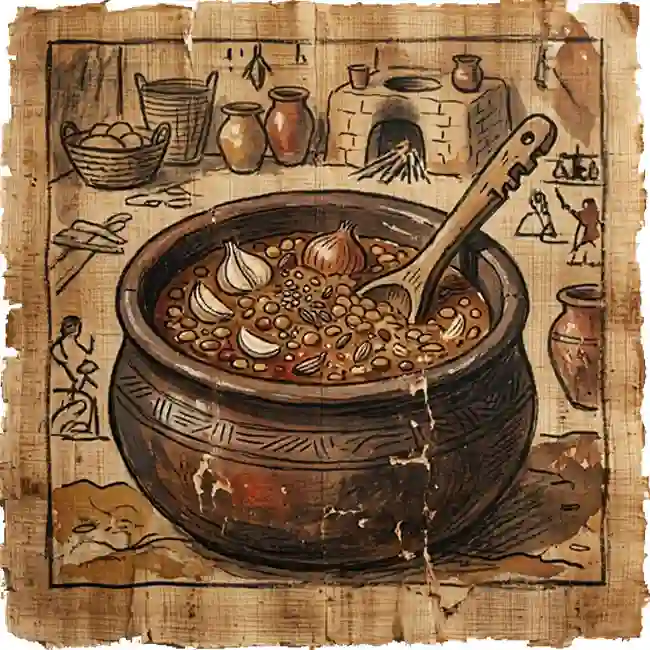
🍲 Recipe: Pharaoh Era Lentil Clay-Pot Stew
🏺 Legends Behind This Excavated Secret
Every ancient recipe begins with more than ingredients—it begins with a story.
Among the many settlements that lined the Nile thousands of years ago, families depended on recipes that could nourish many people using crops harvested from the fertile floodplains. Lentils quickly became one of the civilization's greatest culinary treasures because they stored well, cooked reliably, and provided lasting nourishment throughout the year.
While no single clay tablet or papyrus reveals the exact recipe for a Pharaoh Era Lentil Clay-Pot Stew, archaeological discoveries paint a remarkably clear picture. Excavations have uncovered storage jars filled with lentils, onions, garlic, coriander, and other familiar ingredients. Tomb paintings depict servants preparing meals over clay hearths, while preserved food offerings suggest that hearty stews were valued both in daily life and in sacred ceremonies honoring the dead.
One enduring tradition tells of temple kitchens where large earthen pots simmered from sunrise until dusk. Priests, laborers, travelers, and visiting families could all gather around these communal meals, each bowl reflecting generosity, hospitality, and gratitude for the Nile's abundant harvests.
Whether every detail of these stories is literal history or has grown through centuries of retelling, they capture something timeless about Ancient Egyptian life: good food was created through patience, shared effort, and deep respect for nature's gifts.
This reconstructed stew follows those same principles. Rather than chasing extravagant flavors, it celebrates balance, simplicity, and the quiet elegance that defined everyday cooking in one of history's greatest civilizations.
🌾 Ingredients & The Noble Pantry
Before measuring ingredients, it helps to understand the remarkable pantry that nourished Ancient Egypt.
The fertile black soil left behind after each Nile flood produced crops with exceptional consistency. Families harvested lentils, onions, garlic, herbs, and vegetables that became the foundation of countless daily meals. Nothing was wasted. Every ingredient served a purpose, whether adding nourishment, aroma, texture, or natural sweetness.
Unlike elaborate royal banquets reserved for special occasions, this stew represents the comforting meals enjoyed by ordinary households, skilled craftsmen, temple workers, and farming communities. Its humble ingredients remind us that some of history's greatest recipes were born from practicality rather than luxury.
🌿 The Ancestral Staples
The heart of this recipe remains faithful to ingredients known throughout Ancient Egypt.
• Brown or green lentils formed the nourishing base of the stew.
• Onion contributed natural sweetness as it slowly softened.
• Garlic added warmth and aromatic depth.
• Leeks, when available, offered delicate layers of flavor.
• Carrots provide a modern addition that reflects naturally sweet root vegetables similar to those available in antiquity.
• Celery contributes gentle herbal freshness while supporting the overall balance.
• Ground coriander echoes one of Egypt's oldest cultivated spices.
• Ground cumin adds earthy complexity without overpowering the dish.
• Fresh parsley brings brightness at the final stage.
• Olive oil creates a smooth foundation for sautéing vegetables.
• Sea salt enhances every ingredient naturally.
• Freshly ground black pepper adds subtle warmth.
• Vegetable broth or water allows the stew to simmer gently into a rich consistency.
Every ingredient works together rather than competing for attention. The result is comforting, earthy, naturally sweet, and deeply satisfying.
🌱 Modern Substitutes
Fortunately, recreating this ancient meal requires no rare archaeological ingredients. Modern kitchens can remain surprisingly authentic with thoughtful substitutions.
• Brown lentils can easily replace green lentils without changing the overall character.
• Shallots may substitute for onions if a slightly sweeter flavor is preferred.
• Spring onions can replace leeks when they are unavailable.
• Fresh cilantro may be used instead of parsley for a brighter herbal finish.
• Ground coriander seeds work perfectly if whole coriander is unavailable.
• Extra virgin olive oil remains the closest modern equivalent to traditional pressed oils.
• Homemade vegetable broth offers the richest flavor, though quality store-bought broth also works well.
• Sweet potatoes may replace carrots for a slightly richer texture.
• A small amount of fresh thyme complements the stew while respecting its ancient herbal profile.
These substitutions preserve the spirit of the original cooking traditions while making the recipe practical for today's home cooks.
📏 Ancient Proportions
Prepare the following ingredients before lighting your stove.
• 1½ cups dried brown or green lentils, rinsed thoroughly
• 2 tablespoons extra virgin olive oil
• 2 medium onions, finely chopped
• 4 garlic cloves, minced
• 1 medium leek, sliced thinly
• 2 medium carrots, diced
• 2 celery stalks, diced
• 1 teaspoon ground coriander
• 1 teaspoon ground cumin
• ½ teaspoon sea salt, adjusting to taste
• ¼ teaspoon freshly ground black pepper
• 5 cups vegetable broth
• 2 tablespoons fresh parsley, finely chopped
• Optional garnish: additional parsley and a drizzle of olive oil
These proportions create approximately six generous servings, making the stew perfect for family dinners or meal preparation.
🔥 The Chef's Ancient Ritual
Ancient Egyptian cooking rewarded patience above speed. Instead of rushing each step, allow every ingredient to contribute naturally as the stew slowly develops its character.
1.Begin by warming the olive oil inside a heavy clay pot, Dutch oven, or thick-bottomed cooking pot over medium heat. Once the oil shimmers gently, add the chopped onions and sliced leeks. Stir slowly for about eight to ten minutes until they become soft, fragrant, and lightly golden without browning too deeply.
2.Add the minced garlic and continue stirring for another minute. As the garlic releases its aroma, sprinkle in the coriander and cumin. The gentle heat awakens the spices, filling the kitchen with earthy fragrances reminiscent of an ancient hearth.
3.Next, stir in the diced carrots and celery. Allow the vegetables to soften gradually for five minutes, coating them evenly with the aromatic oil and spices.
4.Add the rinsed lentils and gently fold them through the vegetables. This brief mixing stage allows every lentil to absorb the fragrant seasoning before the liquid is introduced.
5.Slowly pour the vegetable broth into the pot. Increase the heat just enough to bring the stew to a gentle simmer, then immediately reduce it to low heat.
6.Cover the pot with a lid and allow the stew to cook quietly for forty-five to sixty minutes. Stir occasionally to prevent sticking while watching the lentils gradually soften and release their natural starches.
7.As the broth slowly thickens, the vegetables become wonderfully tender and the individual flavors begin merging into one harmonious dish.
8.Taste the stew during the final ten minutes of cooking. Adjust the salt and pepper only after the lentils have fully softened, since seasoning too early can sometimes interfere with achieving the perfect balance.
9.Once the stew reaches a rich, velvety consistency, remove it from the heat and allow it to rest for ten minutes. This brief resting period lets the flavors settle naturally while creating an even silkier texture.
10.Finish each serving with freshly chopped parsley and a light drizzle of extra virgin olive oil. The fresh herbs brighten the earthy lentils, creating a beautiful contrast that feels both timeless and comforting.
As the first spoonful rises from the bowl, imagine a quiet Egyptian home five thousand years ago. Outside, the Nile continues its eternal journey toward the sea. Inside, a clay pot still rests beside glowing embers, patiently preparing the same nourishing meal that has connected generations across the ages.
With every bite, this reconstructed recipe offers more than flavor. It offers a moment of connection to humanity's shared culinary heritage—a reminder that some of the world's greatest recipes have never relied on extravagance, only on honest ingredients, skilled hands, and time.
🔥 Secrets of the Ancestral Hearth
The greatest cooks of Ancient Egypt did not rely on complicated techniques or luxurious ingredients. Their mastery came from understanding fire, time, texture, and balance. Every clay pot resting beside a glowing hearth represented generations of experience quietly passed from one family to the next.
If you would like your Pharaoh Era Lentil Clay-Pot Stew to capture the same comforting character, these ancestral hearth secrets can make all the difference.
🌾 Begin with Well-Rinsed Lentils
Always rinse dried lentils thoroughly under cool running water before cooking. This simple step removes dust from storage and helps produce a cleaner, smoother broth. Ancient cooks carefully cleaned every harvested ingredient before it reached the clay pot, and modern kitchens benefit from the same habit.
🏺 Choose a Heavy Cooking Pot
A thick clay pot was one of the greatest tools available in Ancient Egyptian kitchens because it distributed heat slowly and evenly.
Today, a Dutch oven, ceramic casserole, or heavy-bottomed stockpot creates a similar effect. Thin cookware heats too quickly and may scorch the vegetables before the stew develops its full flavor.
🔥 Patience Creates Richness
One of the biggest mistakes modern cooks make is increasing the heat to speed up cooking.
Ancient hearths rarely produced fierce flames. Instead, they maintained a gentle, steady warmth that slowly transformed simple ingredients into rich, comforting meals.
Allow your stew to simmer quietly rather than boil aggressively. The slower pace produces softer lentils, sweeter vegetables, and a silkier texture.
🧄 Build Flavor One Layer at a Time
Never place every ingredient into the pot at once.
Ancient cooks understood that onions should soften before garlic, spices should bloom before liquid is added, and vegetables should briefly cook before the lentils begin simmering.
This layering technique creates remarkable depth from very humble ingredients.
🌿 Add Fresh Herbs at the End
Parsley and other delicate herbs lose much of their brightness during long cooking.
Instead of adding them early, stir fresh herbs into the finished stew or sprinkle them over each serving. Their fresh aroma beautifully balances the earthy lentils.
🧂 Season Gradually
Resist adding too much salt at the beginning.
As the broth slowly reduces, flavors naturally become more concentrated. Taste the stew near the end of cooking before making final adjustments.
This approach creates a more balanced and natural flavor.
🍲 Allow the Stew to Rest
Many people skip this final step.
After removing the pot from the heat, let the stew rest for about ten minutes before serving.
During this brief pause, the lentils continue absorbing broth while the flavors settle together beautifully.
The result is noticeably richer than serving immediately.
🌞 Enjoy It the Next Day
Like many traditional slow-cooked dishes, this stew often becomes even more flavorful after resting overnight in the refrigerator.
As the herbs, vegetables, spices, and lentils continue mingling, the flavors become deeper and more harmonious.
Many home cooks discover that the second day's bowl feels even closer to what an ancient family might have enjoyed after reheating yesterday's carefully prepared meal.
🧐 Ancient Civilization Origins FAQ
Q1.Why were lentils so important in Ancient Egypt?
Lentils were dependable, nutritious, and easy to preserve throughout the year. They provided valuable protein, fiber, and energy while growing successfully in fertile Nile farmland. Their long storage life also made them ideal for households preparing for changing seasons.
Q2.Did Ancient Egyptians really cook with clay pots?
Yes. Archaeological excavations throughout Egypt have uncovered numerous clay cooking vessels used for simmering stews, baking bread, storing grain, and preparing everyday meals. Their thick walls helped distribute heat evenly over open hearths.
Q3.Is this recipe an exact historical reconstruction?
No historical document preserves a complete step-by-step recipe with modern measurements. Instead, this dish is respectfully reconstructed using archaeological discoveries, surviving ingredients, historical research, and traditional Egyptian cooking methods to capture the authentic spirit of the original cuisine.
Q4.Can this recipe fit into a modern healthy lifestyle?
Absolutely.
The stew is naturally rich in plant-based protein, dietary fiber, vegetables, and wholesome ingredients. It contains no highly processed components and reflects many principles associated with balanced, home-cooked meals enjoyed across generations.
🏛️ The Taste of Archaeology
Some recipes satisfy hunger.
Others awaken curiosity.
The Pharaoh Era Lentil Clay-Pot Stew belongs to the second category because every spoonful carries echoes of a civilization that transformed the ordinary into something enduring.
Its aroma is gentle rather than overwhelming. Sweet onions mingle with garlic and warm coriander while earthy lentils provide remarkable depth. Soft vegetables melt naturally into the broth, creating a texture that feels both rustic and comforting.
Unlike many modern recipes that depend on heavy seasoning, rich creams, or bold sauces, this stew celebrates restraint. Every ingredient remains recognizable while contributing to a beautifully balanced whole.
Perhaps this quiet harmony explains why simple lentil stews have survived across thousands of years.
The ingredients change slightly from one region to another.
Cooking vessels evolve.
Families develop their own traditions.
Yet the essential idea remains wonderfully familiar: gather wholesome harvests, cook patiently over gentle heat, and share a nourishing meal with those gathered around the table.
Preparing this reconstructed recipe also offers something increasingly rare in today's fast-moving world—a chance to slow down.
As vegetables soften, spices bloom, and lentils gradually absorb their broth, the kitchen fills with aromas that require no elaborate presentation. The process itself becomes part of the experience.
Cooking becomes less about rushing toward dinner and more about participating in a ritual repeated by countless anonymous hands across five millennia.
Every bowl quietly reminds us that history is not preserved only inside museums, monuments, and ancient ruins.
Sometimes, history lives inside a humble clay pot.
Sometimes, archaeology can be tasted.
Sometimes, the oldest recipes still have the power to bring modern families together around a warm table, proving that genuine comfort never grows old.
By recreating dishes inspired by Ancient Egypt, we honor not only remarkable monuments and famous pharaohs but also the ordinary people whose daily meals sustained one of humanity's greatest civilizations.
Their names may be lost to time.
Their kitchens may have vanished beneath the desert sands.
Yet through recipes like this one, a small piece of their remarkable legacy continues to nourish the present, one comforting bowl at a time.
🏡 Final Thoughts: Bringing Antiquity to Your Modern Table
Across five thousand years of history, countless kingdoms have risen and fallen. Great monuments have weathered the passing centuries, and entire cities have disappeared beneath layers of sand. Yet some of humanity's most meaningful traditions have endured in a quieter way—through the simple act of preparing food.
The Pharaoh Era Lentil Clay-Pot Stew reminds us that extraordinary history is not found only in royal palaces or magnificent temples. It also lived inside humble kitchens where families gathered after long days beside the Nile, sharing meals that were honest, nourishing, and made with care.
What makes this recipe so remarkable is not its complexity but its timeless wisdom. A handful of lentils, fresh vegetables, fragrant herbs, gentle spices, and patient cooking create a dish that still feels satisfying thousands of years later. It is proof that great cooking has never depended on extravagant ingredients. Instead, it has always relied on balance, simplicity, and respect for nature's harvest.
Preparing this stew today is more than following a recipe. It is an opportunity to slow down, appreciate traditional cooking methods, and experience flavors inspired by one of the world's earliest civilizations. Every stage—from chopping vegetables to patiently stirring the simmering pot—creates a connection between modern kitchens and ancient hearths.
Do not worry about recreating history with absolute perfection.
Ancient households themselves would have adapted recipes according to each season, every harvest, and the ingredients available to them. Flexibility was part of everyday cooking long before written cookbooks existed.
Feel free to make this recipe your own while preserving its ancestral spirit. Share it with family during a quiet weekend meal, introduce friends to forgotten culinary traditions, or simply enjoy a comforting bowl while imagining life along the fertile banks of the ancient Nile.
Food has always been one of humanity's most powerful storytellers.
Long after names fade from memory and monuments become ruins, recipes continue carrying culture from one generation to the next.
Perhaps that is the greatest legacy of all.
✨ The Golden Hook (The Sacred Union)
Every forgotten recipe brought back to life helps preserve a piece of our shared human story.
By exploring ancient cuisines, you become more than a home cook—you become a guardian of culinary heritage that has traveled across thousands of years. Each meal prepared with curiosity and respect ensures that the wisdom of early civilizations continues to inspire future generations.
If this journey into Ancient Egyptian cooking sparked your imagination, let it be only the beginning.
There are countless ancestral kitchens waiting to be rediscovered, from the fertile valleys of Mesopotamia and the royal courts of Ancient China to the mountain villages of the Andes and the timeless shores of the Mediterranean.
Each civilization left behind remarkable flavors, unique techniques, and unforgettable stories that deserve to be experienced once again.
Join us in preserving these extraordinary traditions.
Cook them.
Share them.
Pass them forward.
Because every time an ancient recipe returns to a modern table, history lives again.
Together, we can ensure that the world's oldest culinary secrets are never forgotten.
📜 Credit to the Keepers of the Culture (The Legacy)
This recipe is inspired by archaeological discoveries, surviving botanical evidence, historical research, and the culinary traditions of Ancient Egypt. While no complete written recipe from the Pharaoh Era survives with precise modern measurements, this reconstruction carefully reflects ingredients, cooking methods, and food culture known from one of humanity's earliest civilizations.
Our goal is not to claim a perfect historical recreation, but to respectfully revive the spirit of Ancient Egyptian home cooking for today's kitchens. Every ingredient has been thoughtfully adapted using modern measurements while honoring the simplicity, balance, and enduring wisdom that defined these ancestral meals.
We extend our appreciation to archaeologists, historians, Egyptologists, museum researchers, and culinary scholars whose ongoing work continues to uncover the remarkable food heritage of Ancient Egypt. Their discoveries allow forgotten kitchens to inspire new generations around the world.
May these ancient flavors continue to connect people across cultures, reminding us that history is not only preserved in monuments and museums—it also lives in the meals we prepare, the stories we share, and the traditions we choose to keep alive.
| 🧱 🏛️🍲 < Back |