
🏠 Home > 🗺️ Recipes > 🏛️🌾 Primitive Grains & Flatbreads > 🗿 Pre-Classic Maya: Primitive Grains & Flatbreads Recipes > 🏛️🌾 1.Pre-Classic Maya Hearth Maize Tortilla
🏛️🌾 Inside the Maya Hearth: The Tortilla Recipe Time Forgot
Published by Supakorn | Updated: October 2026
🐆🌎 Ancient Civilization Origins: The Maya Lowlands of Mesoamerica
📜 The Storyteller's Intro: 3,000 Years of Ancestral Flavors
Picture this with me for a second.
It's somewhere around 1000 BCE. You're standing in a small village in the lowlands of what we now call Guatemala, Belize, and southern Mexico. There's no written calendar carved in stone yet, no soaring pyramids at Tikal, no kings with jade masks. Just forest, river, smoke, and people figuring out how to feed each other.
And in the half-dark of a thatched house, a woman is kneeling on the packed earth floor. The fire has been burning low all night — three stones set in a triangle, a shallow clay griddle resting on top, the air thick with that sweet, nutty, slightly mineral smell of soaked corn. She's grinding. Back and forth on a stone slab, the same motion her mother made, and her grandmother, and a chain of hands stretching back further than anyone bothered to count.
What she's making isn't fancy. It isn't a feast dish. It's a flat disc of ground maize, slapped between her palms and cooked on hot clay until it puffs.
But here's the thing that gets me every single time I think about it: that humble disc outlived the empire. The cities fell silent, the stelae cracked, the jungle swallowed entire kingdoms — and the tortilla just kept going. It's still on tables this morning. Three thousand years, unbroken.
That's not a recipe. That's a relic you can eat.
🏛️ The Global Value of Antique Heritage
Let me tell you why food historians get genuinely emotional about this one.
Corn, straight off the cob and ground into flour, is a bit of a liar. It looks nutritious. It fills you up. But the niacin — vitamin B3 — inside it is chemically locked away in a form the human body basically can't touch. Populations that adopted maize as a staple without knowing the secret ended up with pellagra: skin lesions, digestive collapse, dementia, death. That happened in parts of Europe and the American South in the 1700s and 1800s, long after the Maya had solved it.
The Mesoamerican solution was called nixtamalization — simmering dry maize kernels in water mixed with an alkali, usually slaked lime burned from limestone or seashells, sometimes wood ash. The alkali does three things at once. It softens and loosens the tough outer hull. It unlocks that trapped niacin and makes the amino acids more available. And it fundamentally changes the starch so the dough becomes sticky, elastic, and cohesive — something you can actually shape with your hands.
Nobody in that village had a chemistry lab. They figured it out through generations of observation, trial, memory, and tradition passed down as ritual rather than recipe. And it worked so well that it became the nutritional foundation for every civilization that followed in the region — Olmec, Maya, Zapotec, Aztec.
UNESCO recognized traditional Mexican cuisine as Intangible Cultural Heritage of Humanity, and nixtamal maize sits right at the center of that recognition. This isn't just old food. It's one of humanity's great unrecorded scientific achievements, performed daily by people who were never called scientists.
🔥 The Culinary Resurrection
Here's the slightly heartbreaking part. For most of the last hundred years, industrial shortcuts flattened all of this. Instant corn flour, mass-produced and convenient, replaced the overnight soak. Machine presses replaced the palms. Gas ranges replaced the hearth. And a whole generation grew up thinking tortillas taste like cardboard because, honestly, the supermarket ones often do.
But something beautiful is happening right now. Heirloom corn growers in Oaxaca and the Yucatán are back in business. Chefs in Copenhagen, Tokyo, Bangkok, and Los Angeles are building whole menus around single-origin landrace maize. Home cooks are buying bags of dried corn and pickling lime and discovering the smell that filled that Pre-Classic house.
So this is a resurrection, not a reenactment. We're not playing dress-up with history. We're reclaiming a technique that was better all along, and I'm going to walk you through it like a friend standing next to you at the stove.
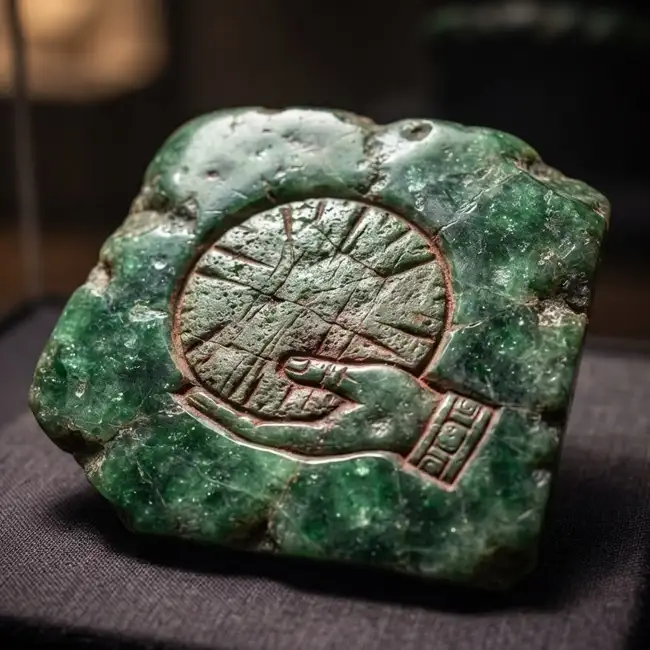
🌽 Recipe: Pre-Classic Maya Hearth Maize Tortilla
⚱️ Legends Behind This Excavated Secret
Archaeologists digging through Pre-Classic Maya house floors keep finding the same quiet trio: grinding stones worn into shallow curves from decades of use, fragments of flat clay griddles scorched black on one side, and three hearthstones arranged in a triangle.
That triangle matters. In Maya cosmology recorded much later in the Popol Vuh, three hearthstones were set at the center of creation itself — the first fire, the center of the world. The three stars in Orion that form the bright trapezium under the belt were understood as that cosmic hearth. So every single household fire was, symbolically, a miniature of the universe's beginning.
And the Popol Vuh goes further: humans, after a few failed prototypes made of mud and wood, were finally made successfully out of maize dough. Yellow corn and white corn, ground and mixed. People believed, in the most literal sense available to them, that they were made of the same stuff as the tortilla.
Which means the woman kneeling at that hearth wasn't cooking breakfast. She was re-enacting creation, feeding her family with the substance of their own flesh, over a fire that mirrored the stars.
I don't know about you, but I'll never look at a tortilla the same way again.
🧺 Ingredients & The Noble Pantry
🌿 The Ancestral Staples
The original pantry was almost aggressively short. Dried maize from last season's harvest, stored on the cob in a raised crib. Water carried from a river, a cenote, or a reservoir. And cal — slaked lime, made by burning limestone or river shells in a fire until they crumbled into white powder, which the limestone-rich Yucatán had in near-infinite supply. Salt came from coastal trade and was precious enough that it was used sparingly, sometimes not at all.
That's it. Three ingredients, one of which is water and one of which is technically a rock. Everything else — the flavor, the aroma, the texture — comes from technique and time. Which is exactly why this recipe survived: a family could make it with whatever the land gave them, in any year, good or bad.
🔄 Modern Substitutes
Real talk — you can absolutely do this in a normal kitchen. Here's how each ancient element translates:
• Dried maize → Whole dried field corn, sold as posole corn, hominy corn, or heirloom landrace maize online. White, yellow, blue, or red all work beautifully and taste noticeably different from each other. Avoid sweet corn and popcorn; wrong starch entirely.
• Cal (slaked lime) → Food-grade pickling lime, labeled calcium hydroxide or cal mexicana. Found in canning aisles and Latin grocers. Must say food-grade on the label. Never substitute garden lime or construction lime.
• Wood ash lye → The older, pre-limestone method. Hardwood ash sieved fine and simmered with the corn. It works, but the strength varies wildly batch to batch, so I'd only attempt it once you've nailed the lime version.
• Metate (grinding stone) → A sturdy food processor, a hand-cranked grain mill set fine, or a heavy mortar and pestle plus patience. A wet grinder gives the smoothest result.
• Comal (clay griddle) → An unglazed clay comal if you can find one, but a bare cast-iron skillet or a heavy carbon-steel pan is excellent. Nothing non-stick — you need real, dry, blistering heat.
• Tortilla press → Two flat plates and your body weight, or a heavy pot pressed down on a dough ball between plastic sheets. Hands work too, once you've practiced.
• Open hearth fire → A gas burner cranked high, or a very hot electric element. If you ever get the chance to cook these over a real wood fire outdoors, do it. The smoke is part of the recipe.
⚖️ Ancient Proportions
Measurements for roughly 12 to 14 tortillas, about 15 cm across. Metric and cups only — no symbols, no confusion.
• Dried whole maize kernels — 500 g, about 2.5 cups
• Water for the nixtamal soak — 2 liters, about 8 cups
• Food-grade pickling lime (calcium hydroxide) — 5 g, about 1 teaspoon, which is 1 percent of the corn weight
• Fresh water for rinsing — 2 to 3 liters, as needed
• Extra water for adjusting the dough during grinding — 60 to 120 ml, about one quarter to one half cup
• Fine salt — 3 g, about half a teaspoon, strictly optional and not traditional in the earliest period
• Working ratio to remember — 1 part corn by weight, 4 parts water by volume, 1 percent lime by corn weight
• Ideal finished dough hydration — roughly 55 to 60 percent water to masa weight, meaning it should feel like soft, cool modeling clay
A quick, serious safety note: calcium hydroxide is alkaline and will irritate skin and eyes. Wear gloves while mixing, don't breathe the dry powder, and keep it away from children and pets. Once the corn is cooked and thoroughly rinsed, it is completely food-safe — this is how hundreds of millions of people have eaten for three millennia.
🪔 The Chef's Ancient Ritual
Treat this as a ceremony with a schedule rather than a race. It spans two days, but almost all of it is waiting.
✦ Dusk — The Awakening of the Grain. Rinse the dried maize in cool water, picking out broken kernels, stones, and anything that doesn't belong. Pour the 2 liters of water into a non-reactive pot — stainless steel or clay, never aluminum, which reacts badly with alkali. Put on gloves, sprinkle in the lime, and stir until the water turns milky and faintly chalky.
✦ Nightfall — The Simmer. Add the corn and bring everything to a gentle simmer. Not a rolling boil. You want lazy bubbles breaking the surface. Hold it there for 35 to 50 minutes depending on how old and hard your corn is. The water will turn deep yellow or amber and smell unmistakably of corn and minerals. Test a kernel by rubbing it between gloved fingers: when the outer skin slips off easily but the center is still firm and slightly chalky, you're done.
✦ The Long Sleep — Overnight Rest. Pull the pot off the heat, cover it, and leave it alone for 8 to 14 hours at room temperature. This is where the real transformation happens. The alkali keeps working slowly all night, softening the kernels and deepening the flavor. Skip this and your dough will be gritty. Don't skip it.
✦ Dawn — The Cleansing. Drain the corn. Rinse it in several changes of cool fresh water, rubbing handfuls between your palms so the loosened hulls float away. Rinse until the water runs nearly clear and the kernels feel clean rather than slippery. Leave a little hull behind on purpose if you want rustic, earthier tortillas — that's closer to the original anyway.
✦ Morning — The Grinding. Work the wet corn into a dough in batches, adding splashes of water only when the machine or stone stalls. You're aiming for a smooth, slightly tacky mass with no detectable grit when you press it to the roof of your mouth. Knead it by hand for two or three minutes at the end, the way you'd knead bread, until it's uniform and pliable. Press a ball flat between your fingers: if the edges crack like dry clay, add water a teaspoon at a time. If it glues itself to your palm, let it rest uncovered for ten minutes.
✦ The Fire — The Cooking. Get your comal or skillet genuinely hot, 428-482 degrees Fahrenheit ( 220-250 degrees Celsius ), with no oil at all. A drop of water should dance and vanish in about one second. Roll 45 to 50 g of dough into a ball, press it between two sheets of plastic to about 2 mm thick, peel carefully, and lay it on the hot surface.
✦ The Three Turns — The Puff. This is the rhythm, and it's the part everyone gets wrong. First side, about 15 to 20 seconds, just until the surface loses its wet sheen. Flip. Second side, 45 to 60 seconds, until pale brown freckles appear. Flip again. Third turn, another 15 to 30 seconds — and this is when it inflates like a small balloon, steam trapped inside separating the layers. If you want to encourage it, press gently on the edge with a cloth.
✦ The Keeping. Stack them immediately in a cloth-lined basket, wrapped tight. They steam each other soft and stay warm and pliable. Served straight from a cold counter, they stiffen within minutes — so the basket isn't decoration, it's function.
🔥 Secrets of the Ancestral Hearth
◦ Too little lime beats too much. Over-liming gives a soapy, bitter, chemical edge that nothing can fix. Stay at 1 percent of corn weight and resist the urge to eyeball it.
◦ Never use an aluminum pot. Alkali reacts with aluminum, leaving a metallic taste and discoloring your corn. Stainless steel, enameled cast iron, or clay only.
◦ Undercooked corn is the number one failure. If kernels still crunch hard at the center after the overnight soak, you pulled them off the heat too early. Nothing downstream will rescue gritty masa.
◦ Over-rinsing strips the soul out. Yes, rinse until clean — but if you scrub away every trace of hull and alkali, you lose the characteristic aroma. Clean, not sterile.
◦ Dough temperature matters more than people admit. Cool dough presses cleanly; warm dough sticks and tears. If yours gets sticky mid-session, chill it for fifteen minutes.
◦ A lukewarm pan guarantees a flat tortilla. Puffing requires an instant steam burst. If your tortillas never inflate, the heat is low — turn it up before you blame the dough.
◦ Don't oil the comal. Ever. Dry heat creates those toasted freckles and the nutty aroma. Fat just steams and makes them limp.
◦ The first one is always a sacrifice. It's how you calibrate the heat. Accept it, eat it standing up, and move on.
◦ Press firmly, once. Repeated pressing works the dough, making it tough. One confident push beats five timid ones.
◦ Make masa fresh, same day. It stiffens and sours in the fridge within a day or two. Cooked tortillas, however, keep well wrapped for two days and are spectacular when re-toasted or fried into chips.
◦ Different corn, different personality. Blue maize tastes sweeter and more floral, white is clean and classic, red is earthy and almost tea-like. Buy small amounts of several and taste them side by side.
🧱❓ Ancient Civilization Origins FAQ
Q1.Is this genuinely what Pre-Classic Maya people ate, or an educated guess?
It's a well-supported reconstruction. Archaeological evidence gives us the tools, the hearth layout, the ceramics, and chemical residues; ethnographic records and surviving Maya communities give us the living technique. The exact seasoning of any single household is lost, but the core process — nixtamal, grind, press, comal — is documented across millennia.
Q2.Can I just use instant corn flour instead?
You can, and you'll get a perfectly edible tortilla in ten minutes. But instant flour is pre-cooked, dried, and milled industrially, which strips much of the aroma. The difference between that and fresh nixtamal masa is roughly the difference between instant coffee and a freshly pulled espresso. Both are coffee. Only one makes you stop and close your eyes.
Q3.Is calcium hydroxide safe to eat?
Yes, in this application and at this dosage, when you use the food-grade product and rinse properly. It's a long-standing food additive used worldwide. Handle the dry powder with gloves and keep it sealed and labeled — treat it with the same respect you'd give baking soda's much stronger cousin.
Q4.What if I don't have a tortilla press or a grain mill?
Two heavy flat plates and a pot work as a press. For grinding, a good food processor with the wet corn in small batches gets you about 90 percent of the way there, and a blender with a splash of water works in a pinch. The ancients used stone and arms — you're allowed to use electricity.
🏺 The Taste of Archeology
So what does it actually taste like?
Warm. Deeply, almost impossibly corn-forward, in a way that supermarket tortillas simply do not reach. There's a faint minerality from the lime, a toasted edge from the clay or iron, and a sweetness that arrives late and lingers. The texture is soft but with a real chew, nothing papery about it.
Tear one open while it's still puffed and steam escapes in a rush. That smell is the whole point. It's the same smell that filled a thatched house three thousand years ago, and it is genuinely, physically unchanged. You are smelling the past.
Eat it plain first. No filling, no sauce, nothing. Just the tortilla, the way a family would have eaten it at dawn before heading out to the milpa. Then build whatever you like on top of it.
🍽️ Final Thoughts: Bringing Antiquity to Your Modern Table
Here's what I love about this recipe: it demands almost nothing from your wallet and everything from your attention.
Corn, water, a spoonful of mineral. Two days, but only about an hour of actual work. No specialty gadgets required. No expensive imports. Just a willingness to wait overnight and the patience to let a pot sit while you sleep.
And the payoff isn't only flavor, though the flavor is extraordinary. It's the feeling of doing something with your hands that connects directly to an unbroken human chain — the same motions, the same chemistry, the same hot griddle, the same little burst of pride when one finally puffs. Your kitchen briefly becomes a hearth. Your Tuesday becomes continuous with a morning in 1000 BCE.
Start with half a batch. Expect your first three tortillas to be mediocre and your fourth to be a revelation. Then make them again next weekend, and the weekend after, and watch your hands learn something your brain can't explain.
✨ The Golden Hook (The Sacred Union)
Here's where you come in.
Every recipe that survives does so because somebody decided to make it one more time. Not a museum, not a textbook — a person, in a kitchen, choosing the slow way on an ordinary afternoon. That's the only preservation method that has ever actually worked.
So make these. Photograph that first puffed tortilla and share it. Tell someone why their corn needs limestone. Buy a bag of heirloom maize from a grower who's keeping a landrace variety alive instead of letting it vanish. Teach a kid to press one.
You don't need Maya ancestry to be part of this. You just need to cook it with respect, name where it came from, and pass it on honestly. That's the sacred union — ancient hands and modern ones, meeting over the same hot stone.
Three thousand years got it to you. Keep it moving.
🙏 Credit to the Keepers of the Culture (The Legacy)
This recipe is not mine, and it never was.
It belongs to the Maya peoples — the more than six million Yucatec, K'iche', Q'eqchi', Mam, Tz'utujil, Kaqchikel, Tzotzil, Tzeltal and other Maya speakers living today across Mexico, Guatemala, Belize, Honduras, and El Salvador. Not a vanished civilization. A present one, with living languages, living communities, and living kitchens.
It belongs especially to the women who carried this knowledge across three thousand years without a single written recipe card, through conquest, epidemic, displacement, and industrialization — kneeling at metates, teaching daughters by touch and by smell because that was the only way it could be taught.
It belongs to the milpa farmers still planting maize, beans, and squash together in the same field the way their ancestors did, and to the seed keepers protecting landrace corn varieties that agribusiness has no interest in saving.
And credit is due to the archaeologists, ethnobotanists, and Maya scholars whose work lets outsiders like us understand even a fraction of what we're holding when we pick up a tortilla.
Cook it. Enjoy it. And say where it came from, every single time.
| 🗿 🏛️🌾 < Back |