
🏠 Home > 🗺️ Recipes > 🏛️🍖 Hearth-Roasted Mains > 🗿 Pre-Classic Maya: Hearth-Roasted Mains Recipes
🗿 🏛️🍖 Pre-Classic Maya: Hearth-Roasted Mains Recipes
Published by Supakorn | Updated: October 2026
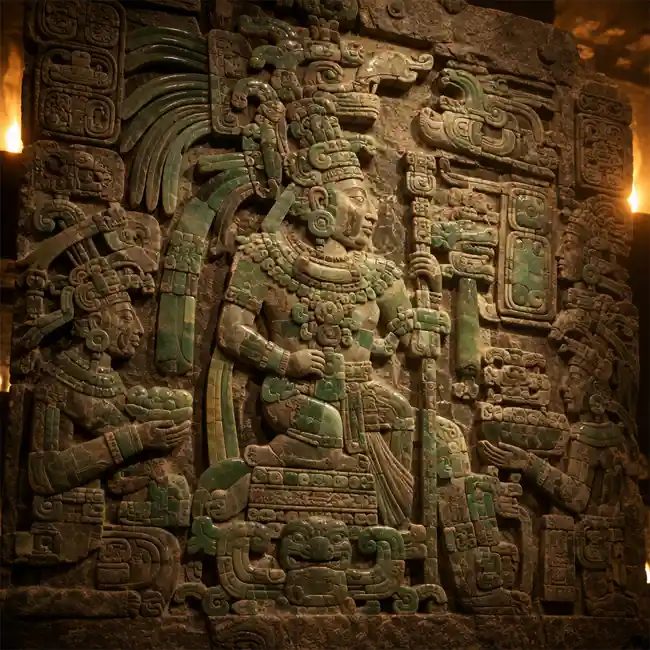
🗿📜 The Storyteller’s Intro: 5,000 Years of Ancestral Flavors
Picture a family hearth glowing beneath a palm-thatched roof in the tropical lowlands of ancient Mesoamerica. Smoke drifts through the house, maize is being ground nearby, and something gathered from the forest is slowly roasting beside the coals. This is the world behind Pre-Classic Maya hearth-roasted mains—a culinary story shaped by fire, fertile soil, seasonal wetlands, and generations of practical knowledge.
The deepest roots of Maya food culture reach back roughly 5,000 years, but the formal Pre-Classic Maya period is usually dated from around 2000 BCE to 250 CE. That means the earliest part of this archaeological era began about 4,000 years ago, while some of the farming traditions behind it developed earlier.
Archaeologists generally divide the Pre-Classic into three broad phases:
✨ Early Pre-Classic, approximately 2000–1000 BCE: Farming villages became more established. Households cultivated maize and other useful plants while continuing to hunt, fish, forage, and collect seasonal foods.
✨ Middle Pre-Classic, approximately 1000–300 BCE: Settlements expanded, ceremonial centers appeared, trade networks strengthened, and food production supported increasingly complex communities.
✨ Late Pre-Classic, approximately 300 BCE–250 CE: Major urban centers, monumental architecture, royal courts, public ceremonies, and long-distance exchange transformed the Maya world.
These dates are archaeological frameworks rather than perfectly fixed boundaries. Cultural change did not happen everywhere at the same moment. A farming settlement in northern Belize could follow a different rhythm from a growing ceremonial center in Guatemala or a community near the Pacific coast.
The wider history of Maya civilization is normally organized into the Pre-Classic, Classic, and Postclassic periods, with an earlier Archaic era preceding them. The Pre-Classic was not simply a rough rehearsal for later Maya achievements. It was the long foundation during which communities developed farming systems, ceremonial customs, architectural traditions, and foodways that would remain influential for centuries.
At early sites such as Cuello in Belize, archaeological research points to communities that combined cultivated crops with hunting, fishing, and wild plant gathering. Maize, fruits, cacao, and root crops formed part of an adaptable food system rather than a single rigid diet.
Fire was at the center of that system. A hearth provided heat, light, protection, and a place where raw ingredients became shared meals. It could roast meat, toast seeds, warm prepared maize foods, cook plants in hot ash, and heat stones or vessels. Cooking was therefore woven into domestic life rather than hidden away in a separate modern-style kitchen.
The phrase “hearth-roasted mains” should be understood as a modern descriptive category. No surviving Pre-Classic Maya cookbook gives us exact temperatures, cooking times, or named recipes. Archaeologists reconstruct food traditions through hearths, charred plant remains, animal bones, grinding stones, ceramics, residues, and comparisons with later Indigenous practices.
This distinction matters. Ancient culinary storytelling becomes more compelling—not less—when imagination remains anchored to evidence. We can recognize ingredients and cooking possibilities while admitting that the original seasoning, presentation, and household names of many dishes are now lost.
🔥 Why the Hearth Mattered
In an early Maya home, the hearth was an everyday gathering point. Family members could prepare maize, sort beans, clean game, mend tools, tell stories, and teach children while food cooked.
Smoke and roasting produced aromas that marked the rhythm of daily life. The scent of toasted maize or fire-cooked squash would have connected meals with planting seasons, household work, and the surrounding forest.
Hearths also help archaeologists locate activity areas. Ash, burnt earth, charcoal, broken pottery, food remains, and discarded animal bones can reveal where people repeatedly cooked and ate.
Cooking methods probably overlapped. Food might be placed near embers, roasted directly over heat, cooked in a vessel, wrapped before heating, or prepared in an earth oven. “Hearth-roasted” does not describe one universal technique but a family of fire-based practices.
📜 Iconic Archaeological Menu Clues: Mains Recovered from Fire and Soil
There is an important truth behind any list of ancient Maya menu names: archaeologists have recovered food evidence, but they have not uncovered a Pre-Classic restaurant menu listing complete dishes.
The names below are historically informed editorial titles. They organize plausible meal combinations suggested by ancient ingredients, animal remains, household tools, and fire-based cooking evidence. They are not claimed as literal translations from Maya inscriptions.
🦌 Hearth-Roasted Forest Venison
White-tailed deer was one of the important wild animals available in many parts of the Maya region. Deer supplied meat as well as bone, hide, antler, and other useful materials.
A fire-roasted venison main represents the close relationship between Maya households and forest environments. Hunting required knowledge of animal trails, water sources, seasons, and the behavior of game.
Archaeological bones can identify the animal, but they rarely reveal a complete recipe. Cuts may have been roasted, simmered, dried, shared ceremonially, or prepared differently according to local tradition.
🦃 Ember-Roasted Turkey with Ground Maize
Turkey remains are known from the ancient Maya world, although their importance and management varied across time and place.
A combination of roasted turkey and processed maize offers a believable picture of a substantial meal. It should not, however, be treated as one standardized Pre-Classic dish served throughout the Maya region.
Maize required considerable labor before reaching the hearth. Kernels had to be stored, processed, ground, shaped, and cooked. Every maize accompaniment represented agricultural planning and skilled household work.
🎃 Ash-Roasted Squash and Seeds
Squash was more than a soft edible vegetable. Its flesh could be cooked, its seeds supplied concentrated nourishment, and mature shells could sometimes serve practical purposes.
Squash placed near hot ash or embers fits the technology available to early farming households. Toasted seeds could add texture and richness to otherwise simple foods.
The prominence of squash reminds us that an ancient “main” did not always need to center on meat. Plant-based meals were essential components of household survival.
🐟 Riverside Fire-Roasted Fish
Communities living near rivers, lakes, wetlands, and coastal environments had access to aquatic foods that differed from those available in inland forest settlements.
Fish could be roasted near a hearth, cooked in leaves, or incorporated into other preparations. Archaeological preservation is uneven, so delicate fish remains may be underrepresented compared with larger animal bones.
This menu clue belongs especially to the watery landscapes of Belize, Guatemala, southern Mexico, and neighboring parts of the Maya cultural region.
🥜 Fire-Warmed Beans with Roasted Woodland Foods
Beans complemented maize and became an enduring part of Mesoamerican food traditions. Their archaeological visibility can vary because soft plant foods do not preserve as easily as pottery or stone.
A household meal could combine cultivated beans with squash, herbs, seeds, roots, or seasonal forest products. Such combinations reflect diversity rather than an unchanging “three-crop menu.”
The balance between farmed and gathered ingredients depended on location, rainfall, soil, household access, and the time of year.
🍃 Leaf-Wrapped Maize Parcels
Tamale-like maize preparations are widely associated with ancient Mesoamerican cuisine, while tortillas and griddle technology require more careful dating and regional interpretation.
Archaeological discussions have noted that the classic ceramic comal, or griddle, is not consistently represented in early Maya contexts. This is one reason researchers should avoid projecting every familiar modern Maya food unchanged into the distant Pre-Classic past.
Leaf-wrapped maize parcels are therefore a useful conceptual link to ancient cooking, but their exact fillings, names, shapes, and preparation styles cannot be reconstructed with certainty for every Pre-Classic community.
🐇 Small-Game Hearth Roast
Rabbits and other small animals could contribute to household meals alongside larger game, fish, birds, and cultivated foods.
Small-game cooking illustrates a practical principle of ancient cuisine: families used what their environment provided. Daily food was shaped by opportunity, labor, seasonality, and local ecology rather than by a fixed ceremonial menu.
🌶️ Fire-Roasted Garden and Forest Gathering
Chilies, edible greens, fruits, roots, seeds, and other gathered plants could transform a basic meal into something aromatic and satisfying.
Preservation limits prevent archaeologists from identifying every herb or seasoning used around a hearth. Many fragile leaves and plant tissues disappear unless they become carbonized or survive in residues.
The missing evidence leaves room for careful interpretation, but not for declaring an imaginary spice blend to be an authentic recorded formula.
🗺️ Following the Maya Food Trail through Rainforests and Ancient Cities
The homeland of the ancient Maya covered a remarkably diverse area, including parts of present-day Mexico, Guatemala, Belize, Honduras, and El Salvador.
This was not one uniform culinary landscape. Tropical rainforests, limestone plains, volcanic highlands, wetlands, river valleys, and coastal zones offered different ingredients and challenges.
Travelers interested in Pre-Classic Maya food history can begin with archaeological sites rather than searching for a single surviving ancient dish. Architecture, geography, museums, and local food traditions together reveal how communities adapted to their surroundings.
🌳 El Mirador and the Mirador Basin
Deep in northern Guatemala, El Mirador became one of the most extraordinary urban centers of the Late Pre-Classic world.
Its monumental complexes and raised causeways show that Pre-Classic Maya society could organize large populations and ambitious construction projects.
For culinary history, the surrounding landscape is just as meaningful as the pyramids. Feeding a major center required reliable access to crops, water, forest products, labor, storage, and transportation.
Visiting the region is generally a serious jungle journey rather than a casual stop. Responsible travelers should use authorized guides, respect conservation rules, carry out waste, and avoid purchasing unprovenanced artifacts.
🛤️ Nakbe and the Ancient Causeways
Nakbe, another important center in the Mirador Basin, had settlement extending into the Middle Pre-Classic. It was connected to other places through raised limestone routes.
These causeways encourage us to imagine food moving beyond individual households. Maize, salt, preserved foods, tools, ceramics, and valued ingredients could circulate between communities.
A hearth meal was local, but the networks behind it could reach far across the landscape.
🏺 Cuello and Northern Belize
Cuello is especially important for understanding early Maya village life. Evidence from the region highlights farming combined with hunting, fishing, and gathering.
The site helps shift attention away from palaces and toward households—the places where most ancient food preparation actually happened.
Travelers in Belize can connect archaeological visits with museums, protected natural areas, and living Maya communities, always remembering that contemporary Maya cuisine is a living heritage rather than a museum reconstruction.
🌋 Tak’alik Ab’aj and the Pacific Foothills
Tak’alik Ab’aj occupied a strategic environment near trade routes linking ecological zones. Highland products, coastal resources, fertile agricultural land, and cultural interaction all shaped life in the region.
Sites like this demonstrate that Maya food history was also a history of movement. Ingredients traveled, communities exchanged knowledge, and regional cooking identities evolved through contact.
🚣 Rivers, Wetlands, and the Waterways behind Maya Food
Water defined where people could live and what they could eat. Rivers and wetlands supplied fish, mollusks, turtles, birds, edible plants, reeds, clay, and transportation routes.
In lowland areas without large permanent rivers, seasonal rain and water storage were critical. Communities adapted through careful settlement planning and knowledge of local terrain.
Wetlands were not empty barriers between cities. They could be productive environments supporting cultivation, gathering, fishing, and movement.
Canoe travel probably helped connect settlements with landing places, coastal routes, and markets. Food history therefore extends beyond the hearth to the waterways that carried ingredients and people.
For modern cultural travelers, river journeys and wetland tours can add an ecological layer to archaeological exploration. The most meaningful question is not simply, “What did the Maya eat?” but also, “How did this landscape make that food possible?”
Sustainable tourism matters in these fragile environments. Choosing trained local guides and community-based services can help protect archaeological sites while supporting the people who continue to care for the region.
🏜️ Beyond the Desert Myth: A Cuisine of Forest, Wetland, and Limestone
Pre-Classic Maya civilization was not primarily a desert civilization, so forcing an oasis narrative onto it would be misleading.
Many Maya communities lived in tropical or seasonally dry environments where access to water could still be difficult. Limestone terrain often allowed rainwater to drain underground, making reservoirs, natural water holes, seasonal wetlands, and careful water management extremely important.
The correct travel keywords are therefore Maya rainforest archaeology, Maya lowland wetlands, Guatemala jungle ruins, Belize Maya heritage, and ancient Mesoamerican food landscapes.
Dry seasons influenced planting, harvesting, hunting, food storage, and fuel collection. A tropical forest could appear lush while still demanding sophisticated knowledge of seasonal water.
This ecological reality makes hearth-roasted cooking even more interesting. Firewood had to be gathered, crops had to survive unpredictable conditions, and meals had to fit the daily labor of farming households.
🛎️❓ Ancient Civilization FAQ: Unlocking Palace Kitchen Mysteries
Q1.Did archaeologists discover complete Pre-Classic Maya recipes?
No complete Pre-Classic cookbook or step-by-step recipe collection has been found.
Researchers study charred seeds, starch traces, ceramic residues, animal bones, grinding stones, hearths, earth ovens, dental evidence, and human remains.
These sources can identify ingredients, dietary patterns, and cooking activities. They usually cannot reveal exact measurements, cooking times, household dish names, or every seasoning.
Responsible ancient-food content should clearly separate direct archaeological evidence from modern culinary reconstruction.
Q2.Did palace food differ from ordinary household food?
Social differences became more visible as Pre-Classic settlements grew into complex centers.
Elite households may have enjoyed greater access to prized animals, imported ingredients, specialized vessels, and ceremonial servings. Public feasts could strengthen alliances, display abundance, and reinforce authority.
Ordinary households still produced the agricultural foundation supporting larger communities. Their daily work—planting, harvesting, grinding, carrying water, collecting firewood, and cooking—was the true engine of Maya cuisine.
The boundary was not always simple. Foods considered ordinary in one context might become meaningful when offered in a ceremony or shared during a communal event.
Q3.Was every Maya meal based on maize?
Maize became central to ancient Maya food systems and cultural identity, but Maya diets were never limited to one crop.
Beans, squash, roots, fruits, seeds, chilies, wild greens, forest products, fish, birds, and game contributed to regional diets.
Dependence on maize also changed over time and varied among communities. Archaeological evidence should be interpreted by site and period rather than turned into one universal menu.
Maize mattered nutritionally, economically, socially, and symbolically, but diversity helped households manage seasonal risk.
Q4.Were all hearth-roasted meals ceremonial?
No. Most fire-based cooking was probably ordinary domestic work.
A roasted animal or carefully prepared maize food could become ceremonial in a feast, offering, burial, or elite gathering, but similar ingredients might also appear in a family meal.
Archaeologists examine location and context. Food remains in a household hearth may suggest daily preparation, while unusual deposits in temples, caches, or burials can indicate ritual activity.
Context is what transforms an ingredient from a simple food remain into evidence of a socially meaningful event.
🧠 Final Thoughts: The Timeless Allure of Antique Gastronomy
The appeal of lost Pre-Classic Maya recipes does not depend on pretending that every ancient dish can be recovered perfectly.
Their real magic lies in the surviving fragments: a blackened seed, a deer bone beside a hearth, a worn grinding stone, a broken cooking vessel, or an ancient settlement positioned near fertile wetland.
Together, these clues reveal a cuisine built on patience, seasonal intelligence, household cooperation, and close observation of the natural world.
Hearth-roasted mains connected cultivated fields with forests, waterways, families, ceremonies, and expanding cities. Every fire carried knowledge inherited from earlier generations.
The full recipe-inspired chapter will explore how these archaeological clues can guide respectful modern interpretations without presenting speculation as historical fact.
Until then, imagine the glow of the hearth, the fragrance of toasted maize, and a meal slowly taking shape in one of the world’s most remarkable early civilizations.
🏛️ Credit to the Keepers of the Culture: The Living Legacy
Maya culture did not disappear when the Pre-Classic period ended. Millions of Maya people and many distinct Maya language communities continue to live across Mexico and Central America.
Their cuisines are living, evolving traditions—not frozen replicas of archaeological meals.
Any exploration of ancient Maya food should recognize Indigenous farmers, cooks, historians, artisans, guides, language keepers, and community elders who preserve knowledge connected to maize, land, ceremony, and hospitality.
Archaeologists provide valuable evidence, but local and Indigenous voices remain essential to responsible cultural interpretation.
Travelers can show respect by using community-based guides, following site regulations, asking permission before photographing people or ceremonies, and avoiding claims that reduce diverse Maya cultures to a single mysterious civilization.
The greatest tribute to ancient culinary heritage is accuracy joined with humility: celebrate the evidence, acknowledge uncertainty, and honor the living communities whose legacy continues today.
🏛️🍖 5,000-Year Pre-Classic Maya Pit-Roasted Meat: Ancestral Fire & Flavor
👉 Explore Pre-Classic Maya: Hearth-Roasted Mains
| 🌐 🏛️🍖 < Back | 🗿 🌾 < Previous | Next > 🍲 🗿 |