
🏠 Home > 🗺️ Recipes > 🏛️🍯 Wild Earth Sweets & Foraged Bites > 🗿 Olmec: Wild Earth Sweets & Foraged Bites Recipes > 🏛️🍯 1.Olmec-Inspired Sweet Cacao Pod and Maize Hearth Cakes
🏛️🍯 Recreating the Lost Sweet-Pod Flavors of the Olmec World
Published by Supakorn | Updated: October 2026
🗿⏳ Ancient Civilization Origins: The Olmec Heartland of Mexico
Long before the rise of the Maya and the Aztec Empire, the Olmec civilization flourished in the tropical lowlands bordering the Gulf of Mexico. Its cultural heartland covered areas now belonging to the Mexican states of Veracruz and Tabasco. Rivers crossed the humid landscape, seasonal floods renewed the soil, and dense forests supplied communities with fruits, seeds, edible leaves, roots, fish, and game.
The Olmec civilization is generally dated from around 1500 BCE to 400 BCE. That makes an exact “5,000-year-old Olmec recipe” historically unlikely. The dish presented here is therefore a respectful culinary reconstruction rather than a literal recipe recovered from an ancient kitchen.
No surviving Olmec cookbook tells us exactly how cooks combined their ingredients. Instead, archaeologists study food residues, pottery, grinding stones, plant remains, settlement patterns, and related Mesoamerican traditions. From that evidence, we can create a plausible modern dish inspired by ingredients that belonged to the wider environment of ancient southern Mexico.
One especially fascinating ingredient is cacao. Most of us think only of the bitter beans used to make chocolate, but a fresh cacao pod contains another treasure: a soft, pale pulp surrounding the seeds. The pulp is aromatic, tangy, gently sweet, and surprisingly tropical. In a forest setting, it would have been an appealing food even before anyone discovered the complicated process of turning cacao seeds into chocolate.
This recipe imagines that sweet pod pulp meeting ground maize, toasted seeds, fragrant leaves, and a little natural sweetness. The result is not a modern dessert pretending to be an archaeological fact. It is a carefully explained bridge between historical evidence, regional food heritage, and a kitchen anyone can use today.
🔥 A Storyteller’s Journey into the Forest of Ancestral Flavors
Picture the Olmec heartland at dawn. Mist rises above slow rivers while birds call from the canopy. A household fire, protected through the night beneath a blanket of ash, begins to glow again. Maize is brought to the grinding stone. Seeds are toasted on a hot clay surface, and freshly gathered fruits wait in woven baskets.
Among those fruits may have been the brightly colored pods of cacao trees growing in humid shade. When opened, a cacao pod reveals rows of seeds covered in creamy pulp. That pulp does not taste like a chocolate bar. It can suggest citrus, lychee, mango, pear, or melon, depending on the variety and ripeness of the fruit.
Imagine a cook tasting the pulp and deciding not to waste its sweetness. A portion might be eaten immediately. Another portion could be blended into a maize preparation and cooked near the hearth. Toasted pumpkin seeds might add richness, while a fragrant leaf could carry the scent of the forest into every bite.
We cannot know whether this exact event happened. Yet it is believable because traditional cooking has always been shaped by observation. Cooks learn from texture, aroma, heat, season, and availability. A useful ingredient rarely remains unnoticed for long.
This is the spirit behind the lost Olmec sweet pod foraged food: not a claim that one secret recipe survived unchanged, but an invitation to explore how ancient cooks may have responded creatively to the gifts of their landscape.
🌎 The Enduring Global Value of Ancient Food Heritage
Ancient food traditions matter because they reveal more than what people ate. They show how communities understood ecology, agriculture, labor, trade, ceremony, hospitality, and survival.
Maize, cacao, squash, beans, chilies, and many other Mesoamerican foods eventually influenced kitchens far beyond their original homelands. Today, these ingredients appear in countless cuisines, yet their deep Indigenous histories are often reduced to a sentence or forgotten entirely.
Looking back at ancient foodways helps restore part of that story. It reminds us that cacao existed long before the modern chocolate industry. Maize was not merely a crop; it became a foundation of life across much of Mesoamerica. Seeds, herbs, and wild fruits were not decorative additions. They were sources of flavor, nutrition, identity, and local knowledge.
Historical reconstruction can also encourage more thoughtful cooking. Using the pulp of a cacao pod, for example, challenges the assumption that only the seeds have value. Toasting whole seeds and grinding maize by hand reconnect us with techniques that require attention rather than speed.
The goal is not to romanticize the past. Ancient life demanded intense labor and depended on environmental conditions that could change without warning. The real value comes from respecting the intelligence behind traditional food systems while being honest about what is documented and what remains uncertain.
🌱 The Culinary Resurrection of a Forest-Born Flavor
Bringing an ancient flavor back to life does not mean copying a single fixed recipe. It means rebuilding a possible relationship among ingredients.
In this reconstruction, cacao pulp provides the “sweet pod” character. Ground maize gives the food its body. Pumpkin seeds contribute richness and an earthy aroma. Honey offers optional sweetness, while vanilla and an aromatic leaf connect the dish to the fragrant plant world of tropical Mesoamerica.
The preparation becomes a small maize cake cooked on a dry griddle or heavy skillet. Its surface develops toasted spots, while the center remains tender. The flavor is subtle rather than sugary: fruity, nutty, warm, and gently smoky.
These cakes can be served warm as a breakfast, snack, or simple dessert. They are approachable enough for a modern home, but every ingredient points back toward a much older culinary landscape.
That is the resurrection taking place here. Nothing supernatural is required. A nearly forgotten flavor returns whenever someone opens a cacao pod, smells fresh masa, toasts seeds, and pauses to consider the generations of knowledge behind those ingredients.
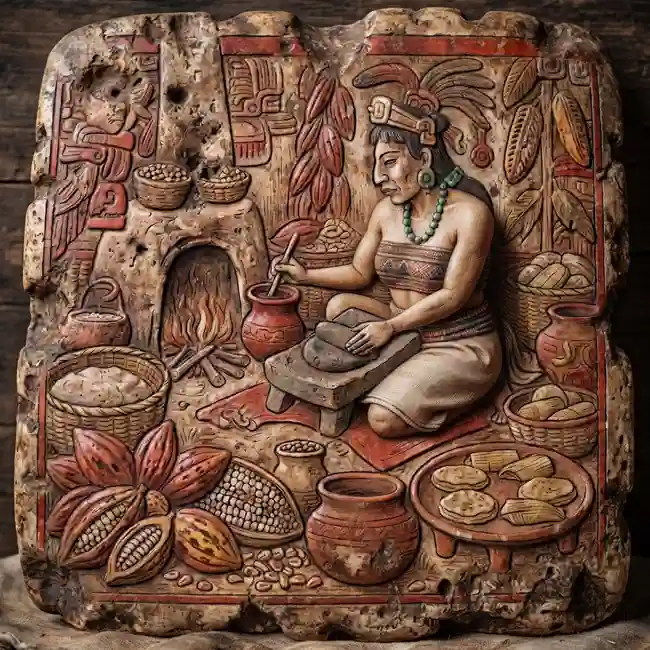
🌽 Recipe: Olmec-Inspired Sweet Cacao Pod and Maize Hearth Cakes
📜 Legends Behind This Reimagined Ancient Secret
It is tempting to describe every ancient recipe as a secret excavated from a temple or decoded from a mysterious inscription. The true story is more interesting—and more honest.
Archaeologists have found evidence connecting cacao with early Mesoamerican societies, including chemical traces and vessels that may have held cacao preparations. However, residue in a vessel cannot provide a complete recipe. It does not tell us every ingredient, exact proportion, cooking time, or social setting.
For that reason, these sweet maize hearth cakes should be understood as historically inspired experimental cooking. The recipe uses plausible regional ingredients and simple techniques, but the final combination is modern.
The legendary element comes from the cacao pod itself. Hidden beneath its thick shell is a fruit many chocolate lovers never taste. The beans became globally famous, while the delicate pulp remained comparatively unfamiliar outside cacao-growing regions.
In our culinary story, that pale pulp is the buried secret. It is removed from the pod, mixed with maize, enriched with toasted seeds, and transformed by fire. The result offers a taste of what ancient creativity might have looked like when people worked directly with freshly gathered food.
🧺 Ingredients & The Noble Pantry
🌽 The Ancestral Staples
Maize stands at the center of this dish. By the time Olmec culture flourished, maize had already undergone a long history of domestication in Mexico. Its transformation from wild grass into a dependable food crop remains one of humanity’s greatest agricultural achievements.
For this recipe, fresh masa harina is the most practical choice. When mixed with warm water, it forms a dough with the aroma and structure needed for griddle cooking. It is not identical to maize processed in every ancient community, but it brings us closer to traditional corn preparation than ordinary wheat flour.
Cacao pulp is the second essential character. It surrounds the seeds inside a ripe cacao pod and supplies natural fruitiness. Fresh pulp is difficult to find in many countries, so frozen cacao pulp or unsweetened cacao fruit purée is perfectly acceptable.
Pumpkin seeds add fat, protein, and a deep roasted note. Vanilla supplies fragrance, although it should remain gentle rather than dominant. A small quantity of honey rounds out the tartness of the fruit. Honey is optional because ripe cacao pulp can already be sweet.
Finally, an aromatic leaf can be used to line the cooking surface or wrap the cakes briefly after cooking. Hoja santa is especially fragrant, with notes that can recall anise and pepper. If it is unavailable, a small piece of banana leaf can provide a softer vegetal aroma.
🔄 Modern Substitutes
◦ Fresh cacao pulp: Use frozen cacao fruit pulp, unsweetened cacao fruit purée, or thawed cacao pulp sold by specialty suppliers.
◦ Cacao pulp alternative: Combine 3 parts white dragon fruit or lychee pulp with 1 part unsweetened passion fruit pulp. This will not duplicate cacao fruit, but it creates a similar sweet-tart tropical direction.
◦ Fresh masa: Prepare dough from masa harina and warm water according to the package instructions.
◦ Masa harina substitute: Finely ground pre-cooked cornmeal can work, but its texture and flavor will differ from nixtamalized maize.
◦ Pumpkin seeds: Use sunflower seeds if pumpkin seeds are unavailable.
◦ Hoja santa: Use banana leaf, avocado leaf from a food-safe supplier, or omit the leaf entirely.
◦ Raw local honey: Use date syrup or mashed ripe banana for a plant-based version.
◦ Vanilla bean: Use a small amount of pure vanilla extract. Avoid artificial flavoring if possible.
◦ Clay griddle: A cast-iron skillet, steel griddle, or heavy nonstick pan works well.
◦ Grinding stone: A mortar and pestle, spice grinder, or food processor can grind the toasted seeds.
⚖️ Ancient Proportions
This recipe makes approximately 8 small hearth cakes.
◦ 2 cups masa harina
◦ 1½ cups warm water, with 2–4 extra tablespoons if needed
◦ ½ cup fresh or frozen cacao pulp
◦ ⅓ cup raw pumpkin seeds
◦ 1–2 tablespoons honey, adjusted to the sweetness of the fruit
◦ ½ teaspoon pure vanilla extract or seeds from ¼ vanilla bean
◦ ¼ teaspoon fine sea salt
◦ 1 teaspoon ground chia seeds, optional
◦ 1 large hoja santa leaf or a small sheet of banana leaf, optional
◦ 2 tablespoons additional pumpkin seeds for serving
◦ 2 tablespoons cacao pulp for spooning over the finished cakes, optional
Do not add commercial cocoa powder if your goal is to experience the fruit-forward sweet pod flavor. Cocoa powder comes from processed cacao beans and creates a darker, more familiar chocolate taste. It is delicious, but it changes the central idea of this recipe.
👨🍳 The Chef’s Ancient Hearth Ritual
1.Wake the seeds with heat. Place the pumpkin seeds in a dry skillet over medium-low heat. Toast them for 3–5 minutes, stirring frequently, until they smell nutty and begin to make soft popping sounds. Remove them immediately to prevent burning.
2.Grind the toasted seeds. Allow the seeds to cool, then crush them with a mortar and pestle or pulse them in a grinder. Aim for a coarse meal rather than a smooth seed butter. Keep 2 tablespoons of whole seeds aside for serving.
3.Prepare the sweet pod mixture. Place the cacao pulp in a bowl. If it contains large or fibrous pieces, mash them gently with a fork. Stir in the honey, vanilla, and salt. Taste before adding more honey. The mixture should be fruity and lightly sweet, not syrupy.
4.Form the maize dough. Add the masa harina to a large bowl. Pour in 1½ cups of warm water gradually while mixing with your hand. Knead for 2 minutes. The dough should feel soft and moist without sticking heavily to your fingers.
5.Unite fruit, seed, and maize. Add the cacao pulp mixture, ground pumpkin seeds, and optional ground chia to the dough. Knead until evenly combined. The added fruit may soften the masa, so mix in a little more masa harina if the dough becomes wet.
6.Let the dough rest. Cover the bowl with a clean cloth and rest the mixture for 15 minutes. This gives the maize time to absorb moisture and makes the cakes easier to shape.
7.Prepare the cooking surface. Heat a dry cast-iron skillet or griddle over medium-low heat. If using hoja santa or banana leaf, pass it carefully over the warm surface for a few seconds until pliable. Place it on the griddle only if it can lie flat and safely avoid direct flame.
8.Shape the hearth cakes. Divide the dough into 8 portions. Roll each portion into a ball, then press it into a round cake about 1 cm thick. Repair any cracks along the edges with damp fingers.
9.Cook slowly. Arrange the cakes on the heated surface without overcrowding. Cook for approximately 4–5 minutes per side. Look for toasted brown patches and a firm exterior. Lower the heat if the surface darkens before the center cooks.
10.Give them a final hearth rest. Stack the cooked cakes inside a clean cloth or wrap them loosely in the warmed aromatic leaf. Rest for 5 minutes. Trapped steam softens the surface and carries the leaf’s fragrance into the cakes.
11.Serve with restraint. Place the cakes on a simple platter. Spoon a little cacao pulp over them and scatter the reserved toasted pumpkin seeds on top. Serve warm so the maize aroma remains vivid.
🔥 Secrets of the Ancestral Hearth
◦ Keep the heat moderate. High heat burns the natural fruit sugars before the maize interior is ready.
◦ Taste the cacao pulp first. Some batches are sweet, while others are sharply tart. Adjust the honey only after tasting.
◦ Do not expect chocolate flavor. Cacao pulp tastes fruity because chocolate flavor develops mainly through the fermentation, drying, roasting, and processing of cacao beans.
◦ Protect the dough from drying. Keep unused portions covered while shaping the cakes. Dry masa cracks easily.
◦ Use damp hands, not oily hands. A little water helps smooth the edges without introducing an unrelated cooking fat.
◦ Avoid making the cakes too thick. Thick cakes may brown outside while remaining raw or gummy in the middle.
◦ Do not grind the seeds into butter. Coarsely ground seeds improve texture. Seed butter can make the dough dense and oily.
◦ Let the toasted seeds cool. Grinding them while very hot may release too much oil.
◦ Use food-safe leaves only. Never cook with leaves gathered from an unknown tree or treated with chemicals.
◦ Treat substitutions as interpretations. Lychee, dragon fruit, or passion fruit can suggest cacao pulp’s tropical qualities, but they are not historically identical ingredients.
◦ Keep sweetness gentle. This dish is more convincing as a lightly sweet maize food than as a heavily sweetened modern cake.
◦ Reheat on a dry skillet. A short reheating restores the toasted aroma better than prolonged microwave heating.
◦ Store carefully. Refrigerate cooled cakes in a sealed container for up to 3 days. Reheat thoroughly before serving.
◦ Freeze extra cakes individually. Separate them with parchment and freeze for up to 1 month to protect their texture.
🐍❓ Ancient Civilization Origins FAQ
Q1.Was this exact recipe eaten by the Olmec?
No complete written Olmec recipe for these cakes is known. This is a modern reconstruction using ingredients and techniques associated with ancient Mesoamerican food traditions. It should not be presented as a direct archaeological transcription.
Q2.Did the Olmec cultivate or consume cacao?
Archaeological research has connected cacao use with early Mesoamerica, and some evidence suggests that cacao was known during the broader Olmec period. The exact ways it was prepared, exchanged, and consumed continue to be studied. Claims about one specific Olmec cacao recipe should therefore be made cautiously.
Q3.Why use cacao pulp instead of cocoa powder?
The title focuses on a sweet pod foraged food. Cacao pulp is the naturally sweet fruit surrounding the seeds inside the pod. Cocoa powder is produced from processed cacao beans and offers a much stronger chocolate flavor.
Q4.Can I make the recipe without cacao pulp?
Yes. Use a mixture of white dragon fruit or lychee pulp with a smaller amount of passion fruit. The result will be a creative substitute rather than an authentic replacement, but it preserves the recipe’s fruity, sweet-tart character.
🏺 The Taste of Archaeology
The first bite is familiar enough to feel comforting. Warm maize has a toasted aroma that recalls fresh tortillas and rustic corn cakes. Then the unfamiliar part appears: a gentle tropical brightness from the cacao pulp, followed by the earthy richness of pumpkin seeds.
The texture is soft in the center, lightly crisp at the edges, and pleasantly coarse where the ground seeds remain. Vanilla lingers in the background. If an aromatic leaf is used, it contributes a quiet forest-like fragrance rather than a dominant flavor.
This is not a dramatic chocolate dessert. It is a subtler encounter with cacao before chocolate—the fruit within the pod rather than the roasted bean.
That distinction is what makes the recipe feel archaeological. It asks us to set aside a familiar modern product and look at the plant again. By doing so, we experience cacao as an ancient fruit, a seasonal food, and part of a living tropical ecosystem.
Every bite carries both evidence and imagination. The evidence comes from known ingredients, regional agriculture, simple griddle techniques, and archaeological research. The imagination lies in their precise combination. Keeping those two elements clearly separated allows the dish to inspire wonder without turning speculation into false history.
🌅 Final Thoughts: Welcoming Antiquity to the Modern Hearth
You do not need a reconstructed ancient palace kitchen to explore the flavors of the Olmec world. A heavy skillet, a bowl of masa, toasted seeds, and a little cacao pulp are enough to begin.
Make the recipe slowly the first time. Smell the pumpkin seeds as they toast. Notice how the masa changes while it rests. Taste the cacao pulp by itself before mixing it into the dough. These small observations are part of the experience.
The finished cakes can become a relaxed weekend breakfast, an educational family cooking project, or a thoughtful ending to a Mesoamerican-inspired meal. More importantly, they can open a conversation about where familiar ingredients began and whose knowledge helped preserve them.
Ancient recipes are rarely frozen moments waiting to be copied perfectly. They are fragments of landscape, memory, technology, and human creativity. We honor them best by researching carefully, cooking respectfully, and admitting what history has not yet revealed.
🤝 The Golden Hook: A Sacred Union Across Time
When you prepare these Olmec-inspired sweet pod cakes, you become part of a larger act of culinary remembrance. You are not claiming ownership of an ancient secret. You are helping keep curiosity alive.
Share the cakes with friends. Tell them that cacao is a fruit before it becomes chocolate. Explain why maize shaped civilizations and why archaeological recipes require both creativity and honesty. Encourage them to taste first, ask questions, and learn about the Indigenous cultures behind the ingredients.
A recipe survives not only when it is written down, but when people cook it with care. Let your kitchen become a meeting place between past and present—one where ancient food knowledge is approached with gratitude rather than treated as a novelty.
🌿 Credit to the Keepers of the Culture: Honoring the Legacy
This culinary reconstruction is offered with respect for the Indigenous peoples of Mexico and Central America whose ancestors developed, cultivated, prepared, and protected foods such as maize, cacao, squash, vanilla, chilies, beans, and countless regional plants.
The Olmec world cannot be reduced to monuments, mysterious legends, or a single reconstructed dish. It belonged to real communities with complex systems of agriculture, trade, belief, craftsmanship, and food knowledge.
Credit also belongs to modern farmers, cooks, researchers, archaeologists, historians, and cultural stewards who continue to study and preserve Mesoamerican heritage. Their work allows ancient ingredients to be understood as living cultural legacies rather than anonymous trends.
Cook this recipe as an interpretation, not a claim of perfect authenticity. Name its inspirations clearly, support responsible cacao and maize producers when possible, and continue learning from sources connected to the region. Respect is the most important ingredient we can bring to an ancient table.
| 🗿 🏛️🍯 < Back |