
🏠 Home > 🗺️ Recipes > 🏛️🍲 Clay-Pot Broths & Stews > 🏰 Proto-Nordic Tribes: Clay-Pot Broths & Stews Recipes
🏰 🏛️🍲 Proto-Nordic Tribes: Clay-Pot Broths & Stews Recipes
Published by Supakorn | Updated: October 2026
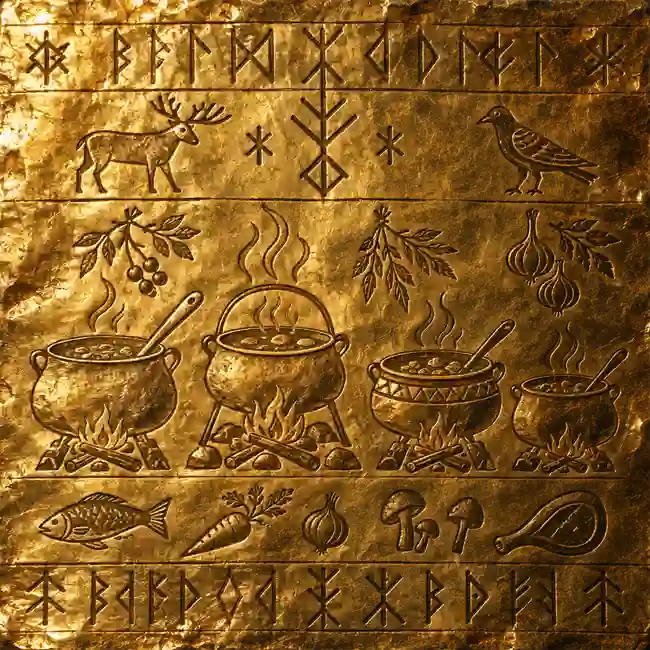
🏰📜 The Storyteller’s Intro: 5,000 Years of Ancestral Flavors
Hey there, fellow food historian and curiosity seeker! Grab a warm blanket, pull up a sturdy wooden stool, and sit with me by the hearthfire. Today, we are taking a deep, fascinating journey back roughly 5,000 years into the mist-shrouded forests, pristine fjords, and rugged glades of Northern Europe. Long before the legendary Viking Age dominated open seas, long before majestic longships set sail for distant shores, early human communities were quietly shaping the foundation of Northern European foodways. These resilient souls were the Proto-Nordic tribes, living during the critical transition between the Late Neolithic Era and the Early Scandinavian Bronze Age (spanning roughly 3000 BCE to 1500 BCE).
To truly appreciate how these ancient ancestors cooked, we have to look at the three major prehistoric epochs that sculpted their world and dictated their daily sustenance:
🛡️ The Late Neolithic Era (c. 3000 BCE – 2000 BCE): This was a transformational time when early agricultural practices slowly blended with deep-rooted hunter-gatherer traditions. Communities began settling into semi-permanent timber farmsteads. Potters learned to mix local clay with organic binders, firing sturdy earthenware pots in open bonfires. These porous clay pots transformed culinary culture forever, moving human diet away from direct flame roasting toward long, gentle simmered broths and nutrient-dense stews.
🛡️ The Early Scandinavian Bronze Age (c. 2000 BCE – 1100 BCE): As trade networks expanded across continental Europe, bronze axes, ornaments, and prestige items made their way north. Yet, when it came to everyday cooking, heavy-bottomed clay vessels remained the undisputed kings of the prehistoric kitchen. Soil cultivation expanded, livestock herds flourished, and community feasts centered around slow-cooked clay pot broths became essential social bonds for tribal cohesion.
🛡️ The Nordic Iron Age Transition (c. 500 BCE onward): Though metallurgy advanced to iron kettles centuries later, the foundational flavor profiles, preservation methods, and clay-pot culinary techniques established during the Proto-Nordic era remained deeply embedded in Northern European hearth culture for thousands of years.
Imagine standing at the edge of a pine forest five millennia ago. The air is crisp, damp, and pine-scented. The winter chill cuts deep, and survival depends entirely on human ingenuity, deep knowledge of the landscape, and a glowing fire pit. Inside low-slung timber longhouses, hand-molded earthenware pots simmered slowly over smoldering hardwoods like birch, oak, and pine. These clay pots weren’t just cooking utensils; they were life-sustaining engines. They retained heat for hours, softened tough wild game, rendered fat from marine mammals, and extracted every drop of protein and minerals from animal bones.
These ancient culinary secrets reveal a culture that was deeply attuned to nature's delicate rhythm. Nothing went to waste. Marrow bones were cracked open and boiled down into gelatinous, skin-nourishing broths. Forest herbs, roots, wild greens, and cracked heritage grains were tossed into the simmer to create thick, hearty pottages. Cooking in unglazed clay allowed subtle earthy notes to infuse directly into every dish, creating a earthy, rustic comfort food experience that nourished generations through bitter sub-zero winters.
📜 Iconic Excavated Menus: Proto-Nordic Prehistoric Specialties
Archaeological digs across Southern Scandinavia, Denmark, Sweden, and Northern Germany have yielded incredible bio-archaeological evidence. Microscopic chemical analysis of pottery sherds, lipid residue testing, charred grain crusts, and paleobotanical samples found inside preserved clay pots give us a clear window into exact ancestral menus. Here are the most iconic excavated menu archetypes discovered by archaeologists, highlighting the true ancient culinary secrets of the north:
✦ The Funnel-Beaker Wild Game & Forest Root Pottage: Unearthed in Neolithic settlement layers across Denmark and Southern Sweden, this dish represents one of the earliest recorded clay-pot stews. Earthenware vessel remnants revealed heavy residues of marrow fat from red deer and wild boar, gently simmered alongside crushed acorns, wild turnip roots, and water chestnuts.
✦ The Baltic Coastal Seal Fat & Barley Broth: Found in coastal midden sites along the Baltic Sea coast, this ancient recipe combined rendered ringed-seal blubber with early hulled barley grains, wild garlic leaves, and dried sea greens. The fat provided vital calories to survive freezing sea winds, while clay-pot simmering rendered the seal oil smoothly into the grain broth.
✦ The Corded-Ware Smoked Venison & Juniper Berry Stew: Discovered in ceramic pot sherds associated with late Neolithic forest settlements, this fragrant stew combined long-simmered, wood-smoked venison shoulder with crushed juniper berries, hazelnut meal, and wild forest thyme. The juniper berries acted as both a natural flavor brightener and a digestive aid.
✦ The Scandinavian Bog-Silt Freshwater Fish & Foraged Green Broth: Recovered from lakeside archaeological deposits in Southern Norway and Sweden, this delicate pottage featured freshwater pike and trout simmered in earthenware pots with nettle leaves, dandelion greens, wild leeks, and cracked emmer wheat.
✦ The Bronze Age Hearth-Stew of Salted Pork, Tallow & Roasted Heritage Grains: Found in preserved hearth pits dating to the Early Scandinavian Bronze Age, this celebratory dish combined salted boar pork, beef tallow, cracked spelt, roasted barley, and sweet gale herbs. It was a rich, thick, calorie-dense feast dish prepared for winter solstice gatherings and seasonal tribal rituals.
🗺️ Ancestral Living, Foraging Trails & Modern Nordic Eco-Tourism
Life for Proto-Nordic tribes was an endless dance with the seasons. Survival meant knowing exactly when the salmon would run, when hazelnut groves were ready for harvest, and where wild garlic shoots would emerge from melting snow. They lived in communal timber longhouses insulated with turf, reed thatch, and clay plaster. Central hearth pits were the pulsing heart of every dwelling, serving as the primary source of light, heat, and hot food day and night.
For modern travelers, history buffs, and food enthusiasts who want to walk in the footsteps of these prehistoric ancestors, Northern Europe offers world-class eco-tourism and living history experiences:
• The Lejre Land of Legends (Sagnlandet Lejre), Denmark: Located near Roskilde, this extraordinary 43-hectare open-air living history museum reconstructs Iron Age, Bronze Age, and Neolithic villages. Visitors can watch experimental archaeologists reconstruct Proto-Nordic clay pots using authentic historical techniques, light hearth fires using flint and steel, and cook ancient stews in earthenware pots over open flames.
• The Tanum Rock Carvings & Vitlycke Museum, Sweden: A UNESCO World Heritage site in Bohuslän, Tanum features thousands of petroglyphs carved into granite bedrock by Bronze Age ancestors. The nearby Vitlycke Museum offers immersive living history farmsteads where you can explore authentic reconstructions of ancient longhouses and learn about prehistoric foraging trails along the Swedish coast.
• The Historical Museum at Lund University, Sweden: Home to an extensive collection of Neolithic and Bronze Age ceramic artifacts, pot sherds with preserved food crusts, and ancient grave goods that tell the story of Northern Europe's earliest culinary innovations.
• The Prehistoric Trail of Djursland, Denmark: A scenic hiking route through ancient landscapes filled with megalithic dolmens, passage graves, and bog sites where archaeologists have uncovered early clay vessels and bog bodies with preserved stomach contents, providing direct proof of prehistoric diets.
🚣 River Basins & Coastal Fjord Waterways of the Proto-Nordic World
Water was the superhighway of the prehistoric north. Proto-Nordic communities established their settlements along rich river basins, glacial lakes, and sheltered coastal fjords. These aquatic corridors provided an endless bounty of fish, waterfowl, and marine mammals, while offering vital travel routes for trade, social gathering, and resource gathering.
Key historical waterways that shaped Proto-Nordic clay-pot cooking culture include:
• The Göta Älv River Basin (Sweden): Flowing from Lake Vänern out to the Kattegat sea, this major river corridor supported dense prehistoric settlements for millennia. The nutrient-rich riverbanks provided fine river clay for pottery making and abundant freshwater fish like salmon and trout for clay-pot broths.
• The Gudenaa River System (Jutland, Denmark): Denmark’s longest river was a bustling highway for prehistoric canoe transport. Excavations along its banks have unearthed countless clay pot sherds containing fish bones, aquatic plant residues, and forest game broth remnants.
• The Oslofjord Coastal Inlets (Norway): The sheltered, nutrient-rich waters of the Oslofjord provided prehistoric tribes with seals, porpoises, cod, and shellfish. Coastal clay pots found in this region show heavy marine lipid residues, proving that long-simmered fish and seal stews were everyday staples.
• The Lake Mälaren Valley (Sweden): Before post-glacial rebound converted it into a lake, this area was a vast sea bay surrounded by fertile shorelines. Prehistoric clay pots excavated here highlight a rich blend of agricultural grains and freshwater lake forage simmered together in heavy earthenware pots.
🌲 Ancient Pine Forests, Peat Bogs & Glacial Valley Landscapes
Beyond the rivers and coasts, the inland topography of the Proto-Nordic landscape was defined by dense primeval pine and birch forests, rolling glacial valleys, and mysterious peat bogs. The land dictated every ingredient that went into the daily clay pot, creating a hyper-local, wild-foraged culinary lifestyle.
Key landscapes that defined their foraging and cooking environment include:
• The Boreal Pine & Birch Taiga: The deep northern forests provided a rich natural pantry. Proto-Nordic tribes gathered pine nuts, wild berries (lingonberries, cloudberries, bilberries), edible mushrooms, wild roots, and aromatic spruce tips to flavor their slow-simmering meat broths.
• The Sacred Peat Bogs of Denmark & Southern Sweden: Peat bogs were both sacred sites for ritual offerings and natural refrigerators. The acidic, oxygen-poor environment preserved organic materials for thousands of years, including wooden cooking spoons, bark containers, and ceramic pots filled with preserved ancient food remains.
• The Glacial Valleys of Telemark and Bohuslän: Carved by ice sheets thousands of years prior, these sheltered valleys offered fertile soils for early wheat and barley cultivation, along with lush summer grazing lands for early domesticated cattle, sheep, and goats.
🏹❓ Ancient Civilization FAQ: Unlocking Palace & Tribal Kitchen Mysteries
Q1:How did Proto-Nordic potters craft clay pots that could survive direct hearth fire without cracking?
Proto-Nordic potters used a specialized technique called "tempering." They mixed raw local clay with crushed granite, quartz, crushed sea shells, or ground plant fibers. This temper reduced thermal shock, allowing the earthenware vessels to expand and contract smoothly when placed directly over open hearth embers without cracking.
Q2:Why was clay pot simmering superior to direct open-flame roasting for early tribes?
While open-flame spit roasting was great for fresh meat, it lost precious fat, juice, and nutrients to the dripping coals. Clay pot simmering trapped every drop of moisture, fat, and bone marrow inside the broth. Furthermore, gentle ceramic heat slowly broke down tough, lean wild game muscles and hard, unrefined grains into easily digestible, highly nutritious meals.
Q3:How do modern archaeologists know what Proto-Nordic people ate 5,000 years ago?
Archaeologists use advanced scientific techniques, including Gas Chromatography-Mass Spectrometry (GC-MS) and stable isotope analysis, to analyze microscopic lipid residues absorbed inside the porous clay walls of excavated pot sherds. They also analyze paleobotanical seeds, charred food crusts, and even preserved stomach contents from bog bodies like Tollund Man and Grauballe Man.
Q4:Did Proto-Nordic clay pot stews use salt for seasoning?
Salt was a precious commodity in the prehistoric north. Coastal tribes produced salt by boiling down seawater or burning salt-rich sea kelp and using the mineral-rich ash to season their broths. Inland tribes often relied on wild herbs, mountain sorrel, wood ash, and pine needles to provide savory, acidic, and mineral-rich flavor profiles to their daily stews.
🧠 Final Thoughts: The Timeless Allure of Antique Gastronomy
There is something profoundly grounding about looking back at the culinary habits of the Proto-Nordic tribes. Five thousand years ago, without electricity, modern stainless steel, or exotic global spice trades, our ancestral cooks created deeply satisfying, nutrient-rich meals using nothing more than local clay, wild forage, clear spring water, and fire.
Their slow-cooked clay pot broths and stews were not merely food; they were a celebrating of survival, community, and human resilience in one of the earth's most challenging environments. As modern food culture swings back toward ancestral eating, slow cooking, wild foraging, and natural earthenware vessels, the ancient wisdom of these northern tribes feels more relevant, comforting, and inspiring than ever before. Stay tuned for our upcoming deep-dive articles, where we will unlock step-by-step authentic home recipes so you can recreate these ancient ancestral broths in your own modern kitchen!
🏛️ Credit to the Keepers of the Culture (The Legacy)
We extend our deepest respect, gratitude, and admiration to the dedicated archaeologists, experimental historians, bio-anthropologists, museum curators, and cultural preservationists across Denmark, Sweden, Norway, and Germany. Their painstaking field excavations, lipid residue analyses, and experimental archaeology projects keep the rich, tangible history of Northern Europe's prehistoric ancestors alive for generations to come.
✦ The National Museum of Denmark (Nationalmuseet, Copenhagen): For preserving invaluable Neolithic and Bronze Age ceramic artifacts, bog finds, and early agricultural exhibits.
✦ The Swedish History Museum (Historiska museet, Stockholm): For world-class curation of Scandinavian prehistoric life, hearth tools, and ancient settlement history.
✦ The Museum of Cultural History (Kulturhistorisk museum, Oslo): For groundbreaking research into early Norwegian coastal settlements, foraging networks, and hearth culture.
✦ Experimental Archaeologists Worldwide: For firing hand-molded clay pots, testing prehistoric recipes, and showing us how our ancient ancestors truly nourished body and soul five millennia ago.
🏛️🍲 The Forgotten Stone Pot: Unearthing the 5,000-Year Nordic Beef Broth
👉 Discover Proto-Nordic Tribes' Clay-Pot Broths & Stews
| 🌐 🏛️🍲 < Back | 🏰 🍖 < Previous | Next > 🍯 🏰 |