
🏠 Home > 🗺️ Recipes > 🏛️🍲 Clay-Pot Broths & Stews > 🏟️ Minoan Crete: Clay-Pot Broths & Stews Recipes
🏟️ 🏛️🍲 Minoan Crete: Clay-Pot Broths & Stews Recipes
Published by Supakorn | Updated: September 2026
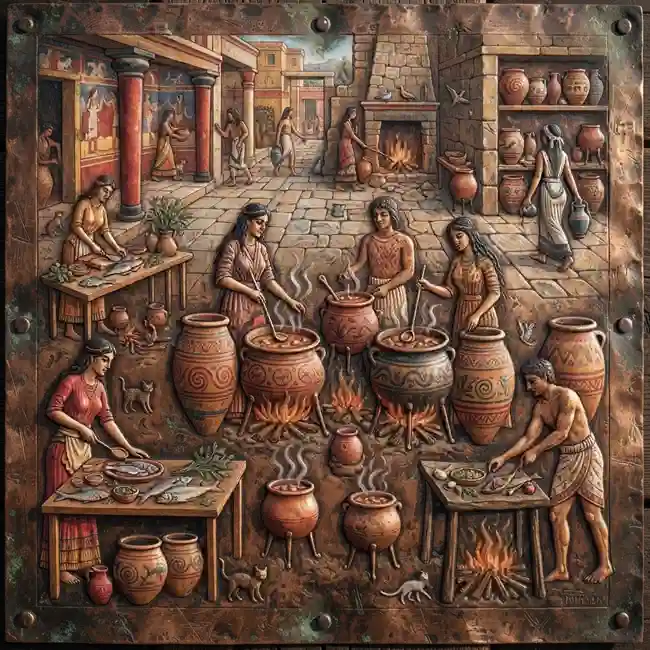
🪓📜 The Storyteller’s Intro: 5,000 Years of Ancestral Flavors
Imagine stepping onto a sun-drenched island in the middle of the shimmering Aegean Sea, around 3000 BCE. Long before classical Greece built the Parthenon or Rome laid its first cobblestone, a sophisticated civilization was flourishing on the island of Crete. These were the Minoans—pioneers of art, trade, architecture, and above all, an incredible food culture that laid the foundations for what we know today as the Mediterranean diet.
When you look back over 5,000 years of ancestral flavors, Minoan history isn't just one flat layer of time. Archaeo-botanists and historians generally divide this incredible timeline into distinct epochs, each bringing its own evolution in culinary craft:
✦ Early Minoan Period (c. 3000–2000 BCE): The dawn of village communities and early farming. This was the era when locals perfected agrarian living, cultivating olive trees, wild grains, and native legumes while mastering rudimentary earthenware production.
✦ Protopalatial Period (c. 2000–1700 BCE): The rise of the first monumental palaces at Knossos, Phaistos, and Malia. Kitchens grew in scale, trade networks expanded across the Eastern Mediterranean, and specialized ceramic cookware—like tripod hearth pots—became a staple in everyday homes and royal compounds alike.
✦ Neopalatial Period (c. 1700–1450 BCE): The golden age of Minoan culture. Grand banquets, sophisticated trade of aromatic herbs, and refined culinary arts defined this era. Elaborate clay pots simmered rich stews infused with wild Cretan herbs, saffron, and fresh olive oil.
✦ Postpalatial Period (c. 1450–1100 BCE): A transitional phase marked by mainland Mycenaean influences. Cultural shifts integrated new cooking styles, yet the fundamental Minoan love for earth-cooked broths stayed firmly rooted in Cretan soil.
At the very heart of this Bronze Age gastronomic revolution was a simple, genius invention: coarse, heat-resistant clay cookware. The Minoans realized that raw clay, fired in localized kilns, retained heat remarkably well and distributed it evenly over open flames. By simmering wild greens, lentils, pork, goat, seafood, and fragrant herbs inside heavy-bottomed clay tripods and wide-rimmed stewing vessels, they unlocked deep layers of flavor. Moisture was trapped inside, turning tough cuts of meat and dense legumes into tender, nutrient-rich broths. Walking through a Minoan town five millennia ago, your senses would be greeted not by raw smoke, but by the irresistible aroma of earthy stews slowly bubbling away in hand-shaped earthenware.
📜 Iconic Excavated Menus: Archaeological Secrets of the Aegean Stew
Thanks to modern bio-archaeology, organic residue analysis, and deep-soil excavation, scientists have been able to "read" the microscopic remnants left behind inside ancient Cretan clay pots. Burned crusts, plant starches, lipids, and animal bone fragments preserved in the porous ceramic surfaces tell a vivid story of what was cooking in these ancestral kitchens. While exact step-by-step recipes weren't written in cookbooks, these specific menu combinations are directly documented through archaeological evidence and linear script record keeping:
✦ The Minoan Tripod Goat Stew with Wild Fennel and Lentils: Residue analysis from tripod cooking vessels at sites like Mochlos and Chryssolakkos revealed traces of goat or mutton fats slow-simmered alongside legumes, heavily seasoned with wild fennel seeds and bulbs.
✦ The Aegean Seafood & Garlic Broth: Uncovered in coastal settlements like Gournia, ceramic pots contained fish bone fragments, limpet shells, and organic markers of garlic and wild onion, pointing to a rich, aromatic broth harvested fresh from the sea.
✦ The Sacred Polyparia Legume Mash: Organic residue from multi-compartment ceramic vessels proves that the Minoans cooked mixed-grain and pulse stews—combining chickpeas, grass peas, fava beans, and barley—often enriched with olive oil and wild thyme.
✦ The Palace Roasted Pork & Wild Mushroom Pot: Excavations around the residential quarters of Knossos unearthed large storage jars and slow-cookers holding pig bones mixed with aromatic forest herbs, wild coriander, and traces of local wood-fungi residues.
✦ The Cretan Saffron & Snails Stew: Evidence of snail shells (Eobania vermiculata) found alongside saffron pollen traces inside small clay stewpots shows that land snails were a prized delicacy cooked with precious mountain spices.
✦ The Barley and Wild Greens Herbal Broth: Residue testing on everyday domestic cookware shows a humble, daily staple: a nourishing pot of wild edible greens (horta), cracked barley grains, and olive oil, simmered into a soothing restorative broth.
🗺️ Life in the Bronze Age: Foodways & Heritage Tourism in Crete
🏺 How the Minoans Lived and Dined
Living in Minoan Crete was deeply connected to the rhythm of the land and the sea. Unlike many ancient civilizations that focused purely on survival, the Minoans built a society centered around communal enjoyment, art, and vibrant social gatherings. Their homes featured central hearths where clay pots were nestled directly into hot embers or suspended over fires on three-legged tripod bases.
Daily life revolved around seasonal harvests. Families gathered olive crops in the autumn, harvested wild herbs like oregano, dittany, and sage from rugged mountain slopes in the spring, and gathered sea salt from natural rock pools along the coast. Meals were eaten communally, often served in terracotta bowls accompanied by freshly baked flatbreads, figs, pomegranates, and rich olive oils. Food wasn't just sustenance—it was an expression of life, health, and hospitality.
🏛️ Walking in the Footsteps of Ancient Chefs
If you are a food lover, history enthusiast, or modern explorer looking to experience the physical world of the Minoans today, Crete offers an incredible heritage tourism route:
• The Palace of Knossos (Heraklion): Step into the epicenter of Minoan civilization. Wander through the sprawling palace complex where grand storerooms (pithoi) once held thousands of liters of olive oil, grain, and dried fruits.
• The Archaeological Museum of Heraklion: Home to the world's most comprehensive collection of Minoan artifacts. Here, you can see the actual hand-crafted clay tripod pots, cooking trays, and delicate ceramic dinnerware recovered from excavations.
• The Coastal Settlement of Gournia: Often called the "Pompeii of the Minoan world," this remarkably preserved artisan town allows you to walk through ancient domestic kitchens and see where everyday villagers prepared their clay-pot meals.
• The Phaistos Palace Ruins: Located in the southern part of the island, offering breathtaking views of the Messara Plain—a region that supplied grain, livestock, and vegetables to Minoan kitchens for centuries.
• Chania’s Old Town & Kastelli Hill: Discover layers of Minoan urban living beneath a charming modern town, where ancient food processing sites and storage rooms continue to be uncovered by team archaeologists.
🚣 The Heart of the Aegean Basin: Waterways and Coastal Trade Networks
🌊 Navigating the Ancient Maritime Highways
To understand how Minoan clay-pot cooking became so rich and diverse, you have to look at the Aegean Basin. Crete sits at the crossroads of three continents—Europe, Asia, and Africa. Minoan seafaring merchants were master navigators who transformed the Aegean Sea into a thriving network of trade and cultural exchange.
🍃 Importing Flavors, Exporting Craft
Minoan ships sailed across the Eastern Mediterranean, connecting with Egypt, the Levant, and Cyprus. Through these maritime highways, Minoan cooks gained access to rare ingredients, foreign herbs, and exotic culinary techniques:
• Coriander and Cumin: Traded via Eastern Mediterranean sea routes, adding warm, earthy notes to local clay-pot broths.
• Garlic and Exotic Grains: Introduced and naturalized across Cretan soil through constant maritime interaction with coastal trade partners.
• High-Quality Clay Materials: Ceramic craftsmen traded finished pottery and imported specialized clay deposits, allowing them to craft fireproof cooking pots that wouldn't crack over intense heat.
• Salt-Cured Delicacies: Seafarers preserved fish and meats in sea salt, creating portable, umami-rich ingredients that could be dropped into slow-cooking stews to build rich, savory depth.
🏜️ From Mountain Caves to Coastal Oases: The Diverse Cretan Landscape
⛰️ The Mountain Plateaus and Sacred Caves
Crete is a land of dramatic geography, featuring towering limestone mountain ranges, hidden high-altitude plateaus, and fertile valleys. Minoans made full use of these microclimates:
• The Lassithi Plateau: A fertile upland plain surrounded by mountains, providing ideal conditions for growing wild legumes, ancient grains, and raising sheep and goats.
• Psychro Cave (The Dictaean Cave): High in the mountains, sacred ritual sites like this cave housed offerings of food cooked in clay vessels, bridging the gap between daily sustenance and spiritual reverence.
• White Mountains (Lefka Ori): The rugged slopes provided a endless bounty of wild mountain tea, dittany, oregano, and edible wild greens (horta) that defined the herbal backbone of Minoan broths.
🌴 Coastal Oases and Fertile Valleys
Down along the coast and throughout inland valleys, the landscape shifted dramatically:
• Vai Date Forest and Coastal Oases: Lush pockets along the coastline provided fresh spring water, wild dates, and salt-marsh vegetation used in coastal cooking.
• The Messara Plain: A massive, sun-bathed agricultural oasis in southern Crete that produced abundant harvests of wheat, barley, olives, and pulses, serving as the breadbasket for palace kitchens.
🐙❓ Ancient Civilization FAQ: Unlocking Palace Kitchen Mysteries
Q1.How do archaeologists know what Minoans ate if there are no written recipe books?
While the Minoans didn't leave behind traditional cookbooks, they left something even better: physical chemical evidence! Archaeologists use a method called organic residue analysis. By scraping microscopic samples from the unglazed porous ceramic walls of excavated clay pots, scientists can detect ancient lipids, fatty acids, proteins, and plant starches. Additionally, Linear B clay tablets (from later administrative phases) record detailed inventories of kitchen supplies, including coriander, cumin, sesame seeds, fennel, lard, olive oil, and livestock.
Q2.Why were clay pots so important to Bronze Age Mediterranean cooking?
Clay was the ultimate ancient cooking technology. Hand-built earthenware distributes heat far more evenly than metal, preventing food from scorching over wild outdoor fires. Clay pots also trap steam efficiently, allowing tough meats, dense root vegetables, and dry legumes to break down slowly over several hours. The clay itself imparted a subtle, earthy richness to the broths, creating a flavor profile that modern metal cookware simply cannot match.
Q3.Did Minoan everyday villagers eat the same food as palace royalty?
The core ingredients—barley, wild greens, lentils, olive oil, and herbs—were shared by almost everyone. However, palace royalty and elites had access to a much higher volume of meat (such as prime cuts of young goat, lamb, and pork), luxurious quantities of olive oil, precious saffron, and imported spices. Common villagers relied more heavily on legume-based stews, small seafood catches, wild snails, and seasonal greens, enriched with olive oil whenever available.
Q4.How did Minoans preserve their ingredients before refrigeration?
Minoans were masters of natural preservation! They dried wild herbs, fruits (like figs and raisins), and legumes in the Mediterranean sun. Meats and fish were cured using sea salt harvested from coastal rock pools or smoked slowly over aromatic hardwood fires. Olive oil and honey were also used as natural preservatives to seal ingredients inside massive clay storage jars called pithoi, keeping food safe for long winter months or dry summer seasons.
🧠 Final Thoughts: The Timeless Allure of Antique Gastronomy
There is something undeniably magical about looking back at the culinary habits of a civilization that thrived 5,000 years ago. The Minoans understood a fundamental truth about food that we often forget in our fast-paced modern world: true flavor takes time, care, and a deep connection to the earth. Their slow-simmered clay-pot broths weren't just meals; they were a harmonious blend of local agriculture, wild mountain foraging, and master craftsmanship.
By cooking with humble ingredients like wild herbs, native legumes, fresh seafood, and rich olive oil inside simple earthenware vessels, they created a culinary legacy that still echoes through modern Cretan cuisine today. The next time you smell fresh oregano, taste warm olive oil, or enjoy a slow-cooked stew, you are tasting a piece of living history born in the Bronze Age Aegean.
Stay tuned, historical food lovers! In our upcoming feature, we will be stepping directly into the ancient Minoan kitchen, unlocking full step-by-step reconstructed recipes, authentic clay-pot cooking techniques, and modern kitchen swaps so you can recreate these 5,000-year-old Aegean feasts right in your own home!
🏛️ Credit to the Keepers of the Culture (The Legacy)
This exploration of ancient Bronze Age gastronomy is made possible thanks to the tireless dedication of international archaeological teams, bio-archaeologists, and Cretan cultural historians. Special honor goes to:
✨ The Archaeological Museum of Heraklion: For preserving and displaying the priceless culinary artifacts, tripod pots, and storage vessels that connect us to the Minoan past.
✨ The Greek Ministry of Culture & Ephorate of Antiquities of Heraklion & Lassithi: For their ongoing efforts to excavate, protect, and study the palace complexes and village settlements of Bronze Age Crete.
✨ Minoan Culinary Research Pioneers: Archaeologists and bio-chemists whose groundbreaking organic residue analysis on ancient Mediterranean ceramics continues to reveal the exact food combinations enjoyed thousands of years ago.
✨ The Local Communities of Crete: The traditional cooks, farmers, and elders who keep ancient Cretan culinary values alive today through their enduring love for wild greens, cold-pressed olive oil, and time-honored slow-cooking traditions.
🏛️🍲 We Unearthed The Minoan Soup That Time Forgot
👉 Savor Minoan Crete: Clay-Pot Broths & Stews
| 🌐 🏛️🍲 < Back | 🏟️ 🍖 < Previous | Next > 🍯 🏟️ |