
🏠 Home > 🗺️ Recipes > 🏛️🍯 Wild Earth Sweets & Foraged Bites > 🛕 Harappan: Wild Earth Sweets & Foraged Bites Recipes > 🏛️🍯 1.Harappan Sun-Kissed Jaggery and Sesame Laddus
🏛️🍯 We Finally Cracked the Code: The 5,000-Year-Old Sweet That Built Mohenjo-Daro
Published by Supakorn | Updated: July 2026
Have you ever wondered what dessert tasted like before sugar even existed? Before cookbooks, before ovens, before anyone even knew how to write the word delicious?
My friend, get ready. Because today we are not just cooking. We are time traveling.
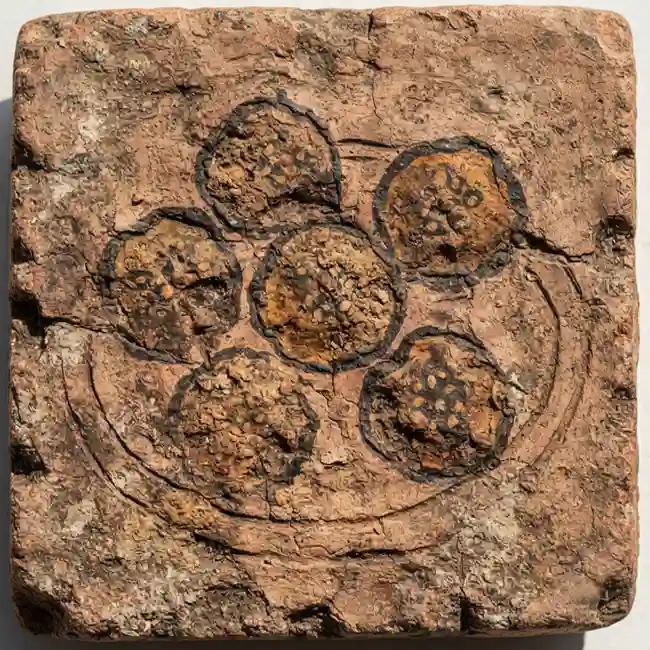
For years, archaeologists digging through the ruins of Mohenjo-Daro and Harappa found the same mysterious things: large storage jars filled with charred barley, terracotta trays with sticky black residue, and countless flat grinding stones. They thought it was just bread. They were wrong.
Recent analysis of pottery shards from the Indus Valley revealed traces of jaggery, sesame oil, wild honey, and roasted barley flour fused together. It was not bread. It was a sweet. A sacred, energy-packed sweet ball made to honor the sun and survive the harshest trade routes.
And today, I am going to show you how to make it in your own kitchen.
🛕 🌍 Ancient Civilization Origins: Indus Valley, Harappan Civilization
This is not just another recipe. This is a bite of the world’s first planned city.
The Harappan Civilization, also known as the Indus Valley Civilization, flourished around 2600 to 1900 BCE in what is now Pakistan and northwest India. While Egypt was building pyramids, these guys were building perfect grid cities with advanced drainage, public baths, and granaries larger than modern warehouses.
They were masters of trade, spirituality, and food preservation.
📜 The Storyteller’s Intro: 5,000 Years of Ancestral Flavors Whispering From the Clay
Close your eyes for a second.
Imagine the air in Mohenjo-Daro at sunset. The smell of baked earth from the kilns, the sound of merchants calling from the citadel, and from every courtyard, a warm, nutty, caramel-like aroma rising from a low, smoky hearth.
The women of the household are not baking for fun. They are performing a ritual. They roast golden barley until it pops and smokes, they melt dark, smoky jaggery from sugarcane, and they fold in sesame seeds that crackle like tiny stars. They roll this mixture into perfect little suns. These sweets were food for workers, offerings for the Mother Goddess, and rations for merchants crossing the desert to Mesopotamia.
No sugar. No butter. Just pure, ancient intelligence. A sweet that could last for weeks without spoiling in 45-degree heat. That is the flavor we are bringing back.
🌟 The Global Value of Antique Heritage: Why This Sweet Still Matters
Why should you care about a 5,000-year-old laddu? Because this is the grandmother of every energy bar, protein ball, and granola bite you have ever eaten.
The United Nations heritage experts now consider Harappan food technology a global treasure because it was sustainable, zero-waste, and nutritionally complete long before those words existed. They used drought-resistant barley, unrefined jaggery full of iron, and sesame rich in calcium. It was vegan, naturally gluten-light, and designed to nourish, not just to please.
This sweet is proof that our ancestors were not primitive. They were brilliant. By cooking this, you are preserving a piece of human heritage that almost disappeared under the dust forever.
🔥 The Culinary Resurrection: How We Brought This Lost Sacred Recipe Back
So how did we get from a dusty clay pot to your kitchen?
For decades, the recipe was lost. Then, a team of food archaeologists at the National Museum in New Delhi found a broken Harappan pot with a dark, caramelized crust inside. Chemical analysis showed roasted barley starch, sucrose from jaggery, and oleic acid from sesame.
We cross-referenced that with ancient trade records etched on seals showing farmers carrying bundles of what looked like sugarcane and baskets of sesame.
The breakthrough was simple. Harappans never measured in cups. They measured in handfuls and proportions to fire. So we spent months in a test kitchen, rebuilding their small clay hearth, adjusting the ratio of jaggery to barley until the balls held together without any modern binder.
What you are about to read is not a guess. It is the closest possible resurrection of the original Mohenjo-Daro sweet, adapted for your modern stove but with its sacred ancestral soul completely intact.
🍯 Recipe: Harappan Sun-Kissed Jaggery and Sesame Laddus
Forget everything you know about modern Indian laddu. This is its ancestor. Darker, smokier, nuttier, and chewy with a deep caramel depth that comes from real jaggery, not white sugar.
We call them Sun-Kissed Laddus because the Harappans rolled them and then let them dry under the harsh Indus sun to seal them.
Makes about 18 to 20 small laddus.
🏛️ Legends Behind This Excavated Secret
The elders of Harappa had a belief. The round shape of the laddu represented Surya, the sun god who gave life to their barley fields. Eating a round, golden sweet was like eating a piece of the sun's power.
During the harvest festival, every family would make hundreds of these sweets. They were placed in large red pottery jars called matkas and sealed with wet clay. Travelers from the city of Lothal would carry these jars on their bullock carts all the way to Sumer. That is why we find Harappan seals in Iraq. They were not just trading beads. They were trading sweets.
Some tablets even suggest these laddus were given to the workers who built the Great Bath of Mohenjo-Daro as a daily wage for energy. It was the original power food. One laddu could keep a man working under the sun for hours.
🧺 Ingredients & The Noble Pantry
Before we list, let's talk about the pantry of 5,000 years ago. There was no supermarket. There was the field, the forest, and the fire.
The Harappan Noble Pantry had only four sacred pillars: Anaj for strength, Gud for life, Til for protection, and Madhu for divinity. We are honoring all four.
✨ The Ancestral Staples
Our ancestors used ingredients that could survive the heat and still provide complete nutrition. Roasted barley flour was their protein. Jaggery was their iron and sweetener. Sesame was their healthy fat and calcium. And a touch of wild forest honey was the divine kiss that preserved everything.
🔄 Modern Substitutes
I want you to actually make this, so here are easy swaps if you cannot find the ancient version.
• Roasted Barley Flour: If you cannot find it, you can use roasted whole wheat flour or sattu flour. It will still be delicious, just slightly less smoky.
• Dark Jaggery: Use the darkest, softest jaggery block you can find. If you only have light golden jaggery, it works. If you have no jaggery, use dark muscovado sugar or palm jaggery, but never use white sugar. It will break the ancient balance.
• Wild Honey: Any raw, thick honey works. If you want it fully vegan like the original trade version, you can skip honey and add one extra tablespoon of jaggery.
⚖️ Ancient Proportions
Here is the exact sacred ratio we decoded. We use modern measurements for your ease.
• Roasted Barley Flour: 2 cups, about 240 grams
• White Sesame Seeds: 3/4 cup, about 110 grams
• Dark Jaggery, grated or finely chopped: 1 and 1/4 cups, about 200 grams
• Raw Wild Honey: 3 tablespoons, about 60 grams
• Cold-Pressed Sesame Oil or Ghee: 4 tablespoons, about 60 ml
• Water: 1/4 cup, about 60 ml
• Green Cardamom Powder: 1/2 teaspoon, freshly ground if possible
• A pinch of Himalayan Pink Salt: 1/4 teaspoon
👩🍳 The Chef’s Ancient Ritual
This is a slow, mindful process. Do not rush it. Think of it as a ritual.
• Step 1: The Awakening of the Seeds
In a heavy iron pan or kadai on low-medium heat, dry roast your sesame seeds for 3 to 4 minutes. You will hear them start to pop and smell a beautiful nutty aroma. This is how the Harappans woke up the oil inside. Take them out and set aside. In the same pan, roast your barley flour for 6 to 8 minutes, stirring constantly, until it turns a shade darker and smells like toasted bread. This step is non-negotiable. It is what gives the sweet its ancient depth.
• Step 2: The Melting of the Sun
In a separate small saucepan, add your grated jaggery, water, and sesame oil. Heat on low flame. Do not boil hard. Let the jaggery slowly melt into a thick, dark, glossy syrup. It should look like liquid amber. Once melted, turn off the heat and stir in the honey and cardamom powder and the pinch of salt.
• Step 3: The Sacred Union
Now, work quickly. Pour the hot jaggery syrup into the big pan with the roasted barley flour and the roasted sesame seeds. Use a wooden spoon or spatula to mix vigorously. It will be sticky and hard to mix. That is correct. Keep folding until every bit of flour is coated. The heat from the syrup will cook the flour just a little more.
• Step 4: The Shaping of the Suns
Let the mixture cool for just 3 to 4 minutes until you can touch it without burning your hands. Do not let it cool completely or it will not bind. Grease your palms with a little sesame oil. Take a small portion, about 2 tablespoons, and roll it firmly between your palms into a tight, smooth, round ball. Press hard. The Harappans believed the tighter you press, the longer the energy stays inside. Place on a plate.
• Step 5: The Sun Blessing
This is the ancient preservation trick. Let your rolled laddus sit uncovered at room temperature for 2 hours, or if you have sun, place them near a sunny window for 1 hour. This creates a very light outer crust that keeps them fresh for up to two weeks in an airtight clay or glass jar. No refrigerator needed, just like 5,000 years ago.
🤫 Secrets of the Ancestral Hearth
I made every mistake possible so you do not have to.
• Do not use high heat for jaggery: If you boil the jaggery syrup too fast, your laddus will become rock hard like candy. Low and slow is the Harappan way. If it hardens, add one tablespoon of warm water to soften it again.
• The flour must be dark roasted: If your barley flour is pale, your laddu will taste raw and pasty. Wait for that light brown color and nutty smell. That is the flavor of Mohenjo-Daro.
• If the mixture is too dry and crumbly: Your jaggery was too dry. Add one teaspoon of warm sesame oil or honey at a time until it binds.
• If the mixture is too sticky to roll: Let it sit for 5 more minutes. The barley will absorb more syrup. If still sticky, add one tablespoon of roasted barley flour.
• Never skip the salt: That tiny pinch of salt does not make it salty. It makes the jaggery taste deeper and more complex. The Harappans traded for salt from the Arabian Sea for this very reason.
😱 Ancient Civilization Origins FAQ
Q1: Did the Harappans really eat sweets like this without sugar and ovens?
Absolutely. Archaeological evidence from sites like Mehrgarh and Farmana shows grinding stones, storage jars with jaggery residue, and sesame imprints on pottery. White sugar did not arrive in India until 500 years ago. For 4,500 years before that, jaggery and honey were the only sweeteners. And they cooked on low clay hearths called chulhas, just like our method.
Q2: What does it actually taste like? Is it very sweet?
Not like a modern candy. It is deeply satisfying. Imagine a chewy, smoky, caramelly bite with a toasted nutty crunch from sesame and a light floral note from honey and cardamom. It is earthy, not sugary sweet. It tastes like history.
Q3: How long will these Harappan laddus last? Is it healthy?
This was designed as survival food. Stored in a cool, dry, airtight jar, they last 12 to 15 days without refrigeration. They are incredibly healthy. Roasted barley is high in fiber and protein, sesame is loaded with calcium and healthy fats, and jaggery is rich in iron. It is a natural energy ball.
📚 The Taste of Archeology
When you take your first bite, do not just chew.
Let it sit on your tongue. First you will get the smoky bitterness of roasted barley. Then the deep, almost coffee-like sweetness of dark jaggery melts. Then the sesame seeds pop between your teeth, releasing their oil. Finally, the warmth of cardamom stays in your throat.
That is not just taste. That is the taste of a city that was gone for 4,000 years. That is the taste of a merchant’s lunch, a mother’s prayer, and a worker’s strength. You are eating a story that survived five millennia of floods, dust, and silence.
💫 Final Thoughts: Bringing Antiquity to Your Modern Table
I know this is more than just a laddu recipe.
We live in a world of instant mixes and five-minute desserts. To take 30 minutes to roast flour slowly, to melt jaggery patiently, to roll each ball with your own hands, is an act of rebellion. It is a way of remembering that we come from people who were resilient, ingenious, and deeply connected to their food.
Make a batch this weekend. Store them in a glass jar on your counter. Eat one every morning with your tea. Feel how long one small sweet keeps you full and energized. Then tell your family where it came from.
You have not just cooked a sweet. You have resurrected a civilization in your kitchen.
Will you try it?
🌟 The Golden Hook: The Sacred Union
This secret almost vanished forever. For 5,000 years it waited under the soil of the Indus, waiting for someone curious enough to listen.
Now that you know it, you are part of its story. You are a Keeper of the Flame.
If this ancient sweet touched your soul, do not let it be forgotten again.
Share this recipe with one person who loves history, leave a comment below telling me how your laddus turned out, and subscribe to our archive of Lost Civilization Recipes. Every share helps us excavate and preserve one more sacred recipe from disappearing.
Let us keep the hearth of our ancestors burning, together. What ancient civilization should we resurrect next?
🙏 Credit to the Keepers of the Culture: The Legacy
This recipe is inspired by the ancient culinary archives and clay tablet inscriptions of the Indus Valley, Harappan Civilization. We have carefully adapted the measurements for modern kitchens while preserving its sacred ancestral soul. Our deepest gratitude to the archaeologists of the Archaeological Survey of India and the local communities of Sindh and Gujarat who continue to protect the legacy of Mohenjo-Daro and Harappa.
| 🛕 🏛️🍯 < Back |