
🏠 Home > 🗺️ Recipes > 🏛️🍖 Hearth-Roasted Mains > 🛕 Harappan: Hearth-Roasted Mains Recipes > 🏛️🍖 1.Sacred Indus Ember-Roasted Heritage Meat
🏛️🍖 Rediscover the Fire-Roasted Feasts of the Ancient Harappans
Published by Supakorn | Updated: July 2026
🛕 🏛️ Ancient Civilization Origins: Harappan Civilization (Indus Valley)
Long before mighty empires rose across Europe and centuries before many of the world's famous kingdoms were established, an extraordinary civilization quietly flourished along the fertile floodplains of the Indus River. Today, we know them as the Harappans, one of humanity's earliest urban societies, whose remarkable achievements continue to astonish archaeologists more than five thousand years after their cities first emerged.
Stretching across what is now modern-day Pakistan and northwestern India, the Harappan Civilization—also called the Indus Valley Civilization—built carefully planned cities with straight streets, sophisticated drainage systems, public baths, granaries, and thriving marketplaces. While many ancient cultures left behind kings' names carved into monuments, the Harappans left something even more mysterious: a civilization whose written script remains undeciphered.
Their silence has become one of history's greatest mysteries.
Yet although their words remain unread, their kitchens still whisper stories.
Excavations at legendary cities such as Harappa, Mohenjo-daro, Dholavira, Rakhigarhi, and Lothal have uncovered clay ovens, grinding stones, cooking vessels, animal bones, charred grains, spices, storage jars, and countless culinary clues. Piece by piece, archaeologists have begun reconstructing how families gathered around glowing hearths to prepare nourishing meals using ingredients harvested from rivers, fields, forests, and grazing lands.
Unlike many later civilizations that celebrated lavish royal banquets, Harappan cuisine reflected a remarkable balance between practicality, sustainability, and seasonal abundance. Every ingredient served a purpose. Every cooking method conserved precious fuel. Every meal represented a close partnership between humans and the natural rhythms of the land.
Among the most captivating discoveries is the widespread use of open-fire roasting.
Long before metal stoves or modern ovens existed, meat was transformed over glowing embers inside clay-lined hearths. The slow dance between fire, smoke, earth, and time created flavors that modern barbecue lovers would instantly recognize, yet the Harappan approach was distinctly their own. Meat wasn't overwhelmed with heavy sauces or elaborate seasonings. Instead, simple aromatics, mineral-rich salt, fragrant herbs, sesame oil, and patient roasting allowed natural flavors to shine.
This ancient philosophy of cooking reminds us that exceptional food doesn't always require complexity. Sometimes, fire itself becomes the greatest chef.
Today, historians, food researchers, experimental archaeologists, and passionate home cooks are breathing new life into these forgotten traditions. While no complete Harappan cookbook has survived, evidence gathered from archaeological sites, botanical studies, residue analysis, and comparative ancient food research allows us to respectfully recreate dishes inspired by the culinary practices of one of the world's oldest civilizations.
The result is not merely another recipe.
It is an invitation to travel back five millennia through taste.
Every roasted bite connects us with farmers tending ancient wheat fields, herders guiding livestock across fertile plains, potters shaping cooking vessels by hand, and families gathering around glowing evening fires after long days beneath the Bronze Age sun.
For those who appreciate history as much as flavor, Harappan cuisine offers something truly special: the opportunity to experience one of humanity's earliest culinary traditions in a modern kitchen while honoring the ingenuity of our distant ancestors.
🔥 The Storyteller's Intro: Five Millennia Beneath the Sacred Hearth
Imagine standing outside a bustling Harappan home just as the sun begins to disappear beyond the dusty horizon.
Children laugh through narrow brick streets while merchants finish trading grains, cotton textiles, gemstones, and pottery before dusk settles across the city. Nearby, smoke rises gently from dozens of household hearths, carrying warm aromas into the evening air.
A clay oven glows softly.
Freshly gathered firewood crackles beneath carefully arranged embers.
Someone slowly turns skewers of freshly prepared meat over the fire while another family member grinds fragrant spices upon a smooth stone slab polished by generations of hands. Nearby, baskets overflow with barley, wheat, lentils, sesame seeds, onions, garlic, and herbs collected from nearby fields.
Nothing is hurried.
The fire decides the pace.
Cooking is more than preparing dinner—it is a daily ritual woven into the rhythm of community life. Every meal strengthens family bonds, celebrates seasonal harvests, and reflects centuries of accumulated knowledge passed from one generation to the next without written cookbooks.
Although the Harappan script remains one of archaeology's greatest unsolved puzzles, food has become its own universal language.
The blackened hearths uncovered beneath layers of earth speak quietly but clearly. Burned animal bones reveal what was eaten. Residue preserved inside pottery tells us what simmered over ancient fires. Carbonized seeds reveal forgotten harvests. Clay ovens preserve the engineering of prehistoric kitchens.
Together, these silent witnesses paint an extraordinary portrait of everyday life.
Unlike grand palaces that often dominate history books, Harappan kitchens belonged to ordinary families. Their meals were practical yet deeply connected to the landscape around them. Ingredients traveled only short distances, making every dish inherently seasonal and sustainable long before those concepts became modern ideals.
Perhaps that is why Harappan food still feels surprisingly relevant today.
As more people seek authentic cooking, natural ingredients, and traditional techniques, the wisdom of this ancient civilization resonates across thousands of years. Slow roasting, minimal processing, locally sourced ingredients, and respect for natural flavors are no longer forgotten practices—they have become modern culinary aspirations.
Each reconstructed recipe is therefore much more than historical curiosity.
It is an edible conversation across five thousand years.
🌍 The Global Value of Antique Heritage
Ancient recipes are far more than instructions for preparing food.
They are living archives of civilization itself.
Every ingredient reveals ancient agriculture. Every cooking vessel reflects technological innovation. Every hearth tells us how communities organized their homes, shared labor, and celebrated daily life. Through food, we discover not only what people ate but how they survived changing climates, traded across distant regions, and adapted to evolving landscapes.
The Harappan Civilization occupies a particularly important place within this global heritage.
As one of the world's earliest urban societies, it developed alongside ancient Egypt and Mesopotamia, yet followed its own remarkable cultural path. Its cities displayed astonishing standards of planning and sanitation, while its agricultural systems supported large populations through careful management of rivers, seasonal flooding, and fertile plains.
Its culinary traditions reflected this same thoughtful balance.
Archaeological evidence suggests diets rich in grains, legumes, vegetables, dairy products, sesame, and a variety of domesticated animals. River fish, wild resources, and regional plants added further diversity depending on local environments. Instead of relying on extravagant luxury, Harappan cooking celebrated dependable abundance.
This philosophy carries remarkable relevance today.
Modern chefs increasingly look toward ancient foodways for inspiration, embracing sustainable agriculture, nose-to-tail cooking, traditional fermentation, natural preservation, and open-fire techniques. Many practices now considered innovative are, in truth, rediscoveries of knowledge that ancient civilizations practiced thousands of years ago.
Recreating Harappan recipes also reminds us that history belongs to everyone.
You do not need to visit an archaeological excavation to experience the ancient world.
Lighting a fire, roasting simple ingredients with patience, and sharing a meal with family can become a meaningful tribute to one of humanity's earliest culinary traditions.
Food possesses a unique power unlike any museum exhibit.
It can be touched.
It can be smelled.
It can be tasted.
And in that fleeting moment when smoke, herbs, roasted meat, and warm bread come together, history ceases to be something distant.
It becomes wonderfully alive once again.
🏺 The Culinary Resurrection
No complete Harappan cookbook has ever been discovered.
There are no surviving recipe scrolls, royal banquet menus, or detailed cooking manuals waiting inside buried libraries. Instead, reconstructing Harappan cuisine resembles assembling an enormous historical puzzle from thousands of scattered fragments.
Archaeologists recover pottery stained with ancient residues.
Zooarchaeologists identify animal bones bearing evidence of butchering and roasting.
Botanists analyze preserved seeds, grains, spices, and pollen.
Experimental archaeologists recreate clay ovens using ancient construction techniques.
Food historians compare discoveries across Bronze Age civilizations to understand regional culinary traditions.
Together, these disciplines breathe remarkable life into forgotten kitchens.
The recipe presented in this series is therefore historically inspired rather than claimed as a verbatim ancient recipe. Every ingredient has been selected because it aligns with current archaeological evidence surrounding Harappan agriculture, livestock, cooking technology, and available seasonings. Where complete certainty is impossible, careful scholarly interpretation fills the remaining gaps without straying beyond what is historically plausible.
This respectful approach honors both history and modern cooking.
Rather than inventing extravagant flavors that never existed, we celebrate simplicity—the defining characteristic of many ancient meals.
The fire remains the centerpiece.
Fresh ingredients remain the heroes.
Time becomes the essential seasoning.
When you prepare these dishes, you are not simply following another recipe from a cookbook.
You are participating in an act of culinary archaeology.
Every glowing ember echoes ancient hearths.
Every fragrant wisp of smoke recalls forgotten evenings beneath Bronze Age skies.
Every shared meal helps preserve a cultural legacy that might otherwise remain buried beneath the earth forever.
And perhaps that is the greatest secret hidden within the lost kitchens of the Harappan world: history is never truly gone as long as someone remembers how to gather around the fire.
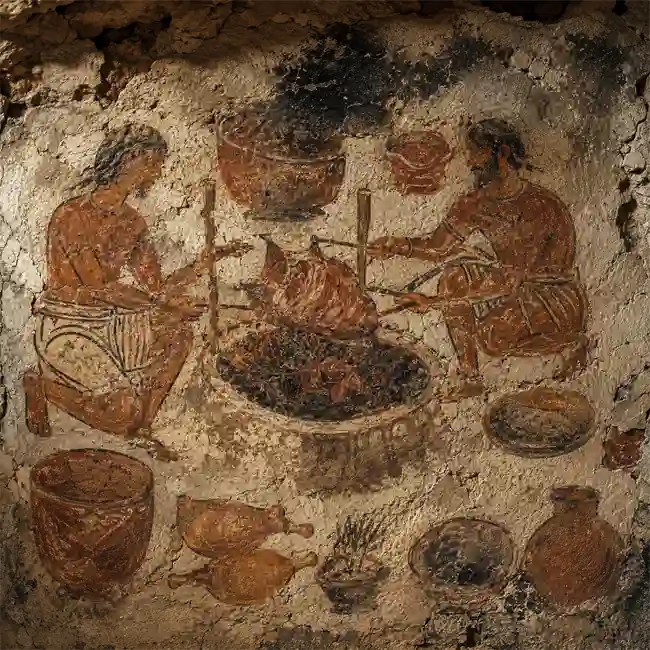
🍖 Recipe: Sacred Indus Ember-Roasted Heritage Meat
An archaeological-inspired fire-roasted meat dish reconstructed from the culinary traditions of the Harappan Civilization, where clay hearths, glowing embers, and simple seasonal ingredients transformed everyday meals into timeless expressions of community and craftsmanship.
🏺 Legends Behind This Excavated Secret
Unlike later civilizations that celebrated royal feasts through lengthy written chronicles, the Harappans left behind remarkably few readable words. Their script continues to puzzle linguists, making every archaeological discovery especially valuable. Instead of recipes carved onto stone tablets, their culinary history survives through humble clues hidden beneath ancient homes.
Excavations at Harappa, Mohenjo-daro, Dholavira, and several other Indus settlements have uncovered clay ovens, ash-filled hearths, roasting pits, grinding stones, animal bones bearing cut marks, and cooking vessels darkened by centuries of use. Together, these discoveries suggest a vibrant tradition of open-fire cooking practiced by families across the civilization.
Among these reconstructed traditions is what historians often imagine as a simple but deeply satisfying fire-roasted meat prepared over hardwood embers.
The meat would likely have come from domesticated animals raised throughout the fertile Indus plains. Rather than masking its natural flavor with elaborate sauces, ancient cooks probably enhanced it using ingredients already common within Harappan agriculture—sesame, garlic, onions, aromatic herbs, rock salt, and fragrant seeds gathered from surrounding landscapes.
Preparing such a meal was never simply about nourishment.
Fire represented warmth, safety, craftsmanship, and family. The evening hearth became the center of conversation after long days spent farming, trading, crafting pottery, weaving textiles, or tending livestock. Children learned by watching older generations carefully judge the heat of glowing embers instead of relying upon measurements or timers.
The slow rhythm of roasting encouraged patience.
As smoke gently curled upward beneath twilight skies, every turn of the meat reflected experience accumulated through countless seasons.
Modern archaeology cannot promise that this exact recipe existed five thousand years ago.
Instead, it respectfully recreates the flavors that would have felt familiar to Harappan households by combining ingredients supported by archaeological evidence with cooking methods known to have been practiced throughout the Indus Valley Civilization.
The result is not fantasy.
It is an edible tribute to one of humanity's oldest culinary traditions.
🌾 Ingredients & The Noble Pantry
Every ingredient tells part of the Harappan story.
The fertile floodplains surrounding the Indus River provided rich agricultural diversity, allowing communities to cultivate grains, legumes, sesame, onions, garlic, herbs, and fruits while raising cattle, sheep, goats, and other livestock. Ancient trade routes expanded available ingredients even further, connecting distant settlements through thriving commercial networks.
This recipe embraces that philosophy by keeping every ingredient natural, practical, and historically inspired.
🌱 The Ancestral Staples
Before gathering ingredients, imagine walking through a thriving Harappan marketplace nearly five thousand years ago.
Large woven baskets overflow with freshly harvested barley and wheat. Clay jars preserve fragrant sesame oil. Farmers proudly display onions, garlic bulbs, lentils, and leafy herbs collected at sunrise. Shepherds return with healthy livestock from nearby grazing lands while potters deliver newly fired cooking vessels ready for another generation of meals.
Nothing appears excessive.
Every ingredient has earned its place through usefulness, nourishment, and seasonal availability.
For this reconstructed fire-roasted meat, the ancestral pantry includes:
• Fresh lamb shoulder or goat shoulder as the primary historical inspiration
• Sesame oil pressed from harvested sesame seeds
• Garlic cloves
• Sweet onions
• Fresh coriander leaves
• Fresh dill or wild fennel leaves
• Cumin seeds
• Coriander seeds
• Black pepper (optional for modern adaptation)
• Rock salt or coarse sea salt
• Barley flour for optional finishing crust
• Fresh ginger (optional but historically plausible through ancient trade)
• Wild honey for gentle caramelization
• Rendered animal fat or clarified butter for additional richness if desired
These ingredients remain intentionally uncomplicated because Harappan cuisine emphasized balance rather than extravagance.
The fire itself supplied much of the flavor.
🌿 Modern Substitutes
Although some traditional ingredients may not be available everywhere today, thoughtful substitutions can preserve the spirit of the original dish while making it accessible to modern kitchens.
• Lamb shoulder can be replaced with bone-in beef chuck, venison, or free-range chicken thighs.
• Goat meat remains one of the closest historical alternatives if available.
• Sesame oil may be substituted with light olive oil if necessary.
• Fresh coriander may be replaced with parsley when preferred.
• Wild fennel leaves can be replaced with fresh dill.
• Whole cumin seeds may be lightly crushed if ground cumin is unavailable.
• Coriander seeds may be replaced with freshly ground coriander.
• Rock salt can be substituted with coarse sea salt.
• Clarified butter may replace rendered animal fat.
• Wild honey can be replaced with raw local honey.
• A charcoal grill produces the closest flavor to an ancient clay hearth, although a wood-fired oven or outdoor smoker also works beautifully.
• Indoor ovens can successfully recreate the recipe by roasting at moderate heat before briefly finishing over high heat or beneath a broiler to mimic ancient embers.
Remember that substitutions should support the ancient cooking philosophy rather than overwhelm it.
Simple ingredients prepared with patience remain the heart of Harappan cuisine.
📏 Ancient Proportions
The following measurements have been carefully adapted for today's kitchens while remaining faithful to the restrained seasoning style suggested by archaeological research.
For approximately four generous servings:
• 2 pounds (900 g) lamb shoulder, cut into large roasting pieces
• 2 tablespoons sesame oil
• 6 garlic cloves, finely crushed
• 1 medium onion, finely grated
• 2 teaspoons whole cumin seeds
• 2 teaspoons crushed coriander seeds
• 1 teaspoon coarse rock salt
• ½ teaspoon freshly ground black pepper (optional)
• 2 tablespoons chopped fresh coriander leaves
• 1 tablespoon chopped fresh dill or fennel leaves
• 1 teaspoon finely grated fresh ginger (optional)
• 1 tablespoon raw honey
• 2 tablespoons clarified butter or rendered animal fat (optional for basting)
• 2 tablespoons barley flour (optional for a light rustic coating before roasting)
These proportions intentionally avoid overpowering seasonings.
Instead, they allow the natural sweetness of slowly roasted meat, gentle smokiness from glowing embers, and earthy fragrance of ancient herbs to remain the stars of the meal.
Just as Harappan cooks likely trusted observation more than strict measurements, feel free to adjust herbs and salt slightly according to personal taste while preserving the overall simplicity of the recipe.
In the next part, we will step beside the glowing clay hearth itself and follow The Chef's Ancient Ritual, recreating the slow, deliberate fire-roasting techniques that made Harappan cooking one of the earliest masterpieces of human culinary history.
👨🍳 The Chef's Ancient Ritual
Imagine the first glow of dawn breaking across the fertile plains of the Indus Valley. The village is slowly awakening as smoke rises from clay hearths, livestock stir from their shelters, and the day's work begins. Preparing a meal is not merely a household chore—it is a daily ritual that honors the land, the harvest, and the generations who came before.
This reconstructed recipe follows that same timeless philosophy. Rather than rushing through the process, allow each step to become part of an experience. Ancient cooks relied on their senses rather than clocks. They judged readiness by aroma, color, texture, and the gentle crackling of hardwood embers.
🔥 Step 1: Preparing the Sacred Marinade
Place the grated onion, crushed garlic, sesame oil, crushed coriander seeds, cumin seeds, chopped herbs, honey, optional ginger, and rock salt into a large clay bowl—or any non-reactive mixing bowl available today.
Mix everything thoroughly until it becomes a fragrant paste.
The aroma should be earthy, herbal, and subtly sweet rather than overpowering.
This simple mixture reflects the Harappan belief that excellent ingredients need only gentle guidance from nature.
🥩 Step 2: Blessing the Meat
Pat the meat completely dry before coating every surface with the ancestral herb mixture.
Massage the seasoning into every fold and crevice.
If using barley flour, lightly dust the meat after seasoning. During roasting it creates a delicate rustic crust reminiscent of ancient hearth cooking.
Cover and allow the meat to rest for at least two hours.
For even deeper flavor, refrigerate overnight.
Patience has always been one of history's greatest seasonings.
🔥 Step 3: Preparing the Ancient Hearth
If cooking outdoors, build a medium hardwood fire using oak, fruitwood, or another natural hardwood.
Avoid treated lumber or heavily resinous wood.
Allow the flames to burn down until glowing red embers remain.
Ancient Harappan cooks rarely cooked directly over large flames.
Instead, they relied on steady radiant heat that roasted food gently while preserving moisture.
If using a charcoal grill, arrange the coals for indirect cooking.
If roasting indoors, preheat the oven to 325°F (165°C) before finishing the meat briefly under high heat or a broiler to recreate the smoky caramelization of ancient embers.
🍖 Step 4: The Slow Fire Ritual
Place the meat above—not directly inside—the hottest embers.
Rotate every fifteen to twenty minutes.
Occasionally brush the surface with clarified butter or rendered animal fat if desired.
Each turn allows the exterior to slowly caramelize while keeping the interior tender and juicy.
Resist the temptation to rush.
Ancient roasting rewarded those who respected the rhythm of the fire.
Depending on the size of the meat, total cooking time usually ranges between 90 and 150 minutes.
The finished meat should develop a beautifully browned exterior with a tender interior that pulls apart easily.
🌿 Step 5: The Final Offering
Remove the roasted meat from the fire and allow it to rest for fifteen minutes.
Scatter fresh chopped herbs across the surface just before serving.
Traditionally inspired accompaniments include:
• Warm flatbread
• Cooked barley
• Lentils
• Roasted onions
• Fresh herbs
• Seasonal vegetables
Serve family-style so everyone shares from the same platter.
The meal celebrates togetherness just as much as nourishment.
🔥 Secrets of the Ancestral Hearth
Centuries of experience taught ancient cooks that mastering fire required observation rather than complicated tools.
These timeless lessons remain surprisingly valuable today.
🌾 Choosing the Right Meat
• Select cuts with moderate marbling for slow roasting.
• Bone-in cuts remain especially flavorful.
• Avoid extremely lean meat, which may dry out over long cooking times.
🔥 Respect the Embers
• Cook above glowing coals instead of active flames.
• Maintain steady heat rather than intense bursts of fire.
• Add small pieces of hardwood gradually instead of large logs.
🌿 Keep the Seasoning Simple
• Do not overwhelm the meat with modern spice blends.
• Fresh herbs should complement rather than dominate.
• Sesame and cumin provide subtle warmth without masking natural flavors.
⏳ Never Skip the Resting Time
• Resting allows juices to redistribute evenly.
• Cutting immediately after roasting causes moisture loss.
• Fifteen minutes makes a remarkable difference.
🛡️ Avoid These Common Mistakes
• Turning the meat too frequently prevents proper browning.
• Cooking directly over flames may char the exterior before the interior cooks.
• Excessive honey can burn quickly over open fire.
• Too much oil may cause flare-ups.
• Overcrowding the grill reduces proper airflow around the meat.
🏺 Ancient Wisdom Worth Remembering
The Harappans understood something modern kitchens sometimes forget:
Fire is not an enemy to control.
It is a partner to understand.
When respected, it transforms simple ingredients into unforgettable meals.
📝❓ Ancient Civilization Origins FAQ
Q1.Was this exact recipe discovered during archaeological excavations?
No. No complete Harappan cookbook has survived. This recipe is a historically inspired reconstruction based on archaeological discoveries, food residue analysis, ancient ingredients, and experimental archaeology. It aims to recreate flavors that are consistent with what researchers believe Harappan communities could have prepared.
Q2.Why are the seasonings so simple?
Harappan cooking emphasized natural ingredients that were locally available. Rather than masking flavors with heavy seasoning, cooks likely relied on fire, fresh herbs, sesame, garlic, onions, and aromatic seeds to enhance the meat's natural richness.
Q3.What kind of meat did the Harappans eat?
Archaeological evidence indicates that domesticated animals such as cattle, sheep, and goats were important resources. Regional diets likely varied depending on geography, local customs, and seasonal availability, with fish and wild game also contributing to the food supply in some communities.
Q4.Can this recipe be prepared without an outdoor fire?
Absolutely. While a charcoal grill or wood-fired oven offers the closest historical experience, a conventional oven combined with a brief high-heat finish can produce excellent results while preserving the spirit of ancient fire-roasting.
🏺 The Taste of Archaeology
There is something profoundly moving about recreating a meal inspired by people who lived five thousand years ago.
Long before written cookbooks, celebrity chefs, or modern kitchen technology, Harappan families gathered around glowing clay hearths to prepare honest food using the gifts of their surrounding landscape. Every roasted meal reflected patience, cooperation, and an intimate understanding of nature's rhythms.
The flavors of this reconstructed dish are intentionally restrained.
Instead of overwhelming spices, the first impression is the gentle smokiness of hardwood embers. This is followed by the natural richness of slow-roasted meat, balanced by the subtle sweetness of onion and honey, the earthy warmth of cumin and coriander, and the freshness of herbs scattered just before serving.
Each bite feels rustic, wholesome, and deeply comforting.
More importantly, it reminds us that extraordinary cuisine does not always depend upon rare ingredients or elaborate techniques. Sometimes the greatest culinary achievements emerge from simplicity practiced with care.
Preparing this recipe is therefore more than cooking dinner.
It is an opportunity to reconnect with one of humanity's earliest urban civilizations through one of our most universal traditions: gathering around a shared meal.
For a brief moment, the centuries separating the modern world from the ancient Indus Valley seem to disappear, replaced by the timeless glow of a humble fire that has united families across generations.
🌅 Final Thoughts: Bringing Antiquity to Your Modern Table
The Harappan Civilization may have disappeared thousands of years ago, but its culinary spirit continues to inspire anyone who believes that great food begins with simple ingredients, patience, and respect for nature.
Preparing Sacred Indus Ember-Roasted Heritage Meat is far more than following a recipe. It is an opportunity to reconnect with one of humanity's earliest urban civilizations through a cooking tradition that has transcended time. Every glowing ember, every fragrant herb, and every carefully roasted piece of meat echoes a world where meals were prepared without modern conveniences, yet were filled with remarkable craftsmanship and care.
What makes this ancient-inspired recipe especially meaningful is its timeless philosophy.
The Harappans understood that food was never only about satisfying hunger. It represented family, cooperation, seasonal abundance, and gratitude for the land that sustained them. Their kitchens were places where knowledge passed naturally from one generation to the next, not through written instructions, but through observation, practice, and shared experience around the hearth.
That same philosophy can still enrich our kitchens today.
You don't need an archaeological excavation, an ancient clay oven, or rare historical ingredients to appreciate Harappan cooking. A simple charcoal grill, a wood fire, or even a modern oven can become the stage where ancient traditions are respectfully revived.
As you prepare this meal, take your time.
Listen to the crackling fire.
Notice the aroma of herbs mingling with wood smoke.
Allow the meat to roast slowly rather than rushing the process.
Invite family or friends to gather around the table and enjoy the meal together.
These simple moments reflect values that have endured for over five millennia.
Perhaps that is the greatest lesson preserved by Harappan cuisine.
Technology changes.
Empires rise and fall.
Languages disappear.
Yet the simple act of sharing food prepared with care continues to unite people across every culture and every generation.
Each recreated ancient recipe serves as a bridge between archaeology and everyday life, allowing us to experience history not through museum displays alone, but through the universal language of flavor.
By preserving these culinary traditions in modern kitchens, we honor the ingenuity of ancient civilizations while ensuring their legacy remains vibrant for future generations.
The fire may be modern.
The kitchen may be modern.
But the spirit remains timeless.
🌍 The Golden Hook (The Sacred Union)
Across the world, countless ancient recipes have disappeared forever.
Some were never written down.
Others vanished alongside forgotten languages, abandoned cities, and civilizations lost beneath sand, rivers, forests, and time itself.
Yet archaeology continues to uncover fragments of these remarkable culinary traditions, allowing passionate cooks, historians, and curious readers to bring pieces of the ancient world back to life.
Every recreated recipe is an act of preservation.
Every shared meal becomes a tribute to those whose knowledge shaped human civilization long before history books were written.
If the story of the Harappans has inspired you, don't let it end here.
Become part of a growing global community dedicated to celebrating the world's oldest food traditions.
Explore forgotten civilizations.
Cook their reconstructed recipes.
Share their remarkable stories.
Introduce younger generations to the incredible diversity of humanity's culinary heritage.
Together, we can ensure that these ancient flavors are remembered not only in museums and archaeological reports but also around modern dining tables across the world.
History deserves to be tasted.
And every kitchen has the power to keep these sacred traditions alive.
🏺 Credit to the Keepers of the Culture (The Legacy)
The recipe presented in this article is a historically inspired culinary reconstruction based on current archaeological research into the Harappan (Indus Valley) Civilization. Because no complete written cookbook from the Harappans has survived, the preparation draws upon evidence from excavated clay hearths, cooking vessels, botanical remains, faunal studies, residue analysis, and comparative Bronze Age food research.
The ingredient choices and cooking methods have been thoughtfully adapted for modern home kitchens while remaining faithful to the archaeological record and the culinary practices considered plausible by current scholarship.
Legacy Statement
"This recipe is inspired by the archaeological discoveries, excavated hearths, botanical evidence, and material culture of the ancient Harappan (Indus Valley) Civilization. We have carefully adapted the measurements and cooking techniques for modern kitchens while preserving the spirit of one of humanity's oldest culinary traditions and honoring the enduring legacy of its ancestral food culture."
May these reconstructed flavors encourage curiosity, inspire respectful exploration of ancient civilizations, and remind us that some of humanity's greatest stories are still waiting to be rediscovered—one shared meal at a time.
| 🛕 🏛️🍖 < Back |