
🏠 Home > 🗺️ Recipes > 🏛️🍲 Clay-Pot Broths & Stews > 🧱 Babylonian: Clay-Pot Broths & Stews Recipes
🧱 🏛️🍲 Babylonian: Clay-Pot Broths & Stews Recipes
Published by Supakorn | Updated: July 2026
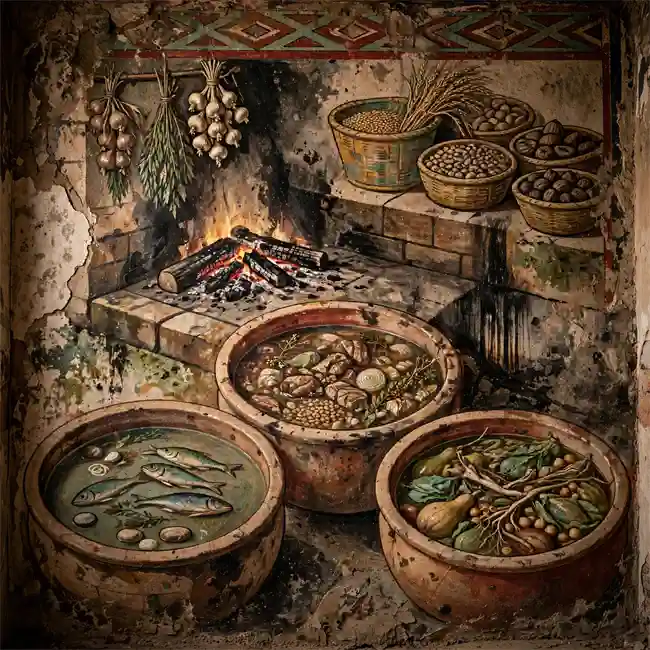
🧱 📜 The Storyteller's Intro: 5,000 Years of Ancestral Flavors
Imagine standing beside the slow-moving waters of the Euphrates just before sunrise. The air is still cool, the scent of damp earth rises from fertile riverbanks, and smoke gently curls upward from clay hearths outside sun-dried brick homes. Somewhere nearby, a heavy clay pot has already begun simmering. Inside it, grains soften, onions melt into rich broth, herbs perfume the air, and tender cuts of meat slowly release their flavors hour after hour.
This isn't just another ancient meal.
It's the beginning of one of humanity's oldest culinary traditions.
When people talk about the birthplace of civilization, they often think of towering ziggurats, the invention of writing, or legendary kings whose names have survived thousands of years. Yet hidden behind these famous achievements lies another remarkable legacy—the kitchens of ancient Mesopotamia, where everyday cooks and palace chefs quietly developed techniques that would influence countless generations.
Long before modern cookware, before metal stockpots became common, and even before written cookbooks existed in many parts of the world, Babylonian households relied on humble clay vessels to create comforting broths and nourishing stews.
Those clay pots became silent witnesses to history.
For thousands of years, they sat over open fires while families gathered together, temple workers prepared communal meals, and palace kitchens crafted elaborate dishes worthy of royal banquets. Every pot carried stories—not only of ingredients but also of trade, agriculture, religion, and daily life.
What makes Babylonian cuisine especially fascinating is that it isn't lost entirely.
Unlike many ancient civilizations whose recipes disappeared without a trace, Mesopotamia left behind thousands of cuneiform tablets pressed into wet clay. These remarkable records preserve shopping lists, agricultural notes, temple offerings, administrative accounts, and even some of the oldest known culinary instructions in human history.
While many tablets remain fragmented or incomplete, they offer extraordinary glimpses into what ancient cooks prepared nearly five millennia ago.
Instead of glossy cookbooks, Babylonian chefs wrote on clay.
Instead of ink, they used reeds.
Instead of paper, they trusted baked earth to preserve their knowledge.
Today, archaeologists continue uncovering these remarkable tablets throughout modern Iraq and neighboring regions, allowing historians to reconstruct pieces of a culinary world that once flourished between two mighty rivers.
🏺 Why Clay Pots Became the Heart of Babylonian Cooking
Clay wasn't simply convenient.
It was everywhere.
The river valleys of Mesopotamia supplied abundant fine silt that could be shaped into durable cooking vessels. Local artisans mastered pottery techniques long before sophisticated metal cookware became widely available, making clay pots the natural centerpiece of nearly every kitchen.
Their advantages were remarkable:
• 🏺 Gentle, even heat reduced scorching.
• 🔥 Thick walls retained warmth for hours.
• 🌾 Slow simmering softened grains beautifully.
• 🥬 Vegetables gradually released natural sweetness.
• 🍖 Meat became tender without constant attention.
• 🌿 Herbs infused broths over extended cooking times.
• 🏡 Pots could move from fire directly to the family meal.
Even today, cooks around the world still appreciate these same benefits when preparing traditional stews.
It's a reminder that some culinary innovations never become outdated.
🌍 Mesopotamia: Where Rivers Built a Civilization
The story of Babylonian food begins long before Babylon itself became famous.
Historians often divide ancient Mesopotamian history into several major periods, each contributing something unique to culinary development.
🌱 Ubaid Period (c. 6500–3800 BCE)
During this early farming age:
• Small agricultural villages spread across fertile floodplains.
• Irrigation systems gradually expanded.
• Wheat and barley farming became increasingly sophisticated.
• Early domesticated sheep and goats supported growing communities.
• Clay pottery improved dramatically in quality.
Although written records had not yet appeared, the foundations of Mesopotamian cooking were already taking shape.
🏙️ Uruk Period (c. 4000–3100 BCE)
This era witnessed astonishing change.
Many scholars regard Uruk as one of humanity's first true cities.
Important developments included:
• 🏛️ Large temple complexes.
• 🏺 Specialized pottery workshops.
• 🌾 Organized grain storage.
• 📦 Expanding long-distance trade.
• ✍️ Early writing systems evolving into cuneiform.
As cities grew larger, kitchens became more organized, and large communal cooking likely became increasingly common.
📖 Early Dynastic Period (c. 2900–2350 BCE)
Independent city-states flourished across Mesopotamia.
This period introduced:
• Palace kitchens.
• Temple food administration.
• Livestock accounting.
• Professional bakers.
• Organized grain distribution.
• Expanding spice exchange.
Food became more than survival.
It became administration, diplomacy, and ceremony.
👑 Akkadian Empire (c. 2334–2154 BCE)
For the first time, much of Mesopotamia came under one imperial government.
As trade expanded:
• New ingredients traveled greater distances.
• Regional cooking traditions blended together.
• Palace cuisine became increasingly sophisticated.
• Luxury foods reached elite households.
Clay-pot stews likely evolved alongside these expanding networks.
🏛️ Old Babylonian Period (c. 1894–1595 BCE)
This is the golden age most closely associated with Babylonian culinary history.
Several remarkable cuneiform tablets from this era contain what many researchers consider the world's oldest surviving recipe collections.
These ancient texts mention numerous stews prepared with combinations of:
• Meat
• Onions
• Garlic
• Leeks
• Herbs
• Grain products
• Aromatics
• Various seasonings
Rather than exact measurements, they describe cooking methods and ingredient combinations—leaving modern historians to carefully interpret the details.
⭐ Later Babylonian Kingdoms
Even after political changes reshaped Mesopotamia, many traditional cooking methods endured.
Generation after generation continued using:
• Clay ovens.
• Clay serving bowls.
• Clay storage jars.
• Clay cooking pots.
The technology remained surprisingly consistent for centuries because it worked exceptionally well.
🍲 More Than Food: A Pot That United Families
One of the most beautiful aspects of Babylonian clay-pot cooking is its social role.
Imagine a large household preparing dinner.
Children return from nearby fields.
Farmers finish tending irrigation canals.
Craftsmen leave busy workshops.
Temple workers complete religious duties.
Instead of everyone eating separate meals, a single clay pot often formed the center of communal dining.
This style of cooking offered many practical advantages:
• 👨👩👧 Meals could feed large families.
• 🔥 Fuel was conserved through slow cooking.
• 🌾 Seasonal ingredients blended efficiently.
• 🥣 Everyone shared from the same pot.
• ❤️ Eating became a daily social tradition.
In many ways, the clay pot symbolized cooperation.
Each ingredient alone contributed something useful.
Together, they created something far richer than any single component.
📚 The World's Earliest Recorded Culinary Knowledge
Perhaps the most exciting discovery for food historians is that Babylonian cooking wasn't passed down solely through oral tradition.
It was written.
Thousands of years ago.
Scholars studying cuneiform tablets have identified texts describing various prepared dishes, ingredient lists, and cooking practices preserved on baked clay.
Although these records are often incomplete, they reveal an astonishing truth:
Ancient cooks thought carefully about flavor.
They balanced herbs.
They combined aromatics.
They selected different meats for different preparations.
They distinguished ceremonial meals from everyday dishes.
This wasn't primitive survival cooking.
It was an established culinary tradition built upon generations of experimentation.
Many historians believe these documents represent humanity's earliest surviving written culinary heritage.
That alone makes Babylonian clay-pot broths and stews some of the most historically significant comfort foods ever created.
🌾 Why This Ancient Cuisine Still Inspires Modern Kitchens
Even after five thousand years, many ideas pioneered in Mesopotamian kitchens remain familiar today.
Modern cooks still appreciate:
• 🍲 Slow simmering instead of rushing.
• 🏺 Cooking in earthenware.
• 🌿 Layering herbs throughout the cooking process.
• 🧅 Building flavor from onions and aromatics.
• 🌾 Combining grains with rich broths.
• 🥩 Tenderizing meat through gentle heat.
• ❤️ Sharing one comforting pot among family and friends.
Technology has changed dramatically.
Ingredients have traveled across continents.
Kitchen appliances have become incredibly advanced.
Yet the simple joy of gathering around a warm bowl of hearty stew feels timeless.
Perhaps that's why Babylonian clay-pot broths continue to capture our imagination today.
They remind us that although civilizations rise and fall, the universal language of good food has always connected people across generations.
And this is only the beginning of the story.
In the next chapter, we'll journey into the fascinating world of iconic Babylonian dishes preserved on ancient cuneiform tablets, exploring legendary stew names, archaeological discoveries, temple records, and palace menus that continue to intrigue historians and food lovers alike
📜 Iconic Excavated Menus: From Clay Tablets to Royal Archives
If there is one thing that separates Babylonian cuisine from nearly every other ancient food tradition, it is this:
The recipes didn't completely disappear.
Across the ancient cities of Mesopotamia, archaeologists have unearthed thousands of cuneiform tablets buried beneath collapsed temples, abandoned palaces, administrative buildings, and ordinary homes. While most of these tablets record taxes, trade, farming, or laws, a precious handful preserve something far more delicious—a glimpse into the kitchens of nearly 4,000 years ago.
Unlike modern cookbooks, Babylonian culinary texts rarely provide exact measurements or cooking times. They were likely written for experienced palace cooks who already understood the techniques. Even so, these remarkable records reveal sophisticated combinations of meats, vegetables, herbs, and seasonings that prove ancient Mesopotamian cuisine was far more refined than many people imagine.
Below are some of the most iconic dishes and culinary traditions connected to Babylonian clay-pot broths and stews, based on archaeological discoveries, translated cuneiform texts, and historical interpretations.
🏺 Why Clay Tablets Matter to Culinary History
Before exploring the famous dishes themselves, it's worth understanding why these discoveries are so extraordinary.
The surviving culinary tablets show that Babylonian cooks:
• 📜 Recorded professional kitchen knowledge.
• 🏺 Used standardized culinary terminology.
• 🌿 Distinguished between herbs and spices.
• 🍖 Prepared different broths for different occasions.
• 🏛️ Worked within organized palace kitchens.
• 🥣 Created recipes intended for skilled cooks rather than beginners.
• 📚 Preserved culinary traditions alongside administrative records.
This makes Mesopotamia one of the earliest civilizations where food preparation became part of written cultural heritage.
🍲 Tuh'u — The Gentle Meat Stew
Among the best-known names appearing in translated Babylonian culinary tablets is Tuh'u, often described as a hearty meat stew.
Although scholars continue debating the exact ingredients, the surviving descriptions suggest a comforting clay-pot dish built around carefully layered flavors rather than overwhelming richness.
Characteristics commonly associated with Tuh'u include:
• 🥩 Slow-cooked meat.
• 🧅 Onion-based aromatic foundation.
• 🌿 Fresh herbs gathered from fertile riverbanks.
• 🧄 Garlic and leeks for depth.
• 🍲 Long simmering inside heavy clay vessels.
• 🌾 A broth designed to nourish as much as satisfy.
Rather than serving as extravagant luxury food, Tuh'u appears to represent the kind of carefully prepared meal that balanced practicality with culinary skill.
🍖 Elamītu Stew — A Taste Beyond Babylon
One fascinating feature of Babylonian cuisine is its openness to neighboring cultures.
Among the recorded dishes is Elamītu, whose name suggests connections with the neighboring land of Elam, east of Mesopotamia.
Its appearance in Babylonian culinary records hints at:
• 🌍 International cultural exchange.
• 🐪 Trade routes carrying ingredients.
• 👨🍳 Palace chefs adapting regional specialties.
• 🏺 Culinary curiosity across political borders.
Even four thousand years ago, great kitchens were already experimenting with foreign influences.
Food traveled almost as successfully as merchants.
🐑 Puhādi — The Shepherd's Comfort
Another intriguing stew mentioned in scholarly reconstructions is Puhādi, believed to have centered around sheep or lamb.
The fertile grazing lands surrounding Mesopotamian settlements supported large flocks, making sheep an essential part of everyday life.
Dishes like Puhādi likely reflected:
• 🐑 Livestock-based agriculture.
• 🌾 Seasonal availability.
• 🏡 Family-centered cooking.
• 🔥 Slow simmering over steady hearth fires.
• 🥣 Rich but practical nourishment.
Rather than wasting any valuable resources, Babylonian cooks became remarkably skilled at transforming modest ingredients into deeply satisfying meals.
🌿 Green Herb Stews of the River Valleys
Not every Babylonian stew focused entirely on meat.
The fertile floodplains produced an impressive variety of edible plants that contributed freshness and fragrance to clay-pot cooking.
Historical evidence points toward generous use of:
• 🌿 Coriander.
• 🌱 Cumin.
• 🌾 Dill.
• 🧅 Leeks.
• 🧄 Garlic.
• 🥬 Leafy greens.
• 🌼 Aromatic local herbs.
These ingredients didn't simply add flavor.
They reflected the agricultural abundance created by the annual flooding of the Tigris and Euphrates rivers.
🏛️ Palace Kitchen Broths
Royal kitchens represented the highest level of Babylonian culinary craftsmanship.
Unlike ordinary households, palace cooks had access to:
• Premium livestock.
• Fresh produce from managed estates.
• Imported aromatics.
• Skilled culinary specialists.
• Large clay cooking vessels.
• Dedicated preparation areas.
• Teams of assistants.
Some palace meals may have required multiple clay pots simmering simultaneously, each contributing a different component to an elaborate banquet.
While today's recipes often emphasize speed, Babylonian palace kitchens celebrated patience.
⛪ Temple Offering Stews
Food held spiritual importance throughout Mesopotamian civilization.
Temples were not only places of worship but also major economic centers with extensive agricultural lands and organized kitchens.
Certain stews were likely prepared as offerings before later being distributed among priests, workers, or communities.
These ceremonial meals emphasized:
• 🙏 Respect for the gods.
• 🌾 Gratitude for successful harvests.
• 🐑 Sacred livestock.
• 🍲 Carefully prepared communal meals.
• ❤️ Shared responsibility within society.
Cooking became an act of both nourishment and devotion.
📖 Administrative Menus and Kitchen Records
Many surviving tablets aren't recipes at all.
Instead, they document the incredible organization behind Babylonian food production.
Examples include records of:
• Grain deliveries.
• Livestock inventories.
• Onion allocations.
• Herb collections.
• Kitchen staffing.
• Food rations.
• Palace banquet planning.
Together, these documents paint a vivid picture of a civilization where feeding thousands of people required remarkable logistical skill.
🧂 Ingredients That Appeared Again and Again
Although complete recipes remain rare, recurring ingredients across archaeological evidence reveal clear culinary preferences.
Frequently mentioned foods include:
• 🧅 Onions
• 🧄 Garlic
• 🌿 Leeks
• 🌱 Coriander
• 🌾 Cumin
• 🥩 Lamb
• 🐐 Goat
• 🐑 Mutton
• 🐟 River fish
• 🌾 Barley
• 🌾 Wheat
• 🌿 Fresh herbs
• 🧂 Sesame products
•🧂 Mineral salts
These staples formed the foundation of countless clay-pot broths prepared across Mesopotamia.
🗺️ Ancient Culinary Tourism: Mapping Flavors to Historic Landscapes
One of the greatest joys of exploring Babylonian food history is realizing that it is also a journey through one of the world's most influential landscapes.
The flavors of Babylon cannot be separated from the geography that created them.
Every ingredient tells the story of rivers, fertile plains, caravan roads, bustling cities, and remarkable engineering that transformed dry lands into thriving agricultural heartlands.
For modern travelers, following Babylonian culinary history becomes much more than searching for ancient recipes.
It becomes an exploration of civilization itself.
🏛️ Babylon — The Legendary City
No destination captures the imagination quite like Babylon.
Known for its monumental architecture, impressive walls, and grand ceremonial avenues, the city also housed sophisticated palace kitchens capable of preparing meals for nobles, officials, visiting dignitaries, and large religious celebrations.
Visitors fascinated by ancient gastronomy often imagine:
• 🏺 Rows of clay cooking vessels.
• 🔥 Hearths glowing throughout palace kitchens.
• 🌿 Fresh herbs arriving from nearby gardens.
• 🥩 Butchers preparing livestock for great feasts.
• 👨🍳 Skilled cooks supervising enormous clay pots.
Although little survives of the kitchens themselves, archaeology allows us to reconstruct their remarkable complexity.
🌊 Along the Euphrates River
The Euphrates was far more than a river.
It was the lifeline of Babylonian civilization.
Communities settled along its banks because the fertile soil supported crops that made diverse cuisine possible.
Traveling the ancient river corridor reveals landscapes once filled with:
• 🌾 Barley fields.
• 🌿 Herb gardens.
• 🧅 Onion cultivation.
• 🥬 Vegetable plots.
• 🐑 Grazing lands.
• 🐟 Fishing communities.
Nearly every famous Babylonian stew began with ingredients grown somewhere along these fertile waterways.
🏺 Sippar — City of Learning
Sippar became famous for scholarship, temples, and written records.
Its scribes carefully preserved knowledge using cuneiform writing, ensuring that administrative records—and occasionally culinary information—survived thousands of years.
For history enthusiasts, Sippar represents the meeting point of:
• 📜 Writing.
• 🍲 Food history.
• 🏛️ Temple administration.
• 🌾 Agricultural planning.
Without cities like Sippar, much of Babylonian culinary history might have vanished forever.
🌅 Nippur — Sacred Traditions
Nippur stood among Mesopotamia's most important religious centers.
Temple kitchens here likely played significant roles in preparing ceremonial meals connected with festivals, offerings, and community gatherings.
Visitors interested in ancient food culture often associate Nippur with:
• ⛪ Sacred cooking traditions.
• 🏺 Temple food preparation.
• 🌾 Agricultural festivals.
• 🍲 Community feasting.
The city's religious significance reminds us that food nourished both body and spirit.
🚶 Walking Through Ancient Markets
Imagine wandering through a Babylonian marketplace nearly four thousand years ago.
Instead of packaged goods and modern storefronts, you'd discover bustling stalls overflowing with local produce and supplies destined for household kitchens and palace storerooms.
You might encounter:
• 🌾 Freshly harvested barley.
• 🧅 Bundles of onions.
• 🌿 Fragrant herbs.
• 🧄 Garlic hanging to dry.
• 🐑 Shepherds leading livestock.
• 🏺 Potters displaying newly fired cooking vessels.
• 📦 Merchants offering rare imported seasonings.
Every purchase represented another ingredient waiting to become part of a slow-simmered clay-pot masterpiece.
As our journey continues, we'll leave the bustling cities behind and explore the fertile river valleys, irrigation systems, caravan routes, and desert crossroads that shaped Babylonian cuisine for thousands of years.
🚣 The Fertile Crescent: River Valley Agriculture & Clay-Pot Cuisine
No discussion of Babylonian clay-pot broths and stews is complete without understanding the landscape that made them possible.
Long before supermarkets, refrigerated storage, or global shipping, the people of Mesopotamia depended almost entirely on the rhythms of two legendary rivers—the Tigris and the Euphrates. Together, these waterways created the fertile region that historians now call the Fertile Crescent, one of the world's earliest cradles of agriculture and civilization.
Without these rivers, Babylonian cuisine would never have existed in the form we know today.
🌊 Rivers That Fed an Empire
Unlike regions blessed with predictable rainfall, southern Mesopotamia relied on seasonal flooding.
When the rivers overflowed, they deposited nutrient-rich silt across the plains, transforming otherwise dry land into exceptionally productive farmland.
This annual cycle allowed ancient communities to cultivate crops on a remarkable scale.
Among the most important agricultural products were:
• 🌾 Barley, the foundation of many everyday meals.
• 🌾 Wheat for breads and grain-based dishes.
• 🧅 Onions, valued for their rich flavor.
• 🧄 Garlic, a favorite aromatic ingredient.
• 🌿 Leeks and fresh herbs.
• 🥬 Leafy vegetables grown near irrigation canals.
• 🌱 Pulses and legumes that enriched hearty stews.
• 🌴 Dates, one of Mesopotamia's signature crops.
These ingredients regularly found their way into clay pots, where slow cooking transformed simple harvests into nourishing meals.
🚜 The Innovation of Irrigation
One of Babylon's greatest achievements wasn't only its architecture or writing—it was water management.
Babylonian engineers constructed extensive networks of canals, ditches, embankments, and reservoirs that carried river water across vast agricultural fields.
These irrigation systems made it possible to:
• 💧 Grow crops beyond the natural floodplain.
• 🌾 Produce reliable harvests.
• 🏡 Support expanding cities.
• 🐑 Raise livestock throughout the year.
• 🌿 Maintain kitchen gardens close to settlements.
The success of Babylonian cuisine was inseparable from this remarkable engineering.
Every bowl of stew represented centuries of agricultural knowledge.
🏺 Clay Pots Meet Fresh Harvests
Fresh ingredients alone do not create memorable food.
Cooking techniques matter just as much.
Babylonian cooks mastered the art of slow simmering, allowing the natural flavors of vegetables, herbs, grains, and meats to gradually blend together.
Clay pots offered several advantages:
• 🔥 Even heat distribution.
• 🍲 Gentle cooking over open fires.
• 🌡️ Stable temperatures for long simmering.
• 🥩 Tender meat without aggressive boiling.
• 🌿 Better infusion of herbs and aromatics.
• ❤️ Rich, unified flavors.
Modern chefs often describe this process as "letting the ingredients speak."
Babylonian cooks understood this philosophy thousands of years before it became fashionable.
🌱 Seasonal Eating in Ancient Mesopotamia
Babylonian households naturally followed the changing seasons.
Instead of expecting every ingredient year-round, families adapted their cooking to whatever the land provided.
Seasonal abundance influenced:
• 🌿 Fresh herbs during warmer months.
• 🧅 Onion harvests.
• 🌾 Grain collection after harvest season.
• 🐑 Livestock availability.
• 🥬 Garden vegetables.
• 🐟 River fishing cycles.
This seasonal rhythm created remarkable diversity despite relying primarily on local ingredients.
Every season brought subtle changes to familiar clay-pot dishes.
🏡 Everyday Life Around the Hearth
The kitchen was more than a place to prepare food.
It was the center of family life.
Imagine a Babylonian household as evening approached.
The day's work was nearly finished.
Children returned from helping in nearby fields.
Farmers inspected irrigation canals one final time.
Craftsmen completed another day's labor.
Meanwhile, inside the home, a clay pot continued its slow transformation over glowing embers.
Conversation unfolded while dinner quietly cooked.
Stories were shared.
Plans for tomorrow were discussed.
Knowledge passed naturally between generations.
The meal became part of daily life rather than a rushed task.
🧭 From Farm to Clay Pot
The journey of every stew began long before cooking.
A single meal reflected an interconnected system of skilled workers.
Consider how many people contributed:
• 🌾 Farmers cultivated grains.
• 💧 Canal workers maintained irrigation.
• 🐑 Shepherds cared for livestock.
• 🌿 Gardeners grew herbs.
• 🏺 Potters crafted cooking vessels.
• 🔥 Wood gatherers supplied fuel.
• 👩🍳 Household cooks transformed everything into nourishing meals.
Each bowl represented an entire civilization working together.
🏜️ Oasis & Desert Trade Route Banquets: Caravan Luxuries
Although Mesopotamia was blessed with fertile river valleys, it never existed in isolation.
Beyond its cultivated fields stretched vast deserts, rugged mountains, and distant kingdoms connected through an extraordinary network of trade routes.
These ancient caravan roads carried far more than merchants.
They transported ideas, technologies, artistic styles, languages—and remarkable new flavors.
Babylonian cuisine grew richer because travelers never stopped arriving.
🐪 The Great Caravan Networks
For thousands of years, camel caravans and donkey caravans crossed challenging landscapes linking Mesopotamia with neighboring civilizations.
Trade connected Babylon to regions including:
• 🏔️ Anatolia.
• 🌄 The Zagros Mountains.
• 🌊 The Persian Gulf.
• 🌴 Arabian oases.
• 🏛️ The Levant.
• 🌅 Elam.
• 🌍 Distant eastern trade networks.
Every successful journey expanded culinary possibilities.
🌿 Rare Ingredients Worth the Journey
Some ingredients were common.
Others became treasured luxuries because they traveled hundreds of kilometers before reaching Babylonian markets.
Highly valued imports likely included:
• 🌿 Fragrant herbs unavailable locally.
• 🧂 Specialty mineral salts.
• 🌱 Exotic spices from neighboring lands.
• 🌳 Aromatic resins.
• 🧂 Premium sesame products.
• 🌺 Rare botanicals.
These precious additions were probably reserved for palace kitchens, temples, wealthy households, and important celebrations.
👑 Banquets Along the Trade Routes
Trade wasn't only about commerce.
It also encouraged diplomacy.
When foreign envoys, merchants, or regional leaders visited Babylonian cities, elaborate feasts often celebrated new alliances and successful negotiations.
Such banquets may have featured:
• 🍲 Rich clay-pot broths.
• 🥩 Carefully prepared meats.
• 🌿 Fresh herbs.
• 🌾 Fine grain dishes.
• 🍪 Freshly baked breads.
• 🥬 Seasonal vegetables.
• 🍯 Sweet fruit accompaniments.
The meal itself became a symbol of hospitality and mutual respect.
🏕️ Oasis Rest Stops
Travel across ancient deserts demanded careful planning.
Caravans frequently paused at natural springs and oasis settlements where travelers could recover before continuing their journey.
These resting places became vibrant meeting points for cultures from every direction.
Here, cooks exchanged ideas about:
• 🍲 Different stew preparations.
• 🌿 Regional herbs.
• 🔥 Cooking techniques.
• 🏺 Pottery styles.
• 🌾 Agricultural practices.
• 🧂 Local seasonings.
Centuries before written culinary schools existed, caravan routes functioned as informal classrooms for ancient chefs.
🌍 Food Without Borders
One surprising lesson from Babylonian archaeology is that ancient cuisine was never completely isolated.
Even thousands of years ago, cooks borrowed ideas from neighboring cultures.
Ingredients crossed borders.
Cooking methods evolved.
Recipes adapted.
Rather than remaining unchanged, Babylonian clay-pot cooking reflected centuries of cultural exchange.
This openness helped create one of the most sophisticated culinary traditions of the ancient world.
🧭 Following Babylonian Food Trails Today
Modern travelers fascinated by ancient gastronomy can still trace the landscapes that inspired Babylonian cooking.
While many archaeological sites are protected and continually studied, the broader geography of Mesopotamia continues to tell the story of its remarkable food culture.
Highlights include:
• 🏛️ Ancient city ruins revealing palace and temple complexes.
• 🌊 The historic Tigris and Euphrates river corridors.
• 🌾 Fertile agricultural plains that supported early farming.
• 🏺 Museums displaying authentic cuneiform tablets and pottery.
• 🧱 Archaeological excavations uncovering everyday household life.
• 🐪 Historic caravan routes that once linked civilizations.
Walking these landscapes offers something unique.
You're not simply exploring ancient ruins.
You're following the footsteps of farmers, potters, merchants, scribes, and cooks who transformed simple ingredients into timeless clay-pot broths that still inspire historians and food lovers today.
✋ Ancient Civilization FAQ: Unlocking Palace Kitchen Mysteries
Q1.Were Babylonian clay-pot stews really among the world's oldest recorded recipes?
Yes. Several Old Babylonian cuneiform tablets dating to around 1700 BCE preserve some of the earliest known written culinary instructions. While they are not modern recipes with exact measurements, they provide invaluable insight into how palace cooks prepared broths, stews, and other dishes, making them among humanity's oldest surviving culinary records.
Q2.Why did Babylonian cooks prefer clay pots?
Clay pots distributed heat evenly, retained warmth for long periods, and allowed ingredients to simmer gently over open fires. This slow-cooking method helped grains soften, herbs release their aromas, and meats become tender, creating rich, well-balanced broths with simple technology.
Q3.Did ordinary families and palace chefs eat the same foods?
They shared many staple ingredients—such as barley, onions, garlic, herbs, and locally raised livestock—but palace kitchens had greater access to premium ingredients, imported seasonings, and specialized cooks. As a result, royal and ceremonial meals were generally more elaborate than everyday family dishes.
Q4.How do archaeologists know what Babylonians cooked?
Researchers combine evidence from cuneiform tablets, excavated pottery, animal bones, plant remains, storage jars, kitchen tools, and residue analysis found at archaeological sites. Together, these discoveries help reconstruct the ingredients, cooking methods, and food traditions of ancient Mesopotamia with remarkable detail.
🧠 Final Thoughts: The Timeless Allure of Antique Gastronomy
There is something truly captivating about standing at the crossroads of history and food.
Every civilization leaves behind monuments, inscriptions, works of art, and remarkable inventions. Yet few legacies feel as personal—or as comforting—as the meals people once gathered around after a long day's work. Babylonian clay-pot broths and stews remind us that, even five thousand years ago, people found joy in sharing warm food, caring for their families, and celebrating life's milestones around a simple hearth.
That is why these ancient dishes continue to fascinate historians, archaeologists, chefs, and curious travelers alike.
They are more than recipes.
They are edible pieces of human history.
🏺 More Than a Bowl of Stew
When we study Babylonian cuisine, we are not simply examining ingredients.
We are discovering an entire civilization through its kitchens.
Every clay pot tells a story about:
• 🌾 The farmers who cultivated fertile river valleys.
• 🏺 The potters who shaped durable cooking vessels.
• 🧱 The builders who created thriving cities.
• 🐑 The shepherds who tended livestock.
• 🌿 The gardeners who nurtured fragrant herbs.
• ✍️ The scribes who preserved culinary knowledge on clay tablets.
• 👨👩👧 Families who gathered together at the end of every day.
Food connected every level of Babylonian society.
From humble village homes to magnificent palace kitchens, the same principles of patience, craftsmanship, and community remained at the heart of every meal.
📜 Ancient Wisdom That Still Feels Modern
Although thousands of years separate us from ancient Mesopotamia, many Babylonian cooking traditions feel surprisingly familiar.
Their kitchens celebrated ideas that modern cooks continue to value today:
• 🍲 Slow cooking instead of rushing.
• 🌿 Fresh herbs layered naturally into meals.
• 🧅 Aromatics as the foundation of flavor.
• 🏺 Earthenware cooking that enhances texture.
• 🌾 Seasonal ingredients harvested close to home.
• ❤️ Meals designed to bring people together.
These timeless principles remind us that great cooking has never depended solely on advanced technology.
Instead, it has always relied on patience, quality ingredients, and thoughtful preparation.
In many ways, Babylonian cooks were practicing a philosophy that still inspires kitchens around the world.
🌍 A Journey Through the Cradle of Civilization
Exploring Babylonian food also means exploring one of humanity's most influential landscapes.
The Fertile Crescent was more than a geographic region—it was a birthplace of innovation.
Here, people learned to:
• 🌾 Cultivate crops on a large scale.
• 💧 Build sophisticated irrigation systems.
• 🏛️ Establish organized cities.
• ✍️ Develop one of the world's earliest writing systems.
• 🛒 Expand long-distance trade.
• 🍲 Transform simple harvests into nourishing cuisine.
Every bowl of clay-pot broth reflected this remarkable network of knowledge, cooperation, and ingenuity.
The cuisine of Babylon cannot be separated from the civilization that created it.
Together, they tell one extraordinary story.
🔍 Why Archaeology Keeps Rewriting Culinary History
One of the most exciting aspects of ancient gastronomy is that new discoveries continue to emerge.
Archaeologists regularly uncover:
• 🧱 Previously unknown settlements.
• 🏺 Household pottery.
• 📜 Fragmented cuneiform tablets.
• 🌾 Ancient storage facilities.
• 🔥 Kitchen hearths.
• 🧂 Food residues preserved inside ceramic vessels.
• 🦴 Animal and plant remains that reveal dietary habits.
Every excavation adds another piece to the puzzle.
What seems mysterious today may become much clearer tomorrow as research advances and new technologies help scholars interpret the archaeological record.
The story of Babylonian food is still being written.
🍲 Why Clay-Pot Cooking Never Truly Disappeared
Although empires have risen and fallen, the basic idea behind clay-pot cooking has endured across countless cultures.
Around the world, people continue to prepare comforting broths and stews using earthenware because it offers many of the same advantages appreciated by Babylonian cooks thousands of years ago:
• 🔥 Gentle, even heating.
• 🍖 Tender textures.
• 🌿 Rich flavor development.
• 🥣 Excellent heat retention.
• ❤️ Shared family-style dining.
This continuity reminds us that some culinary traditions transcend both geography and time.
The tools may look ancient, but the experience remains wonderfully familiar.
🌟 Looking Ahead to the Complete Ancient Recipe Collection
The fascinating journey through Babylonian clay-pot broths and stews is only the beginning.
Across the ancient world, every civilization developed its own remarkable culinary identity.
Future explorations may uncover:
• 🏺 Palace-inspired ceremonial dishes.
• 🌾 Sacred harvest recipes.
• 🍞 Traditional ancient breads.
• 🥬 Historic vegetable preparations.
• 🍖 Royal banquet specialties.
• 🔥 Forgotten hearth-cooking techniques.
• 📜 Additional culinary treasures hidden within archaeological discoveries.
Each recipe carries another chapter in humanity's shared food heritage.
Together, they form an extraordinary collection of Lost Ancient Recipes waiting to be rediscovered.
As new excavations continue and historical research advances, our understanding of these timeless kitchens will only become richer.
The past still has many flavors left to reveal.
🏛️ Credit to the Keepers of the Culture (The Legacy)
Every reconstruction of ancient Babylonian cuisine owes a profound debt to the people who have preserved its history across thousands of years.
Although many original cooks remain anonymous, their legacy survives through the remarkable efforts of generations who safeguarded fragments of the ancient world.
We respectfully acknowledge the enduring contributions of:
• 🏺 Ancient Babylonian cooks, bakers, farmers, shepherds, gardeners, and potters whose daily work shaped one of humanity's earliest culinary traditions.
• ✍️ Mesopotamian scribes who carefully impressed cuneiform writing into clay tablets, preserving invaluable knowledge for future generations.
• 🏛️ Archaeologists who continue to excavate ancient cities, homes, temples, and palace complexes throughout Mesopotamia, expanding our understanding of early food culture.
• 📚 Historians, Assyriologists, linguists, and researchers who painstakingly translate and interpret fragmented cuneiform texts, allowing forgotten culinary traditions to be studied once again.
• 🧪 Museum conservators and heritage professionals who protect fragile artifacts so they remain accessible for education, scholarship, and public appreciation.
• 🌍 UNESCO, cultural heritage organizations, museums, universities, and research institutions dedicated to preserving the archaeological legacy of ancient Mesopotamia for future generations.
• ❤️ Local communities who continue to value, protect, and share the historical landscapes connected to one of the world's oldest civilizations.
This article is intended as an educational and cultural tribute inspired by archaeological discoveries, historical research, and the surviving culinary heritage of ancient Mesopotamia. It does not claim to reproduce complete or definitive ancient recipes; rather, it celebrates the remarkable ingenuity, resilience, and creativity of one of humanity's earliest civilizations.
As we continue to uncover the Ancient Culinary Secrets preserved beneath layers of history, we honor not only the meals themselves but also the countless generations who cultivated the land, tended the hearths, recorded their knowledge in clay, and passed forward a legacy that still inspires the modern world.
The fire may have cooled, the cities may have weathered the centuries, but the story of Babylonian clay-pot broths and stews continues to simmer—one discovery, one clay tablet, and one timeless flavor at a time.
🏛️🍲 Primitive Babylonian Clay Stews That Shaped an Empire
👉 Unlock Babylonian Classics: Clay-Pot Broths & Stews
| 🌐 🏛️🍲 < Back | 🧱 🍖 < Previous | Next > 🍯 🧱 |