
🏠 Home > 🗺️ Recipes > 🏛️🌾 Primitive Grains & Flatbreads > 🧱 Ancient Egyptian: Primitive Grains & Flatbreads Recipes > 🏛️🌾 1.The Sacred Pharaoh’s Golden Kamut and Herb Medley
🏛️🌾 Unlocking the Secrets of the Pharaohs: The Resurrection of Egypt’s Sacred 5,000-Year-Old Imperial Grain Feast
Published by Supakorn | Updated: July 2026
Have you ever looked at the massive, sun-drenched pyramids of Giza and wondered what the masterminds who built them actually ate for dinner? It is incredibly easy to get swept up in the grand stories of golden death masks, powerful curses, and giant stone monuments. But if you strip away the gold and the mythology, you find a living, breathing civilization of people who loved good food, gathered around warm fires, and treated cooking as a deeply spiritual art form. Today, we are not just reading about history; we are bringing it straight into your modern kitchen. Get ready to embark on a culinary time-travel adventure as we resurrect a long-forgotten, nutrient-rich grain dish that sustained Pharaohs and high priests along the fertile banks of the Nile River five millennia ago.
🧱 🏛️ Ancient Civilization Origins: Ancient Egypt
🌾 The Storyteller’s Intro: 5,000 Years of Ancestral Flavors
Picture this: It is dawn in the year 3000 BCE. A thick, silver mist hangs low over the shimmering waters of the Nile River. As the golden sun peaks over the horizon, bathing the majestic temples of Memphis in a warm, amber glow, the air fills with something utterly magical. It isn't just the scent of burning incense or sacred myrrh wafting from the inner sanctuaries. It is the deep, comforting, earthy aroma of freshly ground emmer wheat and crackling rustic hearths waking up the entire empire.
For the people of ancient Egypt, food was never just about survival. It was a holy bridge connecting the physical world with the eternal realm of the gods. Every single seed planted in the dark, mineral-rich silt left behind by the annual flooding of the Nile was viewed as a direct gift from Osiris, the god of resurrection and agriculture. Cooking was treated as a sacred ritual, a rhythmic dance of life that required reverence, patience, and a deep understanding of nature’s elements. When you recreate these meals today, you are stepping directly into that ancient rhythm. You are tasting the exact flavors that fueled the architects, artisans, and rulers who shaped the very foundations of human civilization.
🏺 The Global Value of Antique Heritage
In our incredibly fast-paced, modern world of instant noodles, drive-thrus, and heavily processed snacks, we have lost our connection to the soil and the stories behind what we consume. Reviving an antique culinary masterpiece is more than just a fun, quirky weekend cooking project. It is an act of historical preservation and a beautiful celebration of our shared human roots.
The agricultural wisdom of the ancient Egyptians was remarkably sophisticated. Long before modern nutritional science existed, they instinctively understood how to combine whole grains, wild legumes, natural sweeteners, and indigenous herbs to create deeply satisfying meals that kept their bodies strong, energized, and resilient under a blazing desert sun. By studying and recreating these heritage recipes, we pay respect to thousands of years of human ingenuity. We allow ourselves to pause, slow down, and truly appreciate the beautiful simplicity of clean, whole ingredients that have sustained our ancestors for thousands of generations.
👑 The Culinary Resurrection
For centuries, the specific flavors and exact cooking methods of the Pharaohs were completely lost to time, buried deep beneath shifting desert sands and locked away inside cryptic hieroglyphic inscriptions on tomb walls. However, thanks to the tireless work of modern experimental archaeologists, brilliant botanists, and passionate food historians, these ancient culinary secrets are finally being brought back to life.
By carefully analyzing ancient food scraps found in clay storage jars inside royal tombs, as well as studying detailed wall paintings depicting bustling palace kitchens, experts have successfully decoded the core flavor profiles of the Old Kingdom. This isn't a modern guess; it is a true culinary resurrection. We are pulling a magnificent, forgotten masterpiece right out of the shadows of antiquity and giving it a brand-new life on your modern dinner table. It is an incredible privilege to prepare a meal that carries the profound weight, beauty, and spirit of 5,000 years of human history.
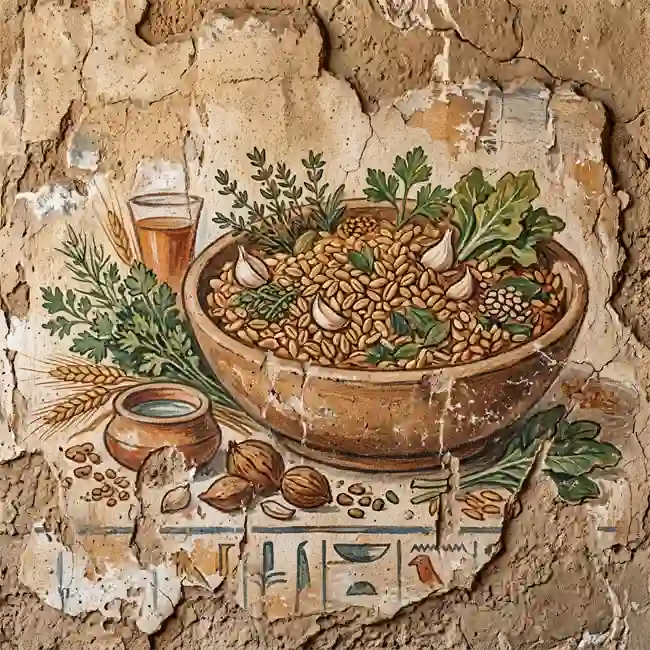
🍲 Recipe: The Sacred Pharaoh’s Golden Kamut and Herb Medley
📜 Legends Behind This Excavated Secret
The stunning recipe we are making today is inspired by the legendary grain preparations often reserved for high-ranking royalty, noble officials, and sacred temple offerings during the early dynasties of Egypt. According to fascinating archaeological discoveries, jars filled with preserved Khorasan wheat (commonly known as Kamut) and ancient emmer grains were deliberately placed inside the burial chambers of Pharaohs to ensure they would never go hungry on their long, mystical journey through the afterlife.
Legend has it that these specific ancient grains were considered so incredibly precious and holy that ordinary citizens were only allowed to harvest them under the strict supervision of temple priests. The dish is a beautiful, hearty combination of slow-simmered whole grains, earthy green lentils, fragrant wild herbs, and a touch of natural sweetness from dates. This created a perfect balance of textures and flavors that was both deeply grounding and remarkably elegant—a true meal fit for a divine ruler.
🌿 Ingredients & The Noble Pantry
• The Ancestral Staples
To truly appreciate this dish, we have to look closely at the incredible ingredients that made up the base of the Egyptian pantry. The absolute star of the show is the ancient grain itself. Five thousand years ago, the fields along the Nile were filled with tall, golden stalks of Emmer and Kamut. These are not your typical, heavily modified modern wheats; they are ancient heirloom grains boasting a rich, sweet, nutty flavor and a fantastic, firm texture. Along with these hearty grains, the Egyptians relied heavily on local legumes like lentils and chickpeas for protein, wild leeks and garlic for deep savory notes, and aromatic seeds like coriander and cumin to infuse their dishes with a signature warmth and complexity.
• Modern Substitutes
Because true ancient emmer and wild Egyptian leeks can be a bit tricky to track down at your local neighborhood grocery store, we can easily use high-quality, easily accessible modern equivalents that keep the authentic soul and flavor profile of the original dish completely intact.
◦ Instead of wild ancient emmer, you can use high-quality whole Kamut berries, farro grain, or spelt berries. They offer the exact same delightfully chewy texture and nutty undertone.
◦ Instead of wild Egyptian desert leeks, standard organic leeks combined with a bunch of fresh scallions work beautifully to mimic that subtle, sweet onion flavor.
◦ Instead of ancient wild celery, standard organic celery stalks mixed with plenty of fresh flat-leaf Italian parsley will give you that wonderful, bright, refreshing herbal lift.
• Ancient Proportions
Here is exactly what you will need to gather for your noble pantry. Please ensure your ingredients are fresh and whole wherever possible to get the absolute best flavor experience:
◦ Two cups of whole Kamut grains or farro grains, thoroughly rinsed and soaked in cold water overnight
◦ One cup of small brown or green lentils, thoroughly rinsed
◦ Four cups of pure, filtered water or rich organic vegetable stock
◦ Two large leeks, white and light green parts only, thoroughly washed and finely sliced
◦ Four cloves of fresh garlic, completely peeled and finely minced
◦ Half a cup of sweet Medjool dates, completely pitted and finely chopped
◦ Two teaspoons of whole coriander seeds, gently toasted and coarsely crushed
◦ One teaspoon of whole cumin seeds, gently toasted and ground
◦ Half a teaspoon of coarse sea salt
◦ Three tablespoons of cold-pressed extra virgin olive oil
◦ One cup of fresh flat-leaf parsley, finely chopped for a vibrant finish
🏺 The Chef’s Ancient Ritual
Now that your pantry is ready, it is time to step into the shoes of an ancient palace chef. Follow these steps mindfully, embracing the slow, rewarding process of traditional cooking.
1.The Awakening of the Grains: Begin by draining your soaked Kamut or farro grains. In a large, heavy-bottomed pot, heat two tablespoons of your extra virgin olive oil over medium heat. Toss in the soaked grains and let them toast gently for about three to four minutes. Stir them continuously so they don't stick. You will know they are ready when your kitchen fills with a gorgeous, warm, nutty aroma. This process mimics the ancient technique of roasting grains over an open fire to lock in flavor.
2.The Savory Foundation: Push the toasted grains to the side of the pot, or temporarily transfer them to a bowl. Add the remaining tablespoon of olive oil to the center of the pot. Toss in your sliced leeks and minced garlic. Sauté them gently for about five minutes until they become beautifully soft, translucent, and sweet, taking care not to let the garlic brown too much.
3.Releasing the Spices: Stir the crushed coriander seeds, ground cumin, and sea salt directly into the warm leek and garlic mixture. Let the spices cook for just sixty seconds. The heat will release the natural essential oils within the spices, creating an incredibly aromatic foundation for the entire dish.
4.The Sacred Union: Pour the four cups of water or vegetable stock into the pot, stirring well to scrape up any delicious, flavorful bits stuck to the bottom. Add the rinsed green lentils and the chopped Medjool dates into the mix. Bring the entire pot up to a rolling boil, then immediately turn the heat down to low. Cover the pot with a tight-fitting lid and let it simmer undisturbed for forty-five to fifty minutes.
5.The Final Rest: Once the time is up, turn off the heat completely. Take off the lid and check the grains; they should be beautifully tender but still retain a fantastic, distinct bite, and the lentils should be perfectly soft. Most of the liquid should be completely absorbed. Stir in the fresh chopped parsley, place the lid back on, and let the dish rest for ten minutes off the heat to allow all the incredible flavors to fully meld together.
🔥 Secrets of the Ancestral Hearth
To make sure your ancient feast turns out absolutely perfect on your very first try, keep these crucial tips, tricks, and culinary insights in mind:
◦ Do Not Skip the Long Overnight Soak: Ancient grains are incredibly dense and hearty. Soaking your Kamut or farro overnight softens the outer bran layer. This ensures that the grains cook completely evenly and achieve that perfect texture without turning into mush.
◦ Avoid the Dreaded Over-Stirring: While the grains are simmering on low heat, try your absolute best to leave the lid on and avoid stirring too often. Stirring grains unnecessarily releases excess starches, which can quickly transform your elegant, distinct grain medley into a sticky porridge.
◦ Mind Your Salt Timing: Always add your sea salt right at the beginning of the simmer along with the spices. This allows the salt to season the grains from the inside out as they expand, resulting in a much deeper, more balanced flavor profile.
◦ Control Your Cooking Heat: Keep the simmer very low and gentle. If your stove is too hot, the liquid will evaporate completely before the dense ancient grains have a chance to soften up, leaving you with hard, crunchy grains and an empty pot.
🖐️ Ancient Civilization Origins FAQ
Q1.Can I make this historic recipe using a modern rice cooker or an Instant Pot?
You absolutely can. If you are short on time, you can put all your toasted grains, sautéed aromatics, spices, lentils, dates, and liquid directly into an Instant Pot. Seal the lid and cook on High Pressure for twenty-five minutes, followed by a natural pressure release for ten minutes. It works like magic while preserving the exact same historic flavor.
Q2.What kind of modern dishes can I pair this Pharaoh grain medley with?
This dish is incredibly versatile. It serves as a fantastic, hearty base for slow-roasted root vegetables, grilled lamb chops, roasted chicken, or a fresh, crisp cucumber and herb salad dressed with plenty of fresh lemon juice and olive oil.
Q3.Are these ancient Egyptian grains completely gluten-free?
No, Kamut, emmer, farro, and spelt are all ancestral varieties of wheat, which means they naturally contain gluten. However, many people find that these ancient, unhybridized heirloom grains are significantly easier on their digestive systems compared to modern, highly processed commercial wheat.
Q4.How long will the leftovers keep, and can I freeze this dish for later?
This dish actually tastes even better the next day as the spices continue to infuse the grains. You can store any leftovers in an airtight container in your refrigerator for up to five days. It also freezes beautifully for up to three months; just thaw it overnight in the fridge and reheat it with a splash of water.
🥄 The Taste of Archaeology
When you finally take your very first bite of this sacred Pharaoh's grain medley, it is a truly profound sensory experience. First, you get the amazing, robust chewiness of the ancient Kamut berries, closely followed by the earthy, comforting softness of the lentils. Then, the savory warmth of the toasted coriander and cumin hits your palate, perfectly balanced out by the sudden, delightful burst of natural sweetness from the melted Medjool dates.
It is a remarkably complex flavor profile that manages to taste deeply rustic, refreshing, and incredibly sophisticated all at the exact same time. It is a real taste of living archaeology—an edible bridge that instantly collapses thousands of miles and thousands of years of time, connecting your modern palate directly to the magnificent kitchens of the ancient Nile.
🌾 Final Thoughts: Bringing Antiquity to Your Modern Table
Cooking this 5,000-year-old recipe is a beautiful reminder that food has always been one of the most powerful ways humans connect with one another, express their creativity, and honor the earth. By stepping away from modern processed foods for just one evening and focusing on pure, wholesome, ancestral ingredients, you aren't just making a delicious dinner—you are keeping a beautiful piece of human history vibrant and alive. Bring this gorgeous dish to your dinner table, share the fascinating story of its origin with your loved ones, and enjoy the timeless experience of eating like a Pharaoh.
✨ The Golden Hook (The Sacred Union)
The incredible culinary secrets of our ancient ancestors belong to all of us, but they can only survive if we actively continue to cook them, share them, and pass them down to the next generation. If you felt a spark of magic while preparing this ancient Egyptian feast, don't let the journey end here. Share this recipe with your friends, talk about the history behind your food, and become a living guardian of the world’s culinary heritage. Together, we can make sure these sacred flavors are never forgotten again.
📜 Credit to the Keepers of the Culture (The Legacy)
◦ This recipe is inspired by the ancient culinary archives, tomb wall paintings, and sacred temple offering lists of Ancient Egypt. We have carefully adapted the measurements for modern kitchens while preserving its sacred ancestral soul.
| 🧱 🏛️🌾 < Back |